

Originally published by Nevena Borisova in Global Voices on September 28, 2026, under a Creative Commons Attribution 3.0 licence (see the Global Voices attribution policy). Adapted here under that licence: the interview was condensed and restructured, answers were summarised with short direct quotations, headings were rewritten and TeaLamp key takeaways, context and FAQ were added. The photographs from the original post were not reused. Global Voices and the interviewee do not endorse TeaLamp. Prepared by the TeaLamp Editorial Team with the help of AI.
How do Ukrainian small businesses survive after five years of war? In a chat interview with Global Voices writer Nevena Borisova, journalist Victoria Belim-Frolova, who has spent more than two years reporting from eastern Ukraine and frontline towns, describes an economy that is not simply shrinking but being reshaped — and the women who keep tiny businesses going inside it.
Key takeaways on Ukrainian small businesses in wartime
- A UNDP-supported study found that 83% of small businesses were hurt by the war.
- Women made up nearly 60% of newly registered sole proprietors in early 2026, up from about 49% when the full-scale invasion began.
- Businesses survive by relocating, shrinking, changing products or selling online to customers abroad.
- Belim-Frolova argues that a café, a market stall or a manicure table is also social infrastructure.
- She warns against turning resilience into an uplifting story: much of it is exhausting survival.
The numbers: more women running businesses
The original article opens with figures that frame the conversation. Beyond the UNDP finding, the Ukrainian outlet The New Voice of Ukraine reported the rising share of women among new sole proprietors. Women also headed 12,757 companies founded in 2025 — about a third of all new firms — and lead roughly 32% of registered companies, according to March 2026 data. Displacement, lost household income, partners serving in the army and the need to combine paid work with care all push women towards self-employment.
An economy restructured, not just shrinking
Belim-Frolova, who moved back to Ukraine from Brussels in 2024, says statistics miss what economic life feels like on the ground. In eastern cities she has watched shops and restaurants close, firms move west or abroad and skilled people leave, so that a town “can still exist on the map” while losing the ecosystem that made ordinary life possible. At the same time, new sectors have grown, above all defence technology, where engineers now build drones and communications systems. She describes the economy as “violently restructured by war” rather than simply declining. Information technology, once a flagship sector, has adapted unevenly but remains resilient.

Image generated by AI
Online sales: customers beyond the front line
Online craft businesses, many run by women, have not disappeared, she says. For people making ceramics, jewellery, embroidery, clothes or cosmetics, the local customer base may have become poorer or vanished, but a web shop can still reach buyers in Warsaw, Brussels, London or New York. Logistics, power cuts, displacement and rising costs make this hard, yet very small firms can adapt quickly precisely because they are small.
Belim-Frolova is drawn to this “very modest” economy that rarely appears in talk of GDP and reconstruction: someone selling embroidered shirts online, baking cakes at home, laying out tomatoes on a market stall, or restarting a micro-business in a new city. Each looks insignificant alone; together, she says, they help keep society working.
The last manicurist in Mykolaivka
Her most vivid example is Anastasia, an 18-year-old in Mykolaivka, near Kramatorsk, who learned gel manicures from online videos and became the last manicurist still working in her town. Women travelled from neighbouring towns, on roads exposed to drones, to see her. Belim-Frolova rejects the idea that this is frivolous: the appointment offered self-care, a sense of normality and control, and a place for women to sit and talk. Its value, she says, cannot be measured only in revenue or jobs — and when such businesses close, communities lose places of connection as well as income.
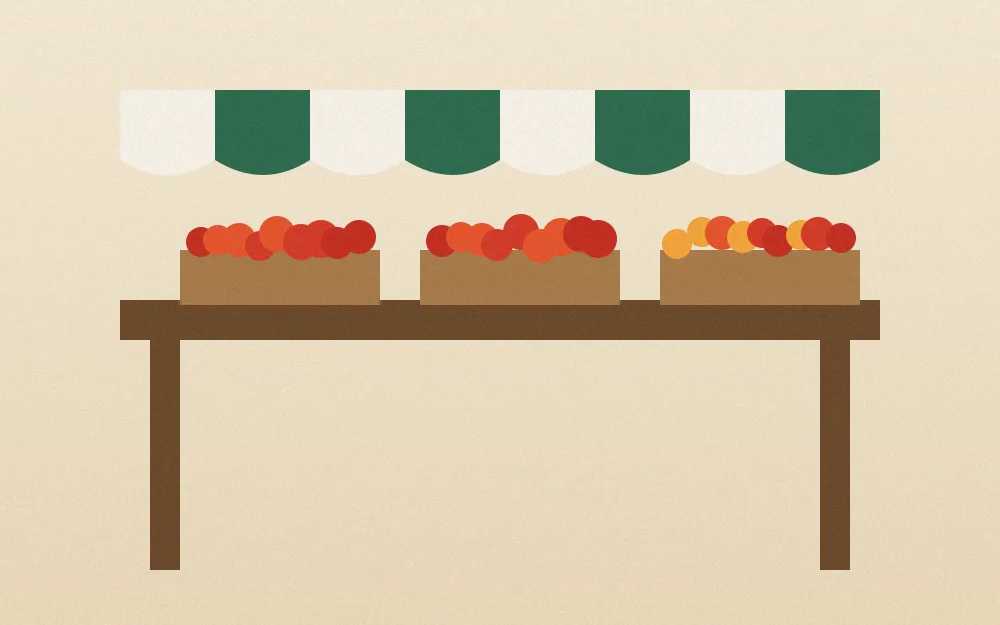
Image generated by AI
Poverty as a loss of choices
Asked about the mental-health effects of declining community wealth, she describes poverty in wartime as a shrinking “radius of possibility”: delayed medical care, cheaper food, unrepaired homes and, eventually, not being able to afford to leave a dangerous place. Evacuating from the Donetsk region requires money, somewhere to go, transport and documents, and some people stay partly because everything they own is there. Women often carry the heaviest load, managing children, older relatives and income while partners serve in the military.
Resourcefulness — without romance
People grow and preserve food, swap goods, lean on relatives and neighbours and combine pensions, aid and several small incomes. For a household, a woman’s small business may mean independence and survival, even if it looks marginal in macroeconomic terms. But Belim-Frolova is clear that constant inventiveness forced by lost income, a husband at war and displaced children “is survival, and we don’t need to romanticise it.” Hope, for her, is “an accumulation of very small actions” — markets opening, roofs repaired, neighbours driven to hospital — that keep ordinary life going.
Why it matters
Coverage of war economies tends to focus on GDP, aid packages and reconstruction bills. This interview is a reminder to look at the smallest units too. Micro-businesses run largely by women keep cash, services and social contact alive in places where larger firms have left, and support for them — access to finance, logistics and online markets — can matter as much as headline investment.
Related reading
For another Global Voices interview adapted by TeaLamp, read Jaume Amigó: Painting Silence as a Form of Resistance. The full original conversation, with Belim-Frolova’s photographs, is on Global Voices.
Frequently asked questions
Who is Victoria Belim-Frolova?
She is a writer and journalist who returned to Ukraine from Brussels in 2024 and reports on how women and communities in eastern Ukraine adapt to the war.
How many Ukrainian small businesses were affected by the war?
A UNDP-supported study cited by Global Voices found that 83% of small businesses were negatively affected.
Why are more women starting businesses in Ukraine?
Displacement, loss of household income, partners serving in the military and the need to combine flexible work with family care have all pushed women into self-employment.








0 Comments