

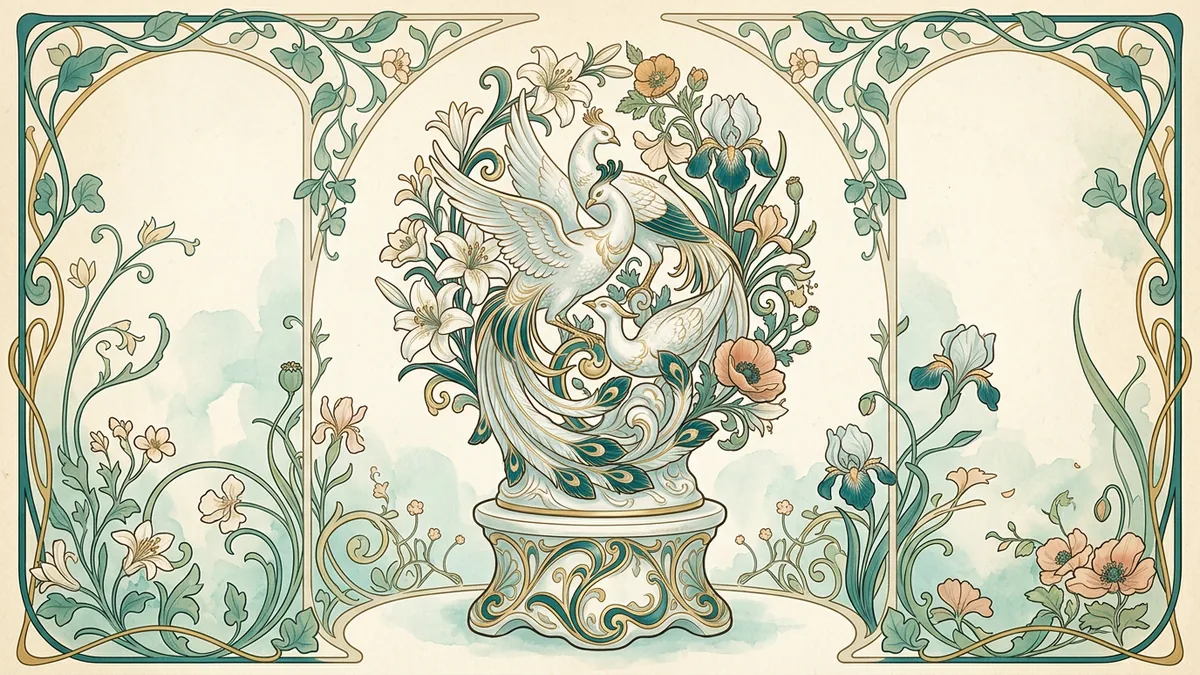
Originally published by Omid Memarian in Global Voices on January 8, 2026, under a Creative Commons licence (CC BY 3.0). Republished here under that licence. Global Voices and the author are not contributors to TeaLamp and do not endorse it or its use of their work. Changes: condensed and restructured with TeaLamp Key takeaways, Why it matters, FAQ and related reading; interview answers kept as attributed quotes; section headings rewritten; gallery photos from the source were not reused. Prepared by the TeaLamp Editorial Team with the help of AI.
Key takeaways on Melis Buyruk porcelain
- Turkish sculptor Melis Buyruk builds imagined “Habitat” worlds in porcelain, where birds, plants and animals stand in for inner states such as pride, greed and longing.
- Her 2025 exhibitions in the UAE and at Contemporary Istanbul, plus a Louvre Abu Dhabi acquisition, mark a wider turn toward ceramics as contemporary art rather than decoration.
- She treats porcelain’s fragility and familiarity as part of the meaning: viewers slow down because the material is both everyday and breakable.
- Technical mastery, she argues, is not separate from concept — years of kiln risk and studio hours are how the ideas become visible.
- Buyruk plans to stretch porcelain further rather than switch media, expanding colour and narrative inside the same demanding material.
What happens when a material we meet at the dinner table becomes a language for myth and self-mastery? In a Global Voices interview, Turkish artist Melis Buyruk porcelain practice is framed as an “inner chronology”: exhibitions arrive when a body of work is ready, not when a market calendar demands them. The conversation ranges from childhood making to Rumi-inspired bird portraits — always returning to why porcelain, of all materials, keeps her attention.
Who is Melis Buyruk?
Buyruk was born in Gölcük in 1984 and describes a childhood spent drawing, sewing, shaping and building tactile worlds by instinct. She began studying ceramics at Selçuk University in Konya in 2003, at a time when ceramics were still rarely treated as a conceptual contemporary medium. Over years of long studio hours she settled on porcelain for its precision, sensitivity and finish — a continuity that deepened both craft and meaning.
TeaLamp has not invented this interview. The questions and answers below are adapted from Omid Memarian’s conversation for Global Voices; quotes remain attributed to Buyruk. Source exhibition photographs were not republished (their licences sit with the photographer and gallery).
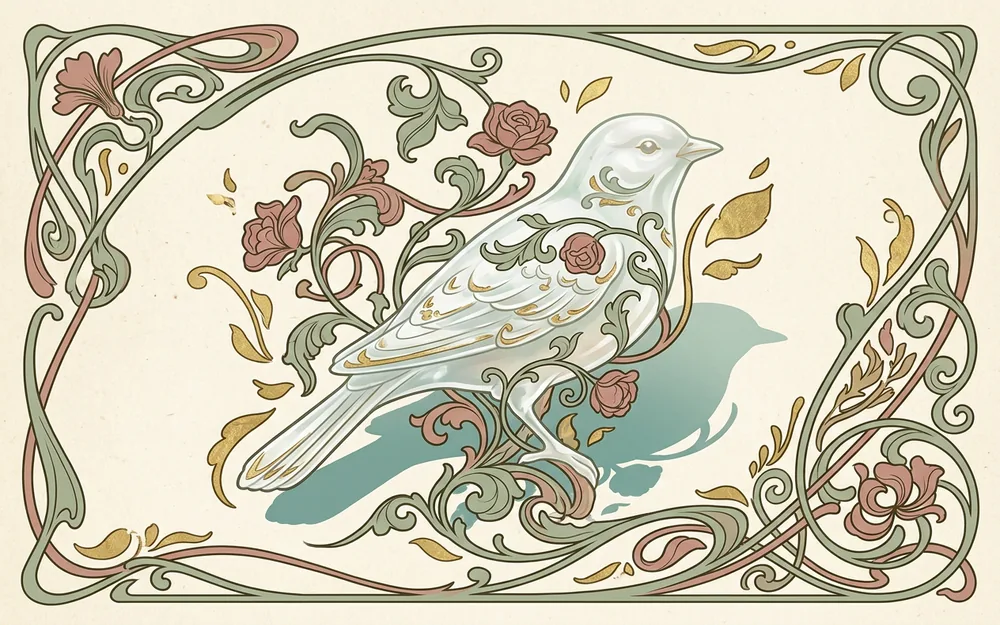
Image generated by AI
Four birds, one soul — and beauty as a position
Buyruk’s exhibition “Four Birds and One Soul” draws on a story in Rumi’s Masnavi, often summarised as four birds in the cage of flesh. In her telling, the peacock stands for pride, the crow for material attachment, the rooster for impulsive desire, and the goose for greed. The story’s point is not punishment but maturity: learning self-mastery so the soul can move with greater clarity. She folded those symbolic birds into her ongoing “Habitat” universe, where natural forms carry inner states.
“Because Some Things Are Still Beautiful” is connected differently. It is not a denial of reality, but a response to moments when clarity feels fragile, and language becomes insufficient. In those moments, attention to beauty, especially the quiet precision of the natural world, can become something to hold onto. For me, beauty is not decoration, but a conscious position.
— Melis Buyruk
She is careful about timing. The Dubai and Istanbul presentations, she says, reflected when each body of work was ready — including a personal stretch in China just before Contemporary Istanbul — more than a curatorial map drawn in advance.
Why porcelain, and why stay with it
Porcelain sits in collective memory: cups, plates, rituals. Buyruk keeps that familiarity visible. Fragility is not a flaw to hide; it adds vulnerability and emotional weight. The material demands delicacy, precision and attention — and those demands shape how viewers experience the work.
Technically, porcelain is unpredictable. It can crack while drying, break before firing, or fail in the kiln; high-temperature firing brings chemical change and shrinkage. Early accidents were frequent. Experience taught her to anticipate risk. Time in Jingdezhen, she notes, deepened that fluency. The more she understands the material, the freer she feels to imagine through it.
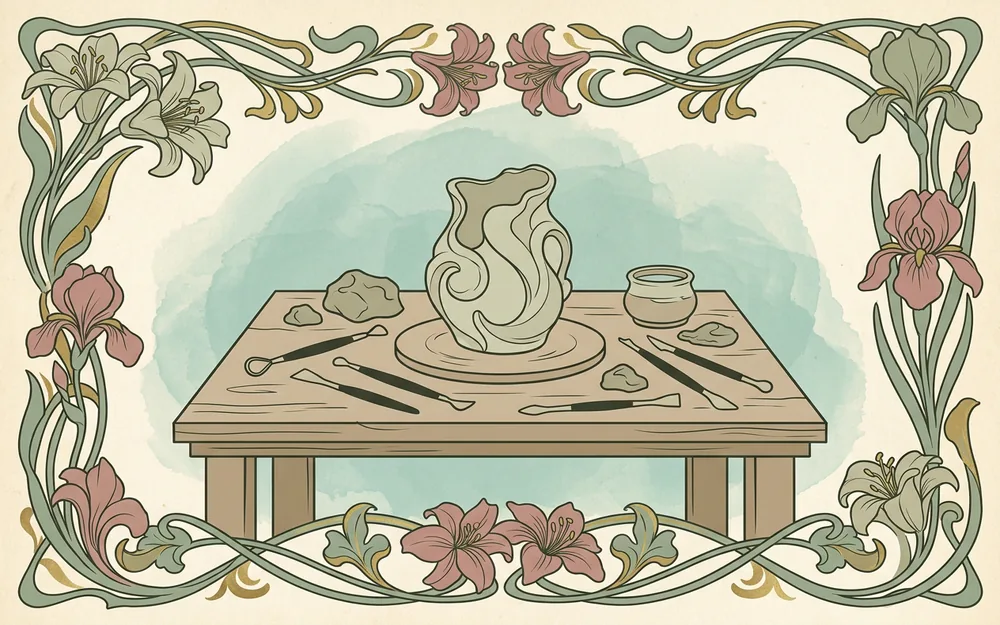
Image generated by AI
Ceramics move from craft corner to centre stage
Over the past fifteen to twenty years, Buyruk says, ceramics have shifted from a craft-centred corner toward the global contemporary art conversation. When she began working seriously with porcelain in the early 2010s, the medium was often labelled decorative and rarely listed as a category in open calls. Today artists from many disciplines engage clay. She finds that change encouraging for younger makers — and still insists trends never drove her choice. What feels most meaningful is a renewed respect for craftsmanship joined to conceptual thinking.
Recognition has followed: international shows spanning Asia and the Middle East, and a Louvre Abu Dhabi acquisition through Leila Heller Gallery. Looking ahead, she wants to deepen a new series — expanding colours and possibilities — while staying with porcelain rather than hopping media. She also hopes to keep building institutional visibility through exhibitions, fairs and biennials after recent presentations in Taiwan, South Korea, India and China.
Why it matters
Buyruk’s interview is a useful window onto a larger art-world shift: materials once filed under “craft” now carry myth, psychology and politics in museum collections. For general readers, the Melis Buyruk porcelain story also clarifies something practical — mastery is not the opposite of ideas. Kiln risk, shrinkage and years of repetition are how fragile forms become strong enough to hold a metaphor.
Related reading
For another TeaLamp piece on how art and science meet in the archive, see Herculaneum Scrolls: How Lead Ink Could Unlock Buried Texts.
Frequently asked questions
What is Melis Buyruk known for?
Intricate porcelain sculptures that mix botanical and animal forms with symbolic “Habitat” worlds, shown recently in the UAE and at Contemporary Istanbul, with work in collections including the Louvre Abu Dhabi.
What does “Four Birds and One Soul” refer to?
An exhibition series inspired by a Masnavi story in which four birds embody human traits that can weigh down an inner journey; Buyruk treats them as portraits of inner states rather than simple illustrations.
Did TeaLamp invent this interview?
No. It was conducted and published by Global Voices under CC BY. TeaLamp adapted framing and added editorial sections; quotes remain attributed to Melis Buyruk.










0 Comments