

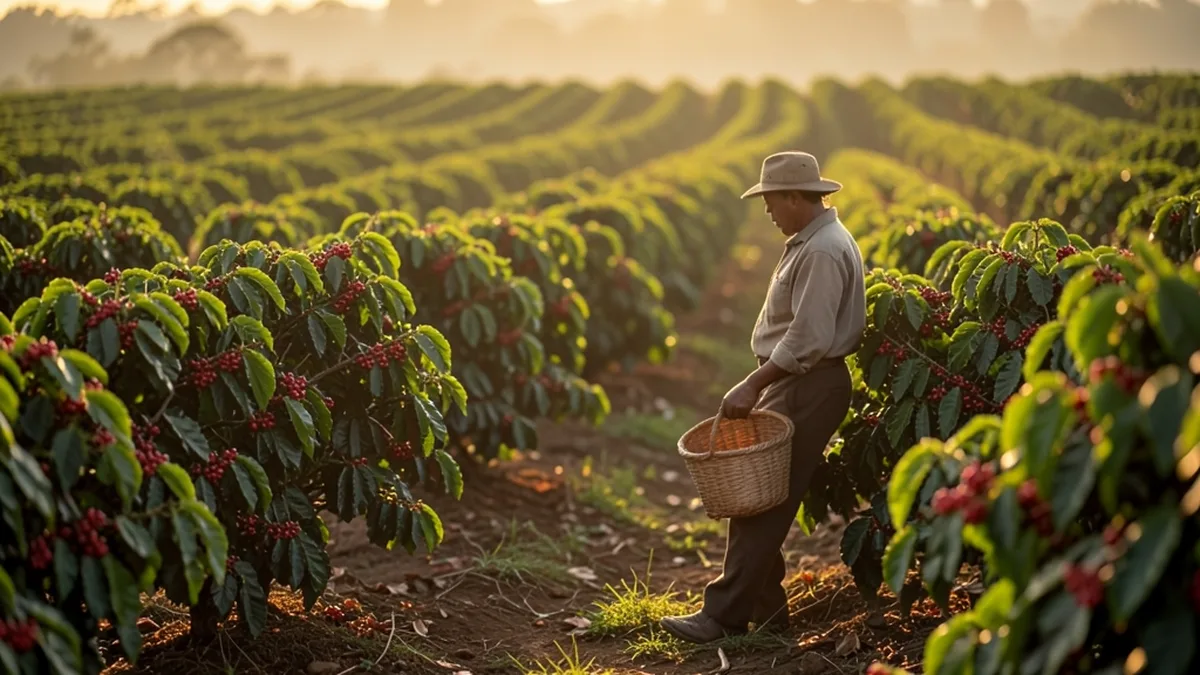
An original TeaLamp explainer based on the sources listed below. Prepared by the TeaLamp Editorial Team with the help of AI.
Why is coffee so expensive right now? In September, a pound of ground coffee in American stores averaged $9.33 — slightly more than a year earlier, and only a little below April’s all-time record of $9.72. Yet over that same year, the wholesale price of coffee beans fell by roughly a quarter. The shortage is over. The $9 pound is not. Here is where the money goes between the farm and your shelf.
Key takeaways on why coffee is so expensive
- The world coffee shortage has flipped into a surplus: the International Coffee Organization projects a record 183.6-million-bag harvest for 2025/26, the first surplus in five years.
- Brazil, the biggest producer, just confirmed a record crop of 67.6 million bags for 2026 — up nearly 20% from 2025.
- Wholesale bean prices have fallen hard from their 2025 peak, but the average US shelf price barely moved: $9.14 to $9.33 a pound over the year to September 2026.
- The gap comes down to timing and structure: roasters buy beans months ahead on locked-in contracts, green coffee is only a fraction of the retail price, and shelf prices fall far more slowly than they rise.
- Relief is likely coming, but slowly — expect months, not weeks, before the surplus reaches your cup.
The shortage that started it all
For two years, the coffee trade ran on a single story: not enough beans. Drought and frost damage in Brazil, a weak harvest cycle in Vietnam, and exchange inventories grinding down to multi-decade lows pushed arabica futures above $4 a pound at the peak. Roasters paid up, and the cost flowed straight to the shelf. By April 2026, the average American pound of ground coffee hit $9.72 — a nominal record in the Bureau of Labor Statistics series that goes back to 1980.
Then the weather turned. Good rains arrived across Brazil’s coffee belt and Vietnam’s Central Highlands, and the 2026 harvest came in heavy.
The surplus nobody priced in
The turnaround arrived in three official data releases. On September 10, the International Coffee Organization projected that 2025/26 world production rose 4.4% to a record 183.6 million bags while consumption slipped 0.9% to 180.6 million — a surplus of roughly 3 million bags, the first in five years.
Two weeks later, Conab, Brazil’s official crop agency, raised its 2026 estimate to 67.6 million bags, up from 66.7 million and the largest harvest in the history of its survey. Arabica output is expected to jump nearly 35% to 48.2 million bags. Vietnam, the world’s top robusta producer, shipped 13.7% more coffee in January–August than a year earlier, with its 2025/26 crop forecast at a four-year high.
Futures got the message: arabica contracts slid to multi-month lows, and by mid-October the December contract sat near 295 cents a pound — roughly 30% below the 2025 highs. The beans are moving again. So why isn’t your coffee cheaper?
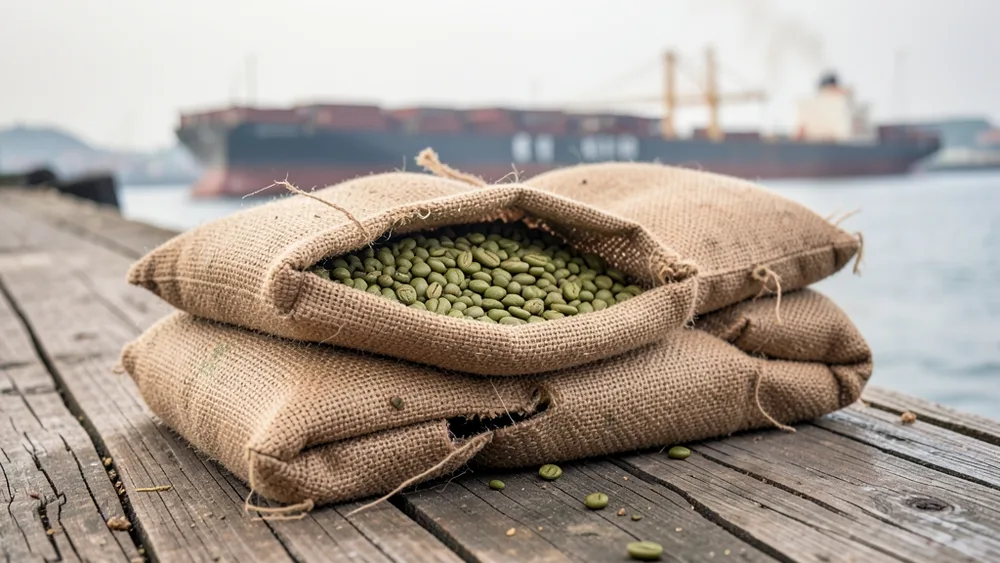
Green coffee bound for roasters worldwide. Image generated by AI.
Why the shelf price lags the bean price
The first reason is the calendar. Big roasters do not buy beans at today’s price; they buy months ahead through futures contracts and hedges that locked in the expensive 2025 market. The coffee on the shelf this morning was priced, in effect, last winter. When bean prices fall, the cheaper beans take months to work through the pipeline — and when bean prices rise, as they did in 2024 and 2025, the increase arrives much faster. Economists call this pattern “rockets and feathers”: prices shoot up like rockets and drift down like feathers.
The second reason is arithmetic. Green coffee is only one ingredient in the price you pay. Roasting, packaging, freight, warehouse space, labor, and the retailer’s margin all sit between the farm gate and the shelf — and none of those got cheaper this year. Even at the peak, the bean itself was well under half the retail price. A 25% fall in futures might shave only a few percent off the finished cost.
The third reason is the biennial cycle. Coffee trees naturally alternate between heavy and light years, and 2026 is an “on” year for Brazil — the record crop was partly the cycle doing its job, amplified by good weather. Buyers know the next “off” year is always around the corner, so nobody prices as if the good times are permanent.
Where your $9.33 actually goes
Think of the journey in four toll booths. The farmer gets the smallest cut of the retail price — often well under a tenth for commodity-grade beans. Exporters, shippers, and importers take their slice moving 60-kilo bags from Santos or Ho Chi Minh City to roasting plants. The roaster — who bought those beans on contracts signed during the expensive months — adds roasting, grinding, packaging, and branding. Finally the retailer adds its margin on the shelf.
Each booth sets its price looking backward at its own costs, not forward at the futures screen. That is why, from September 2025 to September 2026, wholesale bean prices fell about 23% while the shelf price rose about 2%. The two prices live in different years.

The finished cup — the priciest step of the journey. Image generated by AI.
Why it matters
Coffee is the rare commodity almost everyone buys weekly, which makes it a perfect window into how prices actually work. The lesson is broader than one grocery aisle: wholesale markets move fast, but the prices we pay move on contracts, costs, and caution — and they remember the bad years longer than the good ones. The surplus is real, and it should eventually pull shelf prices down. But “eventually” in coffee means the spring, not next week.
Related reading
For another look at the hidden costs inside everyday groceries, read our piece on your supermarket’s carbon numbers — and why they may not even be measured.
Frequently asked questions
Will coffee prices come down in 2027?
Probably, but gradually. The record 2026 harvest and healthy rains for the 2027 flowering season point to continued good supply, and futures have already fallen. But roasters are still working through expensive contracted beans, and the biennial cycle means 2027 is likely an “off” year in Brazil. Expect slow easing, not a collapse.
Why do coffee prices rise fast but fall slowly?
Roasters buy beans months ahead at locked-in prices, so cost increases hit quickly (nobody wants to sell at a loss) while decreases wait for old contracts to expire. Green beans are also only part of the retail price — roasting, packaging, freight, and retail margins rarely fall. The result is the classic “rockets and feathers” pattern.
Is the coffee shortage really over?
On paper, yes: the International Coffee Organization projects the first global surplus in five years for 2025/26, and Brazil and Vietnam both report strong harvests and exports. Exchange stockpiles are rebuilding. The remaining risk is weather — one bad frost in Brazil’s coffee belt can rewrite the story in a weekend, which is why buyers stay cautious.
Sources
- Barchart — “Supply Risks Support Coffee Prices” (Oct 19, 2026) (ICO surplus projection, Conab 67.6M-bag estimate, Vietnam exports, ICE inventory levels)
- TradingView / Barchart — “Coffee Prices Fall as Conab Raises its Brazil Coffee Production Estimate” (Sept 2026) (Conab revision details, arabica/robusta split, futures reaction)
- in2013dollars.com — Coffee price inflation series (Bureau of Labor Statistics data) ($9.33/lb September 2026 average, $9.72 April 2026 record, long-run price history)
- Barchart — “Coffee Prices Slide on Optimism Over Global Coffee Crops” (Oct 15, 2026) (Brazil/Vietnam weather, flowering-season rains, export flows)










0 Comments