Skip to content
Home > Magazines > Global Voices > Chabacano Poetry: A New Anthology in Asia’s Spanish Creole

Chabacano Poetry: A New Anthology in Asia’s Spanish Creole

Oct 17, 2026 | Global Voices, Interviews

By Mong Palatino
Originally published October 13, 2026
© Source: Global Voices, by Mong Palatino, published October 13, 2026. Adapted under CC BY 3.0.
Reading level: Easy
⏱ Estimated reading time: 4 min

Listen to this article

Narrated with AI · 5 min

0:005:18
Illustration of a black boulevard lamppost beside a cloud of magenta bougainvillea flowers above a turquoise sea

Summary

Mong Palatino reports for Global Voices’ Rising Voices on Sombra y Luz, an anthology of 23 poems by 10 writers in Chabacano, the Spanish-based creole of Zamboanga City in the Philippines. Editor Jerome Herrera, creator of the Bien Chabacano blog, explains why most contributors leaned on Spanish words, why he hopes readers stop putting the language in a box, and why finding enough Chavacano poets is the biggest challenge for a second volume.

Please rate this article at the end of the page.

Originally published by Mong Palatino in Global Voices (Rising Voices) on October 13, 2026, under a Creative Commons Attribution 3.0 licence (see the Global Voices attribution policy). Adapted here under that licence: condensed and restructured, with the editor’s interview answers summarised and briefly quoted, new headings, and TeaLamp key takeaways, context and FAQ added. Only a short excerpt of the poem is quoted, in English translation. The photograph from the original post was not reused. Global Voices and the interviewee do not endorse TeaLamp. Prepared by the TeaLamp Editorial Team with the help of AI.

A new anthology of Chabacano poetry, Sombra y Luz, gathers 23 poems by 10 writers in Asia’s only Spanish-based creole language. Speaking to Global Voices, its editor Jerome Herrera — creator of the Bien Chabacano blog — explains what the book is for, why its poems lean on Spanish, and why he hopes it will open up debate about how the language should be written.

Key takeaways on the Chabacano poetry anthology

  • Chabacano is one of about 170 languages of the Philippines and is widely spoken in Zamboanga City, on Mindanao.
  • Sombra y Luz (Shadow and Light) was launched in July 2026 with 23 poems by 10 authors.
  • Its themes are mainly love, family and Zamboangueño identity.
  • Most contributors used many Spanish words to sound formal and poetic — a choice Herrera accepts but wants to discuss.
  • The biggest challenge, he says, is finding enough Chabacano poets to keep going.

What is Chabacano?

Spain ruled the Philippines for more than three centuries, but Spanish stayed largely the language of the colonial elite, friars and officials. Only in Zamboanga, in the far south, did a Spanish-based creole take root as an everyday language. Today it is often called Chavacano de Zamboanga; both spellings, Chavacano and Chabacano, are in use.

From a blog to a book

Herrera’s blog Bien Chabacano, which documents and promotes the language, was featured on Global Voices in 2018. In 2026 he invited writers to submit poems for an anthology, which became Sombra y Luz. He says the project shows that Chavacano is still alive “as a literary language” and that its speakers are creating new writing to preserve it.

The title points to contrasts in a changing city. The cover shows an American-era lamppost of the kind found on the Zamboanga boulevard, framed by bougainvillea — a nostalgic nod to the days when Zamboanga was known as the Ciudad de Flores, the City of Flowers.
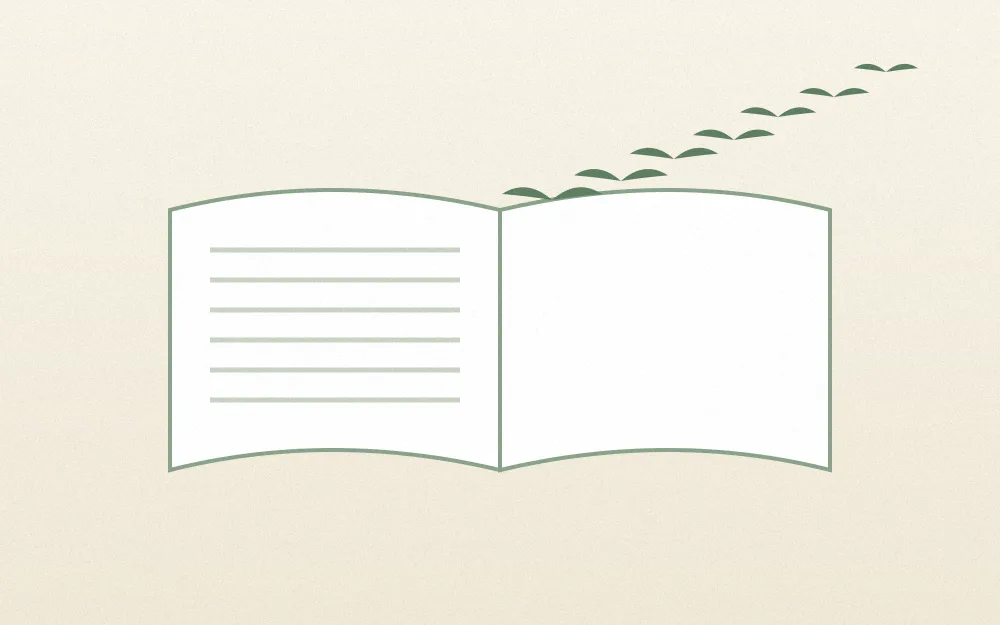
Illustration of an open book with lines of text, and a trail of small green birds rising from its right-hand page

Image generated by AI

Birds, flowers and the City of Flowers

One poem by Jayline Gonzales-Barredo celebrates the birds and flowers of the city. In the English translation published with the original article, it begins: “Birds that fly and flutter freely, / Perched upon the branches of trees.” Later lines turn to night, when many birds can be seen “sitting on wires” above the streets.
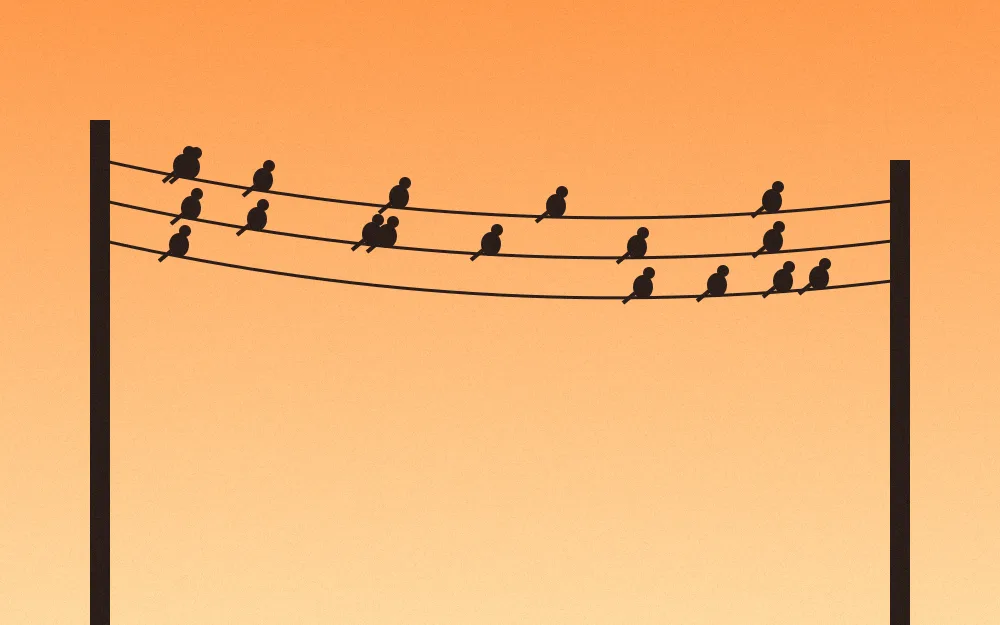
Silhouettes of small birds perched on three sagging electric wires between two poles against an orange sunset sky

Image generated by AI

How Spanish should Chabacano poetry sound?

Herrera notes a long-running debate. Some readers want Chabacano poetry full of Spanish vocabulary; others want it to sound exactly like everyday speech. Most submissions leaned heavily on Spanish, which he thinks writers use to make their work feel more formal and poetic. Because this is poetry, he decided it was fine to present the language “in an idealistic manner.”

His wider aim is acceptance of many styles. For a long time, he says, people have been “putting Chabacano inside a box,” and he hopes the anthology starts conversations and makes readers open to different ways of writing it. A poem titled “Escribi Chavacano, Conversa Chabacano” makes the same point, using both spellings and calling on poems, essays, fables and elders’ stories to show a language that lives when it is written, spoken and shared.

Keeping the momentum

In a separate interview with Asymptote Journal, cited by Global Voices, Herrera said the hardest part is sustaining the project, since Chavacano poets are hard to find. He hopes this is only the beginning, with a second volume to follow.

Why it matters

Small languages survive when people use them for everything — including literature. A printed anthology gives Chabacano writers a shared platform, a record for future readers and a reason for others to write. The debate Herrera describes, between a literary register and everyday speech, is one that many minority and creole languages face as they move onto the page.

Related reading

For another TeaLamp interview about keeping a language alive, read Musah Fuseini: Dagbani Wikipedia and Language Activism. The original report, with the full poem in Chabacano and English, is on Global Voices.

Frequently asked questions

Where is Chabacano spoken?

Mainly in Zamboanga City in the southern Philippines, where it developed as Asia’s only Spanish-based creole language.

Who edited Sombra y Luz?

Jerome Herrera, creator of the Bien Chabacano blog, compiled the anthology, which was launched in July 2026.

Why are there two spellings, Chavacano and Chabacano?

Both spellings are accepted and used; the anthology’s poem “Escribi Chavacano, Conversa Chabacano” deliberately uses both.


If you find a typo in this article, please highlight it and press Ctrl+Enter to let us know.

Rate this article

Rate this article

One star → five stars

(No ratings yet)

Article author: Mong Palatino

Mong Palatino is a Filipino activist and writer and a longtime regional editor for Southeast Asia at Global Voices.

If you find a typo in this article, please highlight it and press Ctrl+Enter to let us know.

0 Comments

Submit a Comment

Your email address will not be published. Required fields are marked *

A white farmhouse with green gables beside a red dirt road and apple trees in blossom
Type: Book8 min

Anne of Green Gables Summary: Imagination Finds a Home

Anne Shirley arrives by mistake at Green Gables, where Matthew and Marilla wanted a farm boy. Montgomery’s 1908 classic, retold.

Two straw sun hats, sunglasses and plain sunscreen tubes on pale linen in bright sunlight
Type: Article8 min

How Climate Change Affects Children’s Skin Health

Children’s skin faces heat, ticks, smoke and floodwater as the climate warms. Here is what the science says, and the simple habits that protect young skin.

Glowing carved lantern with a jagged grin on a stone cottage windowsill, with a misty moonlit bog outside
Type: Article7 min

Jack-o’-Lantern History: From Carved Turnips to Pumpkins

Jack-o’-lantern history begins with marsh lights and an Irish trickster called Stingy Jack, then moves from carved turnips to the pumpkins of North America.

Sunlit bedroom at dawn with a knitted blanket, a cup of herbal tea and a small brass alarm clock on the nightstand
Type: Article8 min

Fall Back Time Change: How to Keep Your Sleep on Track

The fall back time change gives you an extra hour, but it can still nudge your body clock. Here is what happens to your sleep and how to adjust gently.

An empty meeting room in warm morning light, with a long wooden table, chairs, notebooks and plants
Type: Article10 min

The Soft Skills Crisis AI Is Quietly Creating

AI can draft, summarise and answer, but it cannot practise judgment for us. Grace Lordan warns that the human skills we stop using may quietly fade.

A painter's studio at dawn with a large abstract canvas in deep blue and ochre, pigment bowls and brushes on a table
Type: Article9 min

Jaume Amigó: Painting Silence, Memory and the Sea

Jaume Amigó paints slowly in a fast world. His abstract paintings, shaped by Japan and Morocco, give emptiness as much weight as form.

Painting of a small corner bakery glowing with warm light at dawn on a wet cobblestone street lined with potted plants
Type: Article9 min

Business Survival Rates: How Long Do New Businesses Last?

What official US data say about business survival rates: how many new businesses make it through year one, five years and a decade, and what the numbers miss.

Carved wooden toy owl beside a smartphone, crayons and picture cards on a sunny classroom table
Type: Article8 min

An Online Safety Game Built for Kids With Down Syndrome

A small team in Bosnia and Herzegovina built SafeClick, an online safety game where a friendly owl helps children with Down syndrome practise staying safe on the web.

Laboratory glassware with blue liquids on a bench, suggesting cell signalling research
Type: Article9 min

How Cell Messages Could Change the Way We Treat Aging

Cell messages could change how doctors treat aging. GPCR signals link many body systems, and researchers are studying whether treating those networks could help several diseases at once.

A golden mealworm larva on wheat bran in warm morning light
Type: Article9 min

Can Mealworms Change Their Minds? A Tiny Test of Purpose

Mealworm larvae learned where food was, then changed course when it turned bitter. Their tiny test suggests flexible thinking in a very small animal.

Feedback
Feedback
Any additional comments?
Next
If you would like a reply, enter your email
Back
Submit
Thank you for your feedback.

Spelling error report

The following text will be sent to our editors: