

Originally published by Thom Sliwowski in The Public Domain Review on May 28, 2026, under a Creative Commons Attribution-ShareAlike 4.0 licence. Adapted here: condensed and restructured, with new headings, TeaLamp key takeaways, a timeline, context and FAQ. This adapted text is published under the same CC BY-SA 4.0 licence. Historical illustrations are public domain. The Public Domain Review and the author do not endorse TeaLamp. Prepared by the TeaLamp Editorial Team with the help of AI.
For several centuries, European scholars argued over the Vegetable Lamb of Tartary: a plant said to grow small, woolly lambs from its pods or on top of its stem. In an essay for The Public Domain Review, writer Thom Sliwowski follows the legend from medieval travel books to Enlightenment encyclopaedias — and explains the three main theories about what people were really describing.
Key takeaways about the Vegetable Lamb of Tartary
- The legend grew from an ancient category called the “zoophyte” — organisms that seemed half plant, half animal, such as corals.
- The Travels of Sir John Mandeville (1357–1371) first illustrated the lamb-bearing plant for European readers.
- Scholars from Cardano and Scaliger to Francis Bacon debated it; most doubted it, yet kept retelling it.
- Explanations include fern roots shaped to look like lambs (Hans Sloane), a euphemism for luxury astrakhan fleece (Engelbert Kaempfer) and a garbled rumour about cotton (Henry Lee).
- The myth survives in a scientific name: the woolly tree fern Cibotium barometz.
Zoophytes: between plant and animal
Ancient naturalists already struggled with living things that blurred categories. Aristotle observed that nature passes gradually from lifeless to living, but insisted that rooted, motionless animals existed only in water. His student Theophrastus was unsure whether coral was a stone or a plant; Pliny the Elder later placed it between plants and animals. This middle category — the zoophyte — gave medieval writers room to imagine a land creature that was both a lamb and a plant.
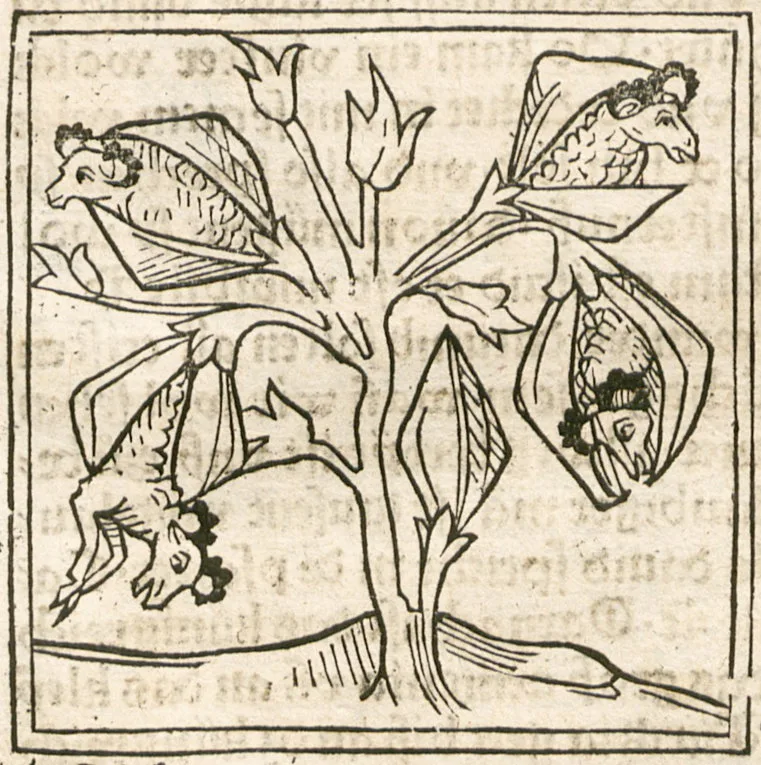
Woodcut from a German edition of The Travels of Sir John Mandeville, Augsburg, 1481. Public domain. Source: The Public Domain Review.
Mandeville’s gourds full of lambs
The fantastical Travels of Sir John Mandeville describes a kingdom where gourd-like fruits, cut in two when ripe, contain a little beast “as though it were a little lamb without wool” — and claims the narrator ate both fruit and animal. Manuscript illustrations show branching plants whose pods hold tiny, cheerful lambs. Parts of the story may come from the friar Odoric of Pordenone, who returned to Europe in 1330 with a similar tale and compared it to another myth: geese said to hatch from trees by the Irish Sea.
Sceptics who kept the story alive
By the 16th century, doubts were loud. In 1557 the Italian polymath Gerolamo Cardano asked how a heartless plant could bleed, though he allowed that a sensing plant might exist in a dense enough climate. Julius Caesar Scaliger mocked him — while adding vivid details of his own: a three-foot plant that grazes the grass around its stem, tastes like crayfish, bleeds real blood and is hunted only by wolves. He ended by asking how four legs could grow from one stalk.
In 1605 the French botanist Claude Duret described a single full-sized lamb on each plant, citing old texts rather than his own observation. That reliance on hearsay was typical of natural histories of the period, which mixed description with fable.
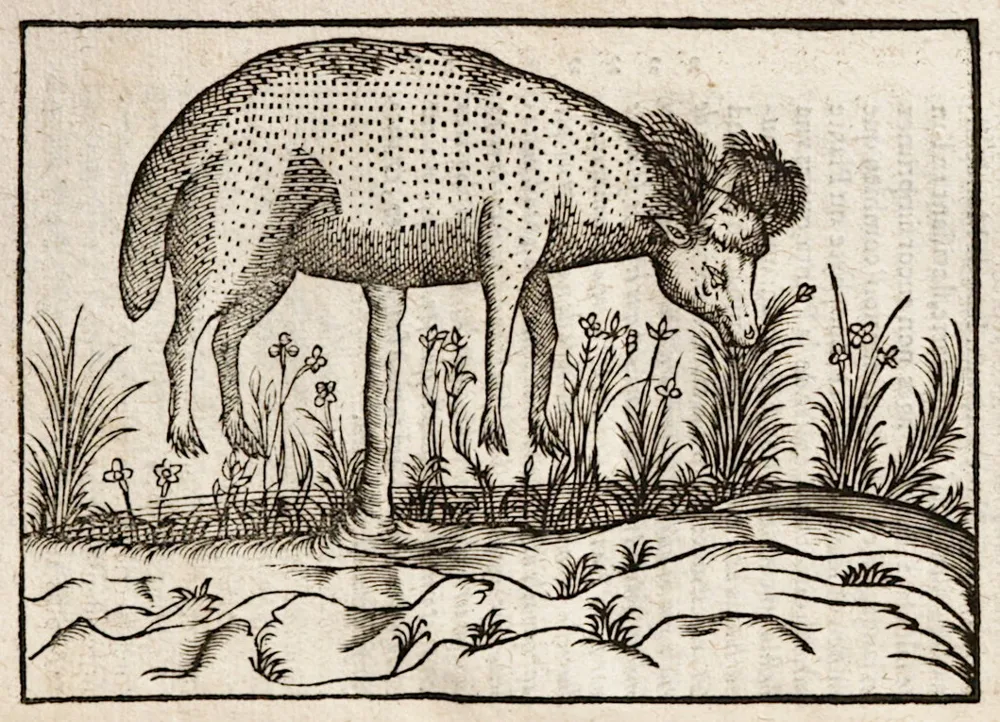
Woodcut of the vegetable lamb from Claude Duret’s Histoire admirable des plantes (1605). Public domain. Source: The Public Domain Review.
Three explanations for the legend
Later naturalists offered rational answers, and the essay traces each one.
- A crafted fern root. In 1698 Sir Hans Sloane examined a dried “lamb” shipped from Fort St. George (today’s Chennai). Its legs looked exactly like fern leaf stalks and its “wool” was fern hair. He concluded it had been shaped by hand to imitate a lamb.
- A polite cover story. The German physician Engelbert Kaempfer, who searched for the creature in Persia from 1683, suggested the legend disguised the source of astrakhan — the extremely soft, curly fleece of newborn or unborn Karakul lambs.
- Cotton. In 1887 the English naturalist Henry Lee argued that early reports of “wool growing on trees” were exaggerated into “lambs growing on trees.” He traced the idea back to Herodotus, who described trees bearing fleeces finer than sheep’s.
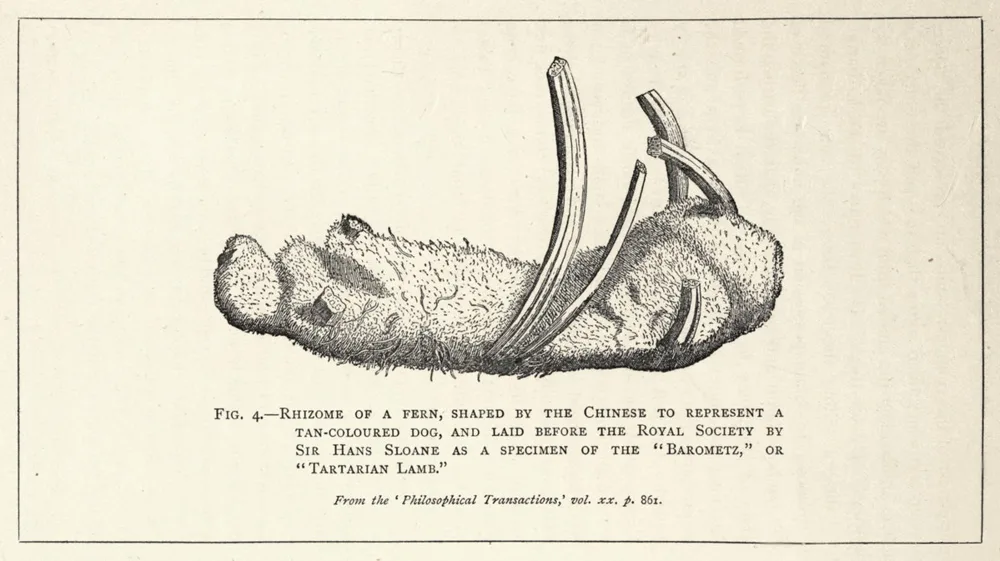
Sloane’s “vegetable lamb”, a fern rhizome shaped to look like an animal, from Henry Lee’s The Vegetable Lamb of Tartary (1887). Public domain. Source: The Public Domain Review.
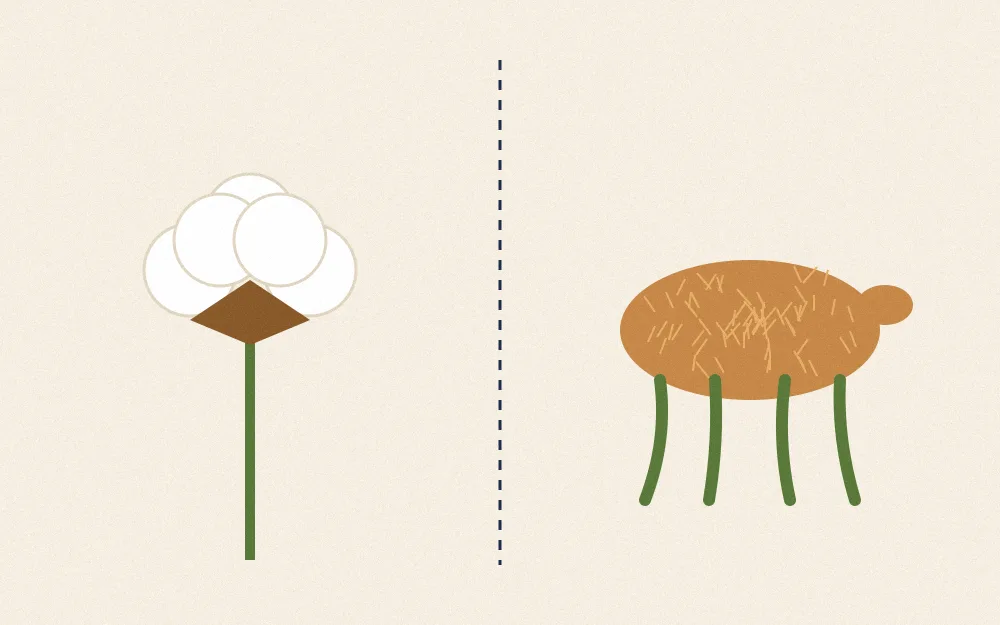
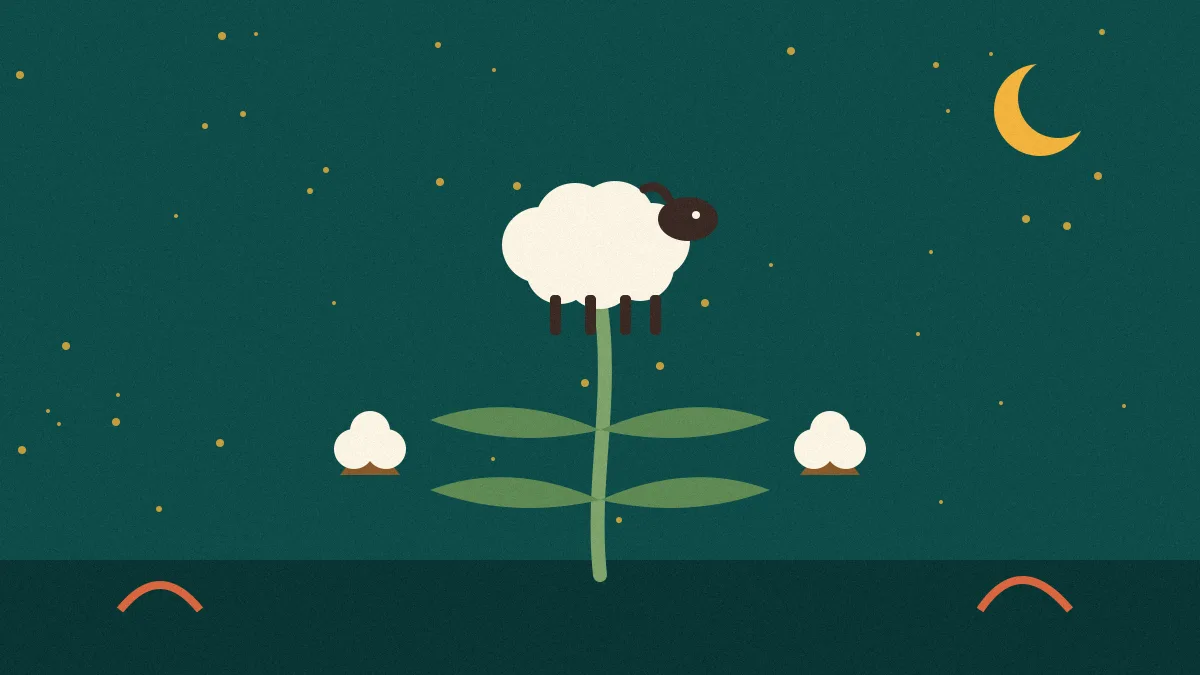
Image generated by AI
A short timeline
- c. 350 BCE: Aristotle describes the blurred line between plants and animals.
- 1330: Odoric of Pordenone returns to Europe with the lamb-gourd story.
- 1357–1371: The Travels of Sir John Mandeville illustrates the plant.
- 1557: Cardano and Scaliger debate the creature in print.
- 1605: Claude Duret publishes his single-lamb version.
- 1698: Hans Sloane identifies a “specimen” as a shaped fern root.
- 1753: Linnaeus’s Species Plantarum gives the woolly fern the name now known as Cibotium barometz.
- 1887: Henry Lee publishes his cotton theory.
Why it matters
The Vegetable Lamb shows how knowledge travelled before modern science: through hearsay, illustrated copies and objects in cabinets of curiosity. Diderot’s Encyclopédie later used it as a lesson in judging evidence — ask who actually saw the thing, and what they risked by saying so. That checklist is still useful in an age of viral images.
Related reading
For another curiosity adapted from The Public Domain Review, read Louis Pope Gratacap and the First T. Rex in Fiction. Sliwowski’s full essay, with many more historical images and notes, is on The Public Domain Review.
Frequently asked questions
Was the Vegetable Lamb of Tartary real?
No. No such plant-animal exists. Surviving “specimens” were dried fern roots shaped to look like small animals.
What is a borametz?
“Borametz” (also boramets or barometz) is one of the old names for the legendary lamb-plant. It survives in the scientific name of the woolly fern Cibotium barometz.
Where was Tartary?
Tartary was a vague European name for a large region of Central and North Asia; Duret placed the lamb between the Volga and Ural rivers, near the Caspian Sea.









0 Comments