

Originally published by Chris Koerner in Diff on January 15, 2026, under a Creative Commons Attribution-ShareAlike 4.0 licence. Adapted here under that licence: the interview has been condensed and rewritten in our own words, with short attributed quotations; the original images are not reused. Diff and the author do not endorse TeaLamp. Prepared by the TeaLamp Editorial Team with the help of AI.
The new face of Wikipedia’s 25th birthday was not designed by an agency. The Wikipedia birthday mascot known as Baby Globe began as a casual sketch on a commuter train, drawn with a phone stylus by a volunteer editor who had simply raised his hand at a local meetup. What followed is a small lesson in how open culture works: one person’s pastime became a symbol seen by millions.
Key takeaways on the Wikipedia birthday mascot
- Jonathan Ferreira, a Bay Area radio-frequency engineer who edits Wikipedia as BaduFerreira, drew the first sketch on his BART commute to pass the time.
- He had volunteered at his first Bay Area Wikipedians meetup, which was planning screen-printed shirts and posters for Wikipedia Day 2025.
- His design — a globe with arms and legs in a 1920s rubber-hose cartoon style — grew from a phone doodle into a clean vector file made in Inkscape.
- The community named it “Baby Globe,” and it became the official mascot of Wikipedia’s 25th anniversary, appearing in a Birthday Mode feature and on the wikipedia.org portal.
- Ferreira’s advice to newcomers: follow what you are personally interested in, because good things can come from doing something just because you enjoy it.
A hand raised at a meetup
Jonathan Ferreira had been editing Wikipedia alone for about three years when he decided he wanted to meet the community behind it. He started attending meetups of the Bay Area Wikipedians user group. His very first meeting happened to be a planning session for Wikipedia Day 2025, and the group wanted memorabilia: screen printing, posters, small keepsakes. Someone asked for a volunteer to draw something.
“I figured that I want to get involved in the community so let me draw something,” Ferreira recalled. “We can screen print it and I never imagined that it would grow to the extent that it has.” He raised his hand, promised to come up with a design, and then had to follow through.
Fifteen minutes at a time
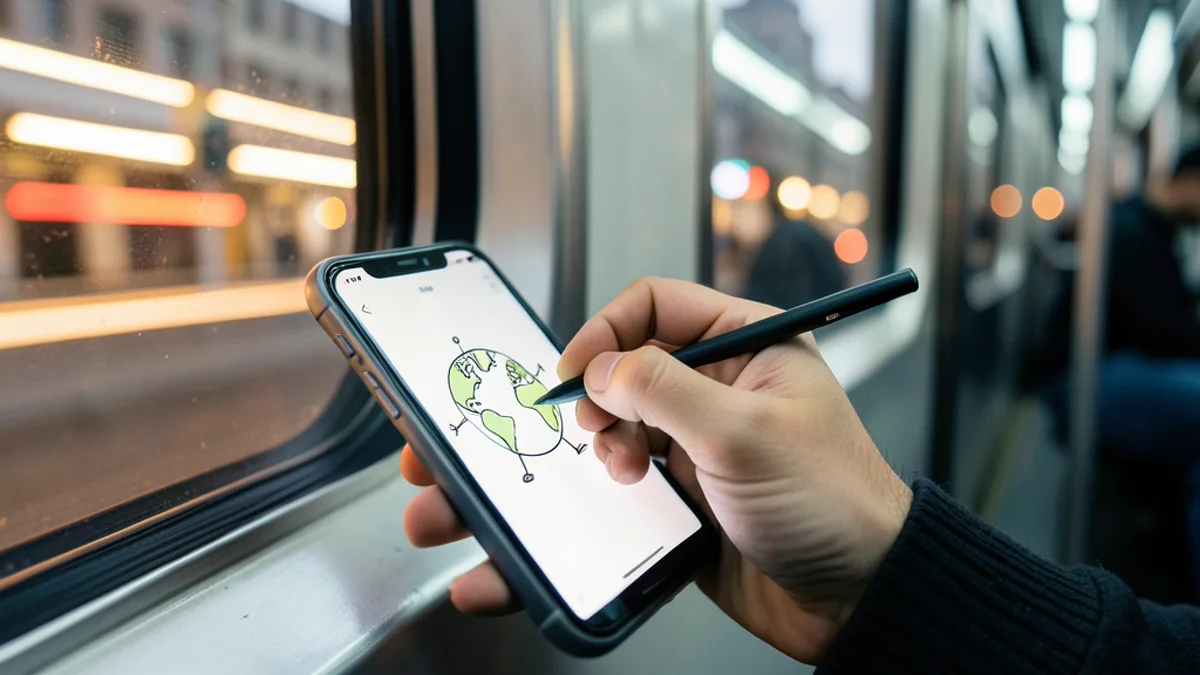
Ferreira is a radio-frequency engineer — a specialisation within electrical engineering — and he commutes in and out of the city every day on BART. He carries a phone with a stylus and a small drawing app, and sketching was his way of filling the ride. “I would just like, doodle on my phone,” he said. “I have my earbuds in and 15 or 20 minute commute.”
Little by little, one direction in his doodles started to feel right, and he kept refining it in his spare time at home. When the sketch was ready for a cleaner finish, he imported it into Inkscape, the free vector-graphics program, and converted it into an SVG file. Ferreira has no formal design background. He credits a childhood spent on the family computer in the 2000s — learning file formats, finding freely accessible tools — for giving him the practical skills to move a drawing from a phone screen to a finished file.
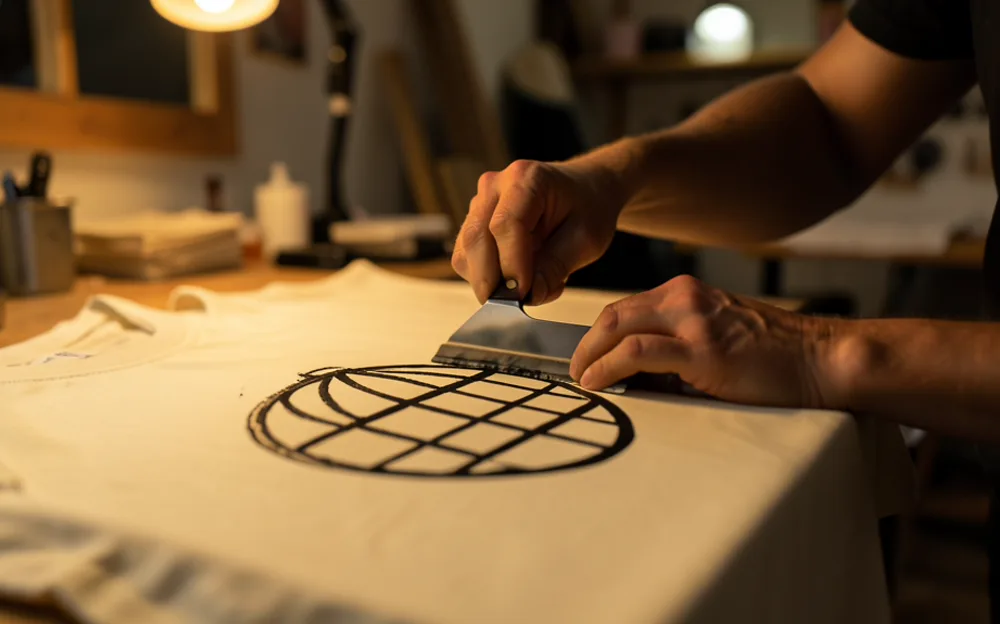
The sketch, screen printed for Wikipedia Day memorabilia. Image generated by AI.
Why a globe with arms and legs
His first ideas tried to capture the Bay Area: redwoods, a seagull, maybe a landmark. None of them felt right. “I didn’t want it to feel too Oakland, too San Jose, or too San Francisco,” he explained. So he stepped back from anything place-specific and went Wikipedia-specific instead: the familiar globe, given arms and legs.
The look came from the 1920s rubber-hose animation style — the bouncy, loose-limbed cartoons he had been noticing in logos and designs. He played with the Wikipedia logo until the character, as he puts it, “kinda became what it became.”
It never had a name. Ferreira always called it “the little mascot” while sending drafts to his girlfriend for feedback. Then people started saying “Baby Globe,” and the name stuck. “I never envisioned a name,” he said, “but it’s cool that a name came up and kind of stuck.”
Baby Globe goes global
The sketch kept evolving. What began as art for a local Wikipedia picnic — printed on t-shirts, tote bags, and once even on the side of someone’s jacket — caught the attention of the wider movement. Baby Globe was chosen as the official mascot for Wikipedia’s 25th anniversary in January 2026.
As part of the celebrations, the mascot stars in Birthday Mode, a special feature bringing playful visual surprises to several language versions of Wikipedia. It also appears on the wikipedia.org portal page, which still receives millions of views a month. A doodle made to kill time on a train is now one of the most-seen images in the open-knowledge world.
For Ferreira, the best part is philosophical. “It is cool that the idea of sharing something under a free and open license is that you can take it and adapt and iterate on it,” he said. Something he drew without intending it to represent anything at all took on a life of its own — and that, he added, is exactly what the movement is about.
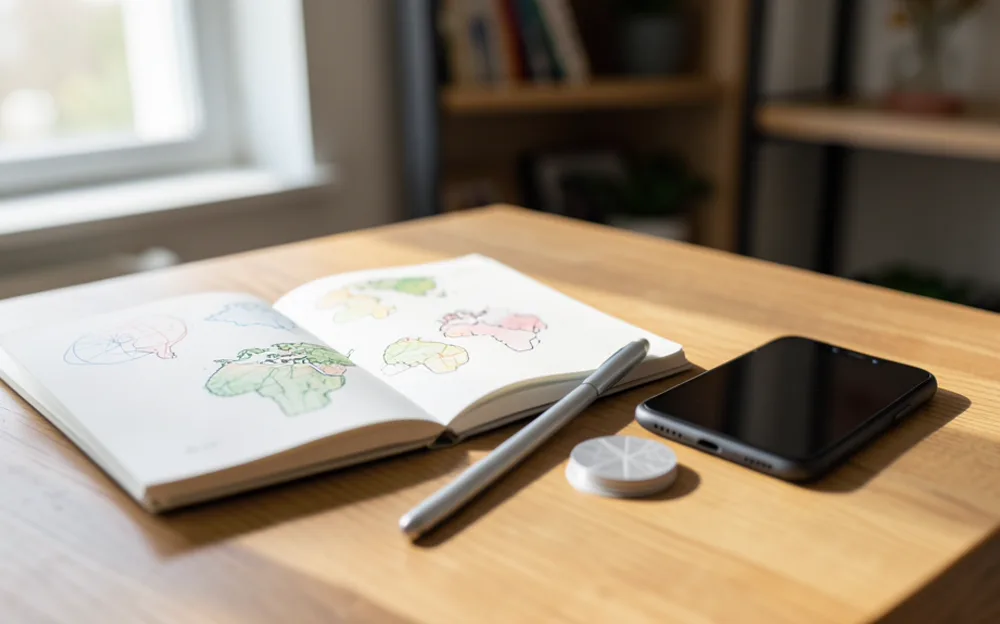
Where the mascot began: doodles, a stylus and a phone. Image generated by AI.
Why it matters
Anniversary campaigns are usually handed to design studios. This one was handed, in effect, to a commuter with a stylus. Baby Globe is a reminder that Wikipedia is built the same way it is illustrated: by volunteers doing small things they enjoy, in 15-minute stretches, without knowing where any of it will land. The next thing you draw on your way to work probably will not become a global mascot — but then again, neither was this one supposed to.
Related reading
For another story about a volunteer whose Wikipedia work grew into something larger, read Musah Fuseini: Dagbani Wikipedia and Language Activism.
Frequently asked questions
Who drew the Wikipedia 25th birthday mascot?
Jonathan Ferreira, a Bay Area radio-frequency engineer and volunteer Wikipedia editor known as BaduFerreira. He sketched the first version on his phone during his BART commute and later refined it in Inkscape.
Why is it called Baby Globe?
The name came from the community, not from Ferreira — he never named the character himself and always called it “the little mascot” until “Baby Globe” caught on.
Where does the mascot appear?
Baby Globe is the official mascot of Wikipedia’s 25th anniversary. It appears in Birthday Mode, a celebratory feature on several language versions of Wikipedia, and on the wikipedia.org portal.
Can anyone use or adapt the mascot?
That is the spirit of the project: it was shared under a free and open licence, so people can take it, adapt it, and iterate on it — which is exactly how a picnic doodle became a global mascot.










0 Comments