


An original TeaLamp reading list. The notes on each book are our own; short quotations come from public-domain texts on Project Gutenberg. Prepared by the TeaLamp Editorial Team with the help of AI.
Classic nature books are perfect for slow autumn evenings: they ask nothing of you except attention, and they hand back a calmer, wider way of seeing. Here are five that have shaped how readers think about wild places, from an English village garden to a German beech forest, each with a short note on what makes it special and who will enjoy it most.
Key takeaways on classic nature books
- Nature writing grew from patient, local observation, often of a single parish, pond or farm.
- The five books below span more than two centuries, from 1789 to 2015.
- Three are in the public domain and free to read online; the two modern titles are widely available in libraries.
- Each one suits a different mood, from gentle science to quiet philosophy.
The Natural History of Selborne, by Gilbert White (1789)
Gilbert White was a country clergyman who spent most of his life in the village of Selborne in Hampshire, England, watching everything that moved. His book is a collection of letters to two fellow naturalists, full of swifts and swallows, hedgehogs, crickets and the weather. Published by his brother in 1789, it has stayed in print ever since, with hundreds of editions.
What makes it lovable is White’s curiosity about small things. In a famous passage, Gilbert White wrote: “Earth-worms, though in appearance a small and despicable link in the chain of nature, yet, if lost, would make a lamentable chasm”, a very modern-sounding point about ecology. Best for: readers who like to dip in and out, a letter at a time, and anyone who keeps a garden notebook.
Walden, by Henry David Thoreau (1854)
In 1845 Henry David Thoreau built a small cabin by Walden Pond, near Concord, Massachusetts, and lived there for two years and two months, growing beans, reading, walking and writing. In Walden he folds that time into the cycle of a single year, from summer to the thaw of spring. His reason for going became one of the most famous lines in American writing, as Thoreau wrote: “I went to the woods because I wished to live deliberately, to front only the essential facts of life.”
The book mixes nature notes with reflections on work, money and simplicity, and its chapter on the pond in winter is wonderfully still. Best for: readers in a thoughtful mood who enjoy a book that mixes ideas and landscape, and who are happy to read slowly.
My First Summer in the Sierra, by John Muir (1911)
John Muir, who was born in Scotland and grew up in Wisconsin, spent the summer of 1869 working with a shepherd’s party that drove a flock of sheep up into California’s Sierra Nevada. His diary from that season, published decades later, records the high meadows, granite domes, waterfalls and wildflowers of the Yosemite region with almost giddy delight.
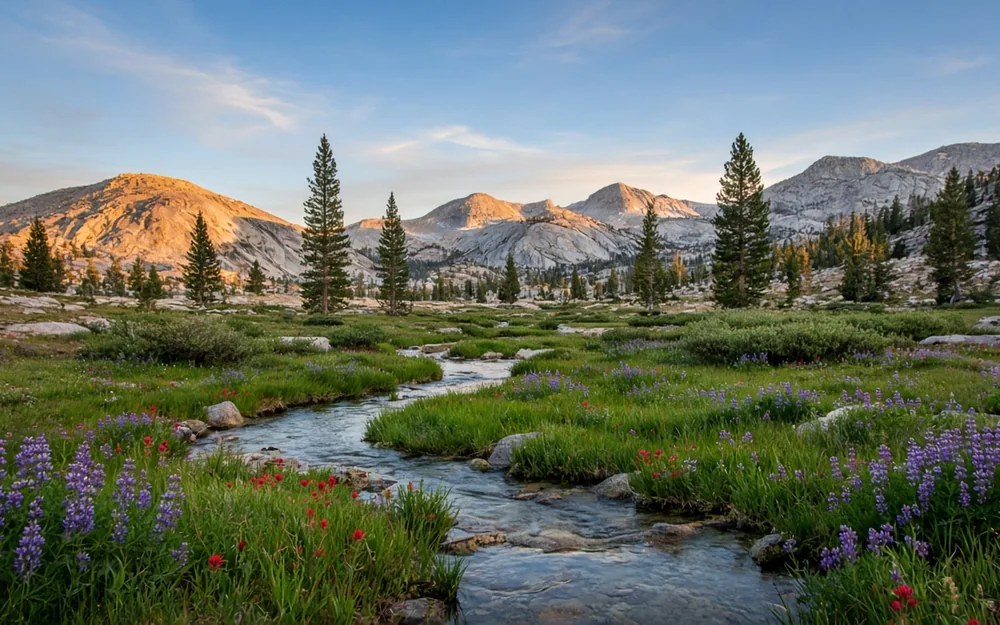
A high Sierra meadow in evening light. Image generated by AI.
Muir writes like someone falling in love with a place day by day, and the dated entries make it easy to read in short sittings. He went on to become one of the best-known voices for protecting America’s wild lands. Best for: hikers, mountain lovers and anyone who wants a dose of pure enthusiasm.
A Sand County Almanac, by Aldo Leopold (1949)
Aldo Leopold was an American forester and ecologist who bought a worn-out farm in Sauk County, Wisconsin, and spent weekends there with his family, restoring the land. The first part of A Sand County Almanac follows that farm month by month, from geese returning in spring to sawing up a lightning-killed oak in February. Later essays build towards his idea of a “land ethic”: the belief that people belong to a community that includes soils, waters, plants and animals.
The book was edited by his son Luna and published in 1949, a year after Leopold died, with drawings by the wildlife artist Charles W. Schwartz. It is now seen as a landmark of the conservation movement. Best for: readers who enjoy short, beautifully made essays and want to think about how we care for land.
The Hidden Life of Trees, by Peter Wohlleben (2015)
Peter Wohlleben is a German forester who wanted to share what he had noticed during years of looking after woodland. Published in German in 2015 and in English in 2016, The Hidden Life of Trees became an international bestseller. In short, friendly chapters he describes how trees in a beech forest seem to support their neighbours, sharing sugars through roots and the fungal threads that link them underground, and how they respond to drought, insects and age.
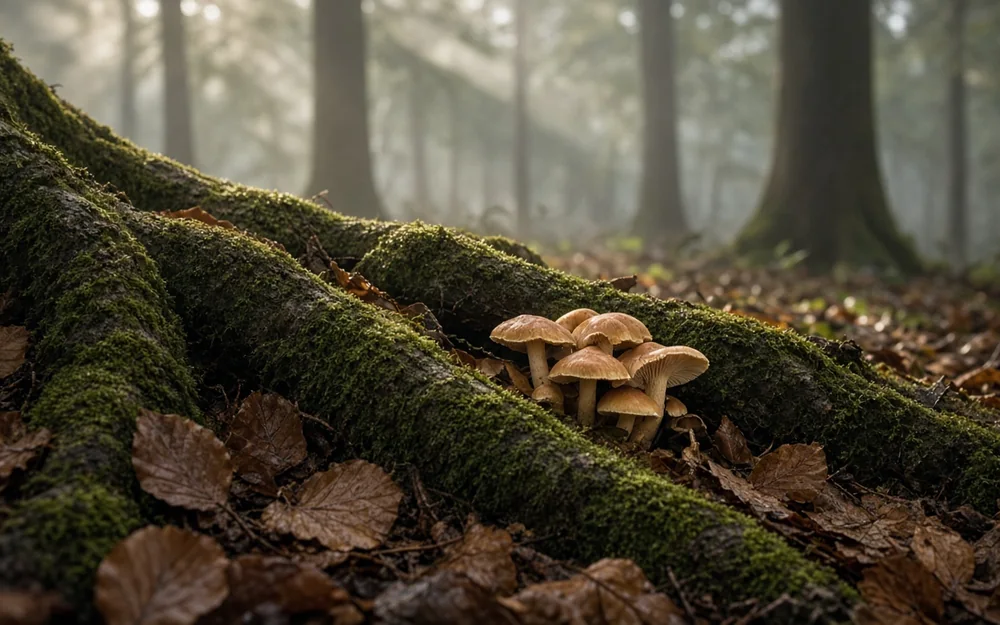
Mossy roots and mushrooms on a beech forest floor. Image generated by AI.
Wohlleben writes about trees almost as if they were families, which makes the science easy to picture. Some of his bolder interpretations are still being studied and discussed by forest scientists, and many readers enjoy following those debates after finishing the book. Best for: newcomers to nature writing and anyone who walks in the woods and wonders what is going on beneath their feet.
How to enjoy these books
- Go slowly. Most of these books were written over seasons, and they read best a chapter or a letter at a time.
- Read outside if you can. A park bench or a window seat with a view of a tree makes the observations come alive.
- Keep a notebook. Gilbert White and Thoreau both kept careful records; jotting down what you see on your own walks is a lovely way to join in.
Why it matters
These classic nature books share one quiet message: paying close attention to a small piece of the world changes how we treat the whole of it. They helped shape the science of ecology and modern conservation, and they remain some of the most calming company a reader can find.
Related reading
If The Hidden Life of Trees appeals, you may enjoy our story on a giant new fungus species from Chinese forests, or a walk through the forested floodplains of Congaree National Park.
Frequently asked questions
Which of these classic nature books is best to start with?
The Hidden Life of Trees is the easiest modern starting point. For a classic, try The Natural History of Selborne, which you can open at any letter.
Can I read any of these books for free?
Yes. The Natural History of Selborne, Walden and My First Summer in the Sierra are in the public domain in the United States and are free on Project Gutenberg. The two modern books are often available through public libraries.
What is nature writing?
Nature writing is non-fiction about the natural world that blends close observation and facts with personal reflection, often centred on one place over time.
Sources
- The Natural History of Selborne by Gilbert White, Project Gutenberg
- Walden by Henry David Thoreau, Project Gutenberg
- My First Summer in the Sierra by John Muir, Project Gutenberg
- A Sand County Almanac, Wikipedia overview
- The Hidden Life of Trees, Wikipedia overview
- The Natural History and Antiquities of Selborne, Wikipedia overview








0 Comments