

Key takeaways
- Vitamin B12 keeps your nerves working and your red blood cells healthy — and only microbes can make it. Plants, animals and people cannot.
- Adults need about 2.4 micrograms a day, mostly from meat, fish and dairy. Vegans and many older adults are the groups most likely to run low.
- Your liver stockpiles B12, so a shortfall can take months or even years to show up — then arrive as tiredness, nerve trouble or a form of anemia.
- Microbes trade B12 like currency: in one survey of 11,000 bacterial species, 86% used it but only 37% could build it from scratch.
- New research links low B12 to weaker bones in older adults — but as with most B12 findings, the link is association, not proof of cause.
Vitamin B12 is one of the strangest nutrients on the planet. Your body needs it to build DNA, keep your nerves insulated and make healthy red blood cells — yet neither you, nor any animal, nor any plant can manufacture it. Every molecule of B12 you will ever absorb was built by a bacterium, in one of the most complex chemical assembly lines in nature. Here is what this hidden microbial vitamin does, who runs short of it, and why it is back in the news.
What vitamin B12 actually does for you
B12 works behind the scenes as a helper for a handful of enzymes. One of them, methionine synthase, keeps the amino acid homocysteine in check. When B12 is scarce, homocysteine builds up — and high homocysteine is associated with heart and vessel problems, though the link is association, not proven cause.
The jobs that matter most are closer to home. B12 helps maintain the myelin sheath, the insulation around nerve fibres, and it is essential for making red blood cells that are the right size and shape. Without enough of it, the nervous system misfires and the blood suffers. The symptoms — fatigue, tingling, memory trouble — are easy to blame on aging or stress, which is one reason deficiency is missed.
What happens when you run low
Severe B12 deficiency can cause megaloblastic anemia, a form of anemia in which red blood cells grow too large to work properly, along with nerve damage, vision problems and mood changes, according to the Mayo Clinic. But a shortfall rarely announces itself loudly. Your liver keeps a reserve that can last months or even years, so a diet that quietly lacks B12 can take a long time to catch up with you.
Three groups are most likely to run low. Vegans, because plant foods contain no B12. Older adults, because the gut absorbs B12 less efficiently with age — the Mayo Clinic notes that people over 50 may need 10 to 12 micrograms a day to get what they need from food, well above the standard adult target of 2.4 micrograms. And anyone whose digestive system cannot absorb it well, for example after certain stomach surgeries or with conditions like pernicious anemia. If you fall into one of these groups, the sensible step is to talk to your doctor about testing rather than guessing.
Why only microbes can make it
B12 is a monster of a molecule: a ring structure built around a single cobalt atom, assembled in roughly 30 chemical steps. No animal or plant genome carries the machinery. Only some bacteria and archaea do — and most of them do not even bother.
A landmark survey of about 11,000 bacterial species found that 86% of them use B12-dependent enzymes, yet only 37% could build the vitamin from scratch. Another 17% carry a partial toolkit and salvage the missing pieces from their surroundings. In other words, microbes run a busy trade in B12: makers supply the rest, and the rest have evolved to depend on them. Your gut hosts trillions of these traders, though most of the B12 made there is absorbed too far down the intestine to help you — the vitamin you use comes from food.
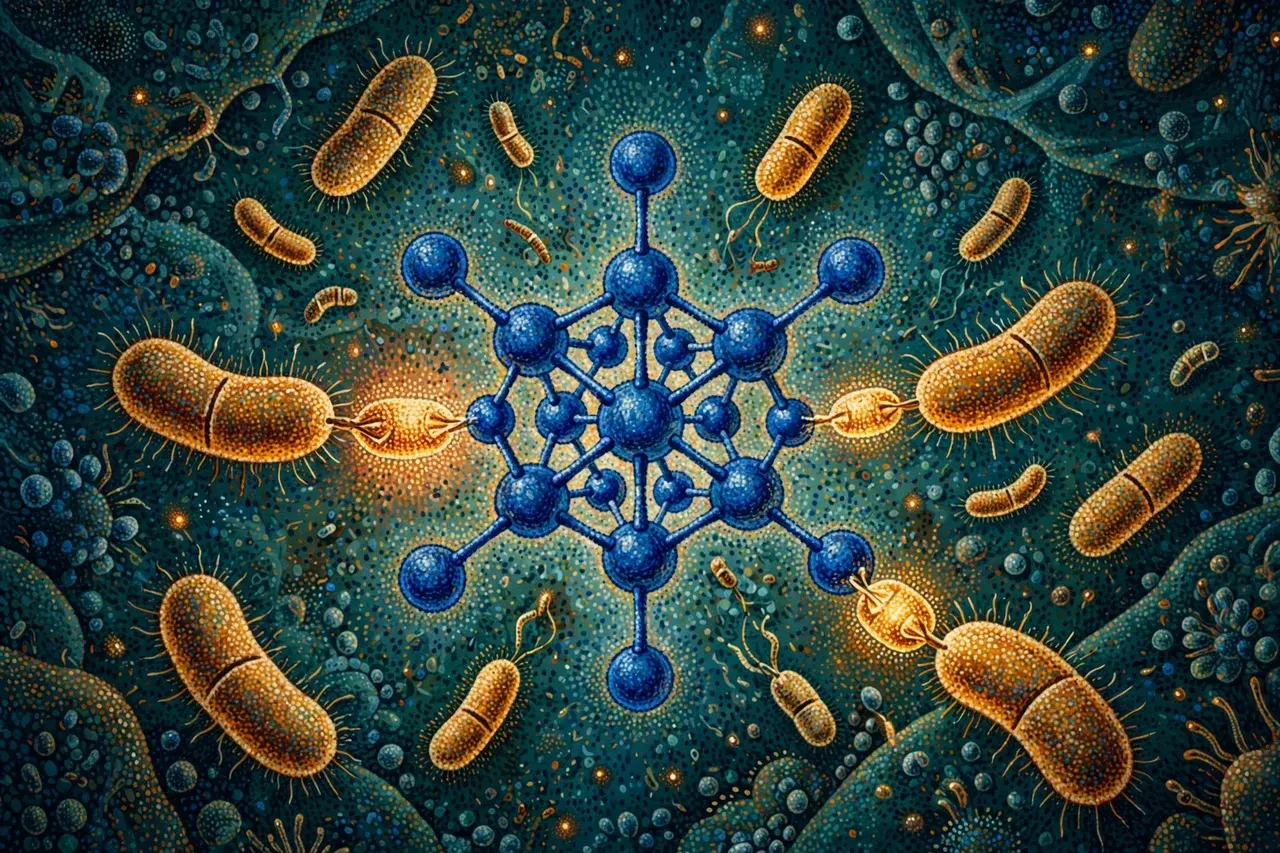
Microbes trade vitamin B12 like currency: most bacteria need it, but few can make it. Image generated by AI.
From cow stomachs to your plate
The route from microbe to human runs through animals. The bacteria living in a cow’s rumen brew B12 around the clock, and it ends up in the meat and milk. Fish, eggs and dairy do the same job. Plants, growing in soil full of B12-making bacteria, still contain essentially none of the vitamin — they do not take it up. Seaweed and fermented foods are sometimes marketed as exceptions, but their B12 content is unreliable and often in forms the body cannot use.
Cooking and processing shave the numbers down further: heat and light destroy some of the vitamin, which is one more reason a varied diet with regular animal foods, or a supplement for those who avoid them, matters. Because manufacturers cannot easily synthesise B12 in a lab — the molecule is too complex for cheap total synthesis — they grow B12-making bacteria in fermentation tanks, essentially hiring the original manufacturers.
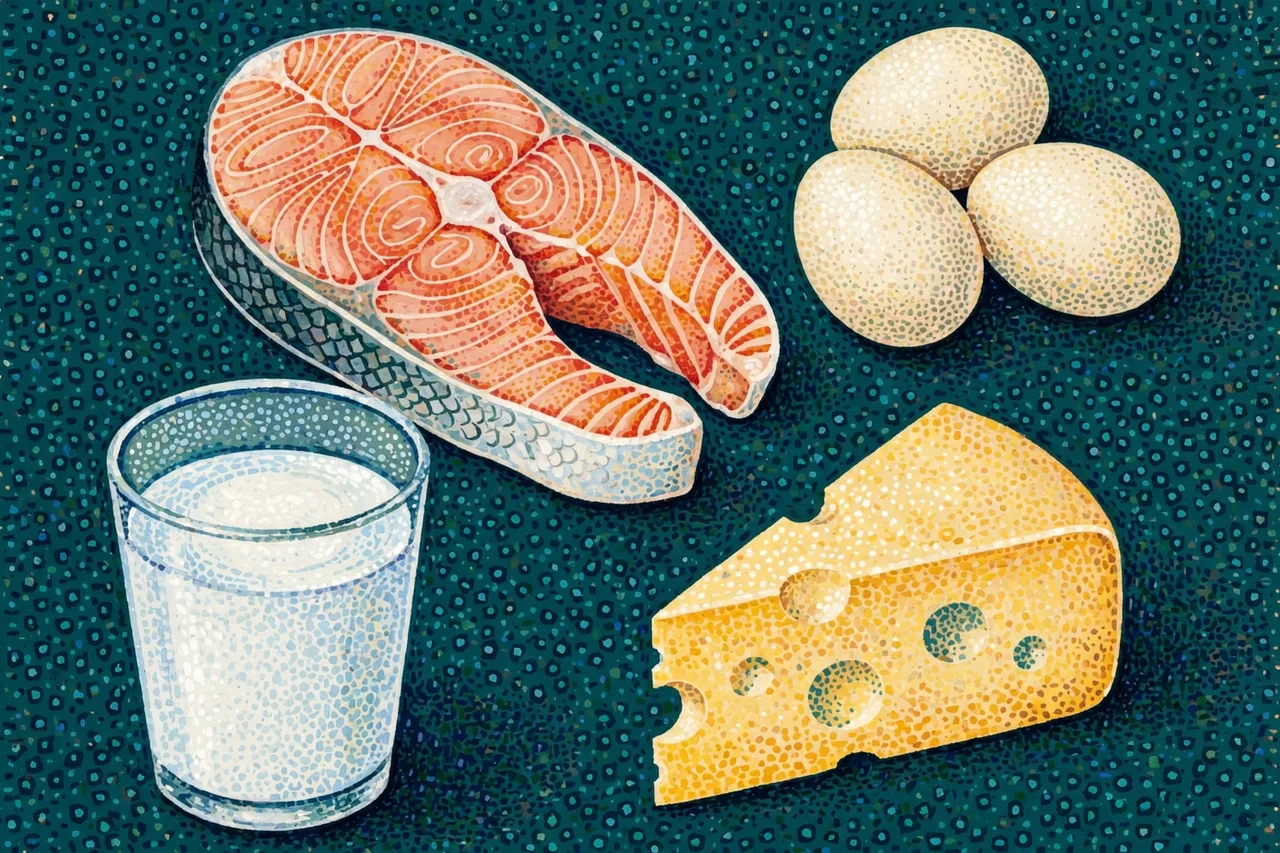
Meat, fish, eggs and dairy are the reliable food sources of vitamin B12. Image generated by AI.
Why it matters
Vitamin B12 is having a moment. A Scientific Reports study published in early October 2026 linked B12 deficiency to a 33% higher long-term fracture risk in more than 115,000 adults over 50 — an association, the researchers caution, not proof that low B12 causes broken bones. Australia’s National Nutrition Week, running October 12–18, is flagging the mouth as a window onto nutrient shortfalls, including B12. And as plant-based diets grow, awareness of B12 is becoming a routine part of vegan health guidance. An old vitamin, built by ancient microbes, keeps finding new ways to matter.
Related reading
Food does more than fuel you. Read how the food on your plate can help lower stress levels, on the growing science of nutrition and mood.
Frequently asked questions
Can I get vitamin B12 from plants?
No. Plants do not make vitamin B12 and do not absorb meaningful amounts from soil. The only reliable food sources are animal products — meat, fish, eggs and dairy — plus fortified foods and supplements.
How long does it take for a deficiency to show up?
Often months or even years. Your liver stores a reserve of B12, so a diet that lacks it can seem fine for a long time. When symptoms do appear — fatigue, tingling, memory trouble — they creep in gradually, which is why at-risk groups benefit from testing rather than waiting.
Does cooking destroy vitamin B12?
Heat and light destroy some of it, so heavily cooked or long-stored foods carry less than fresh ones. The loss is partial, not total — a normal varied diet still delivers plenty, but it is one more reason the numbers on a nutrition label are a ceiling, not a floor.
I am vegan. What should I do?
Do not rely on vegetables, seaweed or fermented foods — their B12 is unreliable. Use fortified foods or a B12 supplement, and talk to your doctor about getting your levels tested. B12 supplements are inexpensive and widely available, and there is no official upper limit for how much is safe.
Sources
- Frontiers for Young Minds: “The Role Of Vitamin B12 for Human Health and the Microscopic Life Behind It,” by Thomas Le and Annika C. Mosier, published October 1, 2026 (adapted under CC BY)
- Mayo Clinic: Vitamin B-12 supplement information
- Harvard Health: Getting enough vitamin B12
- Shelton et al., 2019: Uneven distribution of cobamide biosynthesis in bacteria, ISME Journal
- Halczuk et al., 2023: Vitamin B12 multifaceted in vivo functions, Nutrients
- O’Leary & Samman, 2010: Vitamin B12 in health and disease, Nutrients
- Medical Dialogues: B12 deficiency and fracture risk bulletin, October 5, 2026








0 Comments