

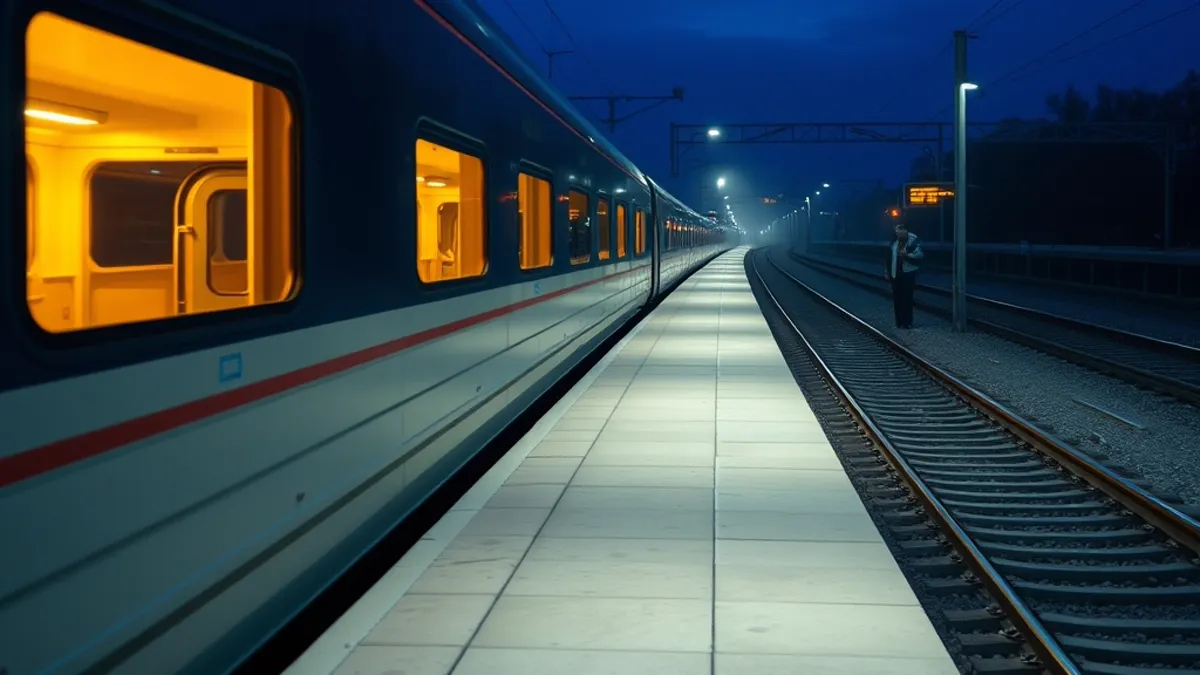
An original TeaLamp explainer based on the sources listed below. Prepared by the TeaLamp Editorial Team with the help of AI.
There is a particular pleasure in going to sleep in one country and waking up in another. Europe’s night trains offer exactly that: you board in the evening, fall asleep to the rocking of the carriage, and step onto the platform in the morning with the whole day ahead of you. For years, these trains looked like a leftover from another age, squeezed by cheap flights and fast daytime rail. Now they are coming back, with new trains, new operators, and a new kind of passenger who would rather sleep through the journey than rush through it.
Key takeaways on night trains
- Europe’s night trains are growing again after decades of decline, led by Austria’s ÖBB and its Nightjet network.
- The new Nightjet trains, built by Siemens, carry 254 passengers in seven cars and include small lockable Mini Cabins for solo travellers.
- A traveller-owned cooperative, European Sleeper, relaunched the Paris to Berlin night train in March 2026 after the old service ended.
- The revival is uneven: some routes have closed and fleets have been trimmed, so the network is growing in some places and shrinking in others.
- A night train saves a hotel night and turns travelling time into sleeping time, which is the heart of its appeal.
The trains that refused to die
Night trains were once the ordinary way to cross Europe. Before budget airlines and high-speed lines, a sleeper from Vienna to Rome or Paris to Berlin was simply how the journey was done. Then, through the 2000s and 2010s, route after route closed. Airlines were cheaper, daytime trains were faster, and the old sleeping cars were expensive to run and maintain. By the mid-2010s, the night train looked finished.
One operator disagreed. Austria’s national railway, ÖBB, kept its Nightjet network going and slowly expanded it, picking up routes other railways dropped. The bet was that passengers cared about more than speed: a night train lets you travel while you sleep, arrive rested, and skip both the airport and a hotel bill. That bet paid off. ÖBB has said it wants to double the number of Nightjet passengers by 2030, and night trains have become one of the most talked-about corners of European travel.
A hotel room that moves
The clearest sign of the revival is the new generation of Nightjet trains, built by Siemens and in service since December 2023. Each seven-car train carries up to 254 passengers and can run at up to 230 kilometres per hour. The interiors were redesigned from scratch, and the most talked-about feature is the Mini Cabin: a compact, lockable sleeping pod for one person, with a mirror, a reading light, a small table and space for a bag. It answers the oldest complaint about sleeper travel, which is sharing a compartment with strangers.
The rest of the train follows the same idea. Sleeping compartments now hold two people instead of four, with their own washrooms in the higher categories. Couchette cars keep the classic four-berth layout for travellers on a budget, and there is step-free boarding, an accessible compartment, room for bicycles and sports gear, Wi-Fi and charging points. The new trains first ran between Hamburg and Vienna and Hamburg and Innsbruck, and have since spread corridor by corridor, reaching Amsterdam services in May 2025 and Zurich routes through 2026. The feeling on board is less like a train and more like a small moving hotel.
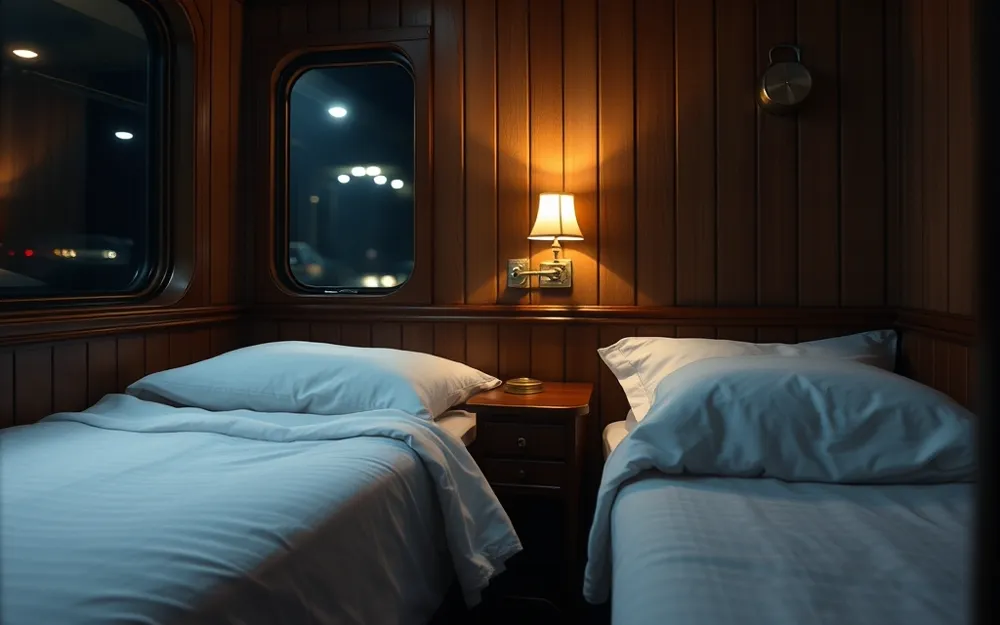
A sleeper cabin at night, made beds and a warm lamp. Image generated by AI.
The cooperative that bought its own railway
The most unusual part of the revival has nothing to do with big state railways. European Sleeper is a Dutch-Belgian cooperative owned in part by its own passengers, who buy shares from 280 euros. It launched its first route, the Good Night Train between Brussels, Berlin, Dresden and Prague, in 2023, and carried more than 230,000 passengers on some 750 trains in its first two years.
Its biggest test came when the old Paris to Berlin night train ended in December 2025. The service, run by ÖBB with French and German partners, had carried plenty of passengers, but the French government withdrew its financial support and the route closed. European Sleeper stepped in, put the new service together in about six months, and launched Paris to Berlin on 26 March 2026, running three nights a week through Brussels. By launch day, 25,000 tickets had already been sold. A Brussels to Milan night train followed in September 2026, with an Amsterdam extension planned for 2027. It is a small operator by railway standards, but it has shown that a night train can be built from the passengers up, not just handed down by a ministry.
Why the revival is uneven
None of this means the night train has won. The same period that brought new trains also brought cuts. The Paris route’s closure showed how fragile these services are when public funding disappears. Trade press has reported that ÖBB’s new-train order was trimmed from 33 sets to 24, with money redirected to daytime services. Engineering works, high track-access charges and the sheer difficulty of running one train across several countries’ timetables all push against expansion. Some corridors gain a shiny new train while others lose their service entirely.
A night train crosses a moonlit viaduct above misty hills. Image generated by AI.
That unevenness matters for anyone planning a trip. A route that exists today may not exist next year, and a popular service can sell out weeks ahead. The revival is real, but it is not a smooth line upward. It is a network being rebuilt piece by piece, corridor by corridor, and sometimes a piece falls away.
Why it matters
The night train’s appeal is not only romantic. A journey that would otherwise be a short flight becomes a night’s sleep, and the emissions of a train journey are far below those of flying the same distance. For travellers, the arithmetic is simple: the ticket replaces a hotel night, the morning is free, and the journey itself becomes part of the holiday rather than a chore to endure. For cities, night trains spread tourism beyond the airports and into station neighbourhoods. And for railways, they prove that comfort and time can matter as much as speed.
Whether the revival lasts will depend on unglamorous things: steady funding, simpler cross-border booking, and enough new trains to meet demand. The European Commission has been working on both, with pilot cross-border services and plans for one-ticket booking across operators. If those pieces fall into place, falling asleep in one country and waking in another may become as ordinary as it once was.
Related reading
For another story about old infrastructure that refuses to disappear, read Why Lighthouses Still Steal Our Hearts.
Frequently asked questions
Are night trains cheaper than flying?
Not always. A seat or couchette can be very affordable, especially booked early, while a private sleeping compartment costs more. But the fare also replaces a hotel night, and you arrive in the city centre in the morning, which often makes the total trip cheaper than it first looks.
Will I actually sleep on a night train?
Most travellers do, though the first night can feel strange. A Mini Cabin or a sleeping compartment gives you a real bed and a door that locks. Earplugs and an eye mask help, and the gentle rocking suits some sleepers better than others. Book a lower berth if climbing worries you.
Do I need to book early?
Yes, on popular routes. Sleeper and couchette places are limited, and the best-known services sell out weeks ahead in summer. Booking early also usually means a lower fare.
Sources
- ÖBB and Siemens Mobility present the interiors of the Nightjets of the new generation, ÖBB press release
- More night trains, more connections, more comfort, ÖBB press release, 5 September 2023
- European Sleeper overcomes the ‘crazy challenge’ to relaunch Paris–Berlin night train, Railway Gazette International, 30 March 2026
- European Sleeper to relaunch Paris–Berlin night train, Railway Pro
- Netherlands Rail Travel Enters New Era as Amsterdam Night Trains Bring Private Cabins to Vienna, Zurich and Beyond, Travel and Tour World
- ÖBB’s Nightjet Project Revival Hits Turbulence, Construction Review Online








0 Comments