

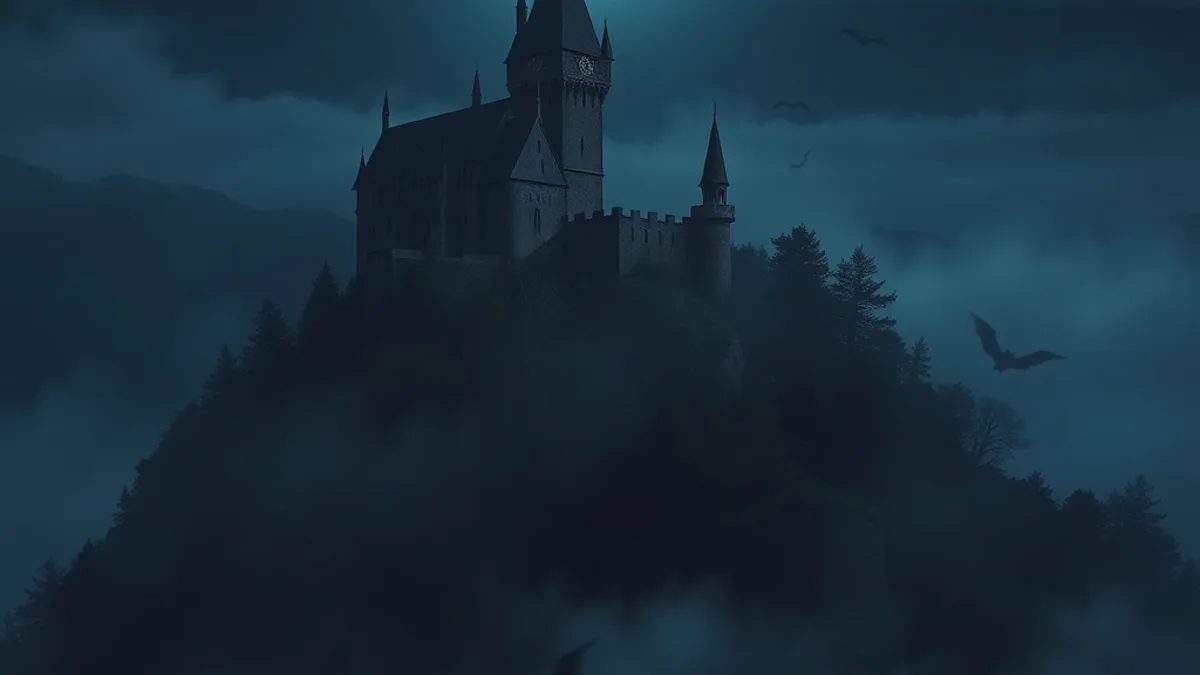
A TeaLamp book summary of Dracula by Bram Stoker, first published in 1897. In the public domain. Prepared by the TeaLamp Editorial Team with the help of AI.
This Dracula summary follows a book that invented much of what we now think a vampire is. Bram Stoker’s 1897 novel is not told by one narrator but by many, through letters, diaries, newspaper cuttings and a ship’s log, so the horror arrives piece by piece, in ordinary handwriting. A young solicitor visits a remote castle, a ship arrives in England with no living crew, a young woman falls strangely ill, and a small group of friends must piece together what they are facing before it is too late. More than a century later, the Count still steps out of the dark with his evening clothes, his castle and his terrible patience intact.
Key takeaways on Dracula summary
- Dracula is an epistolary novel: the story is told through letters, journals, diaries and newspaper reports, with no single narrator.
- Jonathan Harker, a young solicitor, travels to Transylvania on business and slowly realises his host, Count Dracula, is no ordinary nobleman.
- The Count sails to England, where his arrival brings illness and dread to the seaside town of Whitby and to Lucy Westenra and Mina Murray.
- Professor Van Helsing leads the friends who hunt the Count, and the chase ends back in Transylvania, where the Count is destroyed at his own castle.
- Stoker borrowed the name Dracula from history and folklore, and his Count has shaped vampire stories in books and films ever since.
A solicitor goes to Transylvania
The novel opens with Jonathan Harker’s journal. Harker, an English solicitor, travels to Transylvania to help a client, Count Dracula, complete the purchase of a house in England. The journey grows stranger at every stage. The local people grow fearful when they hear where he is going, and press little crosses and charms upon him. The coach that carries him into the mountains travels at a frightening speed, driven by a tall figure Harker barely sees.
At the castle, Dracula is courteous, learned and hospitable, but the hospitality has rules that frighten more than they reassure. Harker is warned never to fall asleep outside his room and never to enter certain doors. He notices that the Count casts no reflection in a mirror, that the castle seems empty of servants, and that his host is never seen in daylight. When Harker explores, he finds the castle’s chapel and, in it, boxes of earth. He also discovers, to his horror, that he is not a guest but a prisoner, and that the Count plans to leave for England while Harker remains behind. The journal breaks off as Harker, desperate, attempts his escape.
The ship and the shore
While Harker is missing, the story moves to England, told through the letters and diaries of Mina Murray, Harker’s fiancée, and her friend Lucy Westenra, who are holidaying in Whitby. A Russian schooner, the Demeter, runs aground off Whitby in a storm with no living crew aboard: only a great dog that leaps ashore and vanishes, and the dead captain lashed to the wheel, clutching a crucifix. The ship’s log, published in the newspapers, tells of a voyage in which the crew vanished one by one.
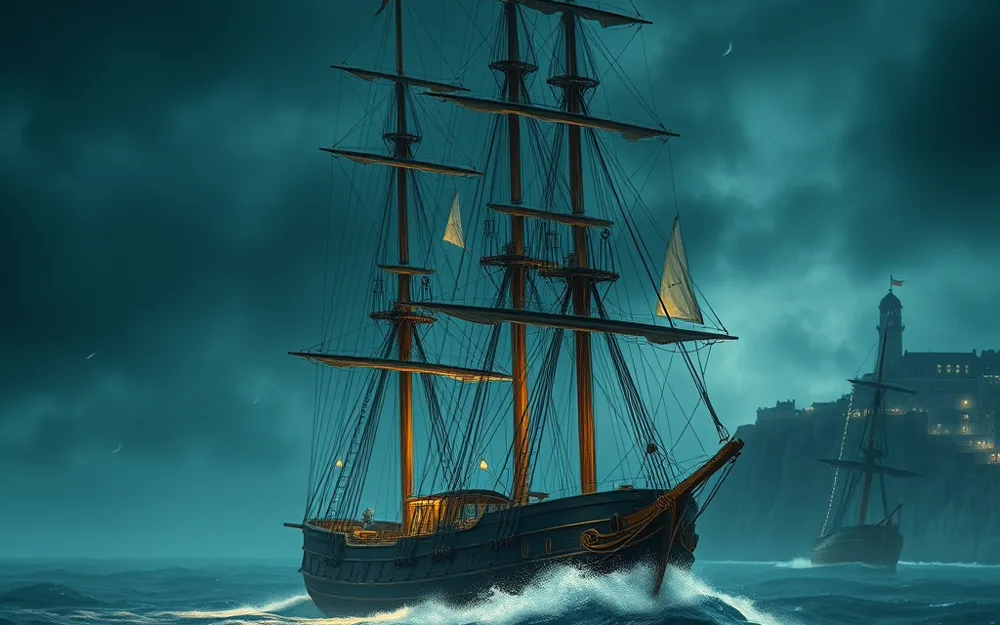
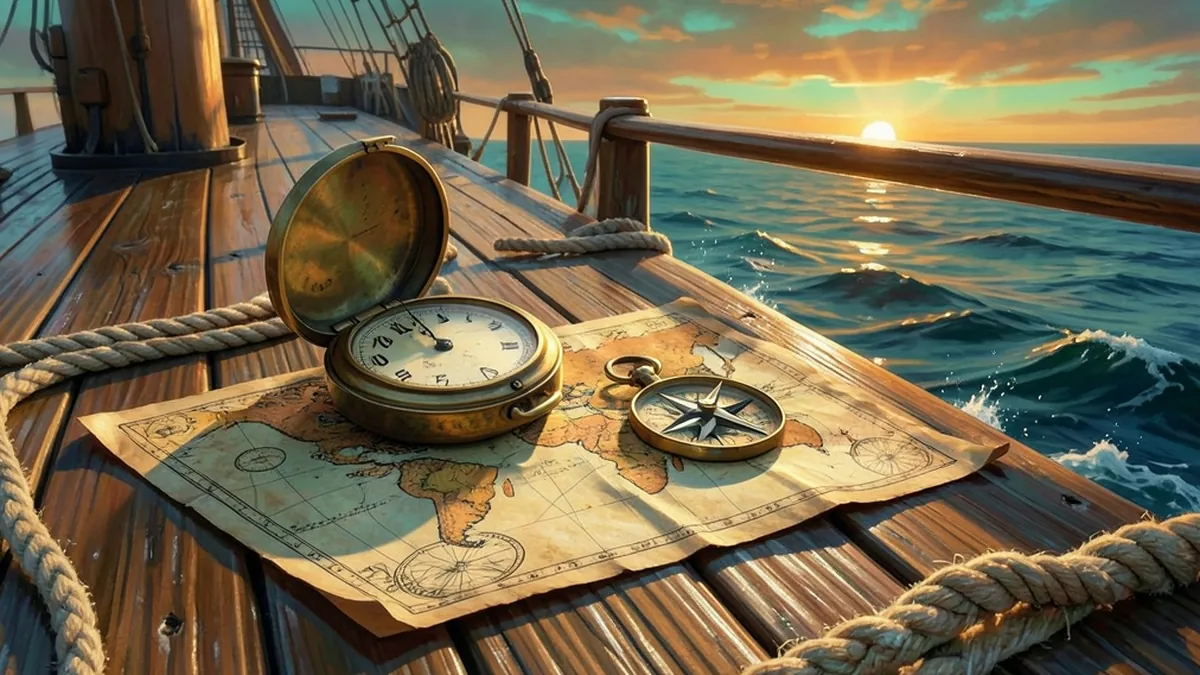
A sailing ship battles a storm off the coast at night. Image generated by AI.
Soon Lucy begins to suffer. She sleepwalks, grows pale and weak, and seems to waste away despite every care. Her friend Mina watches over her, and Lucy’s suitors, Dr John Seward, Arthur Holmwood and Quincey Morris, are drawn into the mystery. Mina herself receives a brief, shocking note: Harker has been found, ill and wandering, in a hospital abroad. She rushes to him, and the two are married there, though Harker is still recovering and cannot fully explain what happened to him in Transylvania.
The doctor’s notes and the professor
Dr Seward’s diary adds another thread. Among his patients is Renfield, a man in an asylum whose behaviour swings between calm and frenzy, and who seems to follow a strange pattern of collecting living things, from flies to birds, as if he were climbing a ladder of life. Seward, puzzled, writes to his old teacher, Professor Abraham Van Helsing of Amsterdam, asking for help with Lucy’s illness.
Van Helsing arrives and at once recognises something Seward cannot name. He orders garlic flowers for Lucy’s room, examines the small marks on her throat, and tries transfusions of blood from the young men who love her. For a time Lucy rallies, but the treatment is undone by well-meaning interference, and Lucy dies. Van Helsing then tells the friends, plainly and at length, what he believes: that Lucy was preyed upon by a vampire, that she herself may now rise as one, and that they must act. Together they visit her resting place, and there they find the proof they dreaded. The friends carry out the grim task Van Helsing prescribes, and Lucy is laid to rest at last.
The hunt
With Harker returned and Mina’s journals and letters gathered, the group now has the whole picture. Mina’s talent for organisation becomes the group’s greatest weapon: she types up every diary, letter and cutting in order, so that the scattered accounts become one clear record. Van Helsing explains what the old books say about vampires: their strengths, their limits, and their need for the earth of their home. The Count, they learn, has hidden boxes of Transylvanian earth around London, in the house he bought and elsewhere, and these boxes are his refuge.
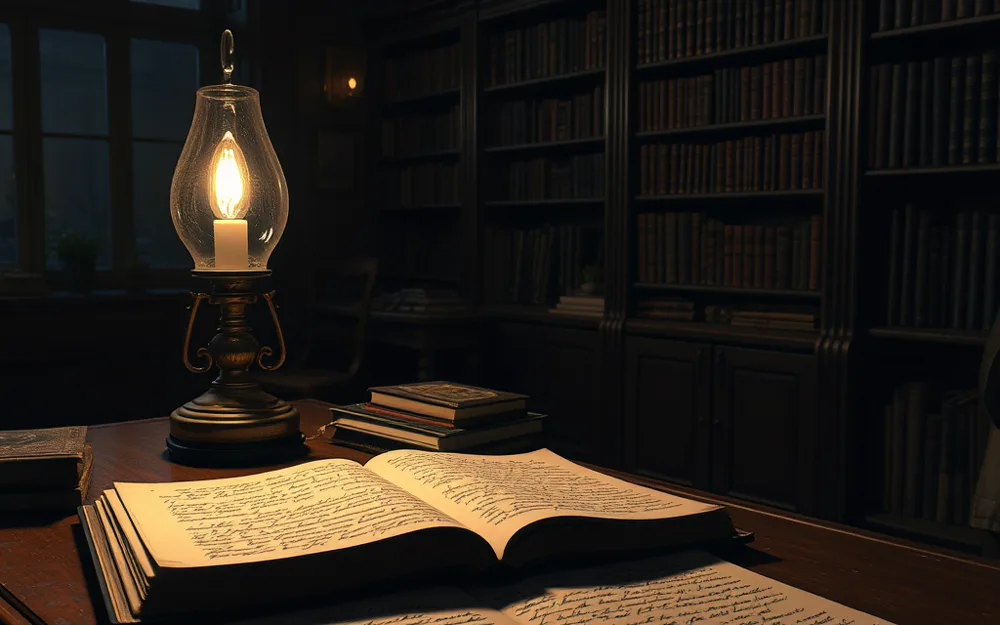
Letters and a journal by lamplight, the documents that tell Dracula’s story. Image generated by AI.
The hunt takes them across London, sealing and destroying the boxes one by one, until the Count has almost nowhere left to hide. But the Count strikes back at Mina herself, and the friends realise that Mina now shares a link with him: she can sense, in trance, where he is. Using that link, they follow him as he flees back toward Transylvania by sea and then by land. The pursuit becomes a race through mountain passes in winter, with two parties closing in on the Count’s party from different directions. At the castle itself, as the sun sets, Jonathan Harker and Quincey Morris reach the Count’s box and strike. The Count crumbles to dust, Morris dies of his wounds, and Mina is freed. The novel closes with a quiet note, years later, from the married Harkers and their friends, remembering what they endured and what it cost.
Why Dracula still bites
Dracula endures for several reasons, and the first is its form. Because the story is told through documents, the reader discovers the horror at the same pace as the characters, and no single voice explains everything away. The second is its mixture of the modern and the ancient: typewriters, shorthand, phonograph diaries, steamships and trains set against castles, superstition and folklore. Stoker’s London is a city of telegrams and newspapers, and the Count walks into it as a figure from an older world, which makes him feel both impossible and close at hand.
The third reason is the Count himself. Stoker drew on years of notes about vampire folklore and on the historical name Dracula, which he found in a history of Wallachia and Moldavia, and he built a villain who is polite, patient, learned and utterly without pity. Later writers and filmmakers have taken the Count in every direction, from monster to romantic hero, but the outline Stoker drew has never been replaced. Béla Lugosi’s portrayal in the 1931 film fixed the image of the caped, accented Count in the public mind, and the book has never been out of print since.
Why it matters
Dracula matters because it shows how a story can be built from paperwork and patience rather than from spectacle. Stoker wrote a novel with no single hero and no single villain’s point of view, and he trusted readers to assemble the truth from the documents themselves. That structure has been borrowed by countless thrillers since, and it is why the book still rewards a first-time reader: the pleasure is not only in the shocks, but in watching careful, ordinary people work out an extraordinary danger, and then act together. Read on a dark October evening, with the wind outside, it still does its work.
Related reading
For another Gothic classic about a creator and the creature he cannot control, read our summary of Frankenstein, Mary Shelley’s monster, explained.
Frequently asked questions
Is Dracula based on a real person?
Not directly. Stoker took the name Dracula from a history of Wallachia and Moldavia, where it was linked to Vlad the Third, a fifteenth-century ruler. The novel’s Count is Stoker’s own invention, built from folklore, history and years of notes, not a biography of Vlad.
Is Dracula very frightening to read today?
It is suspenseful rather than graphic. Stoker suggests far more than he shows, and much of the fear comes from atmosphere, from the slow discovery of what the Count is, and from the danger to characters the reader has come to like.
Where can I read Dracula for free?
The novel is in the public domain, and the full text is freely available from Project Gutenberg as ebook 345, in several electronic formats.





0 Comments