

A TeaLamp book summary. Prepared by the TeaLamp Editorial Team with the help of AI.
This Great Gatsby summary follows F. Scott Fitzgerald’s short, glittering novel from a Long Island lawn in the summer of 1922 to a swimming pool at the end of it, and asks why a book that sold fewer than 20,000 copies in its first months is now one of the most famous novels ever written in America. It is a story about wealth, longing, and a green light at the end of a dock.
Key takeaways on The Great Gatsby summary
- Jay Gatsby, a mysterious millionaire, throws huge parties to win back Daisy Buchanan, the woman he loved before the First World War.
- Nick Carraway, Gatsby’s neighbour, tells the story. He is the only honest person in a world of careless rich people, and even he is drawn into it.
- The novel is set in the summer of 1922, in the fictional towns of West Egg and East Egg on Long Island, between the old money of Daisy’s world and the new money of Gatsby’s.
- Fitzgerald published the book in April 1925. It sold poorly at first, and he died in 1940 believing himself a failure. The book found its readers during the Second World War.
- Today the novel has sold almost 30 million copies, and it entered the public domain in the United States on 1 January 2021.
The story in brief
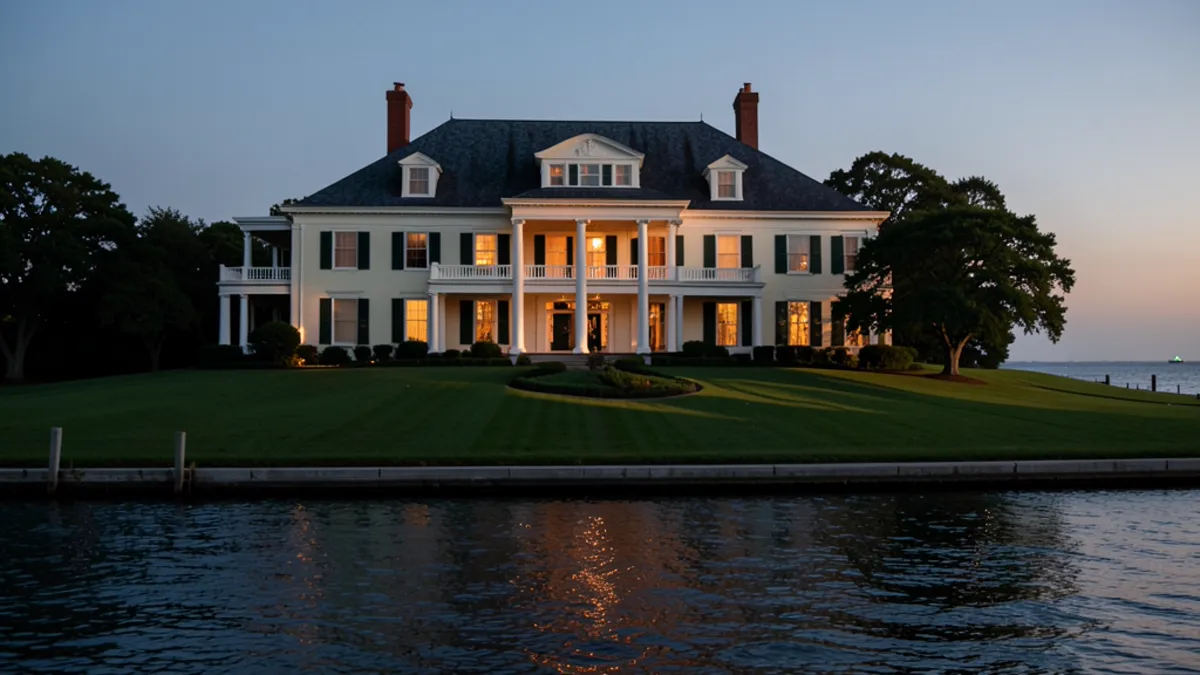
In the spring of 1922, Nick Carraway, a young man from the Midwest and a veteran of the First World War, moves to New York to sell bonds. He rents a small house in West Egg, a village on Long Island, next door to a vast mansion owned by Jay Gatsby, a man nobody seems to know. Gatsby gives enormous parties every weekend, full of music, champagne, and strangers, yet he barely takes part in them himself. One evening Nick sees him standing alone on his lawn, reaching out toward a green light across the bay.
Across the water, in the older and grander village of East Egg, lives Daisy Buchanan, Nick’s cousin, with her husband Tom, a rich former football star Nick knew at Yale. Tom keeps a mistress, Myrtle Wilson, the wife of a garage owner in the valley of ashes, a grey stretch of wasteland between Long Island and the city. That same evening, Nick sees Gatsby staring at a green light across the bay, shining from the end of Daisy’s dock.
When Nick is finally invited to one of Gatsby’s parties, he meets his host at last. Gatsby’s friend Jordan Baker tells Nick the truth: Gatsby and Daisy were in love in 1917, when Gatsby was a young army officer. He went to war, she married Tom, and Gatsby has spent five years building a fortune to win her back. His parties are not for pleasure. They are bait, thrown in the hope that Daisy will wander in one night.
Nick arranges the reunion, and the old love returns at once. Gatsby believes his plan is working: if he can repeat the past, Daisy will leave Tom and marry him. But Tom finds out, and on a hot afternoon in a hotel suite in New York, the two men face each other. Gatsby demands that Daisy say she never loved Tom. She cannot. She says she loves them both, and then she chooses Tom, because Gatsby’s money comes from bootlegging, the illegal trade in alcohol during Prohibition.
On the drive home that night, Daisy is at the wheel of Gatsby’s car when it strikes Myrtle Wilson outside her husband’s garage and kills her. Gatsby takes the blame and sends Daisy home. Tom tells Myrtle’s husband George that the car belonged to Gatsby, and that Gatsby must have been Myrtle’s lover. The next day George walks into Gatsby’s garden and shoots him in his swimming pool, then kills himself.
Almost nobody comes to Gatsby’s funeral: his father, a few servants, and one stranger from his parties, a man Nick calls Owl Eyes. Daisy and Tom have already left town. Nick returns to the Midwest, and on his last night he looks once more across the bay at the green light.
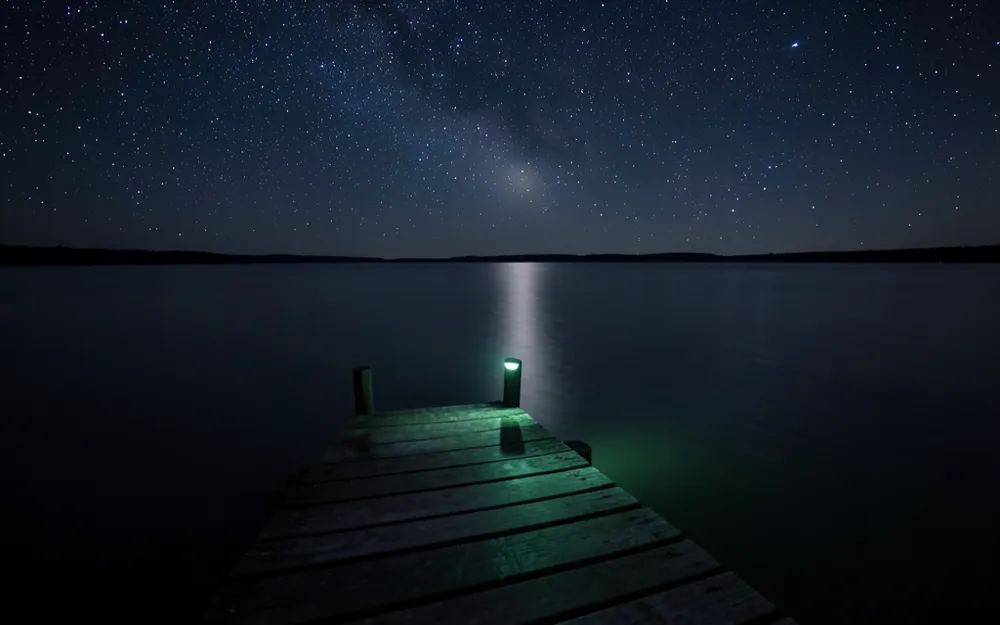
The green light: a dream always just out of reach. Image generated by AI.
Old money, new money
The novel is built on a single contrast: the two villages across the bay. East Egg is old money, inherited wealth, people who were born rich and never had to think about it. West Egg is new money, people who made a fortune quickly and are still trying to prove they belong. Gatsby lives in West Egg in a house that copies a French palace, with a library full of real books he never reads. Tom lives in East Egg in a house that has always been there.
The difference is not the money. It is the manners. Tom can be cruel in a way that looks natural, because nobody in his world ever challenges him. Gatsby tries so hard to look like a gentleman that the effort shows: his shirts, his car, his parties, even the way he calls everyone “old sport”. Gatsby can buy everything except the one thing he wants: to be accepted by Daisy’s world.
Nick sits between the two worlds. He comes from a comfortable family in the Midwest, went to Yale, and works in bonds, so he can move in both villages. But he is not rich, and he is not fooled. He is the reader’s guide, and his judgements are the book’s moral centre.
The green light
The most famous image in the book is the green light at the end of Daisy’s dock. Gatsby stares at it across the bay, and the light returns at the end of the novel, when Nick looks at it alone. It is a real light, marking the end of a pier, but Fitzgerald turns it into something larger: a dream that is always just out of reach.
The green light is the American Dream in miniature. Gatsby believes that with enough money and enough will, he can erase five years and return to the moment before Daisy married someone else. The dream is beautiful, and it is impossible.
The novel’s last lines are among the most quoted in English literature. “So we beat on, boats against the current, borne back ceaselessly into the past,” Fitzgerald wrote. It is a sad ending for a book about hope, and a fitting one: the current always wins, but the rowing is what makes the story worth telling.
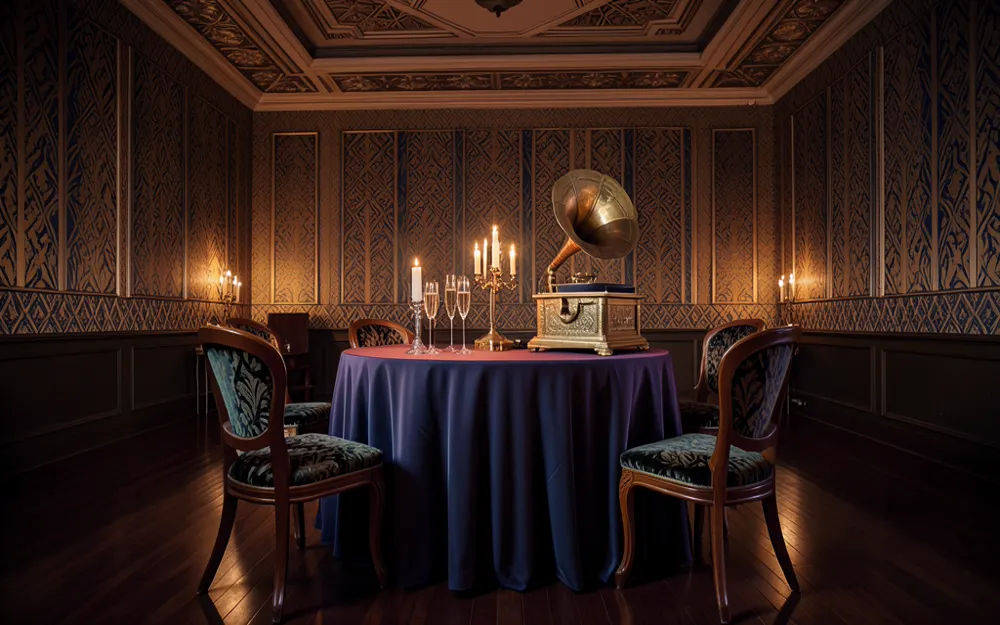
Gatsby’s parties: dazzling, crowded, and strangely empty. Image generated by AI.
From flop to classic
When Charles Scribner’s Sons published The Great Gatsby on 10 April 1925, the reviews were mostly kind, but the sales were not. Fewer than 20,000 copies had sold by October. When Fitzgerald died in 1940, he thought of himself as a failure and his work as forgotten.
The rescue came from the Second World War. The Council on Books in Wartime, which sent free paperbacks to American soldiers overseas, chose The Great Gatsby as one of its titles. Soldiers read it in tents and on ships, and when they came home they carried it into schools and universities. Within a few years the book that had flopped was being taught as a classic, and it has stayed in classrooms ever since.
The numbers now are extraordinary for a book of 218 pages. By early 2020 it had sold almost 30 million copies around the world, and it still sells about 500,000 copies a year. Its American copyright expired on 1 January 2021, so the text is now in the public domain in the United States, free for anyone to read, share, and adapt. The first edition, which cost two dollars in 1925, is now a collector’s item worth many thousands.
Who will enjoy it most
This is a book for readers who like their classics short and sharp. At around 200 pages, it can be read in a weekend, and it rewards a slow second read. It suits anyone who enjoys beautiful sentences and a story that moves quickly.
It is best for readers who do not mind a sad ending, or a story in which almost nobody behaves well. The book deals with adult themes, including infidelity, violence, and death, handled in the restrained style of a 1920s novel, with no graphic detail.
Readers coming to it for the first time should know that it is not a romance. It is a book about wanting, and about what wanting costs. The parties are dazzling, the clothes are beautiful, and the summer is long, but the story underneath is a quiet tragedy, and Fitzgerald never lets the reader forget it.
Why it matters
The Great Gatsby endures because its question has not dated. We still live in a world that measures people by their money, and still believe that a different life is one big purchase away. Gatsby’s dream is extreme, but the shape of it is familiar: the idea that the past can be bought back. Fitzgerald’s answer is gentle and merciless at once. The dream is worth having, and it will not save you. That is why the book is still read, still quoted, and still argued about, a hundred years after it first appeared.
Related reading
For another classic about a young person learning what a fortune is worth, see our review of Great Expectations: Ambition, Love and Second Chances.
Frequently asked questions
Is The Great Gatsby based on a true story?
Not directly, but Fitzgerald drew on his own life. His youthful romance with the socialite Ginevra King, whose wealthy family discouraged him because he was poor, shaped Daisy Buchanan, and the wild parties he attended on Long Island in 1922 shaped Gatsby’s world.
Why is it called The Great Gatsby?
The title is ironic. Gatsby is not great in the way his neighbours think: he is a bootlegger who invented himself out of nothing. He is great in the way Nick means it at the end, because he holds on to his dream with more faith than anyone else in the book, even when it destroys him.
Is The Great Gatsby in the public domain?
Yes, in the United States. Its copyright expired on 1 January 2021, along with all other works published in 1925, so the text is free to read, share, and adapt there. Copyright rules differ in other countries, so readers outside the United States should check their local rules.
Sources
- Wikipedia, “The Great Gatsby” (published 10 April 1925 by Charles Scribner’s Sons; fewer than 20,000 copies sold by October 1925; almost 30 million copies sold by early 2020; US copyright expired 1 January 2021).
- University of Pennsylvania Libraries, “Celebrate Public Domain Day” (first edition 218 pages; 20,000 copies in the first year; public domain from 1 January 2021).





0 Comments