

An original TeaLamp explainer based on the sources listed below. Prepared by the TeaLamp Editorial Team with the help of AI.
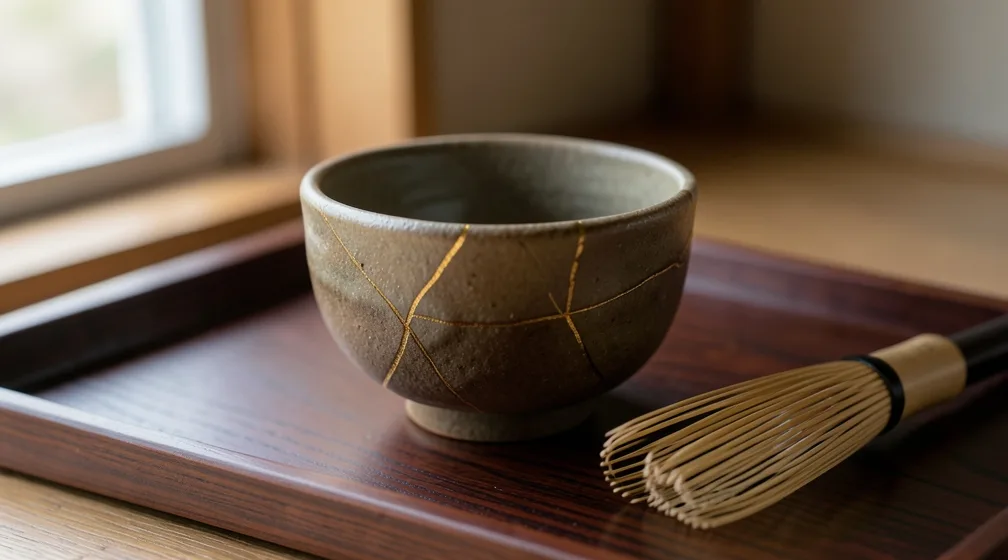
Most of us try to hide a crack. When a favourite mug chips, we turn the damaged side to the wall or quietly retire it to the back of the cupboard. Kintsugi takes the opposite view. In this Japanese craft, a broken bowl is glued back together with natural lacquer, and the seams are dusted with gold, so the break becomes the most beautiful part of the piece. Here is what kintsugi really is, where it came from, how it is done and why a centuries-old repair method has become a worldwide symbol of healing.
Key takeaways on kintsugi
- Kintsugi means “golden joinery”: broken ceramics are mended with urushi lacquer, and the seams are finished with powdered gold or another metal.
- The lacquer does the real work as the glue; the gold is a finishing layer on top.
- Its exact origins are unknown, but museums link its spread to the Japanese tea ceremony in the late 16th century.
- The famous story of a shogun’s stapled tea bowl is a tradition, and the surviving bowl is held together with metal staples, not gold.
- Today kintsugi is also a popular metaphor for resilience, which says as much about our own times as about Japanese history.
What kintsugi means
The word joins kin, gold, and tsugi, joining. Britannica’s entry on kintsugi describes it as a traditional Japanese technique of repairing ceramics with lacquer and a metal powder that is usually gold or silver. You may also see the related term kintsukuroi, “golden repair”.
The idea that sets kintsugi apart is visibility. A conservator in a Western museum has often been trained to make a repair as invisible as possible, so that the object looks untouched. A kintsugi repair does the reverse. As the Smithsonian’s note on a gold-mended Satsuma tea bowl puts it, the technique “not only accepts but highlights the life of the object”. A thin river of gold across a dark glaze tells you, at a glance, that this bowl was dropped, mattered enough to save, and carried on.
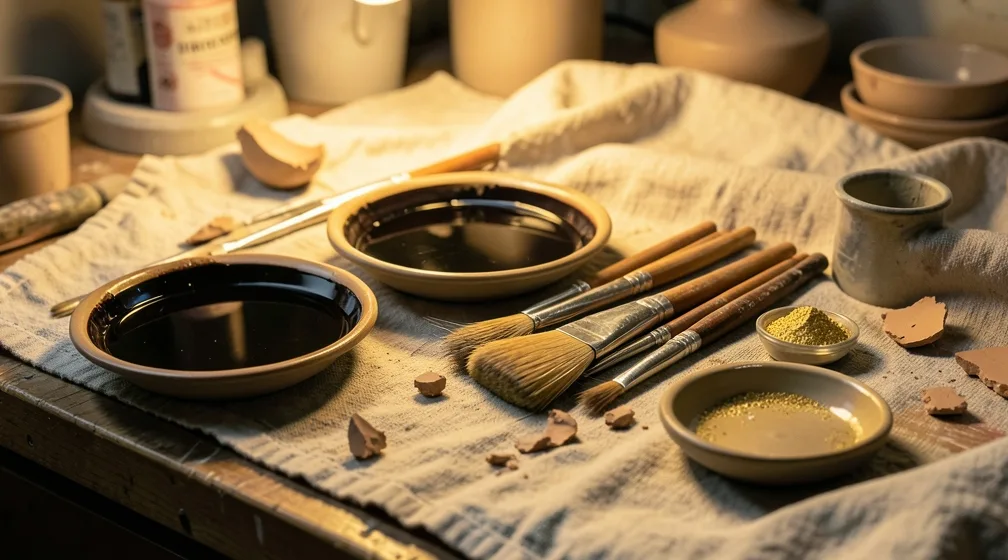
Lacquer, fine brushes and gold powder: the simple tools behind a kintsugi repair. Image generated by AI.
How a kintsugi repair is made
The heart of the craft is not gold at all. It is urushi, a lacquer made from the sap of the lacquer tree, Toxicodendron vernicifluum. Britannica notes that the tree is a relative of poison ivy, and the raw sap can irritate the skin badly. Once it cures, though, urushi becomes hard, glossy and water-resistant. The Smithsonian calls it “a natural plastic”, which is a handy way to picture it.
A traditional repair builds up in stages. The craftsperson first glues the pieces with lacquer, often thickened with flour or clay, and fills any missing chips with a lacquer paste. Each layer must then harden before the next one goes on. Unusually, urushi does not dry by losing moisture like paint; it cures best in warm, humid conditions, so makers often place pieces in a damp cabinet for days at a time. After the joins are smoothed and coated again, a final thin line of lacquer is painted along the seam, and fine gold powder is sprinkled onto it while it is still tacky.
The whole process can take weeks, and many repairs take longer. That slowness is part of the point. It turns fixing a bowl from a quick chore into a patient act of care. It also explains why a genuine urushi repair is expensive, and why so many modern “kintsugi kits” swap the lacquer for quick-setting synthetic glue and the gold for metallic powder. Those kits can make lovely decorative pieces, but they are a different material, so it is wise to follow the maker’s guidance before using a mended cup for food or drink.
Where kintsugi came from
People in East Asia have mended pottery with lacquer for a very long time. The Smithsonian says lacquer has been used to repair ceramics in Asia “since prehistoric times”, but that decorating those repairs with gold began only several centuries ago in Japan. It adds, honestly, that “the exact origins of kintsugi are unknown.” What museums agree on is the setting in which it flourished: the tea ceremony, which grew into a refined art in the late 16th century.
Tea culture prized simple, rustic and often imperfect objects. Bowls, water jars and tea caddies were handled, admired and discussed by guests, and a much-loved piece might be passed down for generations. When such a treasure broke, throwing it away was unthinkable. Mending it with lacquer and gold kept it in use and gave it a new chapter of its story. It is easy to see why the craft is often linked with the wider Japanese appreciation of things that are worn, weathered and modest, though that link is a later interpretation as much as a recorded fact.
The shogun’s bowl: legend and evidence
Almost every popular article on kintsugi tells the same origin story. In the 15th century the shogun Ashikaga Yoshimasa cracked a beloved Chinese tea bowl and sent it to China for repair. It came back clumsily held together with metal staples, and his displeased craftsmen invented a more beautiful method using lacquer and gold. The New Orleans Museum of Art tells the story this way, and it is a charming tale.
The real bowl, however, still exists, and it suggests a quieter history. It is a pale green Chinese celadon named Bakōhan, now held by the Tokyo National Museum. According to the museum’s collection record for Bakōhan, the bowl cracked while Yoshimasa owned it, he sent it to China hoping to swap it for another of the same quality, and it came back with the crack “merely fastened with a clamp”. That large clamp looked like a locust, which gave the bowl its name, and the record says the bowl became “valued even more highly” because of it. There is no gold in this account at all.
So the legend may be a later story attached to a real object, rather than a record of kintsugi’s birth. Interestingly, though, the true story makes the same point as the legend: a visible repair added to the bowl’s value instead of destroying it. The idea behind kintsugi seems to be older than the gold.
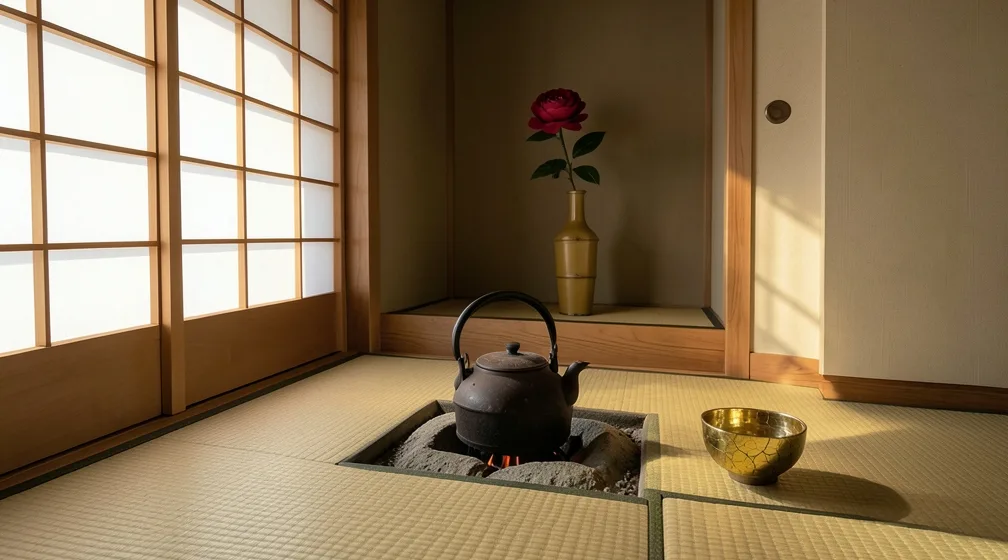
A mended bowl in a quiet tea room, the setting where kintsugi flourished. Image generated by AI.
Why kintsugi speaks to people today
In the past twenty years or so, kintsugi has travelled far beyond the tea room. It appears in self-help books, sermons, therapy blogs, tattoo designs and corporate slide decks, almost always as a metaphor: our scars and failures can become part of what makes us strong and beautiful. It is a comforting message, and many people find it genuinely helpful after illness, grief or a hard year.
It is worth holding that metaphor lightly. Historically, kintsugi was a practical craft for saving valuable objects, done by skilled lacquer workers. It was not a philosophy with a founding text. The modern meaning is something we have built on top of it, in the same way the shogun story was built on top of a stapled bowl. That does not make the metaphor wrong. It simply reminds us that traditions keep changing as each generation finds new meaning in them.
There is also a very down-to-earth lesson in kintsugi that fits our own moment. In a world of cheap, disposable goods, a craft that spends weeks repairing a single bowl is a quiet argument for keeping things, mending them and living with their history. Repair cafés, visible mending of clothes and the right-to-repair movement all share a little of that spirit.
How to enjoy kintsugi yourself
You do not need to be a craftsperson to appreciate it. Many museums with Japanese collections display gold-mended tea wares, and it is worth looking closely: some seams are hair-thin, others fill whole missing sections with a patch of gold. If you would like to try it, a beginner workshop with real urushi teaches the safety steps for handling the raw lacquer. A modern kit is an easier, faster way to experiment with a chipped plate. Either way, the pleasure is the same: slowing down and deciding that something broken is still worth keeping.
Why it matters
Kintsugi matters because it changes the question we ask about damage. Instead of “How do we hide this?” it asks “How do we honour what happened?” Its real history, with an uncertain origin, a stapled bowl and a craft shaped by tea culture, is more modest than the legend. Yet that history still carries a timeless idea: care and attention can make a mended thing more precious than it was before it broke.
Related reading
If kintsugi has you thinking about tea bowls, our guide on how to brew loose-leaf tea at the right temperature will help you fill one well. For a quiet afternoon with a cup, try our list of Japanese novels to read over tea.
Frequently asked questions
Is kintsugi real gold?
Traditional kintsugi uses real powdered gold, or sometimes silver, as a thin finishing layer over urushi lacquer. Many modern kits use synthetic glue and metallic powder that only looks like gold.
Can you drink from a kintsugi bowl?
A traditional piece repaired with fully cured urushi is used for tea in Japan. Kit repairs made with synthetic glues vary, so check the maker’s guidance before using one for food or drink.
How long does kintsugi take?
A traditional urushi repair is done in several layers that each need time to cure, so it usually takes weeks. A quick kit repair can be finished in a day or two.









0 Comments