

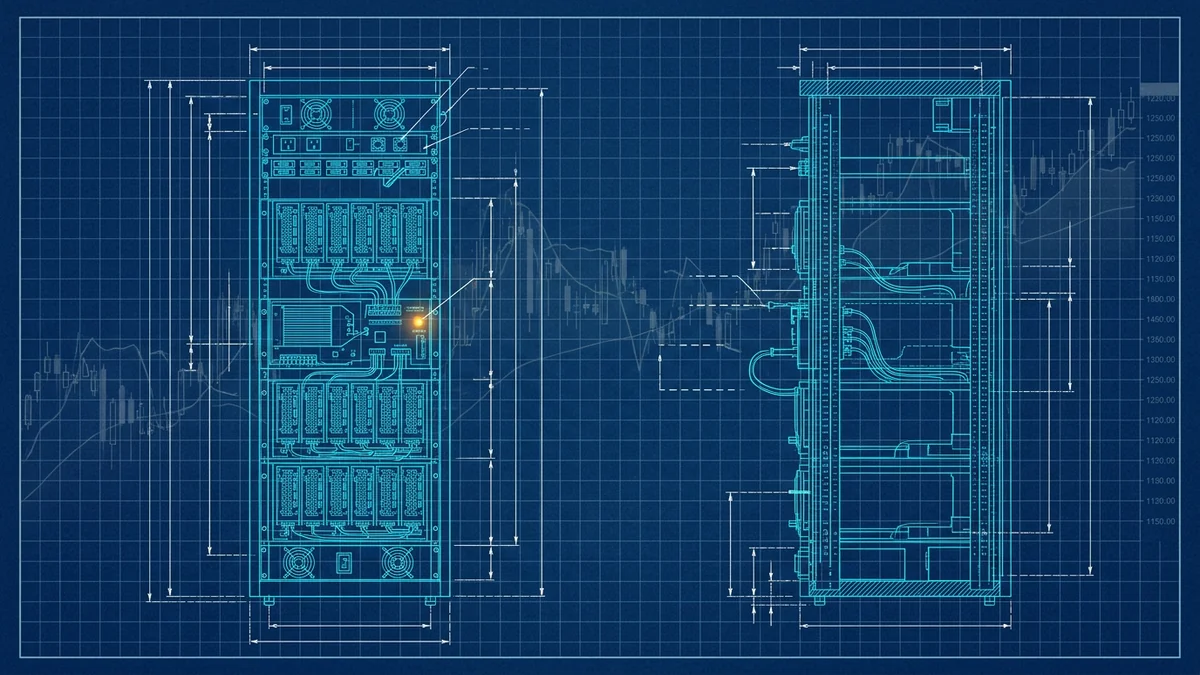
Originally published by Daniel Hebert in LSE Business Review on September 25, 2026, under a Creative Commons licence (CC BY 4.0). Republished here under that licence. LSE Business Review and the author are not contributors to TeaLamp and do not endorse it or its use of their work. Changes: condensed and restructured with TeaLamp Key takeaways, Why it matters, FAQ and related reading; Shutterstock source image not used; headings rewritten. Prepared by the TeaLamp Editorial Team with the help of AI.
Key takeaways on GPU compute futures
- Exchanges are racing to list cash-settled futures on GPU rental prices, treating compute like a commodity that can be hedged.
- CME planned Silicon Data H100 and B200 rental-index futures (730 GPU-hours each); ICE has partnered on a rival compute index product.
- Alongside futures, GPU-backed loans and data-center securitisations are turning chips into collateral and cash-flow strips.
- Analysts compare the layering of debt and derivatives to pre-2008 mortgage finance — while noting clearer exchange oversight today.
- If hedging matures, AI labs may manage compute price curves; a sudden demand drop could still force liquidations through opaque private credit.
For two years, AI labs treated chips as something you buy or rent when a model needs training. In 2026 that mind-set is shifting. GPU compute futures — contracts that settle against rental-price indexes for Nvidia-class chips — are arriving on major exchanges, and the financialisation of compute is moving from procurement desks into trading floors.
From a line item to a traded commodity
On 11 August 2026, CME Group filed a special executive report announcing that the New York Mercantile Exchange would list Silicon Data H100 Rental Index Futures and Silicon Data B200 Rental Index Futures after 9 November. Each contract covers about 730 GPU-hours — roughly a month of renting one chip — and settles in cash against a rental-price index rather than by delivering hardware.
CME is not alone. Intercontinental Exchange has partnered with trading startup Ornn on dollar-denominated, cash-settled GPU futures benchmarked to the Ornn Compute Price Index. Industry voices now talk about compute the way energy desks once talked about oil: as a scarce input whose price risk can be separated from the factories and models that consume it.
The capital at stake helps explain the rush. Goldman Sachs has estimated that AI infrastructure buildout could require on the order of $7.6 trillion in cumulative capital between 2026 and 2031. When numbers that large appear, hedging tools follow.
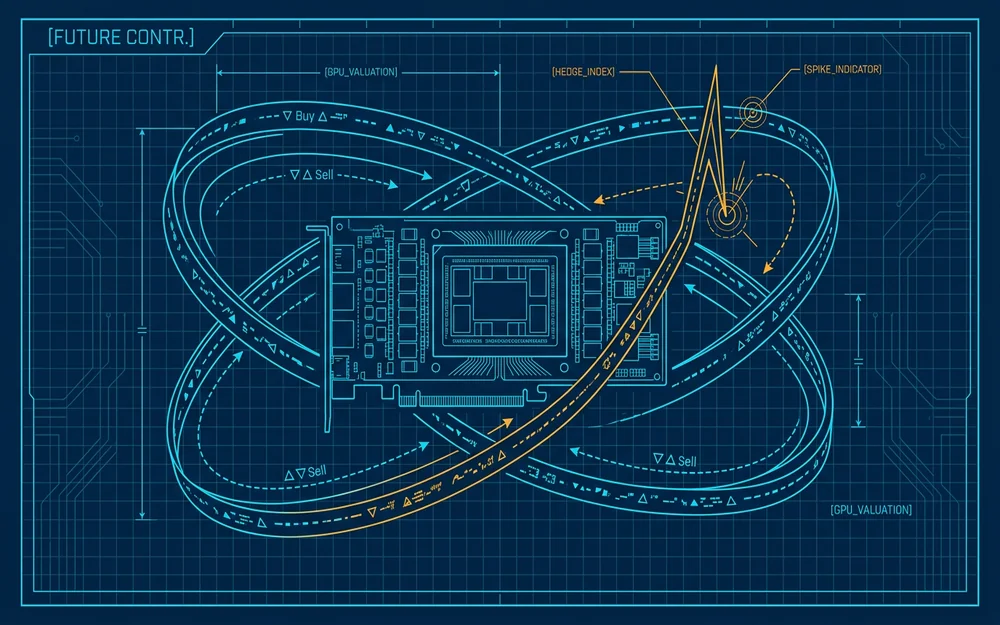
Image generated by AI
Debt, SPVs and the layers above the chip
Futures are only the top layer. GPU-collateralised credit facilities and special-purpose vehicles already finance large data-center builds. Examples cited in the LSE analysis include CoreWeave’s GPU-backed facility, Meta’s roughly $27 billion Hyperion financing through a Blue Owl-anchored SPV, and smaller non-recourse loans secured directly against Nvidia hardware.
In a typical pattern, an SPV holds the debt and future lease receivables are pooled for investors as asset-backed securities. JPMorgan has estimated that annual data-center securitisation could reach $30–40 billion in 2026–2027; Morgan Stanley has projected hyperscaler debt issuance on the order of $400 billion in 2026 alone. Academic work is already adapting no-arbitrage and forward-curve tools — the same frameworks used for oil and gas — to price GPU futures. Options on those futures are a plausible next step once liquidity appears.
Listing separate H100 and B200 contracts matters because newer chips pull demand from older ones. Separate contracts let the market price each generation’s rental capacity — and, eventually, trade the spread between generations.
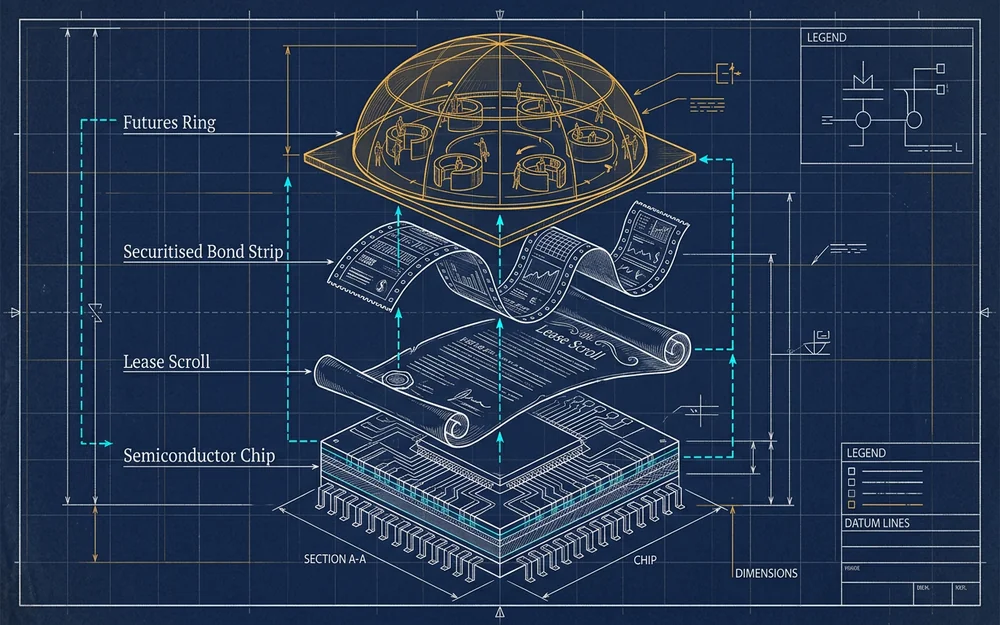
Image generated by AI
The 2008 parallel — useful, not identical
Hebert’s caution is structural, not apocalyptic. GPUs are not subprime mortgages. But in both stories, an asset with genuine yet time-limited value is passed through leases, securitisation and derivatives, adding leverage and distance between risk holders and the underlying economic activity.
Mortgage securities once rested on the idea that national house prices would not fall together. Compute financing often assumes GPU-hours will hold value across seven-to-ten-year loan lives even though chip generations refresh roughly every two years. History already shows how violent that pricing can be: H100 list prices swung from about $25,000 to more than $40,000 in the 2023 shortage, and rental rates for newer Blackwell chips reportedly jumped tens of percent within months.
There are also real differences from 2008. These GPU futures are designed to be exchange-listed, cash-settled and centrally cleared, under Commodity Futures Trading Commission review — a more transparent setup than many over-the-counter credit structures of the mid-2000s. A Federal Reserve Bank of Chicago study in early 2026 found banks’ direct exposure to AI-adjacent industries averaged under one percent of assets, though indirect links through private credit remain harder to see. And unlike housing bubbles that leaned on price appreciation alone, compute still has a growing base of real users.
Why it matters
If hedging tools work, AI companies may plan capacity with less sticker-shock volatility — a quieter kind of progress than another model launch. If the same tools hide correlated bets on endless GPU demand, a regulatory shock or a sudden leap in model efficiency could force margin calls through channels few outsiders monitor. For readers outside finance, the practical takeaway is simple: the price of an AI answer is starting to look like the price of a barrel of oil — something markets will try to forecast, insure and, sometimes, misprice.
Related reading
For how skills and broadband shape which companies adopt AI first, see TeaLamp’s earlier piece on why some firms adopt AI before others.
Frequently asked questions
What is a GPU compute future?
It is a cash-settled derivatives contract whose value tracks an index of GPU rental prices for a defined chip generation and hour volume, rather than delivering a physical chip.
Why list H100 and B200 separately?
Because demand and rental prices diverge across chip generations; separate contracts let traders hedge each generation and, later, trade the price gap between them.
Does this mean another 2008 is coming?
Not automatically. The LSE analysis uses 2008 as a structural warning about layered leverage and opacity, while noting clearer exchange clearing and smaller measured bank exposures so far.










0 Comments