

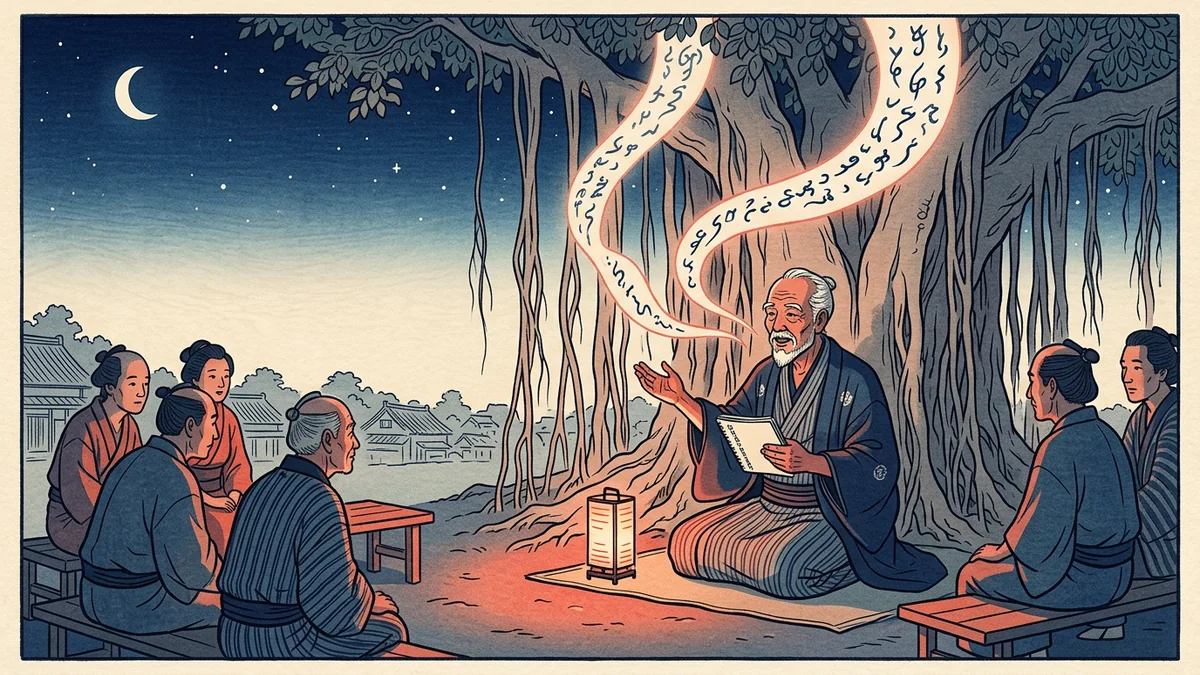
Originally published by Subhashish Panigrahi in Global Voices on August 20, 2026, under a Creative Commons licence (CC BY 3.0). Republished here under that licence. Global Voices and the author are not contributors to TeaLamp and do not endorse it or its use of their work. Changes: condensed and restructured with TeaLamp Key takeaways, Why it matters, FAQ and related reading; interview answers kept as attributed quotes; section headings rewritten. Prepared by the TeaLamp Editorial Team with the help of AI.
Key takeaways on Juang language survival
- Juang is a vulnerable Indigenous language with about 30,000 speakers in Odisha, India; much of its cultural knowledge is still oral.
- Educator and writer Kshetrabasi Juanga is documenting everyday practices — from fire-making to festival songs — on his YouTube channel Majang Studio Vlogger.
- OpenSpeaks Archives and Rising Voices are building ways for Wikimedians to cite oral knowledge with audio-visual records and subtitles.
- Juanga argues that recordings made today will show future researchers how the language changed under pressure — and how it survived.
- He sees Indigenous languages as “green grass” pushing through a cracked road: stressed by globalisation, yet still alive.
How does a language with tens of thousands of speakers still risk going quiet? In an interview for Global Voices and Rising Voices, Juang-language writer and educator Kshetrabasi Juanga describes why Juang language survival depends as much on cameras and captions as on grammar books — and why he treats documentation as a gift to children who are not yet old enough to ask for it.
Who is Kshetrabasi Juanga?
Juanga is an educator, writer and speaker of Juang, a vulnerable Indigenous language of eastern India’s Odisha state. Rising Voices collaborators Opino Gomango and Subhashish Panigrahi interviewed him in person and by phone for OpenSpeaks Archives, a project helping Wikimedians cite oral knowledge from Indigenous and other low-resourced language communities across India, Nepal and Sri Lanka.
The interview is genuine: Juanga’s answers appear as attributed quotes. TeaLamp has not invented questions or answers. The framing below adds context for general readers and points to why audio-visual records matter when a culture’s deepest knowledge still travels by speech, song and practice rather than by page.
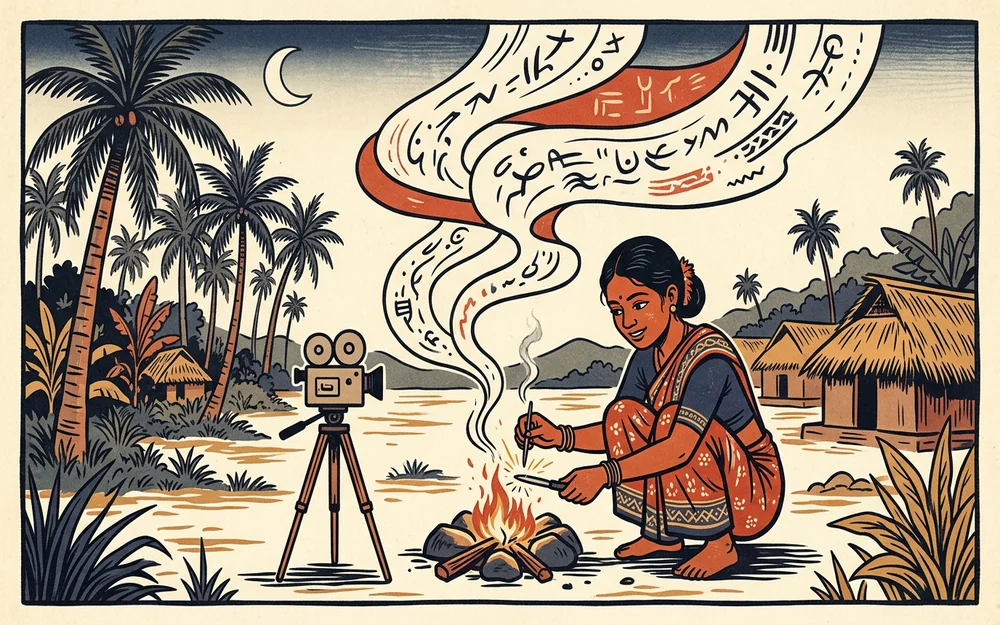
Image generated by AI
What official work exists — and what is still missing
Juanga is careful not to claim that nothing has been done. Odisha’s multilingual education programme has engaged the language. The Academy of Tribal Language and Culture has published tri-language books. The Eastern Regional Language Centre issued a primer and a grammar. The Central Institute of Indian Languages ran a major research programme on Juang.
Even so, he says, the living texture of Juang life is rarely captured: festivals, marriage ceremonies, songs, and the unspoken codes that organise a village day. “Our people, society, and culture — our festivals, marriage ceremonies and songs — are rarely documented,” he told the interviewers.
Why audio-visual documentation helps Juang language survival
Books matter. They also struggle to hold techniques that are learned by watching hands move. Juanga points to skills such as lighting a fire with stones or taking shelter under palm leaves in the rains — knowledge that fades when people leave traditional techniques behind.
He is recording that knowledge himself through Majang Studio Vlogger. The channel is imperfect, he admits, and the scale is still small. But the direction is clear: share Adivasi identity with the tools that are available, and leave a trail that young speakers can find later on Wikipedia and beyond.
“Suppose a recording is made today, in 2026. When someone listens to it decades from now, they will be able to understand how the language was gradually changing, how a culture was being challenged, and how it survived. I think of it like a bitumen road. In some places, the surface has cracked, the bitumen risen, and green grass has pushed through. I see our language like that green grass surviving despite countless vehicles crushing it every day.”
— Kshetrabasi Juanga
That metaphor is the heart of the interview. Globalisation brings more languages into people’s pockets through technology, he argues, while local languages risk going stagnant if nobody records them. Documentation is how tomorrow’s PhD students — and tomorrow’s twelve-year-olds — discover that someone tried.
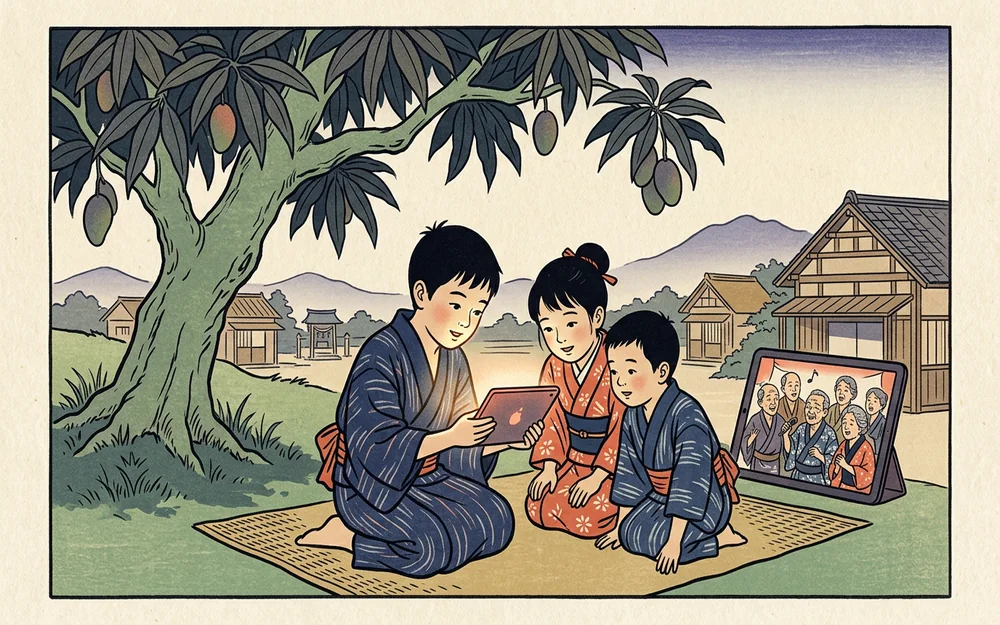
Image generated by AI
Children, city speakers, and moral codes that resist a page
Juanga is especially focused on children aged roughly three to twelve, an age range where multiple languages can be absorbed at once. Videos with subtitles, he says, serve two audiences at once.
First are Juang speakers who have moved to cities — he estimates perhaps one per cent today. For them, encountering community documentation can feel like meeting history and reclaiming pride. Second are speakers who remain in rural communities, carrying practices that encode moral meaning. He describes how a group walking with bows, arrows and spears can signal a death in a village, or how mothers leave stacked firewood that neighbours will not take — a trust code that outsiders can learn only if captions help them understand.
“To me, documenting these traditions will create an invaluable resource for the entire humankind,” he said.
Why it matters
Most of the world’s languages are primarily spoken, not written. Wikipedia and similar projects still lean on written citations. Projects like OpenSpeaks Archives try to close that gap with audio-visual records that communities help produce. Juanga’s interview is a reminder that language loss is not only about word lists — it is about losing the social software that tells people how to mourn, share, and teach. Recording that software is both local stewardship and a public good.
Related reading
For another TeaLamp conversation on community rights in language work, see our adapted interview with Van Gujjari writer Taukeer Alam on language documentation.
Frequently asked questions
Is Juang a written language?
Some primers, grammars and tri-language books exist, but Juanga stresses that much cultural knowledge still travels orally through ceremonies, songs and everyday practice.
What is OpenSpeaks Archives?
It is a Rising Voices / Wikimedia-adjacent effort to help cite oral knowledge from Indigenous and low-resourced language communities with audio-visual documentation and community capacity building.
Did TeaLamp invent this interview?
No. The interview was conducted by Opino Gomango and Subhashish Panigrahi for Rising Voices / OpenSpeaks Archives and published by Global Voices under CC BY. TeaLamp adapted the framing and added editorial sections; quotes remain attributed to Juanga.







0 Comments