

A TeaLamp book summary. Prepared by the TeaLamp Editorial Team with the help of AI.
This Black Beauty summary follows a handsome black horse through a whole life, from green meadows to the hard streets of Victorian London, and back to kindness at last. Anna Sewell published the novel in 1877, and it has never been out of print since. It is told by the horse himself, and that choice made the book famous: readers see the world through a horse’s eyes, and never look at horses the same way again.
Key takeaways on Black Beauty summary
- Black Beauty, a black horse, tells his own life story, from a happy foalhood with his mother Duchess to hard years as a London cab horse and a peaceful retirement in the country.
- Kind owners, from Farmer Grey and Squire Gordon to the London cabman Jerry Barker, show how steady, gentle care keeps a horse healthy and willing.
- Careless or cruel treatment breaks horses down: the bearing rein that forces a horse’s head high, cold water and no blanket after a hard gallop, drink and overwork all leave their mark on Beauty’s body.
- Anna Sewell wrote the book between 1871 and 1877 while seriously ill, hoping to make readers kinder to horses. She died in April 1878, five months after publication.
- First published on 24 November 1877, the book has sold more than fifty million copies in fifty languages, and its picture of the bearing rein helped end that cruel fashion.
A Foal in the Meadows
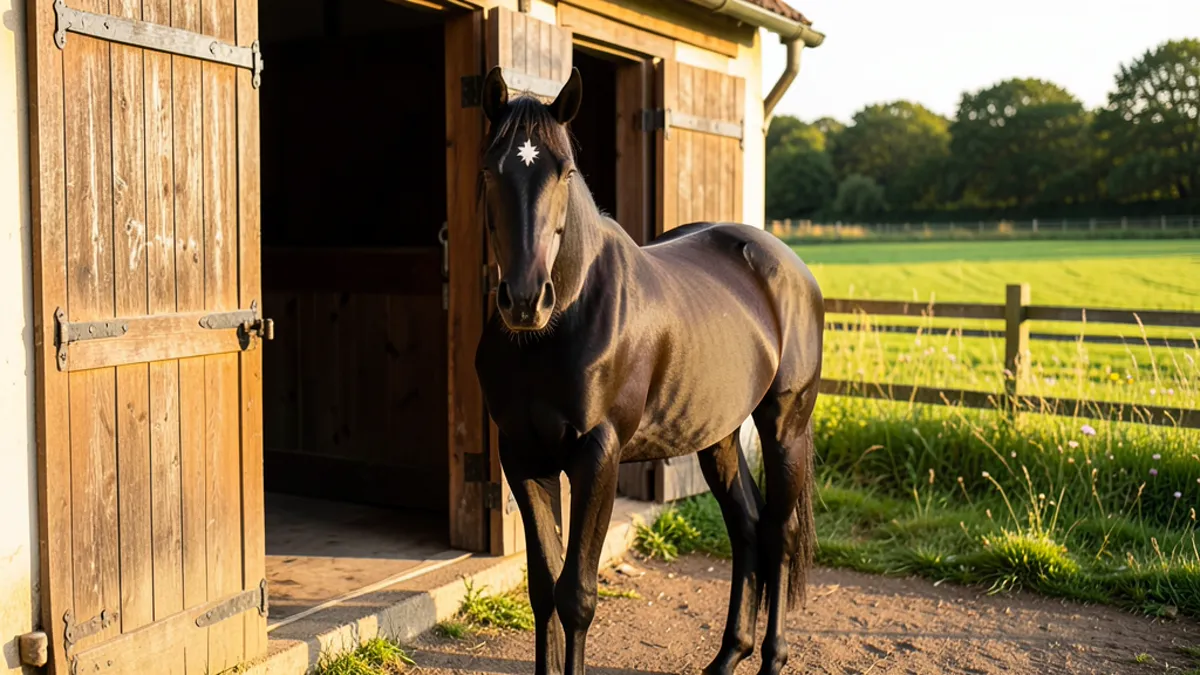
Beauty begins life as Darkie, a black foal with one white foot and a white star on his forehead, in a large, pleasant meadow. His mother, Duchess, is a wise old horse, and her advice shapes the whole book: be good, be gentle, and always try to do your best. Beauty remembers those first years as the happiest of his life.
When Beauty is four, he is broken in: taught to wear a saddle and bridle and to carry a rider. His first owner, Farmer Grey, trains him gently, and Beauty learns his work without fear. It is the first lesson of the book: a horse treated with patience gives its best willingly, while a frightened one learns to fear the hand that holds the rein.
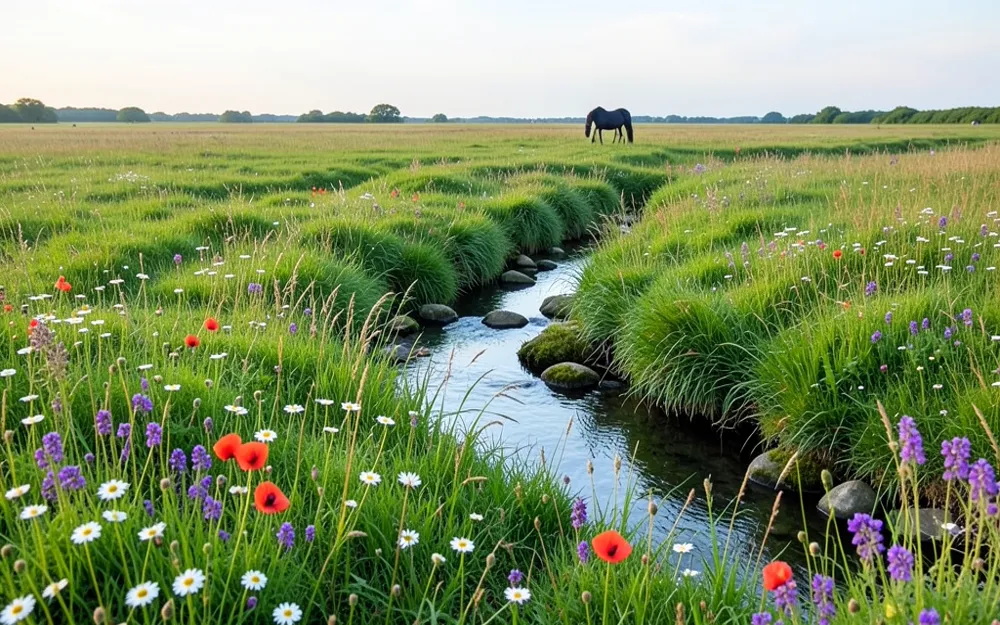
The meadow where Beauty begins life, green grass and a stream. Image generated by AI.
Birtwick Park: Kind Hands
Beauty is sold to Squire Gordon, a kind master who lives at Birtwick Park, and there he finds the best home of his young life. His groom is John Manly, a man who knows horses and loves them, and John’s young helper James Howard cares for him just as well. Beauty shares the stable with two other horses who become his friends. Merrylegs is a short, dappled grey pony who carries the Squire’s daughters. Ginger is a chestnut mare with a sharp temper: she was badly treated as a young horse, and the fear and pain of it never left her.
Life at Birtwick Park is good, but not without trouble. A new stable boy, little Joe Green, replaces James, and one day, after a long gallop, Joe gives Beauty a pail of cold water and forgets to put a blanket on him. Beauty falls seriously ill, and only John Manly’s careful nursing saves him. Joe meant no harm, he simply did not know: ignorance can hurt a horse just as surely as cruelty.
Then the good days end. The Squire’s wife falls ill, and the family must leave the country for her health. The horses are sold, and Beauty and Ginger go together to a new home. It is the first of many partings: for a horse, a sale means a new master, a new stable and a new life.
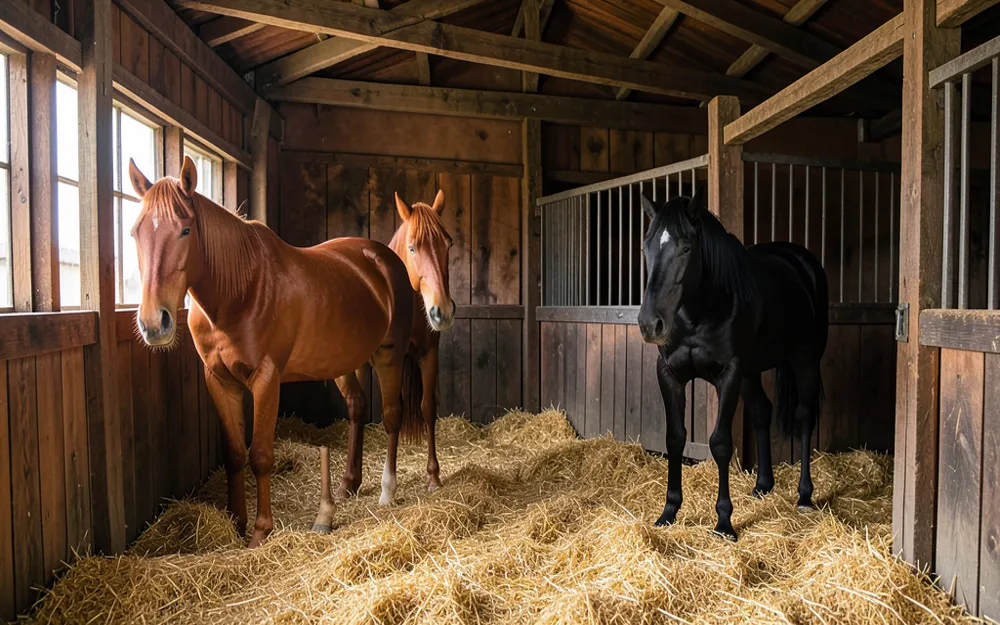
The stable at Birtwick Park, warm straw and kind hands. Image generated by AI.
The Bearing Rein and a Broken Knee
Their new home is Earlshall Park, where Beauty meets the bearing rein. The Earl’s wife, Lady W, wants her carriage horses to hold their heads high, as fashion demands, so they must wear a tight strap that pulls their heads up and holds them there. It looks smart. It feels dreadful. Ginger, who has suffered under it before, tells Beauty what it is like: the strap leaves “your neck aching until you don’t know how to bear it”.
Things grow worse when the Earl’s coachman, Reuben Smith, takes Beauty out one evening after drinking. Reuben is a skilled driver when sober, but drink makes him careless, and he rides Beauty hard over rough ground in the dark. Beauty falls and breaks his knees, leaving scars that mark him for life. With scarred knees he is no longer fine enough for a grand carriage, so he is sold again, down the ladder of horse life, to harder work and poorer keep.
A Cab Horse in London
Beauty’s hardest years are spent pulling a cab in London, and this part of the book is also its most vivid picture of Victorian life. His master there is Jerry Barker, a cabman who is as kind as his trade is hard. Jerry works long hours for low, fixed fares and pays a high fee for his cab licence, yet he treats his horses with steady care, feeds them well, and never works them on Sundays. Beauty shares the work with Captain, an army horse who lost his master in the Charge of the Light Brigade.
London is hard for a cab horse. The streets are crowded and noisy, the work never stops, and other drivers are not all like Jerry. When Captain is hurt in a collision with a drunken driver’s carriage, Jerry has him put down rather than sell him to a life of cart work. Jerry grows ill from the long hours and the London air, and in the end he gives up the cab and leaves the city. Beauty is sold once more, and the reader is left to wonder whether kindness will ever find him again.
The Long Road Home
The last part of Beauty’s life is the hardest, then, at last, the happiest. He is sold to a corn dealer who treats him fairly, then to a cab owner who works his horses until they drop. Thin, tired and worn out, Beauty collapses in the street under a heavy load. A kind farmer buys him cheaply, feeds him up and gives him rest, and slowly his strength returns.
Then comes the ending readers remember. Beauty is sold to three kind ladies who want a gentle horse, and their groom turns out to be Joe Green, the boy from Birtwick Park, now grown up. Joe recognises the old horse at once, by the white star on his forehead and the one white foot. The book closes with Beauty in a pleasant home, with good food, kind hands and work he can manage. It is a quiet ending, not a grand one: after a life of being bought and sold, Beauty has at last found a place to stay.
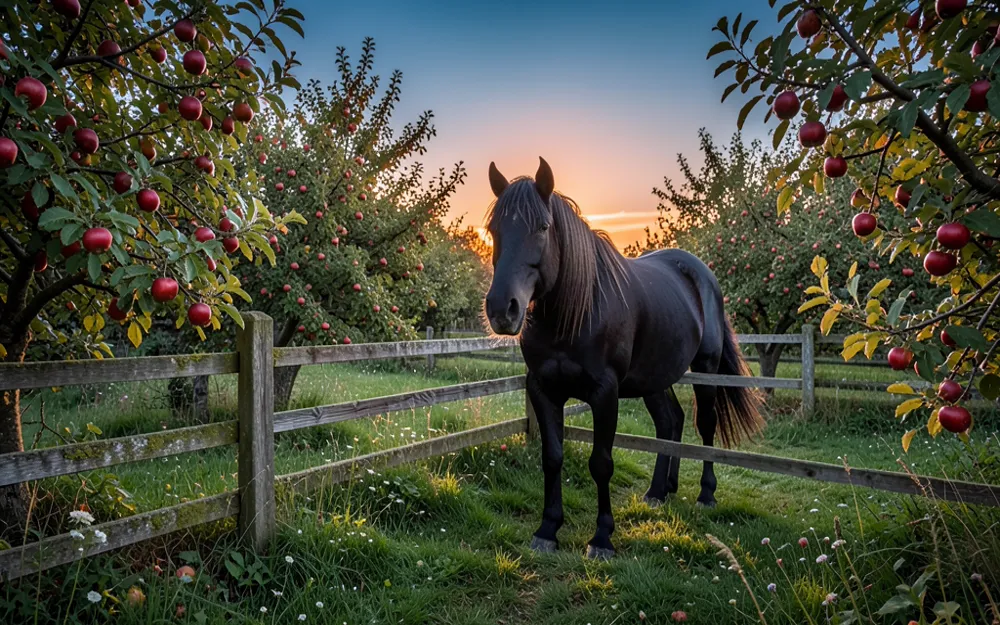
Beauty at last, resting in a kind garden at sunset. Image generated by AI.
Why Anna Sewell Wrote It
Anna Sewell was born in Great Yarmouth in 1820, and at fourteen she injured both her ankles in a fall walking home from school. The injury was badly treated, and for the rest of her life she could not walk or stand for long. She depended on horse-drawn carriages to get about, and those long hours taught her how horses were treated, well and badly.
She began writing Black Beauty in 1871, and worked on it for six years at Old Catton, near Norwich, while her health grew worse. In her last years she was often bedridden, and she dictated much of the book to her mother. She wrote it, she said, “to induce kindness, sympathy, and an understanding treatment of horses”, and she meant it for adults: she wanted the people who owned and drove horses to read it and change their ways. The book was published by Jarrold and Sons on 24 November 1877, under its full title, Black Beauty: His Grooms and Companions, the Autobiography of a Horse. Sewell lived just long enough to see it succeed, and died on 25 April 1878, five months after publication, her only book.
She got her wish. Readers were moved, above all by Ginger’s account of the bearing rein, and the fashion for forcing horses’ heads high faded away. Animal welfare groups handed out copies to drivers and stablemen, and the book was soon called the “Uncle Tom’s Cabin of the horse”. Within two years, a million copies were in circulation in the United States alone.
Why It Still Matters
Black Beauty has lasted because it does something no book had done before: it lets an animal tell its own story, from beginning to end, in fifty-two short chapters that read like a memoir. The horse’s view is steady and fair: he praises kind masters and remembers cruel ones without hatred, judging people by how they treat those weaker than themselves. That is why the story still works for readers who have never ridden a horse in their lives.
It also lasts because Sewell writes about work. Beauty’s life is a working life, and the book pays close attention to the details of that work: the harness, the stable, the cab stand, the price of a licence, the long hours. Readers learn, almost without noticing, what a horse’s day is really like, and why small kindnesses matter so much: a blanket, a drink of water at the right time, a word of praise.
If you enjoy animal stories told with a warm heart, you may also like our review of Charlotte’s Web, E. B. White’s tale of a spider, a pig and a friendship that saves a life.
Frequently asked questions
Is Black Beauty a true story?
No, it is a novel, but it is built on things Anna Sewell saw herself. She spent much of her life travelling in horse-drawn carriages, watching drivers and owners treat their horses well and badly. The horses and people are invented, but the harness, the bearing rein, the cab trade and the hard life of a working horse are drawn from Victorian life as it really was.
What age is Black Beauty for?
Readers from about nine or ten enjoy it, and many adults return to it later in life. Some parts are sad, especially Ginger’s fate and Captain’s end, but Sewell tells them gently, and the book ends happily. It is a good first classic for a young reader, and a good read-aloud book.
How long is Black Beauty?
It is a short novel of fifty-two brief chapters in four parts, and the first edition ran to 255 pages. Most readers finish it in a few sittings. The short chapters make it easy to read a little at a time, which is one reason it has been a favourite bedtime book for generations.
Sources
- Black Beauty, Wikipedia (Anna Sewell, Jarrold & Sons, 24 November 1877; Sewell 1820–1878; more than fifty million copies; BBC Big Read number 58; the bearing rein; plot and characters)
- Black Beauty, Wikisource (the public-domain text of the 1877 novel)
- Black Beauty summary, Audible (Sewell’s only novel, written while bedridden; more than fifty million copies sold; first-person horse narrator)










0 Comments