

An original TeaLamp book summary. The book is in the public domain (first published 1859). Short quotations are credited to Charles Darwin, On the Origin of Species. Prepared by the TeaLamp Editorial Team with the help of AI.
Few books have changed how humanity sees itself as much as Charles Darwin’s On the Origin of Species. Published on 24 November 1859, it argued — with twenty years of patient evidence behind it — that all living things descend from common ancestors, shaped by a simple, relentless process Darwin called natural selection. This is the book’s big idea, and the story of how one careful naturalist built it.
Key takeaways on the origin of species
- Darwin’s core claim: species are not fixed. Small, inherited differences accumulate over generations, and nature “selects” the useful ones — just as breeders shape pigeons and dogs, but without a breeder.
- The book builds its case in layers: domestic breeding, wild variation, the struggle for existence, natural selection, then fossils, geography and embryos as independent lines of evidence.
- Darwin honestly confronted the weak points himself: missing transitional fossils, the complexity of the eye, the imperfection of the geological record.
- 1,250 copies of the first edition sold out on the first day; the book went through six editions in Darwin’s lifetime.
- A century and a half of genetics — from Mendel’s laws to DNA sequencing — has confirmed the book’s central prediction of common descent.
The voyage that started it all
Darwin sailed from Plymouth on 27 December 1831 aboard HMS Beagle, a young gentleman naturalist on a surveying voyage that would last nearly five years. In South America he found giant fossil bones of extinct mammals that resembled the small armadillos still living nearby. On the Galápagos Islands, visited for just five weeks in the autumn of 1835, he noticed that mockingbirds — and the famous finches — differed slightly from island to island.
Back home, he wrote in his journal that in 1837 it occurred to him that “something might perhaps be made out on this question by patiently accumulating and reflecting on all sorts of facts.” He then did exactly that, for two decades.
Pigeons, farmers and the idea of selection
Darwin opens the book not with wild nature but with the farmyard. Breeders and pigeon-fanciers reshape animals dramatically in a few generations by choosing which individuals reproduce — artificial selection. If humans can do this so quickly, Darwin asks, what might nature do over millions of years?
In the wild, the same small differences exist between individuals of every species. And nature is far harsher than any breeder: every creature produces far more offspring than can survive, so most die young. Darwin paints the image vividly: “The face of Nature may be compared to a yielding surface, with ten thousand sharp wedges packed close together and driven inwards by incessant blows.”
Out of this struggle comes his central mechanism. Any slight variation that helps an individual survive and reproduce tends to be preserved and passed on. Over time, useful differences accumulate, populations diverge, and new species form. He called it natural selection — “one general law, leading to the advancement of all organic beings, namely, multiply, vary, let the strongest live and the weakest die.”

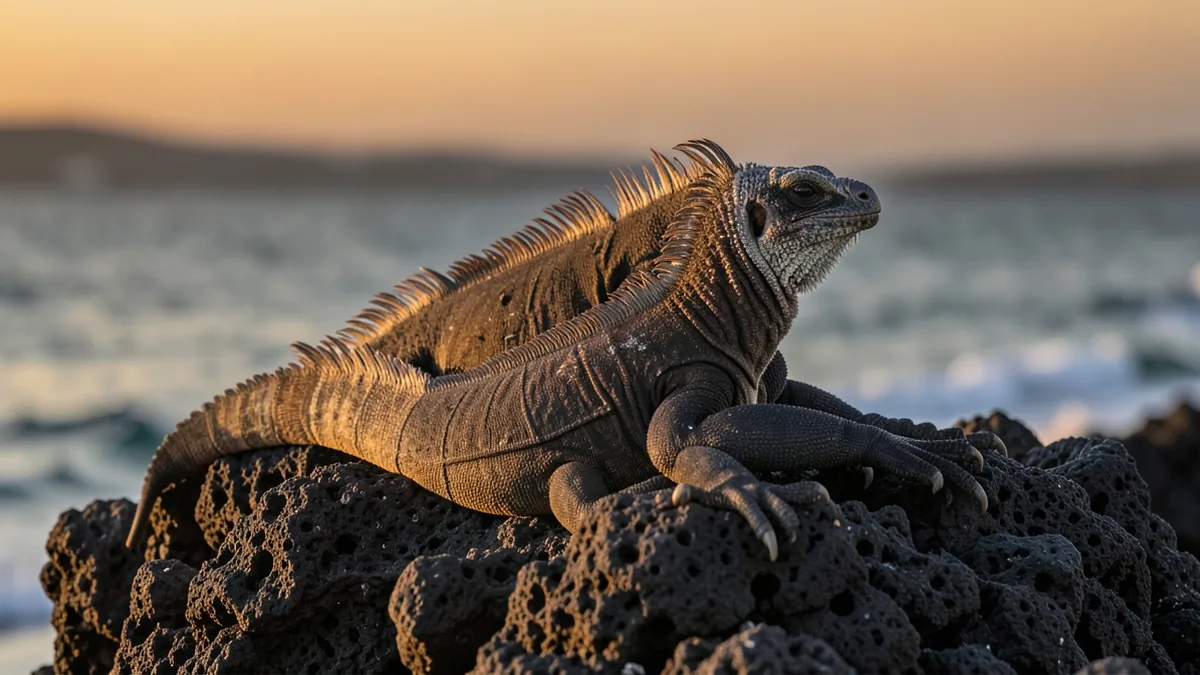
Darwin gathered his evidence patiently, specimen by specimen, for twenty years. Image generated by AI.
Arguing with himself
What makes the book so readable is Darwin’s honesty about its difficulties. He devotes whole chapters to the objections: if species change gradually, where are all the transitional fossils? How could something as exquisite as the eye evolve by small steps? Why do islands hold such strange, unique species?
His answers are patient. Fossilisation is rare and the geological record is patchy — absence of evidence is itself explained. The eye, he argues, could have evolved through a long series of small improvements, each useful in its own right: nature makes no leaps. And islands make perfect sense under his theory, because their species descend from the nearest mainland’s, not from the most similar climate’s.
The evidence from rocks, maps and embryos
The second half of the book marches through independent lines of evidence. The fossil record shows new species appearing slowly and old ones vanishing — extinction, Darwin insists, is final. Geography shows that species cluster near their relatives: South American animals resemble South American fossils, not African animals in similar climates. Embryos of very different animals look strikingly alike, because they share ancestors. And useless leftover structures — rudimentary organs — are inherited hand-me-downs from ancestors that once used them.
Classification itself, Darwin argues, falls into nested groups — species within genera, genera within families — precisely because it is a family tree drawn in the shapes of living things.

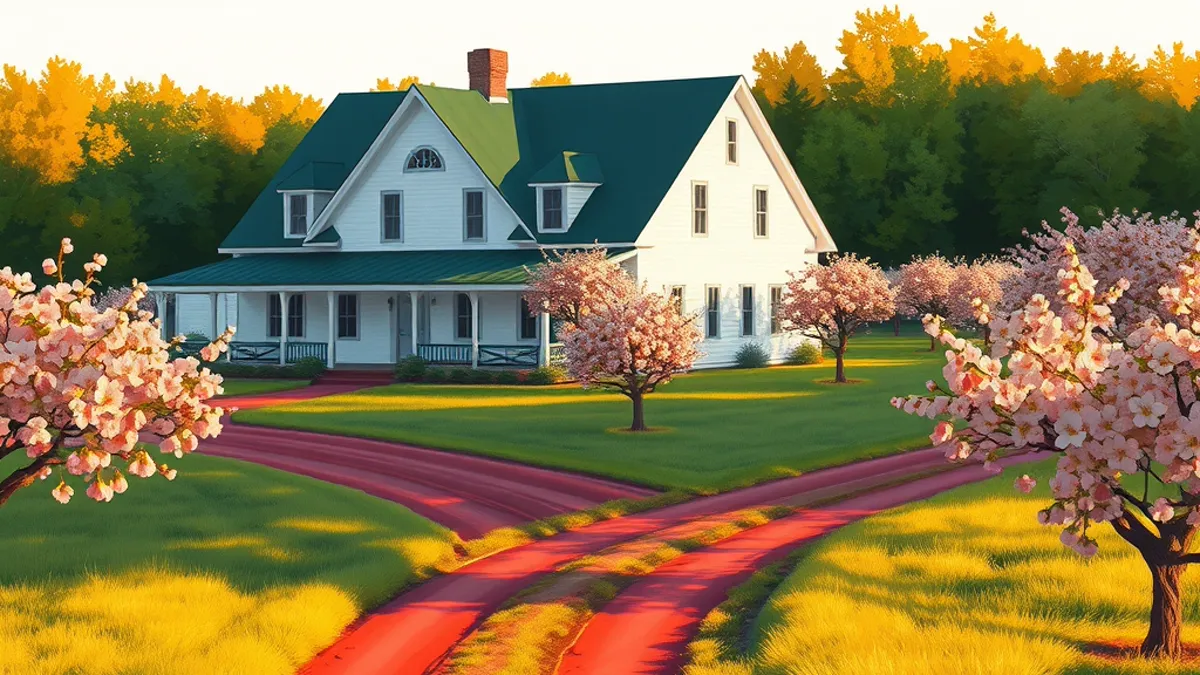
Darwin’s ‘entangled bank’: many forms, produced by laws acting around us. Image generated by AI.
A quiet sentence about humans
Darwin deliberately said almost nothing about people. The book contains just one quiet line on the subject: “Light will be thrown on the origin of man and his history.” The debate that followed — defended by scientists like Thomas Henry Huxley, criticised by others including Bishop Samuel Wilberforce — made the book famous far beyond natural history circles.
The book’s journey after 1859
The first edition of 1,250 copies, priced at fifteen shillings, sold out on the day of publication. Darwin revised the book through six editions in his lifetime, answering critics as he went. (One detail for the curious: the famous closing sentence reads slightly differently across editions — the 1860 second edition added the words “by the Creator” to the passage about life being “originally breathed into a few forms or into one.”)
Darwin did not know how inheritance worked — Mendel’s laws were unknown to him — and he said so frankly. The twentieth century supplied the missing piece: genetics fused with natural selection into the modern synthesis, and DNA sequencing then tested common descent directly. The chimpanzee genome project, published in Nature in 2005, confirmed that humans share recent common ancestors with the African great apes — exactly as Darwin and Huxley had predicted from anatomy alone.
Why it matters
On the Origin of Species is that rare book: a scientific argument written for general readers that actually changed the general reader’s world. You do not need to agree with every Victorian detail to feel the force of its method — gather the facts patiently, argue with yourself honestly, and follow the evidence where it leads. From medicine to conservation to crop breeding, evolutionary thinking is now everyday applied science. It all traces back to one book, written by a frequently ill naturalist at his country home in Kent, after twenty years of note-taking. Darwin closes the book with the passage readers have loved for over a century and a half: “It is interesting to contemplate an entangled bank, clothed with many plants of many kinds, with birds singing on the bushes, with various insects flitting about, and with worms crawling through the damp earth, and to reflect that these elaborately constructed forms… have all been produced by laws acting around us. There is grandeur in this view of life.”
Related reading: Are Viruses Alive? New Discovery Blurs the Line
Frequently asked questions
Is On the Origin of Species hard to read?
Less than you might expect. Darwin wrote it for educated general readers, not specialists, and his prose is clear and conversational. The first edition runs to about 500 pages, but the argument is easy to follow chapter by chapter.
What does the full title mean by “favoured races”?
In Darwin’s Victorian usage, “races” meant varieties or breeds — he writes of “the several races, for instance, of the cabbage.” It referred to varieties of plants and animals, not people.
Did Darwin really say humans evolved from monkeys?
Not in this book. He confined himself to the single quiet sentence about “the origin of man.” He took up human evolution directly twelve years later, in The Descent of Man (1871).
Sources
- Charles Darwin, On the Origin of Species, 1st edition (1859), Project Gutenberg ebook 1228
- Darwin Correspondence Project, “The Voyage of the Beagle”
- Penguin Classics edition page (2009, 480 pages, ISBN 9780140439120)
- The Chimpanzee Sequencing and Analysis Consortium, “Initial sequence of the chimpanzee genome”, Nature 437 (2005)









0 Comments