

Key takeaways
- Robert Hall and Michael Woodford won the 2026 economics Nobel for “microeconomic foundations of macroeconomic stabilisation”, work that became the New Keynesian approach to the economy.
- Hall showed in 1978 that household spending follows expected future income, so it cannot be forecast; most families smooth their consumption, while about a fifth live hand to mouth.
- Woodford built the complete model in 2003: sticky prices, the output gap, and forward-looking expectations explain how interest rates steer inflation and jobs.
- Because people and businesses act on what they expect, clear central-bank communication about future policy is itself a tool for calming the economy.
- These models helped policymakers respond to the pandemic slump and recent energy and supply shocks with far less prolonged damage than the 1970s.
The 2026 economics Nobel, announced on October 12 in Stockholm, went to two American economists who changed how the world thinks about boom and bust: Robert E. Hall of Stanford University and Michael Woodford of Columbia University. The Royal Swedish Academy of Sciences cited their “microeconomic foundations of macroeconomic stabilisation”. In plain terms, they built the bottom-up models that central banks now use to decide when to raise or cut interest rates.
What the 2026 economics Nobel rewards
The prize is officially called the Sveriges Riksbank Prize in Economic Sciences in Memory of Alfred Nobel, and it is not one of the original five Nobel prizes. It carries 12 million Swedish kronor, shared equally between the two laureates. What the committee honoured is a way of thinking: instead of modelling the economy from the top down with statistical links between big variables like inflation and unemployment, Hall and Woodford built it from the bottom up, from the decisions of millions of households and businesses.
This is the New Keynesian approach, and it quietly runs the modern economy. When central banks set inflation targets or signal where rates are headed, they are using machinery these two built.
When the old recipe broke
After the Great Depression, John Maynard Keynes convinced policymakers of a simple recipe: governments should stimulate demand in downturns to fight unemployment, and cool demand in booms to fight inflation. It worked well for decades. Then came the 1970s, when oil crises produced something the old models said should not happen: unemployment and inflation rising together, the misery called stagflation.
The assumed stable links between the big variables, like the Phillips curve trade-off between inflation and unemployment, fell apart. The economist Robert Lucas argued that economic models needed to be rebuilt from the behaviour of real people, not from statistical correlations. Hall and Woodford built the working version.
Hall: what you spend depends on tomorrow
Hall, born in Palo Alto in 1943 and a PhD from MIT in 1967, started with a puzzle about how families spend. His famous 1978 paper argued that if households spend according to the income they expect over their whole lives, then changes in spending cannot be predicted from the past. Only genuinely new information moves the needle: a surprise raise, a layoff, a windfall.
Think of it this way. A household does not decide its budget from last month’s pay slip alone. It considers what it will earn next year, and the year after. When nothing surprising happens, spending glides along smoothly. With Fredric Mishkin in 1982, Hall tested the idea and found roughly 80 percent of households behave this way, while the rest spend whatever comes in each pay period, living hand to mouth.
That split matters for policy. A tax rebate, for example, will be spent very differently by smoothers and by hand-to-mouth families. Hall gave policymakers a way to account for both.
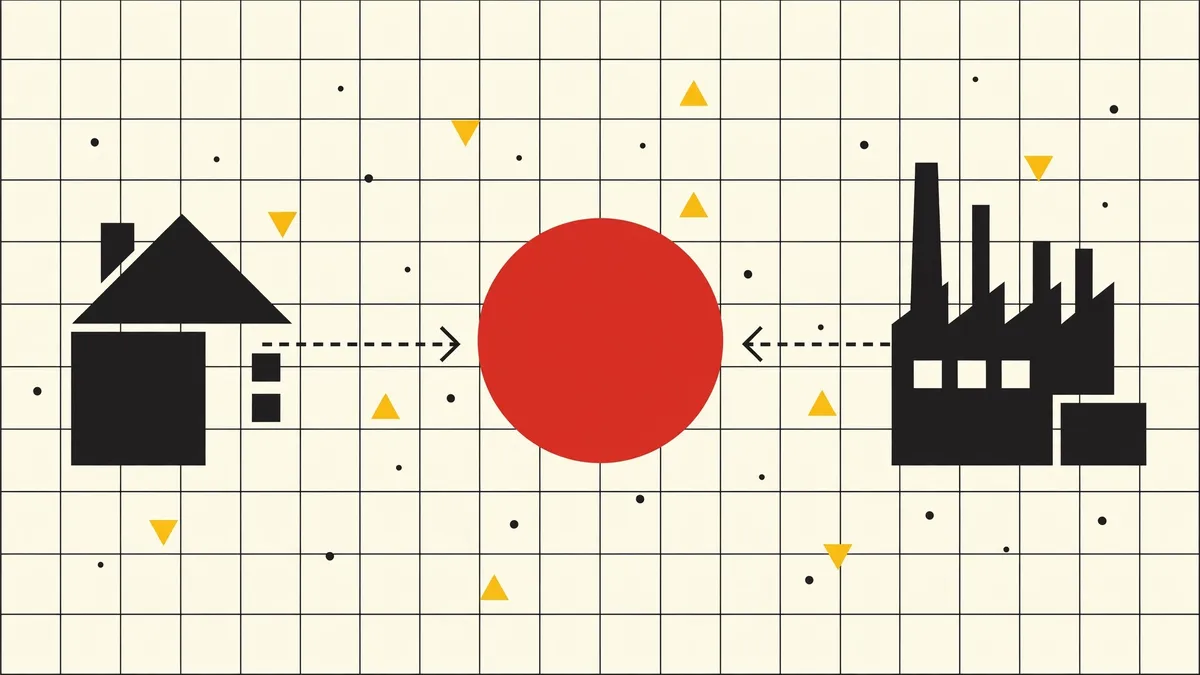
Millions of household and business decisions add up to the whole economy. Image generated by AI.
Woodford: sticky prices and the output gap
Woodford, born in Chicopee, Massachusetts in 1955 with a 1983 MIT doctorate, completed the picture. His 2003 book assembled the first complete New Keynesian model, the three-equation framework now taught to every central banker. Its ingredients: households spend based on expected future income and on the interest rate compared with a “natural” rate, and inflation comes from sticky prices plus the output gap, the difference between what the economy produces and what it could produce.
“Sticky prices” is the key friction. Shops do not rewrite their price lists every day when conditions change. That stickiness is what lets monetary policy bite: when demand runs hot, prices adjust slowly, so the pressure shows up in jobs and output instead of instantly vanishing into higher prices.
The model’s most practical insight is about words, not levers. Because households and businesses are forward-looking, a central bank that credibly communicates its future path steers expectations today. Woodford told the Nobel press conference that explicit statements about where interest rates were headed, not just cutting rates in the moment, were a key part of the response after the 2009 financial crisis. This is forward guidance, and it came straight from his framework.
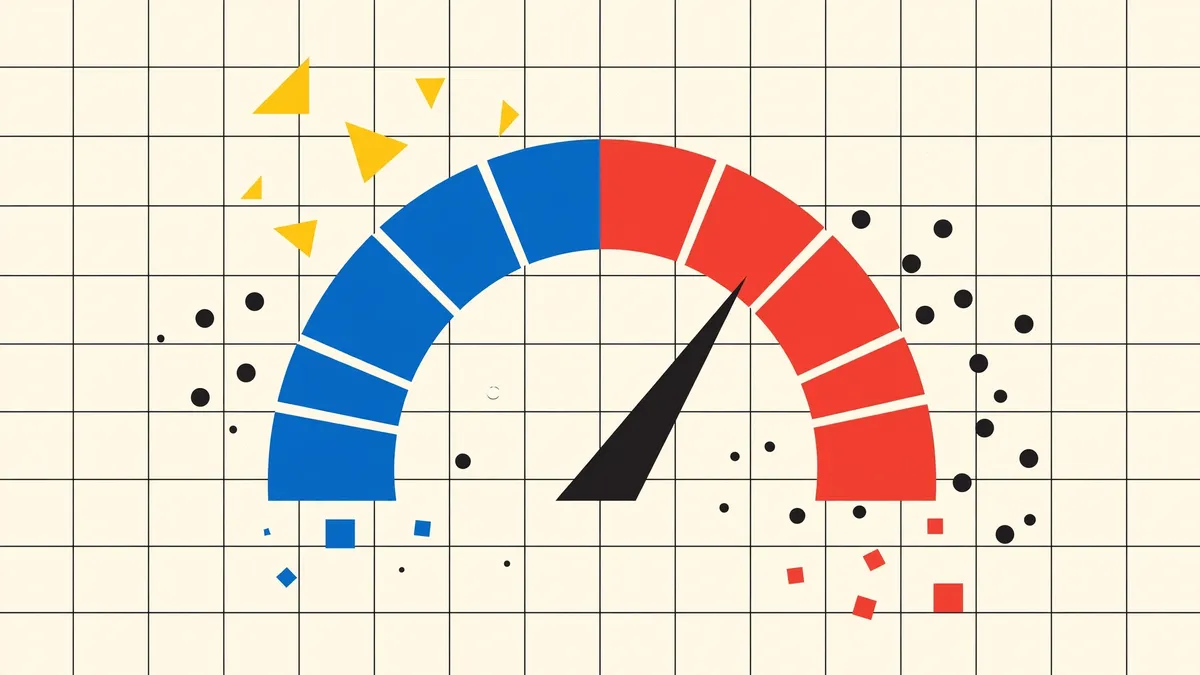
Interest rates are the main dial central banks turn to steady the economy. Image generated by AI.
Why it matters
The worth of a model is measured in the crises it helps tame. The pandemic threw millions of people out of work, and the supply shocks that followed drove up the cost of living. The recent energy shocks did the same. Central banks leaned on the New Keynesian toolkit to respond, and the damage, while real, was far less drawn out than the stagnation of the 1970s.
For ordinary readers the lesson is close to home. Every mortgage payment, car loan and savings account rate is shaped by this machinery. When inflation flared in 2022, the question facing policymakers was exactly the one Hall and Woodford framed: how much pressure is in the system, and how firmly must the economy be cooled? Their work turned that from a guess into a calculation.
Related reading
Want to see economic cycles play out in a real country? Read Belize After the Rebound: Can Recovery Become Long-Term Growth?, on how a small economy tries to turn a post-pandemic boom into lasting prosperity.
Frequently asked questions
Is the economics prize a real Nobel Prize?
It is awarded by the Royal Swedish Academy of Sciences alongside the science prizes, but it is technically a memorial prize established by Sweden’s central bank in memory of Alfred Nobel, not one of the five prizes he created in his will.
What is the New Keynesian approach?
It is the modern form of Keynes’s economics, rebuilt on microfoundations: models that start from how individual households and businesses make forward-looking decisions, then add the frictions, like sticky prices, that make economies wobble.
What is the output gap?
The difference between what the economy is producing and what it could produce at full employment. A positive gap means demand is pressing on the economy’s limits and inflation is likely to rise; a negative gap means slack and weak inflation.
How old are the new laureates?
Robert E. Hall is 83 and Michael Woodford is 70, as of October 2026.
Sources
- Press release: The Prize in Economic Sciences 2026, The Royal Swedish Academy of Sciences, October 12, 2026
- Popular information: Microfoundations deliver macro insights, The Royal Swedish Academy of Sciences
- Robert E. Hall: Facts, NobelPrize.org
- Two Americans win Nobel Prize in Economics for work on boom-bust cycles, NPR, October 12, 2026
- Robert Hall and Michael Woodford awarded 2026 Nobel Prize, National Bureau of Economic Research










0 Comments