

An original TeaLamp explainer based on the sources listed below. Prepared by the TeaLamp Editorial Team with the help of AI.
Today we hardly notice interviews. They fill podcasts, magazines, morning television and the back pages of novels. Yet the history of the interview is surprisingly short. Less than two hundred years ago, the idea of a reporter sitting down with someone, asking questions and printing the answers word for word was new, a little shocking and, to many editors, rather rude. Here is how a once-scorned newspaper trick became one of the most familiar ways we learn about each other.
Key takeaways on the history of the interview
- The newspaper interview is a 19th-century invention, and most historians trace it to the United States.
- Early claims for the “first interview” include James Gordon Bennett’s reporting in 1836 and Horace Greeley’s talk with Brigham Young in 1859.
- In 1868 Andrew Johnson became the first US president interviewed by a reporter for publication.
- Many editors first condemned interviews as intrusive, but by 1900 they were everywhere.
- The 20th century turned the interview into an art form, from The Paris Review’s literary conversations to Studs Terkel’s decades of radio talks.
Before the interview: speeches, letters and reports
For most of history, news came to readers in other forms. Newspapers printed official notices, speeches, letters, court reports and the reporter’s own description of events. People were quoted, of course, but usually from what they had said in public. The idea of a private conversation, held mainly so it could be published, was not yet a normal part of the job. As the EBSCO research guide to interviewing in journalism notes, interviewing only gained prominence in the late 19th century.
Two things changed that. Cheap “penny papers” in American cities needed lively stories to sell thousands of copies a day, and new technology such as the telegraph made fresh, personal news more valuable than ever.
Who gave the first interview?
Historians still argue about it, and the answer depends on what you count. As the Library of America’s Story of the Week explains, there are three main candidates.
The earliest is James Gordon Bennett, owner and editor of the New York Herald. In April 1836 he covered a notorious New York murder case himself, acting almost like a detective. He questioned the woman who ran the house where the crime took place and printed the conversation. A study in the journal Doxa Comunicación dates that report to April 16, 1836, and argues it may be the first published interview in history.
The second candidate is Horace Greeley of the New York Tribune. In 1859 he travelled west and spent about two hours talking with Brigham Young, the leader of the Latter-day Saints, in Salt Lake City. The Tribune printed the talk in question-and-answer form on August 20, 1859. The format was so unusual that Greeley added a note explaining it was, “as nearly as I can recall, the substance” of their conversation, as quoted in a history of newsgathering on ebrary.
The third is Joseph “Mack” McCullagh, a Washington correspondent for the Cincinnati Commercial. In 1867 he recorded a long conversation with Alexander H. Stephens, the former Confederate vice president, and in 1868, during his impeachment trial, President Andrew Johnson invited McCullagh to the White House to give his side. That made Johnson the first president interviewed by a reporter for publication. Many scholars see McCullagh’s work as the first interviews in the modern sense.
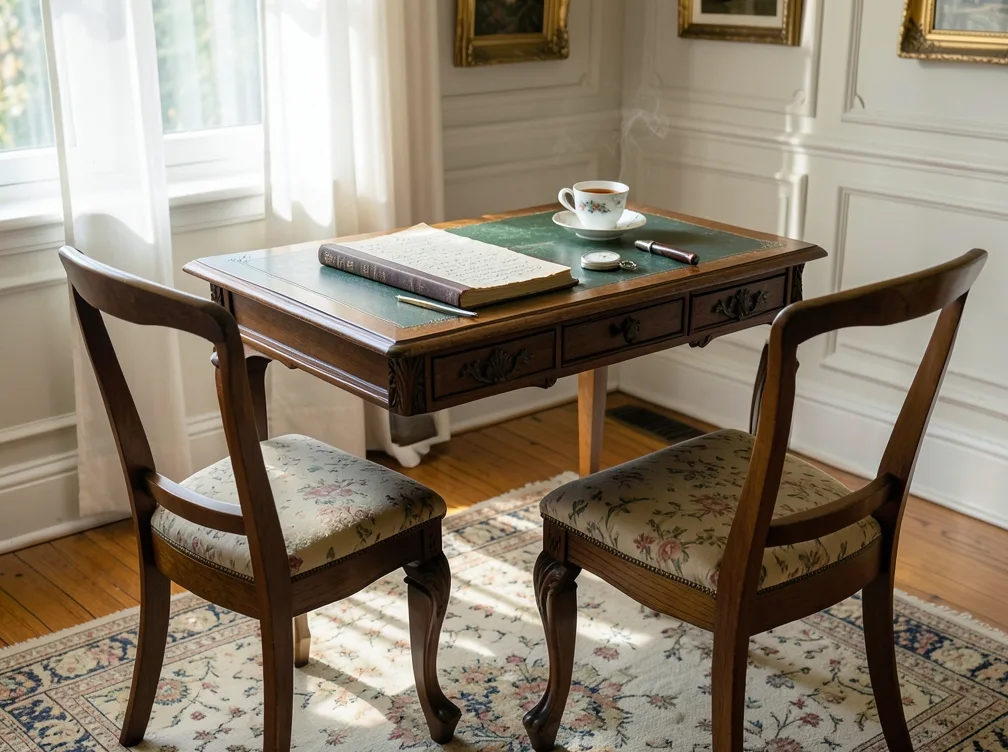
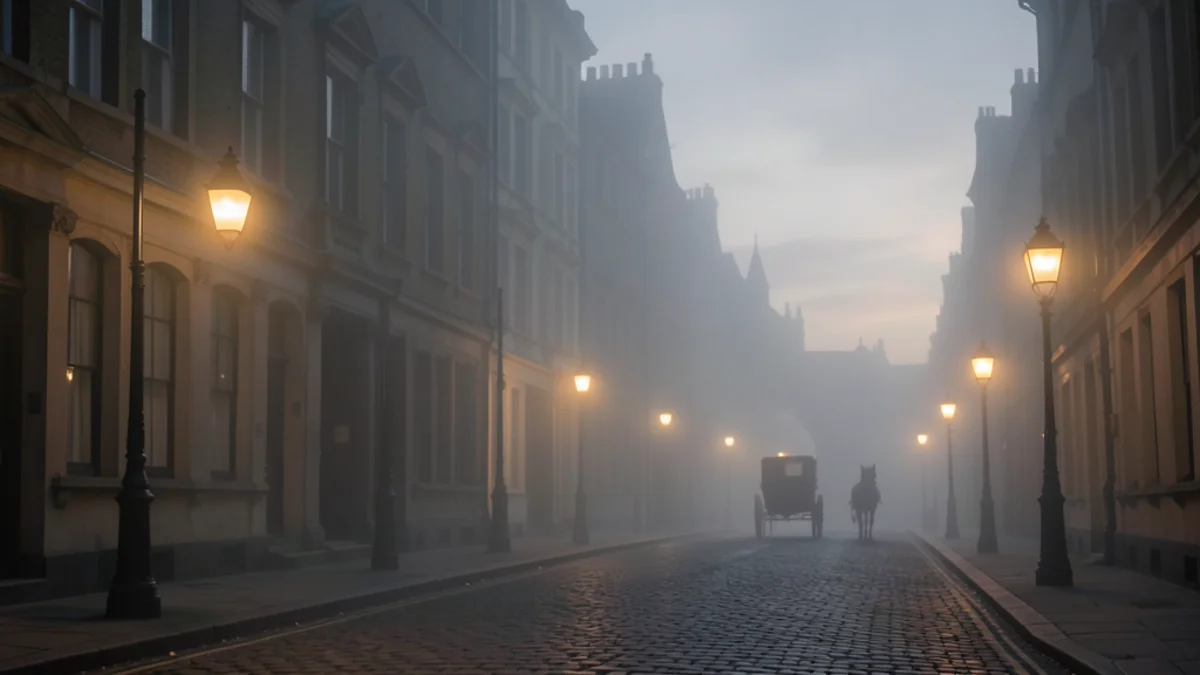
Early interviews were written down by hand, often from memory, long after the conversation ended. Image generated by AI.
A “pest” and an “Inquisition”: the backlash
Not everyone welcomed the new form. According to the Library of America, the magazine The Nation launched a campaign against interviews in 1869, calling them the joint product of a publicity-seeking politician and a reporter hunting for spicy copy. In 1873 The New York Times called the interview a “pest”, and the New York World described it as “a modern and American Inquisition.”
The complaints are easy to understand. Readers worried that reporters would twist words, that public figures would use interviews only to promote themselves, and that private matters would be dragged into print. Some of those worries still sound familiar today.
Mark Twain, always quick to spot a trend, poked fun at the form. In 1874 he wrote a comic sketch, “An Encounter with an Interviewer”, in which a nervous young reporter questions a narrator who answers with cheerful nonsense. Twain read it on stage for years. He had a complicated relationship with real interviewers: he often asked them to paraphrase him rather than quote him, because, as a working author, he preferred to sell his words rather than give them away. Even so, a later scholar gathered 258 published interviews with him, which shows how quickly the habit took hold.
How the interview took over the press
By the end of the 19th century, the critics had lost. The Library of America notes that interviews became common across newspapers and magazines, including many that had once condemned them. On-the-record interviews also spread from the United States to Europe and beyond, becoming one of America’s quieter cultural exports.
Part of the appeal was simple. A good quote lets readers hear a person in their own words. It adds warmth and colour to facts, and it lets readers judge a speaker for themselves instead of relying only on a reporter’s summary.
The interview becomes an art form
In the 20th century, the interview grew far beyond quick news quotes. One famous example began in 1953, when a small group of young Americans in Paris, including Peter Matthiessen, Harold L. Humes and George Plimpton, launched a literary magazine called The Paris Review. Instead of printing scholarly essays about writers, they decided to let writers explain their craft themselves. The first issue carried a conversation with the English novelist E. M. Forster, recorded at King’s College, Cambridge, on June 20, 1952, and published as The Art of Fiction No. 1. The series has since grown to include hundreds of novelists, poets, playwrights and translators.
Radio brought another kind of interview, one that people could hear. In Chicago, the broadcaster and oral historian Studs Terkel hosted programmes on the station WFMT from 1952 to 1997. He talked with famous musicians and writers, but also with ordinary working people. According to the Studs Terkel Radio Archive, he created about 5,600 radio programmes there. The Library of Congress later helped digitise thousands of his tapes, and the online archive launched in May 2018, on what would have been his 106th birthday.
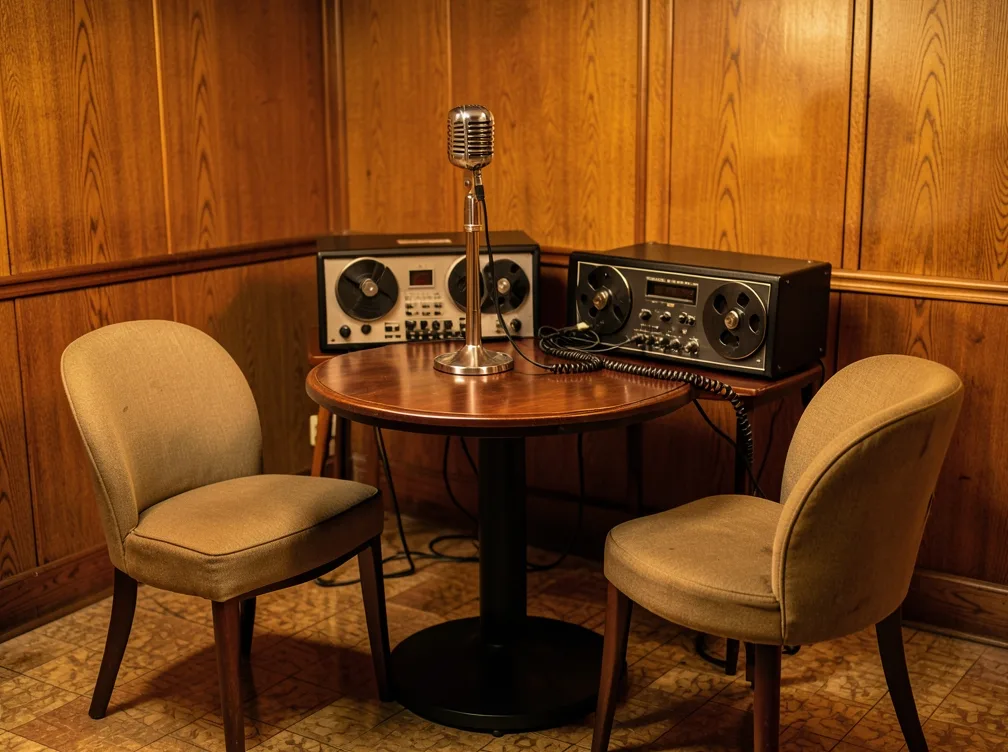
In the 20th century, radio turned the interview into something people could hear. Image generated by AI.
From oral history to podcasts
Terkel’s work points to a big shift: the interview was no longer only for the powerful or famous. Oral historians record the memories of farmers, nurses, factory workers and grandparents, so that ordinary lives become part of the historical record. Projects such as StoryCorps, which we described in our guide on how to interview your grandparents, invite families to record one another.
Today podcasts and video calls let almost anyone run an interview from a kitchen table. The tools have changed, but the basic idea Greeley struggled to explain in 1859 is the same: one person asks, another answers, and the rest of us listen in.
What history teaches about a good interview
Looking back over nearly two centuries, a few lessons stand out:
- Accuracy builds trust. The early fear that reporters would invent or twist answers is why careful note-taking, recording and checking quotes became standard.
- Depth matters. The Paris Review chose to ask writers about the craft of writing itself, and that focus is why its conversations are still read decades later.
- Listening beats talking. Terkel’s long radio conversations gave people time to speak at length, which is still the heart of a good interview.
- Everyone has a story. The move from presidents to ordinary people is one of the interview’s greatest gifts.
For more on the craft, see our piece on the quiet power of a good question and what an astronaut’s interviews can teach us.
Why it matters
The history of the interview is really a history of curiosity. A form that began as a bold, slightly scandalous newspaper experiment became a way to hear voices that might otherwise be lost. The next time you listen to a podcast over a cup of tea, it is worth remembering that the simple act of asking someone a question, and printing what they say, once felt like a revolution.
Frequently asked questions
What was the first newspaper interview?
There is no single agreed answer. Candidates include James Gordon Bennett’s New York Herald report of April 1836, Horace Greeley’s 1859 question-and-answer talk with Brigham Young, and Joseph McCullagh’s interviews of 1867 and 1868.
Who was the first US president to give an interview?
Andrew Johnson, who invited reporter Joseph McCullagh to the White House in 1868, during his impeachment trial, is generally named as the first president interviewed by a reporter for publication.
Why were early interviews controversial?
Critics in the 1860s and 1870s saw them as intrusive, self-promoting and easy to distort. Publications such as The Nation and The New York Times openly attacked the practice before it became normal.
Sources
- Library of America, Story of the Week: An Encounter with an Interviewer (Mark Twain)
- Doxa Comunicación: The birth of the journalistic genre of the interview (PDF)
- ebrary: When was the first interview, and how did interviewing become standard practice?
- EBSCO Research Starters: Interviewing in journalism
- The Paris Review: E. M. Forster, The Art of Fiction No. 1
- WFMT: About the Studs Terkel Radio Archive
- Library of Congress: Library collaborates with Chicago History Museum to preserve Studs Terkel’s recordings





0 Comments