

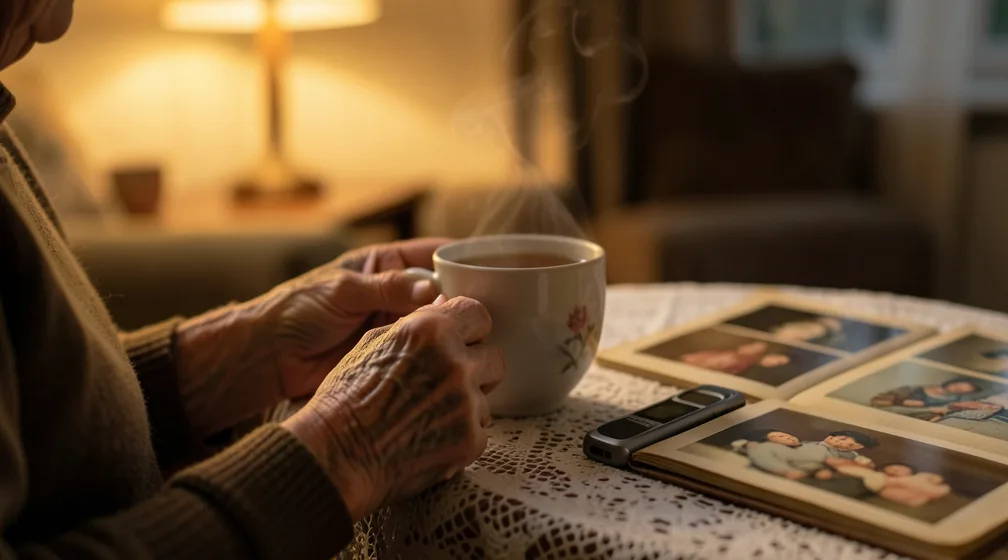
An original TeaLamp explainer based on the sources listed below. Prepared by the TeaLamp Editorial Team with the help of AI.
The holidays bring families around the same table, and that makes them one of the best times of the year to interview your grandparents. A relaxed conversation, a phone on the table and a pot of tea can turn half-remembered family stories into a recording your children and grandchildren will treasure. You do not need special equipment or training, only a little planning and a lot of listening.
Key takeaways on how to interview your grandparents
- Plan a handful of open questions, but treat them as a guide, not a script.
- Start with easy warm-up questions, then move towards memories, places and turning points.
- Ask for permission to record, explain what you will do with the recording, and respect any topic they want to skip.
- A quiet room and an ordinary smartphone are usually enough for good sound.
- Label the file, write a short summary and keep copies in more than one place so the story lasts.
Why family interviews are worth the effort
Many families have one relative who “knows all the stories”, and many families only realise how much that person carried when it is too late to ask. Folklorists have long argued that ordinary people are history’s best witnesses. The Smithsonian Folklife and Oral History Interviewing Guide quotes the folklorist Barbara Kirshenblatt-Gimblett, who called such tradition-bearers “living links in the historical chain, eye witnesses to history.”
This kind of recording has a name: oral history. It is simply history gathered by listening to people describe their own lives. Big public projects show how much it matters. StoryCorps, founded in 2003 with a recording booth in New York’s Grand Central Terminal, has collected conversations between ordinary people for more than two decades, according to its history page. Its interviews are preserved at the American Folklife Center at the Library of Congress, and since 2015 its Great Thanksgiving Listen has invited people to record an elder, mentor or friend over the holiday.
Even if you never share your recording with an archive, the same idea applies at home. A grandparent’s voice, with its laughs, pauses and favourite phrases, says something no photo album can.
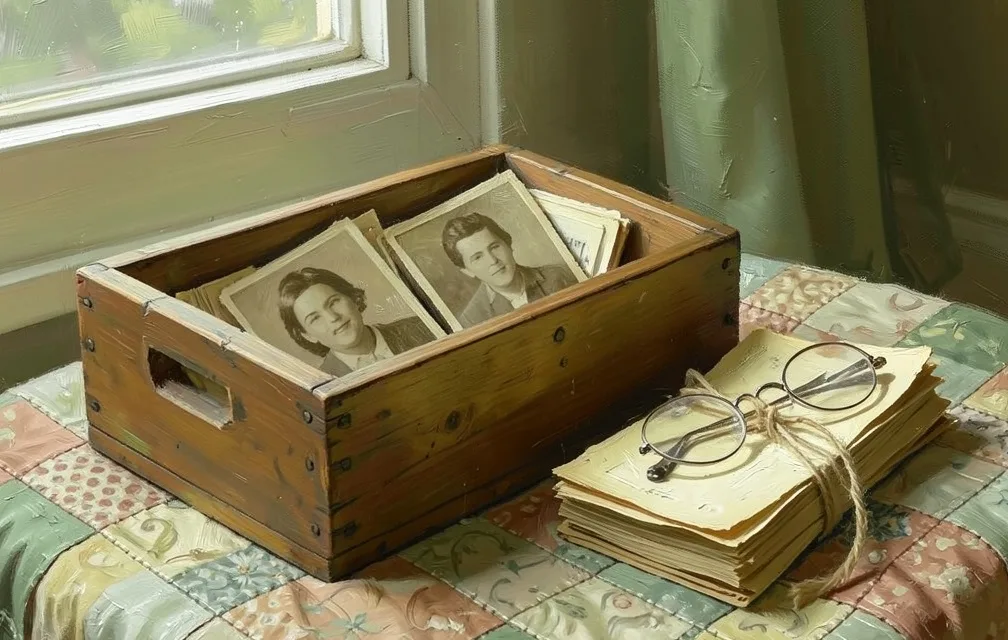
Old photos and letters are wonderful prompts for family memories. Image generated by AI.
Before you press record
Choose a calm time and place
The busiest moment of a holiday is rarely the best moment for a deep talk. StoryCorps suggests scheduling a time when both of you can relax and avoid interruptions, and recording in a quiet place. A side room after lunch, or a slow morning before guests arrive, often works better than the dinner table itself. Turn off the television, move away from the kitchen and, if you can, sit on soft furnishings that soak up echo.
Ask for consent and explain the plan
Recording someone is a matter of trust. The Oral History Association’s principles and best practices put respect for the narrator at the centre of the work, including their informed consent and their right to understand how a recording will be used. In a family setting, that can be as simple as saying, “I’d love to record this so the grandchildren can hear it one day. Is that all right? You can skip anything you like.” The Smithsonian guide also offers simple sample release forms, which are handy if you might later share the recording more widely.
Prepare a short list of questions
StoryCorps recommends planning around six to eight questions for a 40-minute conversation, and sharing them ahead of time so your grandparent can think back. That might sound like very few, but good answers lead to new questions, and a short list leaves room for surprises.
How to interview your grandparents, step by step
Once the tea is poured and the phone is recording, the craft is mostly about listening. These steps draw on the advice in the StoryCorps tips for a great conversation and the Library of Congress guide Folklife and Fieldwork.
- Introduce the recording. Begin by saying the date, the place and who is speaking. Future listeners will thank you.
- Start with warm-ups. Easy questions such as where they were born or what their childhood home looked like help everyone settle in.
- Ask open questions. Phrases like “Tell me about…” or “What was it like when…” invite stories rather than yes-or-no answers.
- Follow up. Simple prompts such as “And then what happened?” or “How did that feel?” are often where the best memories appear.
- Add context. If they mention a person or place, ask who or where it was. A name that is obvious to you may mean nothing to a great-grandchild.
- Invite the senses. Ask what the kitchen smelled like, what music played or what a street sounded like. Sensory details make stories vivid.
- End with reflection. Save a few minutes for big questions about lessons learned, hopes for the family or how they would like to be remembered.
Above all, let silences breathe. Older people often need a moment to travel back in time, and the pause before an answer is part of the story. Resist the urge to fill it.

An ordinary smartphone in a quiet room is usually enough to record a family interview. Image generated by AI.
Questions that open up good stories
You can write your own questions, but published lists are a great starting point. The StoryCorps Great Questions collection and the Smithsonian guide both offer many ideas. Here are a few themes we find especially rich, written in our own words:
- Childhood: the house they grew up in, a favourite game, the food that meant “home”.
- Family: how their parents met, a relative who influenced them, stories their own grandparents told.
- Work and everyday life: a first job, what things cost, how they travelled, what a normal week looked like.
- Big moments: moving to a new place, meeting a partner, the birth of a child, a time they were proud of themselves.
- Traditions: how holidays were celebrated, recipes, songs or sayings that have been passed down.
- Looking back: what they wish they had known at your age, and what they hope for the youngest members of the family.
Some memories are painful, especially for people who lived through war, migration or loss. Let your grandparent decide how far to go. It is perfectly fine to steer gently to another topic, or to stop and simply hold their hand for a while.
Keeping the recording safe
A recording that sits forgotten on one phone is easily lost. The Library of Congress fieldwork guide treats documentation and archiving as part of the job, not an afterthought. A few simple habits help:
- Give the file a clear name with the person’s name, the date and the place.
- Write a short summary of what you talked about and roughly when key stories come up.
- Keep at least two copies in different places, for example on a computer and with a relative, as the Library of Congress personal digital archiving guidance recommends for family files.
- Check the copies now and then, and move them to new devices as technology changes.
If you would like your interview to become part of a public collection, StoryCorps explains how to upload it to its online archive and choose privacy settings that feel right.
Why it matters
Families pass down more than objects. They pass down ways of speaking, jokes, recipes, values and the small details of how ordinary life used to feel. When you interview your grandparents, you give those details a second life and you give your grandparents something precious too: the experience of being truly listened to. Many people find that the conversation itself, not just the recording, becomes one of the warmest memories of the season.
Related reading: for more on what thoughtful interviews can teach us, read what an astronaut’s interviews teach us, and brew the perfect pot for your chat with our guide to brewing loose-leaf tea.
Frequently asked questions
How long should a family interview be?
About 40 minutes to an hour is a good target. StoryCorps suggests six to eight questions for a 40-minute conversation. You can always record a second session another day.
What equipment do I need?
A smartphone, tablet or computer with a microphone is usually enough. A quiet room matters more than an expensive microphone.
What if my grandparent is shy or does not want to be recorded?
Respect their choice. You can start with a casual chat, share a photo to spark memories, or simply take notes instead. Many people relax once the conversation is flowing.
Sources
- Smithsonian Center for Folklife and Cultural Heritage: The Smithsonian Folklife and Oral History Interviewing Guide
- Library of Congress, American Folklife Center: Folklife and Fieldwork guidebook
- Library of Congress: Personal Digital Archiving
- Oral History Association: Principles and Best Practices (2018)
- StoryCorps: Tips for a Great Conversation
- StoryCorps: Great Questions
- StoryCorps: The Great Thanksgiving Listen
- StoryCorps: History






0 Comments