

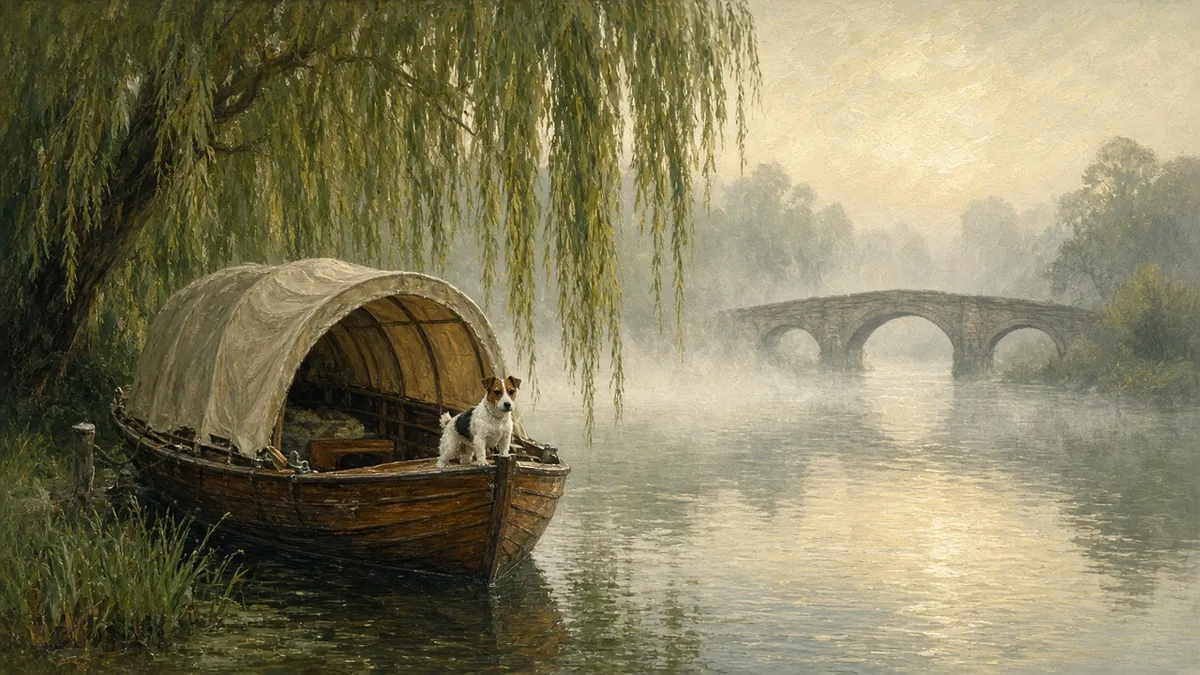
A TeaLamp book review of Three Men in a Boat (To Say Nothing of the Dog) by Jerome K. Jerome (1889), written in our own words. Prepared by the TeaLamp Editorial Team with the help of AI.
This Three Men in a Boat review looks at one of the gentlest and funniest books in English: three London friends and a small terrier set off up the River Thames for a fortnight of rowing, camping and fresh air, and almost nothing goes to plan. Jerome K. Jerome published it in 1889, and it has never been out of print since. It is a book about a holiday that reads like one, and it may be the only classic novel with a running joke about getting a kettle to boil. Here is what makes it last, and who will enjoy it most.
Key takeaways from our Three Men in a Boat review
- A comic novel by the English writer Jerome K. Jerome, first published in 1889, about a two-week boating trip on the Thames from Kingston upon Thames to Oxford and back.
- The three men are based on Jerome and two real friends; the dog, Montmorency, was invented.
- The book mixes slapstick mishaps, long comic digressions and quieter passages about river history and scenery.
- It suits readers who love gentle, observational humour, armchair travel and stories best enjoyed a chapter at a time.
What the book is about
The story opens in the narrator’s rooms in London. J., George and Harris are sure they are all unwell. J. has just read a medical book and found symptoms of nearly every disease in it except one. They agree that what they really need is rest and a change of scene. After rejecting a sea voyage and a quiet country stay, they decide to hire a camping skiff and row up the Thames, sleeping under a canvas cover on the boat or at riverside inns.
That is almost the whole plot, and it is all the book needs. The three men pack badly, row unevenly, argue about who is doing the work, get lost, get rained on and eat a great deal. Along the way J. points out the places they pass, such as Hampton Court, Magna Carta Island and the little river towns, and wanders off into memories of earlier trips and friends. The book was first planned as a light travel guide to the river. The jokes soon took over, but the guidebook is still there underneath, which gives the comedy a real map to follow.
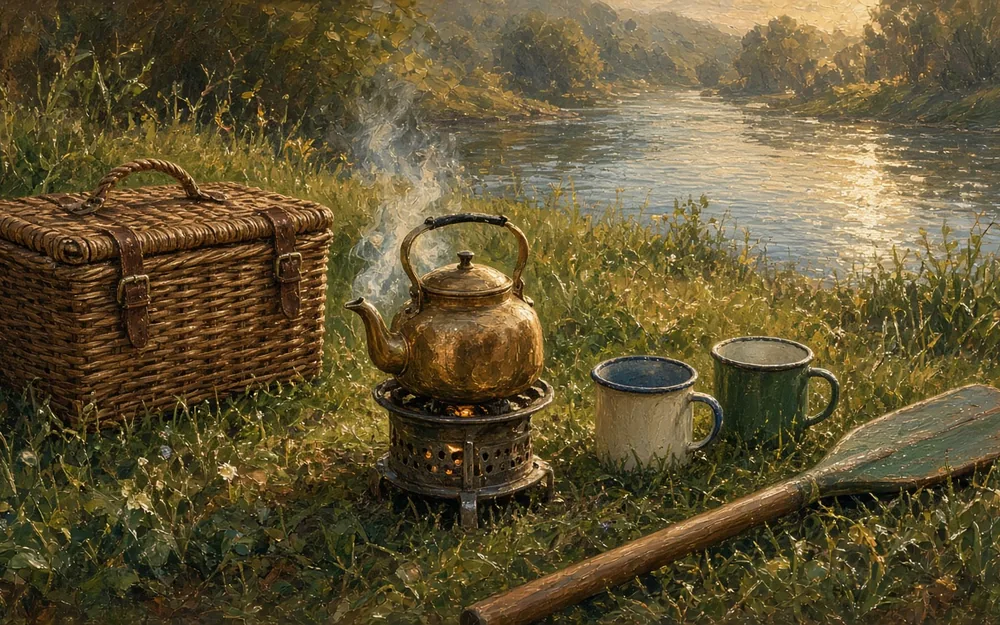
A riverside kettle, the running joke of the book. Image generated by AI.
Comedy built from ordinary disasters
The humour in Three Men in a Boat comes from things everyone has lived through. One of the best-loved scenes is the packing in chapter four. J. offers to supervise, the others make a mess of it, then the roles reverse and the chaos grows: the butter goes missing, then turns up in the least likely place. In chapter six, Harris boasts that the hedge maze at Hampton Court is simple, then leads a growing crowd of lost visitors round and round in circles.
Food is a rich source of trouble. In chapter twelve the friends discover they have a tin of pineapple but no tin-opener, and their attempts to open it end in a battle that the tin wins. Later they build a stew from every leftover in the hamper. Jerome’s gift is to describe these moments with a perfectly straight face, as if each small domestic defeat were a serious historical event.
The kettle, the tea and the dog
Tea lovers will feel right at home. In chapter ten, J. explains that a kettle on the river will never boil if it notices you are waiting for it. The only way, he advises, is to walk away and loudly announce that nobody wants tea anyway. It is one of the book’s most quoted ideas and a lovely example of its style: a silly theory delivered with total conviction.
Montmorency, the fox terrier, steals many scenes. He is proud, nosy and always in the way, and in chapter fourteen he picks a fight with the camp kettle and comes off worst. Jerome later joked that the dog came from the part of every Englishman that is a little bit dog. Montmorency gives the book its famous subtitle and much of its warmth.

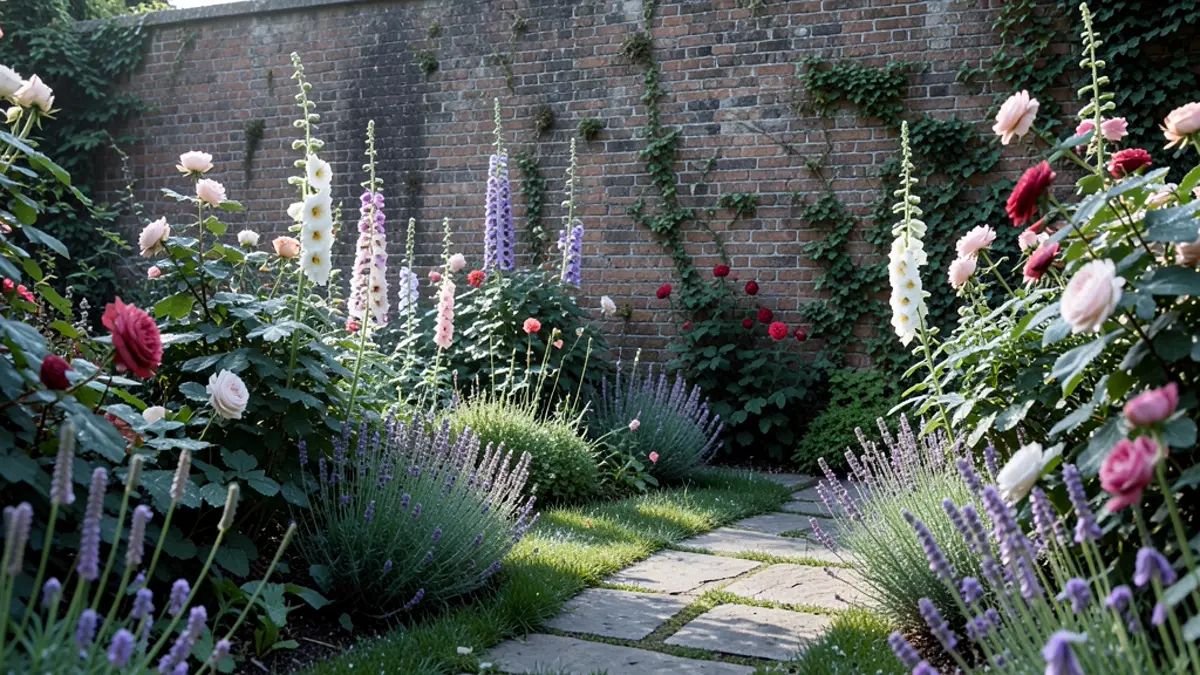
A hedge maze like the one Harris gets lost in at Hampton Court. Image generated by AI.
The quieter river between the jokes
Not every page is a punchline. Between the comic set pieces, J. pauses to describe sunsets on the water, old churches, legends of the river and scenes from English history, such as the sealing of Magna Carta in the riverside meadows. These passages are written in a more lyrical, old-fashioned style, and some readers find the change of tone surprising.
They are best read as part of the journey’s rhythm. The river is calm, then busy, then calm again, and the book moves the same way. Readers who enjoy slow travel writing will like these interludes; readers who come only for laughs can let them drift by without losing the thread.
Why it still feels fresh
Many comic novels from the 1880s now feel dated. This one mostly does not, because its targets are timeless: overpacking, pride, bad weather, small arguments between friends, and the gap between the holiday we plan and the holiday we get. The language is relaxed and chatty, almost like a long letter from a funny friend.
Critics in 1889 were not all kind. Some disliked its everyday slang and called it vulgar. Readers felt differently. The book sold in huge numbers in Britain and America and was translated into many languages. It has been adapted for film, radio, stage and television, and fans still row the route today, since many of the riverside inns J. mentions are still there.
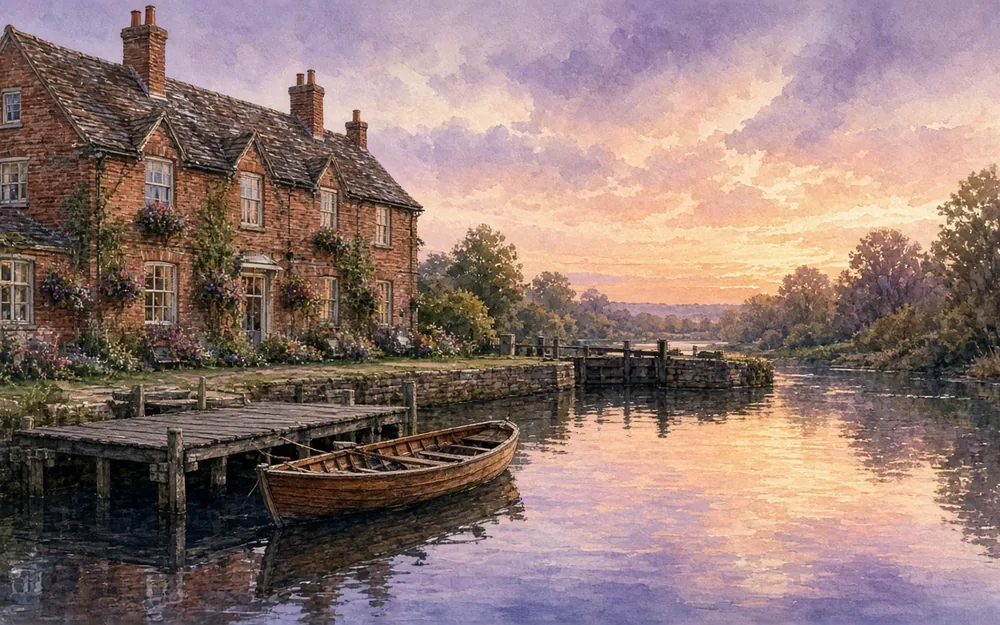
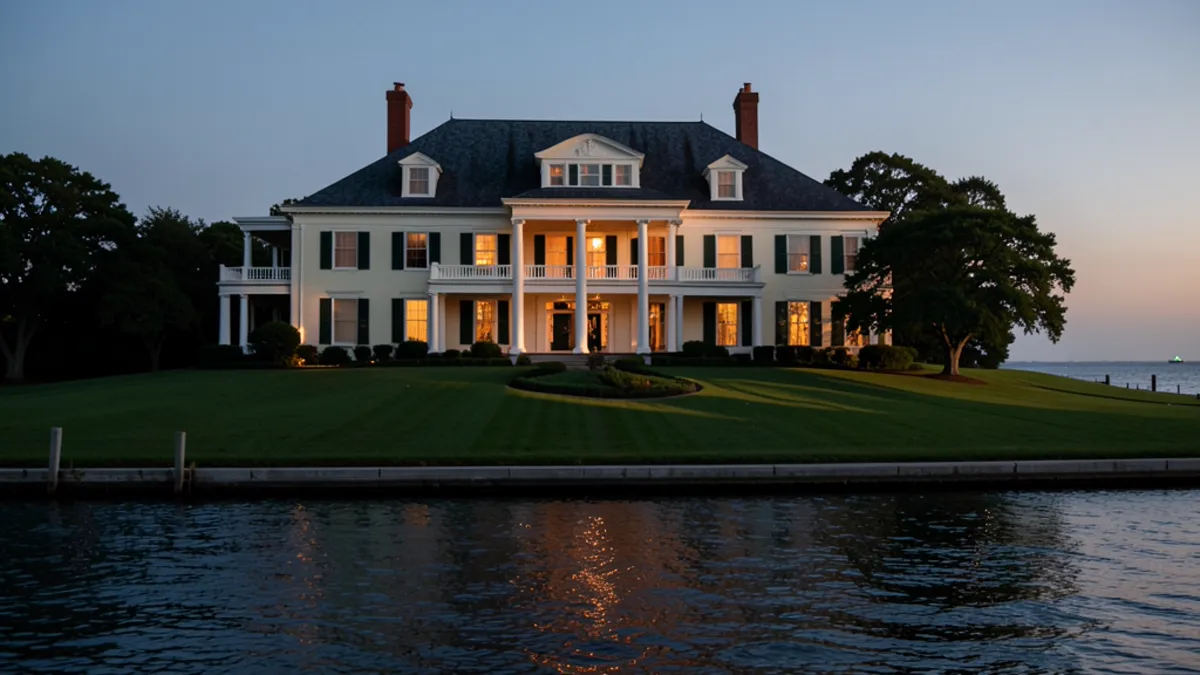
Riverside inns still line the route the three friends rowed. Image generated by AI.
Who will enjoy it most
Three Men in a Boat is best for readers who like humour that grows out of character rather than plot twists. It works well as a bedside book or a commuting companion, because each chapter is a small story in itself. It also makes a cheerful read-aloud for families with older children, since its comedy is clean and good-natured.
Readers who prefer tight plotting and constant action may want to treat it as a series of sketches rather than a novel, dipping in and out over a week or two. Lovers of P. G. Wodehouse, Gerald Durrell’s family stories or modern travel humour will recognise an ancestor of the books they already enjoy. And anyone who has ever argued with a tent, a timetable or a stubborn kettle will find a kindred spirit in J.
How to read it
The novel is in the public domain, so free editions are easy to find, including the text at Project Gutenberg, which keeps the original small illustrations. It is short enough to finish in a weekend, but it rewards a slower pace: a chapter with a cup of tea in the evening, perhaps, while waiting for the kettle to give up and boil. If you enjoy it, Jerome wrote a sequel, Three Men on the Bummel (1900), in which the same friends take a cycling holiday in Germany.
Why it matters
Three Men in a Boat helped show that a book could be a classic simply by being funny, kind and true to everyday life. It also captured a moment when boating on the Thames had become a popular pastime for ordinary Londoners, and it remains a charming record of that world. More than a century later, its message is still a welcome one: plans go wrong, friends get on our nerves, and the holiday is wonderful anyway.
Related reading
For another classic journey with a very different pace, read our Around the World in Eighty Days review. And if Jerome’s kettle has you reaching for a cup, browse our reading list of books about tea.
Sources
- Three Men in a Boat (To Say Nothing of the Dog), free public-domain text (Project Gutenberg)
- Three Men in a Boat: background, real-life models, reception and adaptations (Wikipedia)
- Jerome K. Jerome: life and works (Wikipedia)
- Three Men on the Bummel, the 1900 sequel (Wikipedia)





0 Comments