

A TeaLamp reading list of five Japanese novels, with notes written in our own words. Prepared by the TeaLamp Editorial Team with the help of AI.
Autumn evenings were made for a warm pot of green tea and a book that takes its time. Japanese fiction is famous for exactly that mood: quiet rooms, changing seasons and feelings that are shown rather than shouted. This list of Japanese novels to read over tea brings together five much-loved books, from a 1914 classic to a modern bestseller. Each one is available in English translation, and each offers a different kind of calm.
How we chose these Japanese novels to read over tea
We looked for books that are widely admired, easy to find in translation and gentle enough to enjoy slowly. Two are by Nobel-era masters of the twentieth century, one is a family saga, and two are short modern novels that reached huge audiences. The list moves roughly in date order, so you can also read it as a small journey through a century of Japanese storytelling.
- Best for a first try: Kitchen or The Housekeeper and the Professor, both short and warm.
- Best for a long, cozy read: The Makioka Sisters.
- Best for tea lovers: Thousand Cranes, built around the tea ceremony.
1. Kokoro by Natsume Sōseki (1914)
Natsume Sōseki (1867–1916) is often called the most important novelist of Japan’s modern era, and for twenty years his portrait appeared on the 1,000-yen banknote. Kokoro, first serialised in the Asahi Shimbun newspaper in 1914, is his most widely read book. The title can mean heart, mind or spirit.
A young student meets an older man on the beach at Kamakura and starts calling him Sensei, or teacher. Sensei lives quietly, visits a grave every month and seems weighed down by something he will not explain. The last part of the novel is a long letter in which he finally tells his story. Set at the end of the Meiji era, the book is about friendship, guilt and loneliness in a fast-changing country. It is serious, but its clear, simple style makes it surprisingly easy to read.
Read it if: you enjoy reflective novels and stories told through letters.
2. The Makioka Sisters by Jun’ichirō Tanizaki (1943–1948)
Jun’ichirō Tanizaki began publishing this long family novel in a magazine in 1943, but wartime authorities stopped the serial because they saw its gentle, private world as out of step with the war effort. He kept writing, and the full book appeared after the war. Edward Seidensticker’s English translation came out in 1957.
Four sisters from an old Osaka merchant family try to hold on to their way of life in the late 1930s. Much of the plot follows the search for a husband for Yukiko, the shy third sister, while the youngest, Taeko, wants a freer life of her own. Floods, illness and money worries come and go, but the heart of the book is ordinary life: letters, visits, clothes, meals and the yearly trip to see the cherry blossoms in Kyoto. It is long, but it reads like a slow, comforting family visit.
Read it if: you love family sagas and books that capture a vanished world in fine detail.
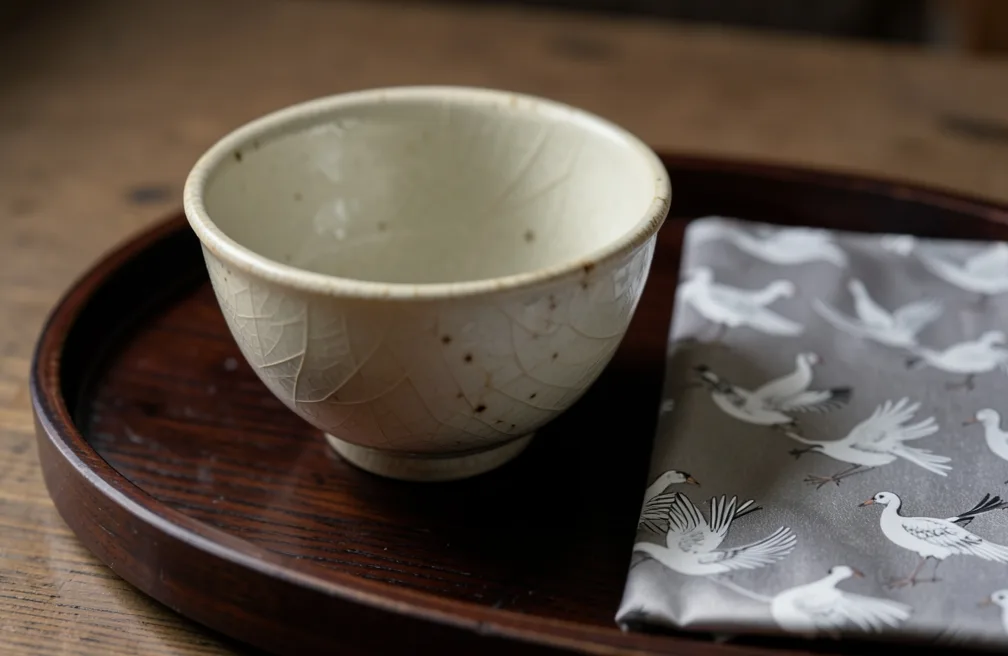
Tea bowls carry memories from hand to hand in Thousand Cranes. Image generated by AI.
3. Thousand Cranes by Yasunari Kawabata (1952)
Yasunari Kawabata (1899–1972) became the first Japanese writer to win the Nobel Prize in Literature, in 1968. The Swedish Academy mentioned this novel by name, together with Snow Country and The Old Capital. Thousand Cranes first appeared in instalments from 1949 and was published as a book in 1952.
The story is short and built around the tea ceremony. Kikuji, whose late father loved the tea ceremony, is invited to a tea gathering by Chikako, one of his father’s former companions, who hopes to arrange his marriage. There he meets Mrs Ota, another woman from his father’s past, and later her daughter Fumiko. Old tea bowls and water jars pass from hand to hand, carrying memories with them. Kawabata says much through silence and small gestures, so it is a novel to read slowly, perhaps with a bowl of matcha nearby.
Read it if: you are curious about the tea ceremony and enjoy short, poetic fiction.
4. Kitchen by Banana Yoshimoto (1988)
Banana Yoshimoto’s debut won the Kaien Newcomer Writers Prize and became a publishing sensation in Japan, so popular that the press spoke of “Bananamania”. Megan Backus’s English translation followed in 1993. Most editions pair the title story with a second novella, Moonlight Shadow.
Mikage, a young woman in Tokyo, loses the grandmother who raised her. She feels most at peace in kitchens, even sleeping beside the refrigerator. A kind young man named Yuichi and his warm, unconventional parent Eriko invite her to stay with them, and slowly she begins to heal. The book is about grief, but it is also full of late-night cooking, city lights and small kindnesses. It can be read in one evening.
Read it if: you want a short, tender story about loss and comfort.

In Kitchen, a quiet late-night kitchen becomes a place to heal. Image generated by AI.
5. The Housekeeper and the Professor by Yōko Ogawa (2003)
Yōko Ogawa’s novel won the first Japan Booksellers’ Award in 2004, a prize voted for by bookshop staff, and later became a film. Stephen Snyder’s English translation appeared in 2009.
A housekeeper is sent to work for a retired mathematician whose memory lasts only eighty minutes, the result of a car accident years before. Every morning he meets her as a stranger, and he greets her with questions about numbers, such as her shoe size or her phone number. Over time she, her ten-year-old son, whom the Professor nicknames Root, and the Professor form a gentle family of their own, bound by prime numbers, baseball and patient care. You do not need to like maths to enjoy it; the numbers are explained simply and feel almost magical.
Read it if: you enjoy heartwarming stories about unlikely friendships.
Tips for reading Japanese fiction slowly
- Notice the seasons. Weather, flowers and food often hint at a character’s mood.
- Read the silences. Many important things are left unsaid, so pause when a conversation suddenly stops.
- Check the translator’s note. Good translations often explain names, titles and customs in a few pages.
- Pair with tea. A light green tea such as sencha or a cup of roasted hōjicha suits these books well.
Related reading
For more slow reads, see our five classic nature books to read over tea, or try our Wind in the Willows review for a cozy English classic.
Sources
- The Nobel Prize, Yasunari Kawabata, facts (Nobel Prize in Literature 1968)
- Wikipedia, Natsume Sōseki and Kokoro
- Wikipedia, The Makioka Sisters (serialisation and wartime ban)
- Wikipedia, Thousand Cranes
- Wikipedia, Kitchen (novel) and Banana Yoshimoto
- Wikipedia, The Housekeeper and the Professor









0 Comments