

Originally published by Harditaher WMID (Wikimedia Indonesia) in Diff, the Wikimedia community blog on September 30, 2026, under a Creative Commons licence (CC BY-SA 4.0) (Diff’s footer reads “Content licensed under Creative Commons Attribution-ShareAlike 4.0 (CC-BY-SA) unless otherwise noted”; the three photos are credited CC BY-SA 4.0). Republished here under that licence. This adaptation is shared under the same licence (CC BY-SA 4.0). Diff, the Wikimedia Foundation, Wikimedia Indonesia and the author are not contributors to TeaLamp and do not endorse it or its use of their work. The article is about how WikiKathā helps preserve indigenous languages in Indonesia. Changes: formatting, the “Share this”, translation-request and related-post boxes removed, a short “Key takeaways” section added by TeaLamp. Prepared for TeaLamp by the TeaLamp Editorial Team with the help of AI.
Amid rapid modernization and development that frequently displace indigenous communities, many regional languages in Indonesia find themselves increasingly marginalized. Responding to the threat facing this oral heritage, Wikimedia Indonesia (WMID), in collaboration with the Alliance of Indigenous Peoples of the Archipelago (AMAN), through the Wikimedia Foundation Knowledge Equity Fund launched a collaborative project titled WikiKathā.
The name WikiKathā is derived from combining the word wiki and the Sanskrit word कथा (kathā), meaning ‘story’—which was subsequently absorbed as ‘kata’ (word) in the Malay language. Through this project, contributors aim not only to digitally preserve vocabulary, but also to safeguard the stories and cultural values embedded behind them.
Reaching Threatened and Isolated Languages
Unlike general regional language documentation projects, WikiKathā focuses specifically on indigenous languages that receive little attention, are threatened with extinction, and are difficult to access. From August 2025 to May 2026, teams of fieldworkers and indigenous youth traveled to various remote corners of the archipelago.
Some of the languages targeted for field documentation include:
- Balik language in Sepaku, East Kalimantan;
- Orang Rimba language in Jambi;
- Isam language and O’Hongana Manyawa language in Malifut, North Halmahera;
- Kutai language (Adat Lawas variant) in Kutai Kartanegara, East Kalimantan;
- Using language in Banyuwangi, East Java;
- Punan Tubu language (Tugung variant) in Sekatak, North Kalimantan;
- Sakai language and Talang Mamak language in Pekanbaru, Riau; and
- Sasak language in Selong, East Lombok, West Nusa Tenggara.
Digital Collaboration: From Audio Recording to Wiktionary
The project implemented a “miniature language documentation” model, a practical 2-to-3-day approach where local indigenous youth pair with native speakers to record and preserve their own language.
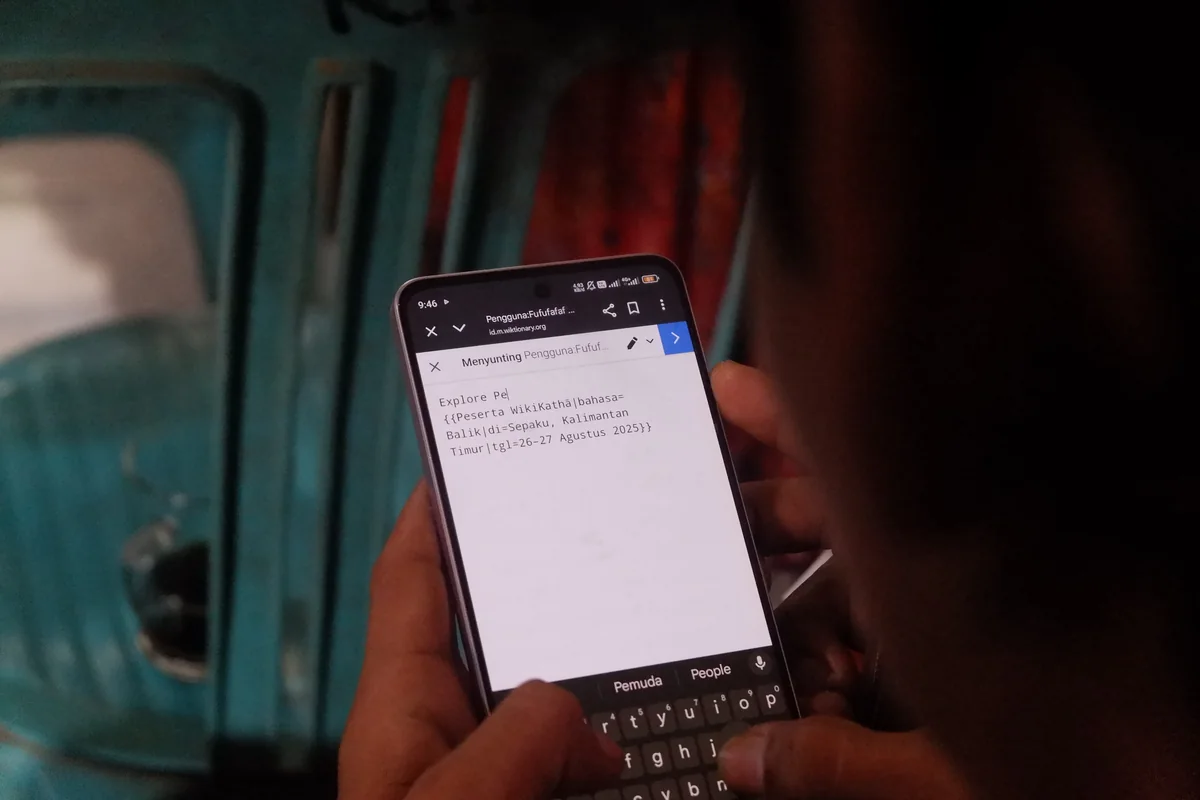
Editing workshop for inserting lemmas into Wiktionary during the WikiKathā activity in Sepaku, East Kalimantan, August 2025. Photo: Wadaihangit, CC BY-SA 4.0, via Diff.
This preservation process spans three main stages:
- Vocabulary Inventory: Collecting and verifying word lists alongside native speakers.
- Audio Recording: Capturing the speech of native speakers word by word using the Lingua Libre tool connected to Wikimedia Commons. When internet connections drop in remote areas, the team switches to manual recording via mobile devices.
- Wiktionary Editing: Uploading vocabulary data and audio files to Indonesian Wiktionary.
This effort was also supported by a WikiLatih collaboration with Goethe-Institut Indonesien as well as an online edit-a-thon in March 2026 involving 20 participants from various regions, which generated 13,119 edits.
Quantitative Achievements: Thousands of Audio Clips and Digital Lemmas
By May 2026, the community’s collective work yielded tangible results for Indonesia’s digital repository:
- 13,870 audio recordings were successfully documented from native speakers.
- 13,444 new lemmas were added to Indonesian Wiktionary.
The Using language recorded the highest contribution with 2,127 audio files and 4,447 lemmas, followed by the Orang Rimba language (1,012 audio files and 2,482 lemmas), Isam language (1,116 audio files and 2,138 lemmas), and Kutai Hulu language (Adat Lawas variant) (1,510 audio files and 1,332 lemmas).
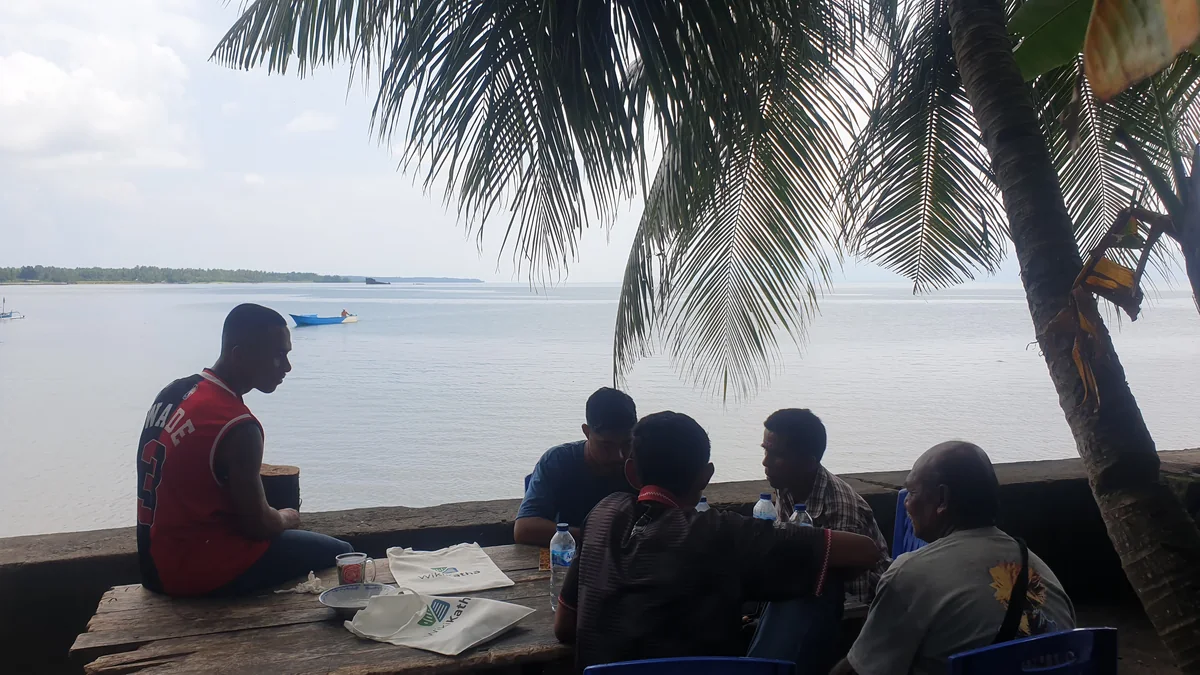
A vocabulary recording session with native speakers and inputters during the WikiKathā activity in Halmahera, October 2025. Photo: Bangrapip, CC BY-SA 4.0, via Diff.
Facing Field Realities and Identity Recognition
The WikiKathā journey was not without obstacles. In the field, the team faced various complex challenges, ranging from the lack of standardized orthography, complex morphemic structures in non-Austronesian languages such as Isam and O’Hongana Manyawa, to the demographics of Balik language speakers, who are predominantly elderly.
Major challenges also emerged regarding language identity and naming. International classification systems (Ethnologue) often use exonyms that are inaccurate or derogatory. One of the most significant advocacy achievements of the project was replacing the offensive term “Kubu” with Orang Rimba language across digital platform interfaces.
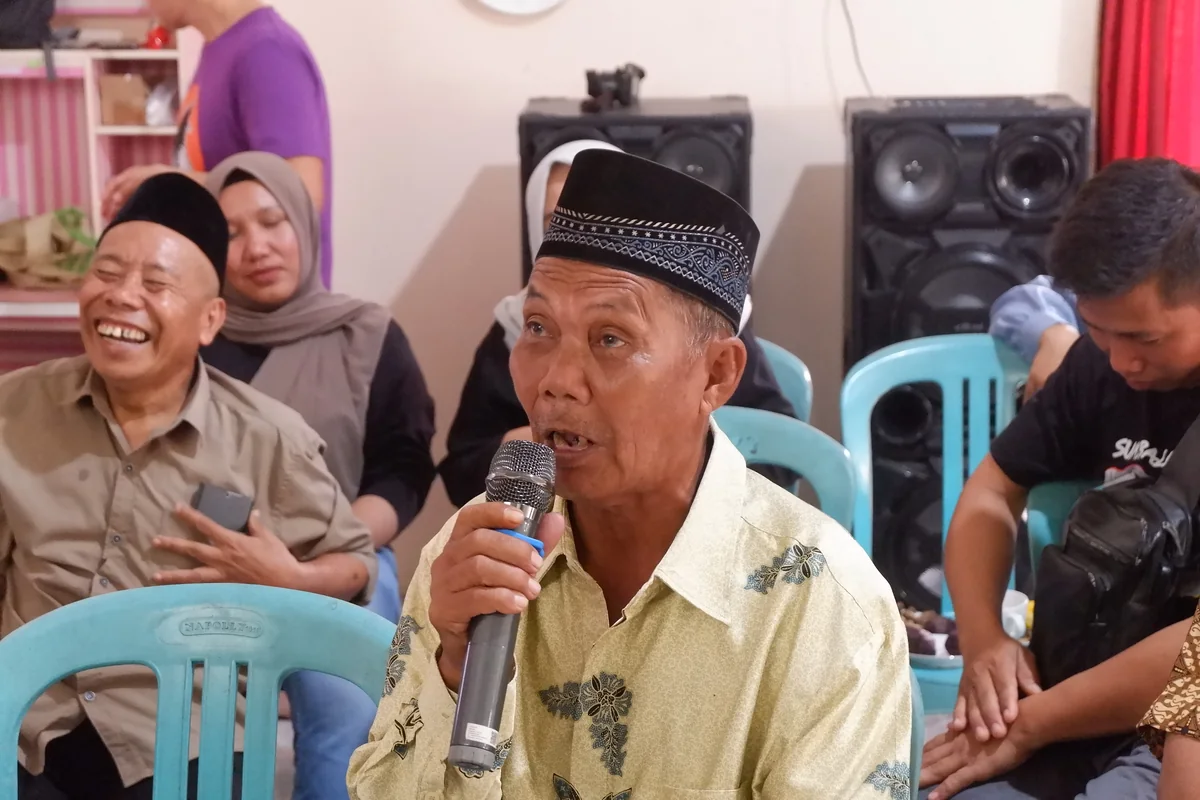
One of the Balik language speakers [lbx]. Photo: Wadaihangit, CC BY-SA 4.0, via Diff.
Project WikiKathā demonstrates that language preservation is not merely an academic exercise on paper, but a tangible expression of respect for indigenous identity and rights. This initial step is expected to serve as a sustainable foundation for protecting Indonesia’s linguistic diversity.
Why it matters
Indonesia is home to more than 700 living languages, making it one of the most linguistically diverse countries on Earth — and many of those languages are under pressure from urbanization and the dominance of Indonesian in schools and media. Linguists estimate that a language disappears roughly every two weeks somewhere in the world, most taking unrecorded stories, knowledge, and identity with them. What makes WikiKathā notable is the method: instead of outside researchers documenting languages from afar, indigenous youth record their own elders, and the results go straight into open resources anyone can use.
Frequently asked questions
What does “WikiKathā” mean?
The name combines “wiki” with the Sanskrit word kathā, meaning “story” — which entered Malay as kata, “word”.
What is Wiktionary?
Wiktionary is a free, open dictionary run by the Wikimedia Foundation, the nonprofit behind Wikipedia. WikiKathā uploads its recorded vocabulary and audio there so the languages remain freely accessible.
Why does community control matter?
Language documentation has a long history of outsiders deciding what gets recorded and what names are used. WikiKathā’s model keeps those decisions with the speakers — down to replacing an offensive exonym with the Orang Rimba community’s own name.
Key takeaways on indigenous languages in Indonesia
- WikiKathā, a project of Wikimedia Indonesia with the Alliance of Indigenous Peoples of the Archipelago, documents threatened indigenous languages in Indonesia.
- Local indigenous youth worked with native speakers over 2–3 day “miniature language documentation” sessions: word lists, audio recordings with Lingua Libre, and uploads to Indonesian Wiktionary.
- From August 2025 to May 2026 the teams recorded 13,870 audio clips and added 13,444 new lemmas to Indonesian Wiktionary.
- The project also helped replace an offensive label for the Orang Rimba language with the community’s own name on digital platforms.










0 Comments