

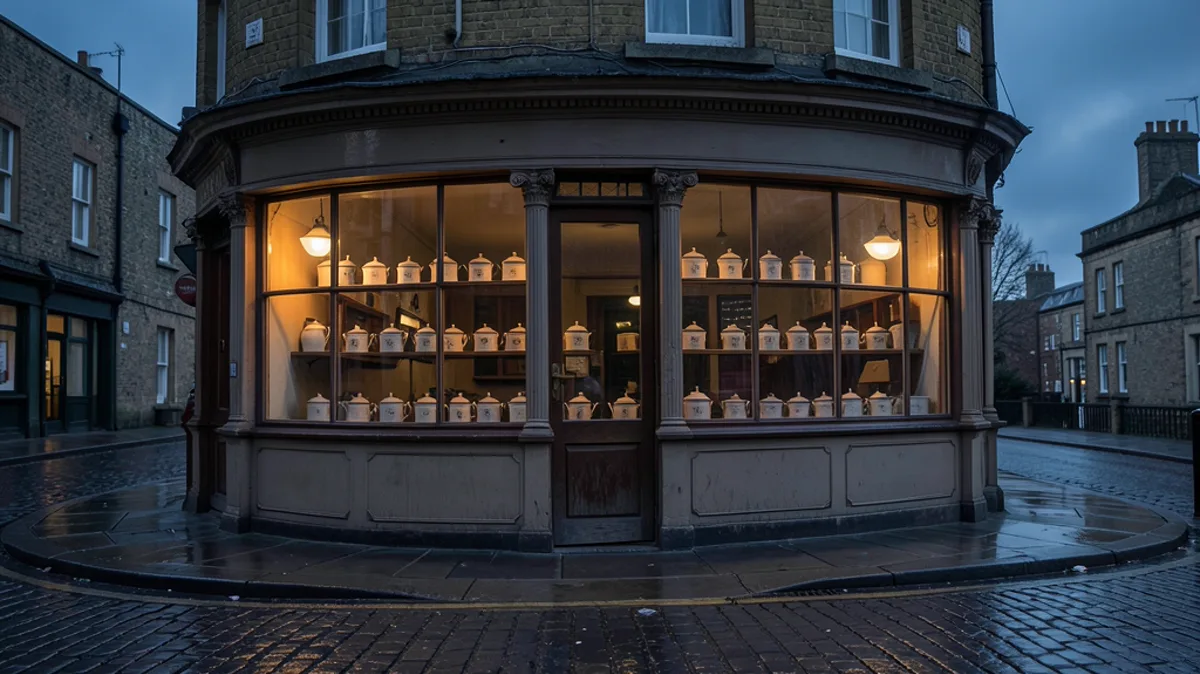
An original TeaLamp explainer based on the sources listed below. Prepared by the TeaLamp Editorial Team with the help of AI.
Walk down the Strand in London and you can still buy tea from the same shop that sold it in 1706, when tea was a luxury and most Londoners drank ale. Heritage brands like Twinings are easy to take for granted, yet they are the exceptions. Most companies are gone within a generation, and even stock-market giants rarely reach old age. So what keeps a few names trading for a century, or ten centuries, while thousands around them disappear?
Key takeaways on heritage brands
- Heritage brands are companies and brand names that have traded for a century or more, often under the same family or the same craft.
- Most companies die young: the average S&P 500 company lasted about 61 years in 1958 and under 18 years by the 2010s.
- A 2008 Bank of Korea study found 5,586 companies older than 200 years in 41 countries, and more than half of them were in Japan.
- Long-lived companies studied at Shell shared four habits: sensitivity to their surroundings, a strong sense of identity, tolerance for new ideas, and cautious financing.
- Family ownership is both strength and weak point: only about 30 percent of family firms reach a second generation, and about 12 percent reach a third.
Most companies die young
Companies feel permanent, but the numbers say otherwise. A study by the consultancy Innosight, drawing on work by Richard Foster of Yale, traced how long companies stay in the S&P 500 index of large American firms. In 1958 the average lifespan was 61 years. By 1980 it had fallen to 25, and by the 2010s it was under 18. Three quarters of the companies in the index were expected to be replaced by 2027.
A team at Royal Dutch Shell asked why some companies live so much longer than others. Arie de Geus, who led Shell’s planning group, wrote up the findings in his 1997 book The Living Company and in the Harvard Business Review. The Shell study put the average life of a Fortune 500 firm at only 40 to 50 years, and found that a third of the 1970 Fortune 500 had vanished by 1983, just thirteen years later. A Dutch study of firms of all sizes, quoted by de Geus, put the average life of a company at only 12 and a half years.
The oldest names still trading
The oldest company in the world, by most counts, is Kongō Gumi, a Japanese temple builder founded in 578 to build the Shitennō-ji temple in Osaka. It stayed in the same family for some forty generations before debts from Japan’s property bubble caught up with it. In 2006, after 1,428 years, it was bought by the Takamatsu Construction Group, though it still trades under its old name.
Next comes a hotel. Nishiyama Onsen Keiunkan, a hot spring inn near Mount Fuji, has welcomed guests since 705, and Guinness World Records calls it the oldest hotel in the world. It stayed in the same family for 52 generations, until ownership changed in 2017. St Peter Stiftskulinarium in Salzburg has served food and drink since 803, Staffelter Hof, a German winery on the Moselle, has made wine since 862, and the Weihenstephan brewery in Bavaria traces its brewing to 1040.
Banking has its own ancient survivor. Banca Monte dei Paschi di Siena was founded on 4 March 1472 as a mount of piety, a charitable lender offering the poor an alternative to moneylenders. It became a commercial bank in 1624 and still trades today, the oldest continuously operating bank in the world, according to Guinness World Records. The bank needed a government rescue in 2017, a reminder that old age is no guarantee of health.
Closer to home, Twinings opened Britain’s first known tea room at 216 Strand in London in 1706. Thomas Twining had bought Tom’s Coffee House and made tea, then a rare and costly drink, its selling point. The shop still stands at the same address, and the logo designed in 1787 is the world’s oldest company logo in continuous use. The family sold the business to Associated British Foods in 1964, but the name, the shop, and the trade carried on. Beretta, the Italian gunmaker, goes further still: a Venetian order for 185 arquebus barrels, dated 3 October 1526, is the first record of the firm, and the family has run it ever since, through fifteen generations.
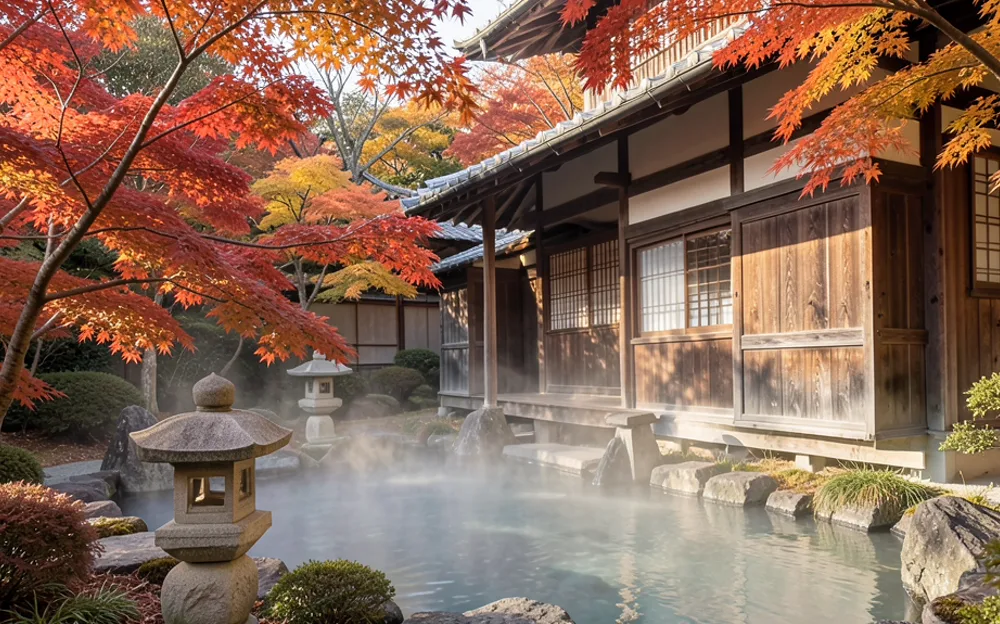
Nishiyama Onsen Keiunkan, a hot spring inn near Mount Fuji, has welcomed guests since 705. Image generated by AI.
Japan’s thousand-year shops
If longevity has a capital, it is Japan. In May 2008 the Bank of Korea published a study of long-lived companies in 41 countries. It counted 5,586 companies older than 200 years, and 3,146 of them, 56 percent, were in Japan. Germany came second with 837, the Netherlands third with 222, and France fourth with 196. A nationwide Japanese survey in 2019 counted more than 33,000 companies over a century old.
These firms have a name in Japanese: shinise, meaning old shop. Most are small: the Bank of Korea study found that 89 percent of century-old companies employ fewer than 300 people. They sell things people need every day, food and drink, traditional crafts, religious goods, and stay close to one craft for generations. A sake brewer brews sake; a bell founder casts bells, as the Pontificia Fonderia Marinelli in Italy has done since around the year 1000.
Researchers give several reasons for Japan’s lead. As an island nation it escaped long periods of foreign rule, and its culture holds craftsmanship in high regard. Succession is also handled differently: when no suitable son is available, a capable son-in-law or adopted heir may take the family name and the business with it, keeping the line, and the craft, unbroken. The longest-lived companies are usually small, specialised, and deeply rooted in one place.
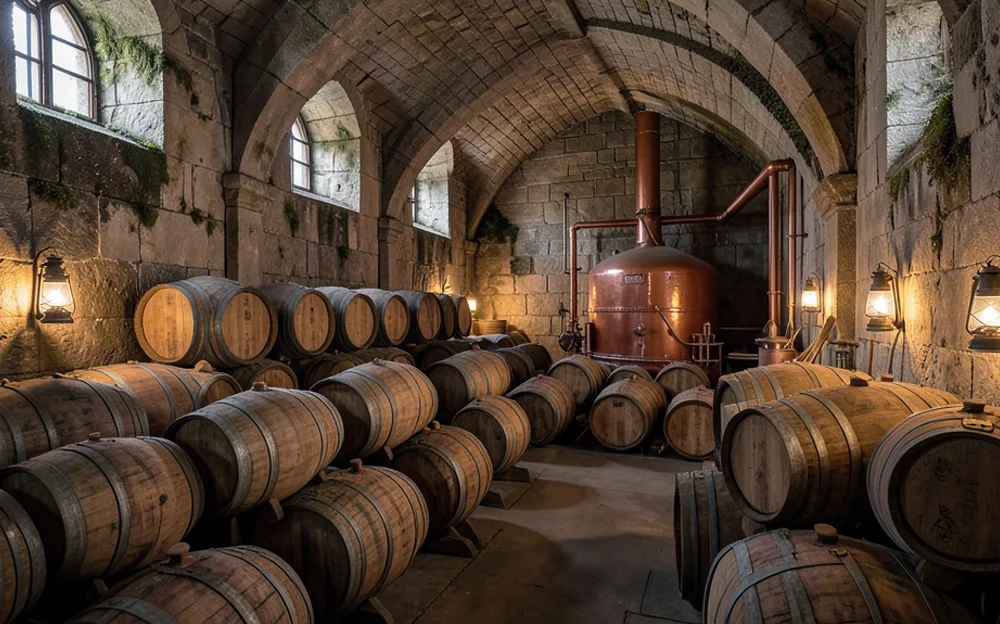
Old breweries and wineries are among the longest-lived firms, holding to one craft for centuries. Image generated by AI.
What the long-lived have in common
De Geus and his Shell colleagues studied some forty companies as large as Shell and older, including DuPont, Sumitomo, Mitsui, and the Hudson’s Bay Company. Four habits kept turning up. The survivors were sensitive to their environment, watching the world around them and adapting to it. They were cohesive, with a strong sense of identity. They were tolerant, giving room to new ideas and letting local managers experiment. And they were conservative with money, keeping reserves to ride out bad years without borrowing their way into trouble.
A second famous study reached a similar conclusion. Jim Collins and Jerry Porras spent six years at Stanford studying eighteen “visionary” companies for their 1994 book Built to Last. Their organising idea was “preserve the core and stimulate progress”: hold a small set of values and a purpose fixed, and change almost everything else. The authors were careful to say their evidence showed correlation, not proof of cause, but the pattern matched de Geus: identity fixed, everything else flexible.
The family test
Most of the oldest companies are family firms, and family ownership cuts both ways. A family that expects to hand the business to its children thinks in decades, not quarters, but the handover itself is where most family firms die. The figures most often quoted, traced to the Family Business Institute and the US Small Business Administration, are stark: only about 30 percent of family businesses survive into a second generation, about 12 percent reach a third, and about 3 percent reach a fourth.
The survivors plan the handover the way they plan anything else. Beretta trained each generation in the workshop before handing over the firm. Twinings passed through father, son, and widow Mary Twining, who ran the business in the eighteenth century, before the family decided selling to a larger group was the safer way to keep the brand alive. Kongō Gumi lasted forty generations and still fell, not because its craft failed, but because it borrowed heavily during a property boom. Survival depends on treating the handover as a job in itself, and on knowing when to let go.
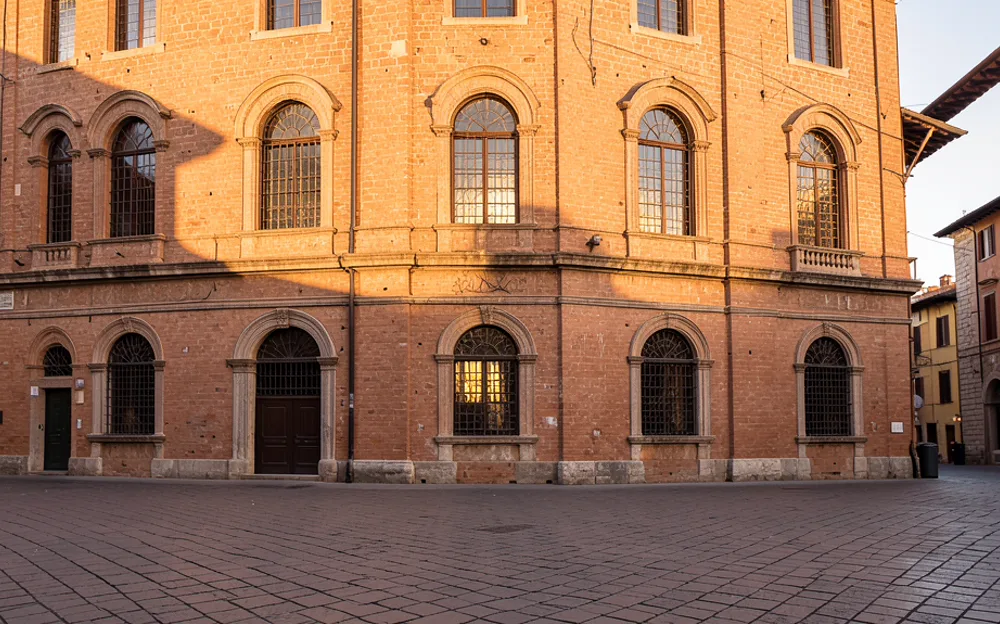
Banca Monte dei Paschi di Siena, founded in 1472, still trades from its home city. Image generated by AI.
Why it matters
Heritage brands matter for more than nostalgia. A company that has traded for centuries carries skills that cannot be rebuilt quickly: a brewer’s yeast strain, a bell founder’s ear, a tea blender’s palate, a builder’s knowledge of wooden temples. When such a firm closes, the craft often closes with it. That is why Japan treats its shinise as a national asset, and why Kongō Gumi’s loss of independence in 2006 was news around the world.
There is also a practical lesson for anyone running a business. Longevity is not bought with size or speed. The evidence points to something quieter: know what your company is for, keep enough money in reserve to survive a bad year, let new ideas in, and treat succession as seriously as sales. Old age is not a promise: Monte dei Paschi needed rescuing, Kongō Gumi lost its independence, and Twinings survives inside a conglomerate. A heritage brand is not a company that never changes. It is one that has learned, over and over, how to change without losing itself.
Frequently asked questions
What is the oldest company in the world?
Kongō Gumi, a Japanese temple builder founded in 578. It traded independently for 1,428 years before being bought by the Takamatsu Construction Group in 2006, and it still operates under its historic name.
What is the oldest brand still in use?
Twinings, founded in London in 1706. Its logo, designed in 1787, is the world’s oldest company logo in continuous use, and the original tea shop at 216 Strand is still trading at the same address.
Why do so many companies fail within a few decades?
The Shell study put the average life of a Fortune 500 firm at 40 to 50 years, and Innosight found the average S&P 500 lifespan fell from 61 years in 1958 to under 18 by the 2010s. Companies die through takeovers, mergers, bad debts, and failure to adapt, and family firms most often fail at the handover to the next generation.
Related reading
For another way a brand can spread without losing its name, read How Franchising Works: One Brand, Many Owners.
Sources
- List of oldest companies. Wikipedia.
- Oldest continuously operating bank. Guinness World Records, 13 February 2025.
- Shinise. Wikipedia.
- Japanese mantra for firms to survive crises, last for centuries. The Business Standard, 18 August 2020 (reporting the Bank of Korea 2008 study).
- de Geus, A. (1997). The living company. Harvard Business Review, 75(2), 51–59.
- Collins, J., & Porras, J. I. (1994). Built to Last: Successful Habits of Visionary Companies. HarperBusiness.
- Twinings. Wikipedia.
- 500 Years in Business: Beretta’s Staying Power. American Rifleman.










0 Comments