

A TeaLamp book review of Don Quixote by Miguel de Cervantes (Part One 1605, Part Two 1615), written in our own words. Prepared by the TeaLamp Editorial Team with the help of AI.
This Don Quixote review looks at a book that many readers know by reputation long before they open it: the tale of an elderly gentleman from La Mancha who reads so many tales of chivalry that he decides to become a knight himself. Miguel de Cervantes published the first part in 1605 and the second in 1615, and more than four centuries later the book is still called, again and again, the first modern novel. It is long, funny, surprisingly tender and full of ideas that feel strangely current. Here is what it is about, what makes it special, and who will enjoy it most.
Key takeaways from our Don Quixote review
- A Spanish novel by Miguel de Cervantes, published in two parts in 1605 and 1615, originally titled El ingenioso hidalgo don Quijote de la Mancha.
- It follows Alonso Quijano, a country gentleman who renames himself Don Quixote, and his practical squire, Sancho Panza, on three journeys across Spain.
- It began as a parody of popular chivalric romances and grew into a rich study of imagination, reality and friendship.
- Its playful games with authorship and storytelling helped shape the novel as a form.
- Best for patient readers who enjoy comedy, road stories and books that are worth returning to.
What the book is about
In a village somewhere in La Mancha, a lean gentleman of nearly fifty spends his days and nights reading romances about knights errant until, as Cervantes puts it with gentle mockery, his brain dries up. He polishes an old suit of armour, gives his bony horse the grand name Rocinante, chooses a farm girl from a nearby village, who knows nothing of his devotion, as his lady Dulcinea del Toboso, and rides out to right the wrongs of the world.
On his second outing he persuades a neighbour, the farmer Sancho Panza, to come along as his squire, with the promise that Sancho will one day govern an island. Together they meet innkeepers, travellers, shepherds, prisoners, priests and noblemen, and almost every encounter is reshaped by Don Quixote’s imagination. Inns become castles, flocks of sheep become armies, and a barber’s brass basin becomes a legendary golden helmet. Sancho, who sees the world as it is, follows him anyway, partly from hope, partly from loyalty and, increasingly, from affection.
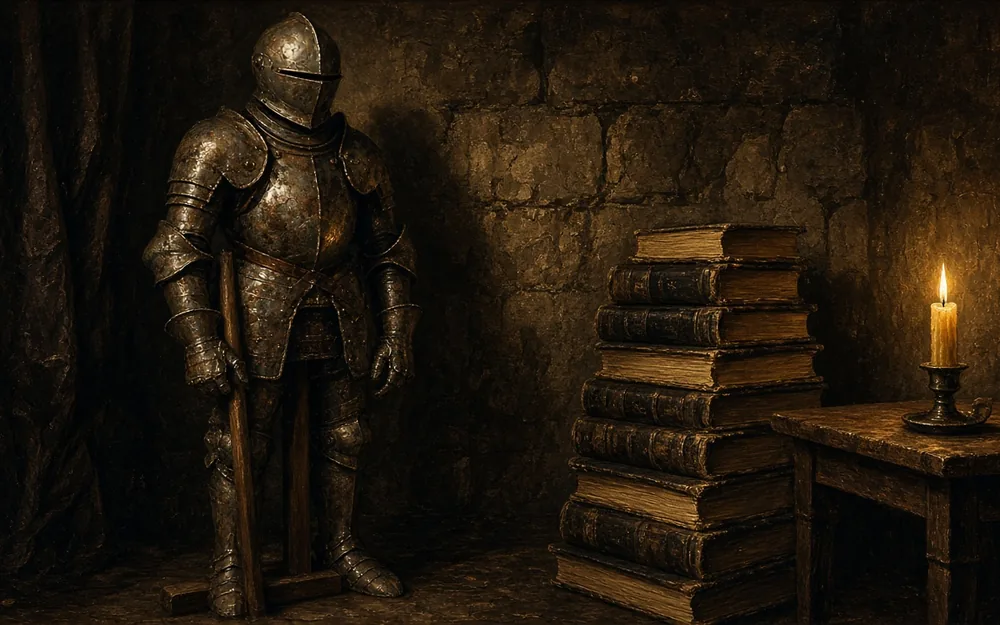
A country gentleman’s library, where the dream of knighthood begins. Image generated by AI.
Windmills, inns and the comedy of misreading
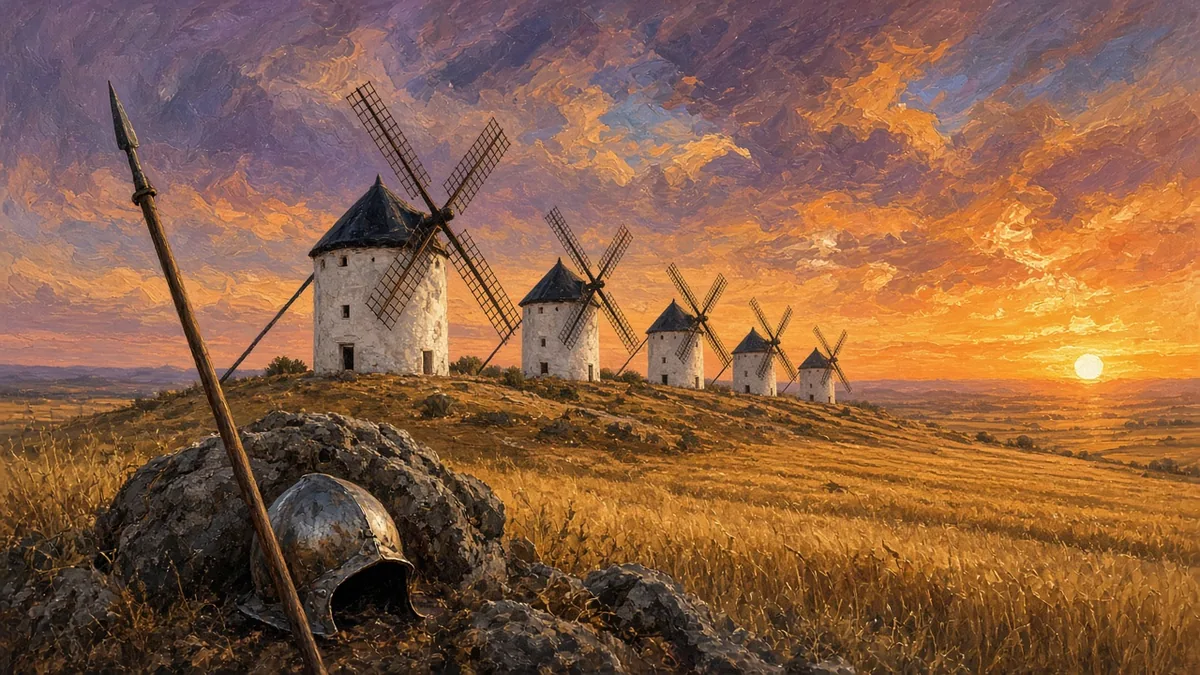
The most famous scene comes early in Part One, when Don Quixote sees a row of windmills on the plain and takes them for giants. Ignoring Sancho’s warning, he charges, his lance catches in a sail and he and Rocinante are flung to the ground. He explains that an enchanter turned the giants into windmills to rob him of glory. The episode is short, but it gave many languages the phrase “tilting at windmills” for fighting imaginary enemies.
Much of Part One works in the same way: a confident misreading, a painful collision with reality and an inventive excuse. The comedy can be broad, with plenty of bruises and falls, but it is rarely cruel in spirit. Cervantes also fills this half with stories within the story, tales of love, betrayal and captivity told by people the pair meet on the road. Some readers love these detours; others skim them. Either way, they show Cervantes playing with every kind of fiction popular in his day.
A friendship at the heart of the story
What keeps the book alive is the relationship between knight and squire. Don Quixote is learned, idealistic and impractical; Sancho is earthy, talkative, fond of food and full of proverbs. At first they seem like a simple comic double act, the tall dreamer and the short realist. Over hundreds of pages, though, they change each other. Don Quixote grows more reflective, and Sancho grows wiser and more imaginative, sometimes even taking up his master’s way of seeing the world.
Their long conversations on the road, about honour, food, governing, fame and what makes a good life, are among the warmest passages in classic literature. By the end, the reader feels less that they have watched a madman and his servant than that they have travelled with two old friends.
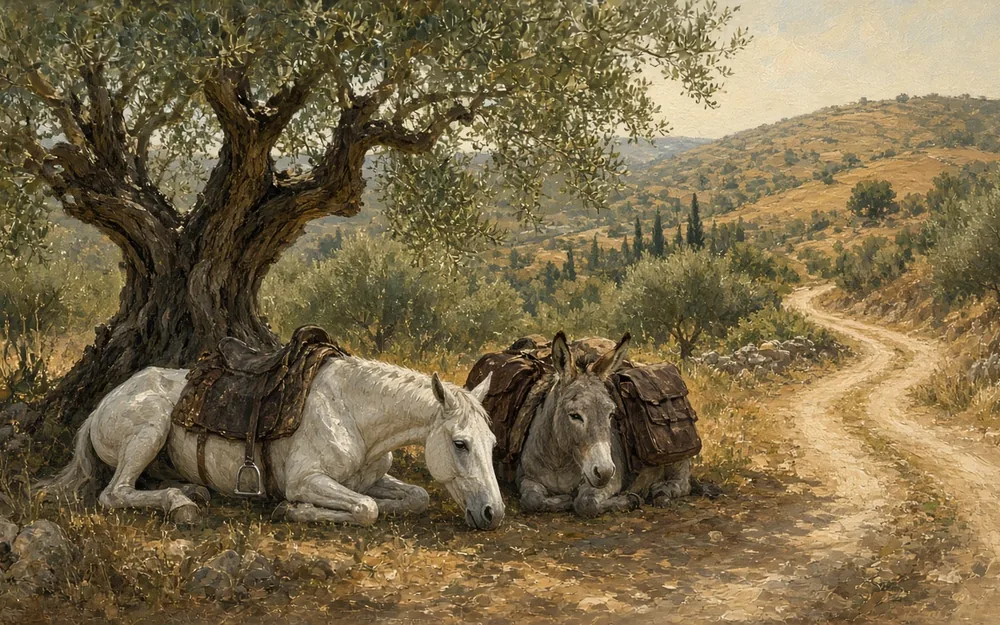
Rocinante and Sancho’s donkey, the patient companions of the journey. Image generated by AI.
Part Two: a book that knows it is famous
Ten years passed between the two parts, and in that time something unusual happened. Part One became a best seller, and in 1614 an unknown writer using the name Alonso Fernández de Avellaneda published an unauthorised sequel. Cervantes answered in his own Part Two, and he made the situation part of the story. Many of the people Don Quixote and Sancho meet have read Part One, recognise them and know their adventures. The pair even hear about the false sequel and set out to prove it wrong.
This gives Part Two a playful, modern feel. A duke and duchess who have read the book stage elaborate pranks to enjoy the famous knight in person, including making Sancho the governor of an “island”. To nearly everyone’s surprise, Sancho governs with good sense and fairness. Cervantes also plays with authorship throughout, pretending that the story comes from the manuscript of an Arab historian, Cide Hamete Benengeli, and stepping in as a narrator who doubts his source. These layers are part of why writers and critics still call the book the first modern novel.
Is it funny, sad or both?
Readers have argued about this for centuries. Early audiences mostly laughed. Later readers, especially in the age of Romanticism, saw a tragic hero, a man whose ideals are too noble for a practical world. Both readings are there in the text. The slapstick is real, and so is the sadness of an old man who wants the world to be braver and kinder than it is. Without giving too much away, the closing chapters bring the adventure home and end on a quiet, moving note that shows how far the book has travelled from simple parody.
The novel also says a great deal about reading itself. Don Quixote is undone by books, yet the people around him, from the village priest to the duke, cannot stop talking about books either. Cervantes seems to ask how stories shape what we see, a question that feels at home in any age of screens, headlines and shared imaginary worlds.
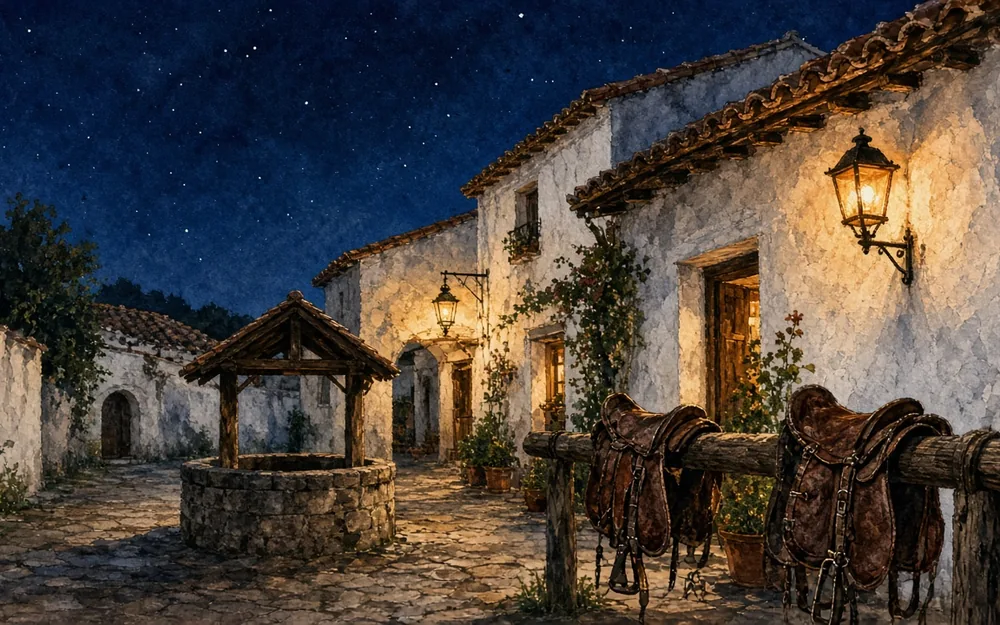
Roadside inns, which Don Quixote takes for castles. Image generated by AI.
Who will enjoy Don Quixote
Don Quixote suits readers who like long, generous books they can live with for a while: fans of road stories, comic novels and friendships at the centre of a tale. Those who enjoy books that play with storytelling, from Laurence Sterne to modern metafiction, will find a great deal to admire. It is less suited to readers who want a tightly plotted story; the book wanders, and that is part of its charm.
A modern translation helps a great deal. Several are widely praised, and older public-domain translations, such as John Ormsby’s from 1885, are free to read online. A good approach is to read a few chapters at a time, perhaps with a cup of tea in the evening, and to let the two travellers set the pace. Many readers find that Part Two, with its deeper characters and clever games, is the half they love most.
Why it matters
Don Quixote has been translated into a great many languages and has inspired paintings, ballets, operas, the musical Man of La Mancha and countless novels. In 2002, a poll of one hundred writers from around the world organised by the Norwegian Book Clubs named it the best work of fiction ever written. Its words have even entered everyday speech: “quixotic” describes a hopeful, impractical idealism. Above all, the book endures because its two travellers are so human, one who dreams too much and one who learns to dream a little.
Related reading
For another classic journey full of humour, read our Three Men in a Boat review. And for a very different landmark of storytelling in Spanish, see our One Hundred Years of Solitude review.
Sources
- Don Quixote, John Ormsby translation, free public-domain text (Project Gutenberg)
- Don Quixote: background, publication, themes and legacy (Wikipedia)
- Miguel de Cervantes: life and works (Wikipedia)
- Don Quixote: summary, characters and facts (Encyclopaedia Britannica)










0 Comments