

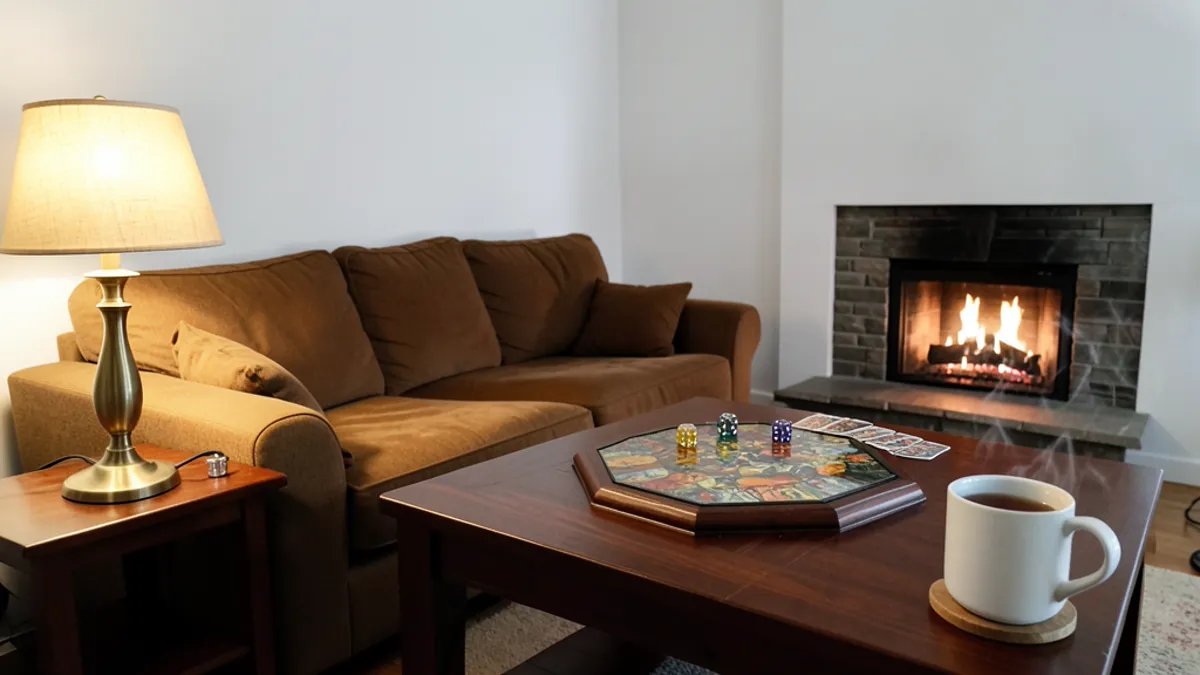
An original TeaLamp explainer based on the sources listed below. Prepared by the TeaLamp Editorial Team with the help of AI.
Something quiet has happened to the humble board game. A pastime many of us filed away with childhood has come back as a grown-up evening out, a family ritual, and a billion-dollar business all at once. Board games are selling faster than ever, cafés built around them are opening in city after city, and the table, for once, is beating the screen. This is not just nostalgia. The comeback has numbers behind it, a history worth knowing, and some real research on what an evening of play does for us.
Key takeaways on board games
- The global board games market was worth about 20 billion dollars in 2025, and one research firm expects it to pass 22 billion in 2026, though estimates vary by firm.
- The modern revival traces back to Catan, a German game from 1995 that showed a board game could be about trading and building rather than luck and elimination.
- Board game cafés have grown from one Toronto shop in 2010 to more than 1,200 venues worldwide, and the café market alone is worth about 1.2 billion dollars.
- Small trials suggest regular play supports memory, attention and mood in older adults, and cuts loneliness, though the evidence is still young and mostly about association, not proof.
- Families are driving much of the growth, using a weekly game night as a simple way to get everyone off screens and into the same room.
The numbers behind the comeback
Start with the money, because it is hard to argue with. IMARC Group puts the global board games market at 20.3 billion dollars in 2025, rising to 22.5 billion in 2026, and forecasts 43.5 billion by 2034. Other firms give lower totals, Fortune Business Insights, for example, estimates 15.83 billion in 2025 and 17.45 billion in 2026, but every estimate points the same way: steady growth of roughly 7 to 10 percent a year.
The hobby end of the market has grown fastest of all. In the United States and Canada, sales of hobby games nearly doubled from 1.68 billion dollars in 2019 to 2.84 billion in 2024, according to the industry tracker ICv2. BoardGameGeek, the sprawling website where players rate, trade and argue about games, passed 4 million registered users in 2025.
It started with Catan
Every revival has a starting point, and for modern board games it is a small island of hexagonal tiles. The Settlers of Catan, designed by Klaus Teuber, a dental technician from Darmstadt in Germany, was published by Kosmos in 1995 and won Germany’s Spiel des Jahres, Game of the Year, the same year. Players settle an island, trade wood, brick, sheep, wheat and ore, and race to ten points by building roads, settlements and cities. The heart of the game is negotiation: nobody wins alone, and every turn is a small conversation.
That was the break with the past. The mass-market games most of us grew up with, Monopoly, Risk, Scrabble, were often about luck, elimination or waiting for your turn. Catan, and the wave of German-style games that followed it, offered something different: several ways to win, little direct conflict, no player knocked out early, and a game that stayed interesting to the last move. It became a gateway. More than 40 million copies have now sold in more than 40 languages, and the game has been adapted for phones, consoles and even talked about as a film. Teuber, who died in 2023 at the age of 70, lived to see his evening hobby become a global industry.
The café that changed the game
The second half of the comeback happened away from the home table. On 30 August 2010, a couple of French expats, Ben Castanie and Aurelia Peynet, opened Snakes and Lattes in Toronto: a café with a library of games, staff who would teach you the rules, and a small cover charge. It worked. The idea spread to Portland, Austin, Chicago, London and beyond, and there are now more than 1,200 board game cafés worldwide. The café market itself was worth about 1.2 billion dollars in 2025 and is expected to roughly double by the early 2030s.
A game café is a different kind of third place, the sociologist Ray Oldenburg’s term for the spots outside home and work where community forms. Coffee shops filled that role for decades, but a café with games does something a coffee shop cannot: it gives strangers a reason to talk. A shared game breaks the ice in a way small talk never does, and the staff, the game teachers, remove the one barrier that keeps most people from trying a new game, the rulebook. Visits run long, often three or four hours against a coffee shop’s 45 minutes. In Japan, researchers studying nine Tokyo game cafés found the same pattern: the cafés work as places of belonging, easing loneliness and the pull of screens.
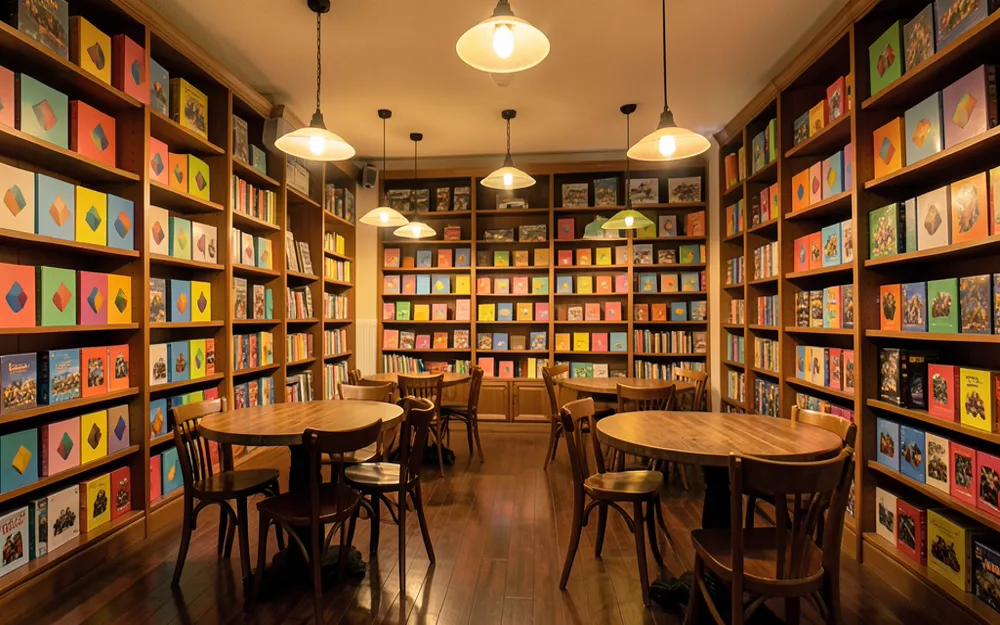
Inside a board game café. Image generated by AI.
Why our brains like the table
There is also a quieter story, about what play does for the people playing. A 2025 randomised trial in a nursing home, published in the Journal of Visualized Experiments, gave 30 residents, average age 83, twice-weekly sessions with modern board games for twelve weeks. The players improved on tests of comprehension, memory, attention and calculation, and reported better emotional wellbeing, relationships and social inclusion, while the comparison group, which kept its usual routine, did not change. A 2026 study in Taiwan, with 67 older adults in long-term care, found a six-week board game programme improved cognitive scores and reduced loneliness.
The longer view is encouraging but needs its honest footnote. A French study that followed 3,777 people over 65 for twenty years found that regular board game players had a 15 percent lower risk of developing dementia than non-players, even after adjusting for age, sex and education. But when the researchers also adjusted for the players’ starting memory scores and depression, the difference shrank and was no longer statistically significant. The players also showed slightly less decline over time. In Scotland, a study following more than a thousand people from age 11 to 79 found frequent players declined a little less in later life. The pattern is consistent: people who play games tend to keep their thinking sharper. What no study has proved is that the games themselves cause it. People who play may simply be more social, more active and healthier to begin with. The honest claim is smaller and still worth making: a regular game is good company for an ageing brain, and good company is itself good medicine.
The family game night returns
For many families, though, the research is beside the point. The game night is back because it solves a problem every parent recognises: how to get everyone into the same room, looking at each other instead of at a screen, without anyone feeling lectured about it. A game gives the evening a shape. There is a start, a middle, an end and a winner, and in between there is talking, teasing and the small drama of a good roll. It works for a six-year-old and a grandparent at the same table, which is a rare thing for any family activity.
The industry has noticed. The biggest sellers are still the familiar names, but the shelves now hold a middle ground of games designed to be learned in ten minutes and finished in under an hour: cooperative games where the family wins or loses together, and the gateway titles, Catan, Ticket to Ride, Azul, Wingspan, that turn a casual player into a hobbyist. The pandemic helped, as locked-down households rediscovered the cupboard, but the growth has continued well past it.
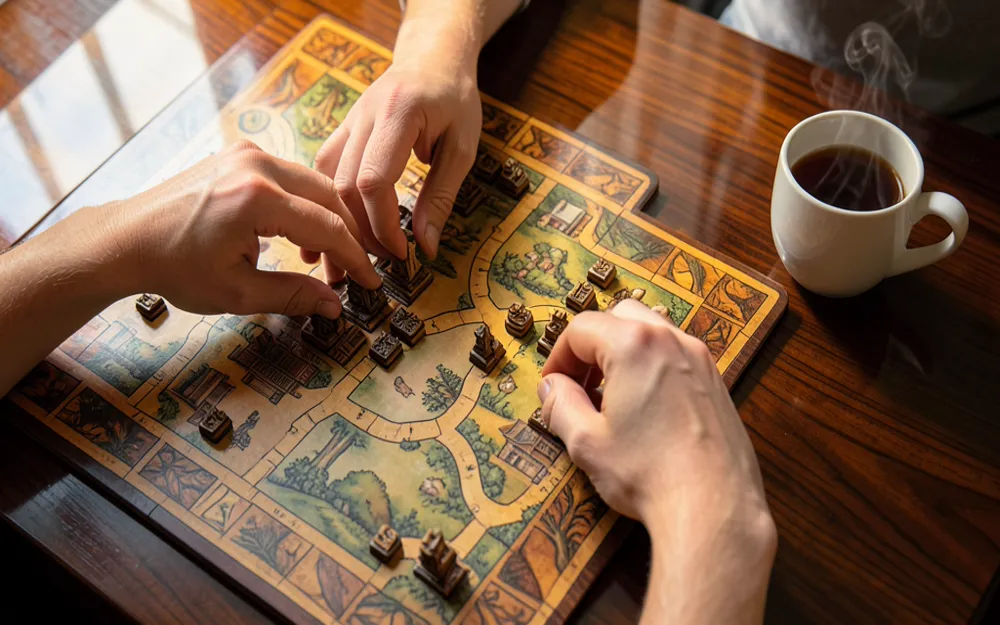
A game in progress. Image generated by AI.
Frequently asked questions
Are board games really growing, or is this a fad?
The growth is real and it is measured in money, not just enthusiasm. Every major market research firm reports steady growth of roughly 7 to 10 percent a year, and hobby game sales in North America nearly doubled between 2019 and 2024. The café boom and the millions of players on BoardGameGeek point the same way. Fads spike and fade; this one has been building for thirty years.
Do board games make you smarter?
No study has shown that board games raise IQ. What the research does show is more modest: older adults who play regularly tend to decline a little more slowly, and small trials find improvements in memory, attention and mood. The social side probably matters as much as the game itself. Think of play as good exercise for the mind, not a shortcut to genius.
What is a good first modern board game?
Start with something short and friendly. Ticket to Ride teaches in minutes and finishes in under an hour. Azul is a beautiful tile game with almost no rules to memorise. Catan is the classic gateway if your group likes talking and trading. And if your family argues easily, try a cooperative game, where everyone wins or loses together.
Why it matters
Board games matter because they are one of the few pleasures that ask nothing of us but our attention. No account, no feed, no notification, just a table, some pieces and the people across from us. The comeback is not really about cardboard. It is about a hunger for evenings that feel shared, in a world that keeps pulling our attention apart. The numbers say the hunger is real, the cafés say it has somewhere to go, and the research says the company is good for us too. The game on the table is only the excuse. The point is the people around it.
Related reading
For another story about an analogue pleasure making a quiet comeback, read Why Handwritten Letters Are Making a Quiet Comeback.
Sources
- IMARC Group, “Board Games Market”
- MarketIntelo, “Board Game Cafe Market Research Report 2034”
- GamesRadar, “How Settlers of Catan changed board games forever”
- Journal of Visualized Experiments, “Impact of Modern Board Games on Executive Functions and Quality of Life in the Elderly: A Randomized Controlled Trial,” 2025
- Lin and Yao, “Effects of a Taiwanese Practice of Board Game Program on Cognitive Function and Loneliness Among Older Adults in Long-Term Care Facilities,” Social Sciences, 2026
- “Board Game Cafe Growth Report: How Tabletop Gaming Went Mainstream,” 2026








0 Comments