

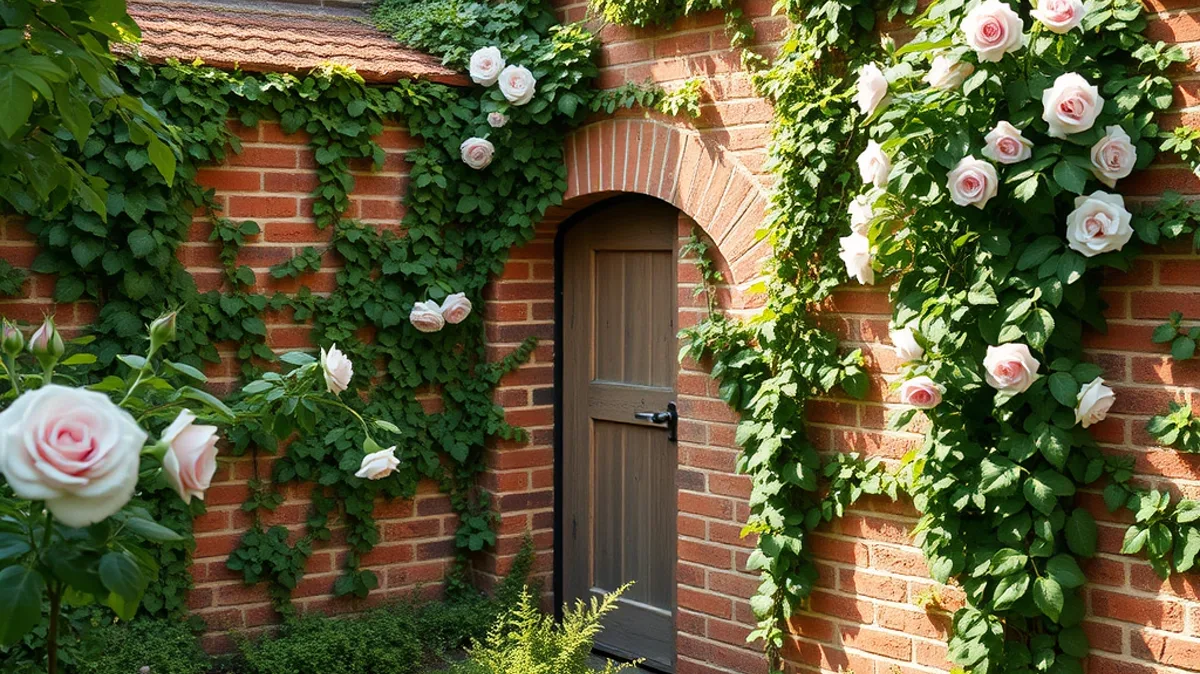
A TeaLamp book review of The Secret Garden by Frances Hodgson Burnett, first published in book form in 1911. In the public domain. Prepared by the TeaLamp Editorial Team with the help of AI.
Some books announce themselves loudly. The Secret Garden does not. It begins with a sour, lonely child in a house full of servants, and it ends with three children running in the open air, and the distance between those two pictures is the whole reason the book has lasted more than a century. Frances Hodgson Burnett’s 1911 novel is a quiet story about neglected things coming back to life: a garden, two children, and a grieving household. It is best read slowly, preferably with tea nearby.
Key takeaways on The Secret Garden
- Mary Lennox, unloved and alone after her parents die, is sent from India to her uncle’s remote Yorkshire manor, and discovers a garden locked for ten years.
- With Dickon, a moor boy who understands animals, and her hidden cousin Colin, Mary secretly restores the garden through a spring of steady work.
- The garden’s return mirrors the children’s own: fresh air, effort and friendship do what scolding and medicine could not.
- The book’s best-known idea is that the whole world, looked at the right way, is a garden.
The girl nobody wanted
Mary Lennox begins the book as a difficult child, and Burnett does not soften that fact. Born in India to wealthy British parents who had little interest in her, Mary was raised by servants who obeyed her every whim, and she grew up sickly, selfish and friendless. When cholera takes her parents, she is discovered alone in an empty house and sent to England, to live with an uncle she has never met at Misselthwaite Manor, a great house standing alone on the Yorkshire moors.
Her uncle, Archibald Craven, is rarely at home. He is a grieving man, still mourning his late wife, Lilias, and the house runs on routine rather than warmth. Mary is given a room, a maid named Martha, and very little attention. At first she hates everything: the moor, the house, the wind, the people. What saves her is the one thing nobody forbids her to do, which is to go outside. The moor air, the long walks, the skipping rope Martha’s mother sends her, and a friendly robin that follows her around the gardens begin, almost without her noticing, to change her appetite, her temper and her health.
A garden behind a locked door
Martha tells Mary about the garden that belonged to Lilias Craven, a walled rose garden that Archibald locked after his wife’s death in an accident there, burying the key. For ten years no one has entered it. Mary becomes determined to find it, and the robin leads her to the key, buried in the earth, and then to the door itself, hidden under ivy in the wall.
What she finds inside is not beautiful, not yet. It is a tangle of dead-looking stems and grey branches. But Mary, who has never cared for anything in her life, begins to care for this. She clears, she digs, she asks the old gardener Ben Weatherstaff careful questions without quite admitting what she is doing. Then spring arrives, and the garden answers her. Green points push through the soil. The book’s seasonal structure is its quiet engine: the garden is found in winter, worked through spring, and alive by summer, and Mary’s own change follows the same calendar.
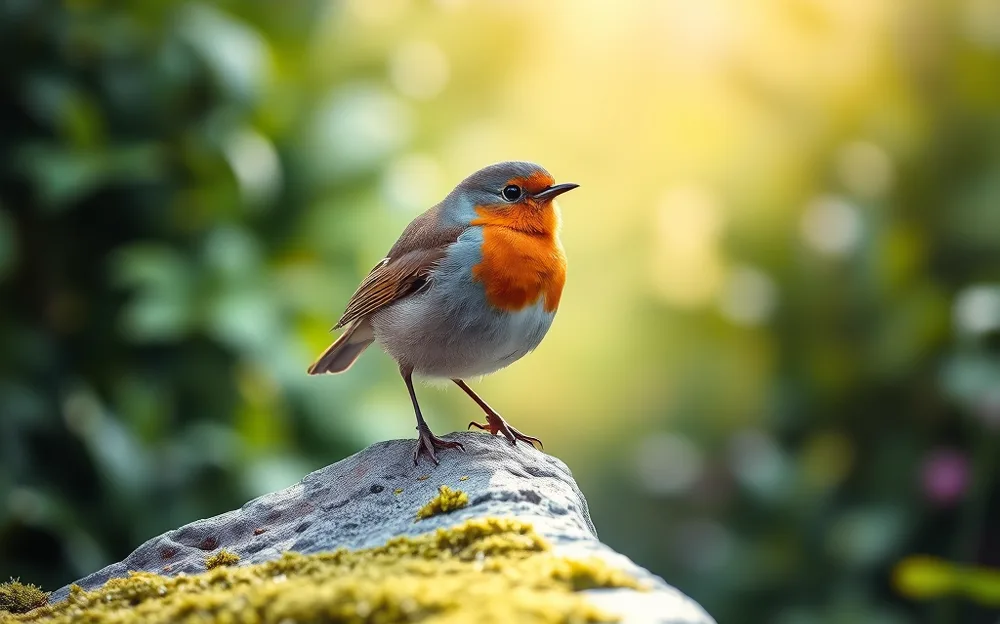
A robin perched on a mossy stone. Image generated by AI.
Three children grow together
Mary does not restore the garden alone. Dickon Sowerby, Martha’s younger brother, is a boy of the moors who charms animals, understands growing things, and treats the garden as a living creature with moods and needs. He becomes Mary’s first real friend, and through him she learns the patience of working with nature rather than ordering it about.
Then Mary discovers the source of the crying she has heard at night in the manor: her cousin Colin, Archibald’s son, kept hidden in his room, convinced by years of anxious adults that he is dying and will grow deformed. Colin is, in his own way, as neglected as the garden. Mary tells him about the garden, and the secret becomes the engine of his recovery. Out of doors, with work to do and living things depending on him, Colin’s belief about himself begins to change, and his body follows. The three children keep the garden secret together, and the secret itself becomes a bond: something tended daily, in trust, away from adult worry.
When Archibald Craven finally returns and walks into the garden he had locked away, he finds not only roses but a son on his feet and a household waking up. The ending is gentle rather than grand, which suits the book. Nothing is fixed by magic. Everything is fixed by attention, over time.
What the book does best
The Secret Garden works because Burnett trusts small changes. She does not rush Mary’s transformation or explain it away. A child who could not run learns to run because she runs every day. A boy who believed he could not walk learns to stand because he has a reason to try. A garden that looked dead was only dormant. The book’s great idea, that care itself is healing, is shown rather than preached, in soil under fingernails and in roses returning to a wall.
Burnett’s Yorkshire setting is a character in its own right. The moor wind, the rain, the robins and the smell of turned earth give the book a sensory richness that many children’s classics of its era lack, and her descriptions of the garden through the seasons reward slow reading. The dialogue, especially Martha’s and Dickon’s Yorkshire speech, gives the book its warmth and humour, and Ben Weatherstaff’s gruff kindness is a small masterpiece of character writing.
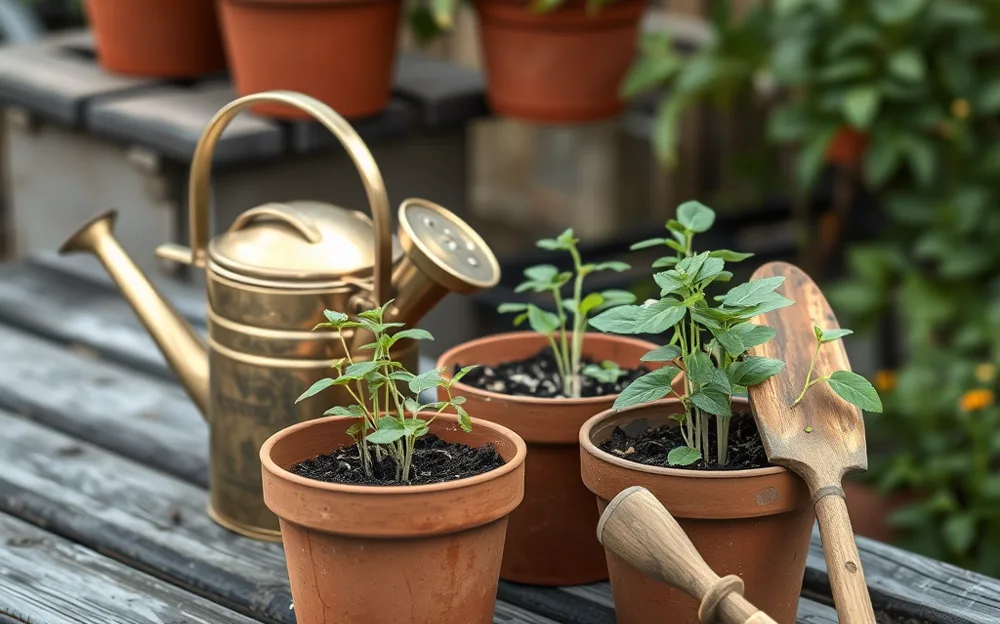
Seedlings, a watering can and a trowel on a garden bench. Image generated by AI.
The book is best for readers who love gentle classics and do not mind a slow opening. Its first chapters move at the pace of Mary’s sulk, and that is deliberate, but readers who want constant action may find the opening stretch quiet. Readers who enjoy period stories will take its 1911 attitudes in stride, and the book suits families reading aloud together as well as adults returning to a childhood favourite. It also suits anyone who gardens: Burnett knew what she was writing about, and the garden work in the book is real work, not decoration.
Why it matters
The Secret Garden has outlasted hundreds of louder books because its central claim still feels true: neglected living things, children included, respond to steady care. Burnett wrote it after a life that had known both success and sorrow, and the book carries that knowledge without bitterness. It does not promise that love fixes everything overnight. It promises that attention, fresh air and honest work, repeated daily, can change a life’s direction. More than a century after its first publication, in a world where children spend much of their lives indoors and on screens, a story about three children who heal by going outside and tending something green feels less old-fashioned than ever.
Related reading
For another classic about a lonely child finding a home, read Anne of Green Gables Summary: Imagination Finds a Home.
Frequently asked questions
Is The Secret Garden based on a true story?
No. It is a work of fiction, although Burnett drew on real gardens she knew, including the walled gardens at Maytham Hall in Kent, and on her own love of gardening.
What age is The Secret Garden suitable for?
It is usually read by children around eight to twelve, and it works well read aloud to younger children. Adults return to it often, and much of its writing rewards an older reader.
Why was the garden locked?
Archibald Craven locked the garden after his wife Lilias died in an accident there, and he buried the key. The garden stayed shut for ten years until Mary found the key and the hidden door.







0 Comments