

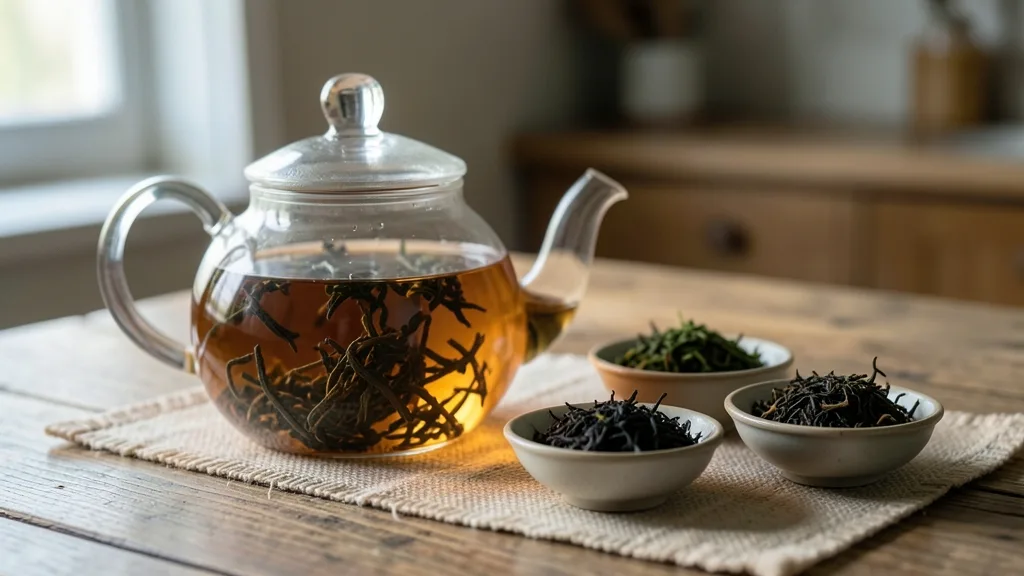
An original TeaLamp guide based on the sources listed below. Prepared by the TeaLamp Editorial Team with the help of AI.
Learning how to brew loose-leaf tea well comes down to three simple dials: how much leaf you use, how hot the water is and how long you let it steep. Get those roughly right and the same leaves that tasted harsh yesterday can turn sweet, smooth and full of aroma today. You do not need special gear or a ceremony. You need a little attention, a timer and a willingness to taste and adjust.
Key takeaways
- A good starting point is about 2 to 3 grams of leaf (roughly one heaped teaspoon) for every 200 to 250 millilitres of water.
- Delicate green and white teas like cooler water; black and herbal teas like water at or near boiling.
- Most bitterness comes from steeping too hot or too long, not from the tea itself.
- Good loose leaf can usually be steeped two or more times, so one spoonful goes further than you might think.
Why loose-leaf tea is worth the small extra effort
Almost all “true” tea, whether green, black, white or oolong, comes from one plant, Camellia sinensis. The differences come from how the leaves are processed after picking. Green tea is heated soon after harvest to stop the leaf from oxidising, while black tea is withered, rolled and allowed to oxidise fully before drying. The international tea-testing standard, ISO 3103, describes black tea in exactly these terms: withering, maceration, aeration and drying.
Whole or large pieces of leaf need room to open up in the water. Many bags hold small broken grades that release colour and strength fast, which is handy, but that speed also makes bitterness arrive fast. Loose leaf gives you more control. You can watch the leaves unfurl, smell the change as they open and stop the steep at the moment the cup tastes right. That small window of control is the whole art.
How to brew loose-leaf tea: the three dials
Think of brewing as a balance between leaf, heat and time. If you change one, you can often fix a problem by nudging another.
Dial one: how much leaf
Professional tasters use a fixed recipe so they can compare teas fairly. ISO 3103 calls for 2 grams of tea per 100 millilitres of water. That is strong on purpose, because tasters are hunting for faults. For an everyday mug, about half that strength is a friendly place to start: 2 to 3 grams for a 200 to 250 millilitre cup. Large, fluffy leaves such as white tea or some oolongs take up more space, so use a slightly bigger spoonful. Tightly rolled leaves are denser, so a level teaspoon may be plenty.
Dial two: water temperature
Hot water pulls flavour out of the leaf, but it also pulls out the compounds that make tea taste astringent and bitter. Delicate teas reward cooler water. These ranges are common guidance from tea sellers and growers, and they make a sensible starting point:
- Green tea: about 70 to 80 °C, for 1 to 3 minutes.
- White tea: about 75 to 85 °C, for 2 to 4 minutes.
- Oolong: about 85 to 95 °C, for 2 to 4 minutes.
- Black tea: about 90 to 100 °C, for 3 to 5 minutes.
- Herbal infusions: freshly boiled water, for 5 to 7 minutes or longer.
No thermometer? Let a boiled kettle rest with the lid open. After a few minutes it drops into green-tea territory. You can also pour boiled water into your empty cup first, then into the pot, which cools it and warms the cup at the same time.
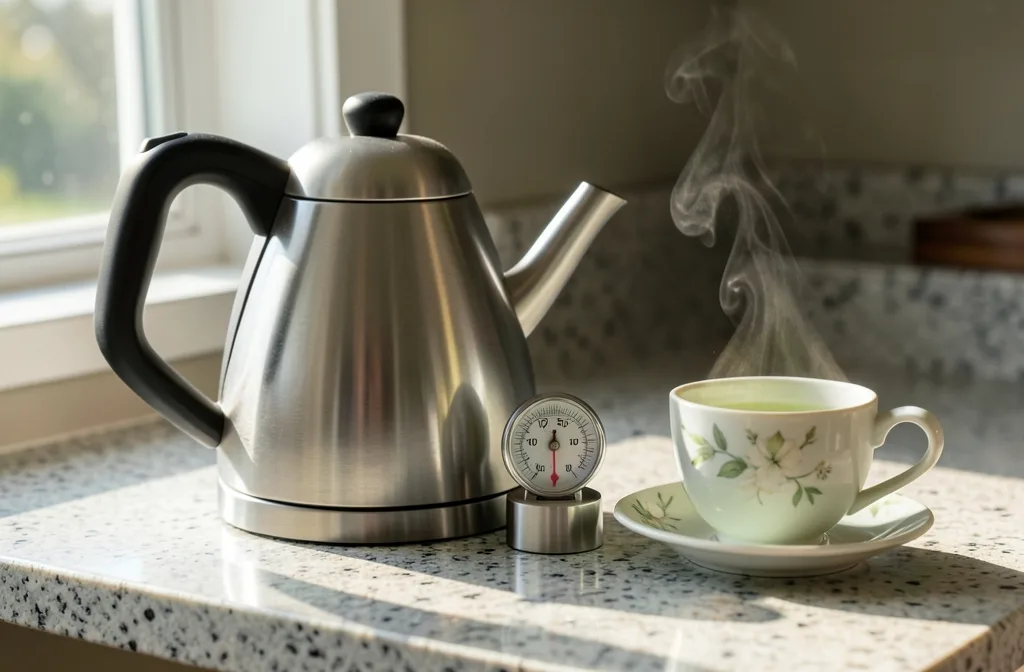
Letting boiled water rest for a few minutes brings it into the range many green teas prefer. Image generated by AI.
Dial three: steeping time
Time is the easiest dial to control and the one people most often forget. ISO 3103 steeps black tea for six minutes in boiling water, which, again, is a tasting recipe rather than a breakfast one. At home, set a timer, start at the short end of the range and taste. If the cup is thin, add a minute next time. If it is bitter, shorten the steep or lower the temperature before you blame the tea.
Fixing a disappointing cup
Most brewing problems have a simple cause. Here is a quick way to think them through:
- Bitter or harsh: water too hot or steep too long. Cool the water by a few degrees or cut a minute.
- Weak and flat: not enough leaf, or the steep was too short. Add a little more leaf before you add more time.
- Dull or stale: old leaves or reheated water. Store tea sealed, away from light, heat and strong smells, and use fresh water.
- Cloudy or with a film on top: often hard water. ISO 3103 itself notes that water hardness changes the flavour and look of the liquor. Filtered water can make a clear difference.
Here is a small kitchen experiment worth trying once. Brew the same tea twice, side by side, changing only one dial. Taste them together. Within ten minutes you will learn more about your favourite tea than any label can tell you.
Second steeps and gongfu-style brewing
Loose leaf rarely gives up everything on the first pour. Many oolongs and green teas taste best on the second or third infusion, once the leaves have fully opened. Simply add fresh hot water and steep a little longer each round.
In China and Taiwan, a style often called gongfu brewing takes this idea further. It uses a small pot or lidded bowl, much more leaf and very short steeps, sometimes only 10 to 30 seconds, repeated many times. Each round tastes a bit different, and the session becomes a slow conversation with one tea. If you enjoy oolong, it is a lovely way to spend a quiet afternoon.
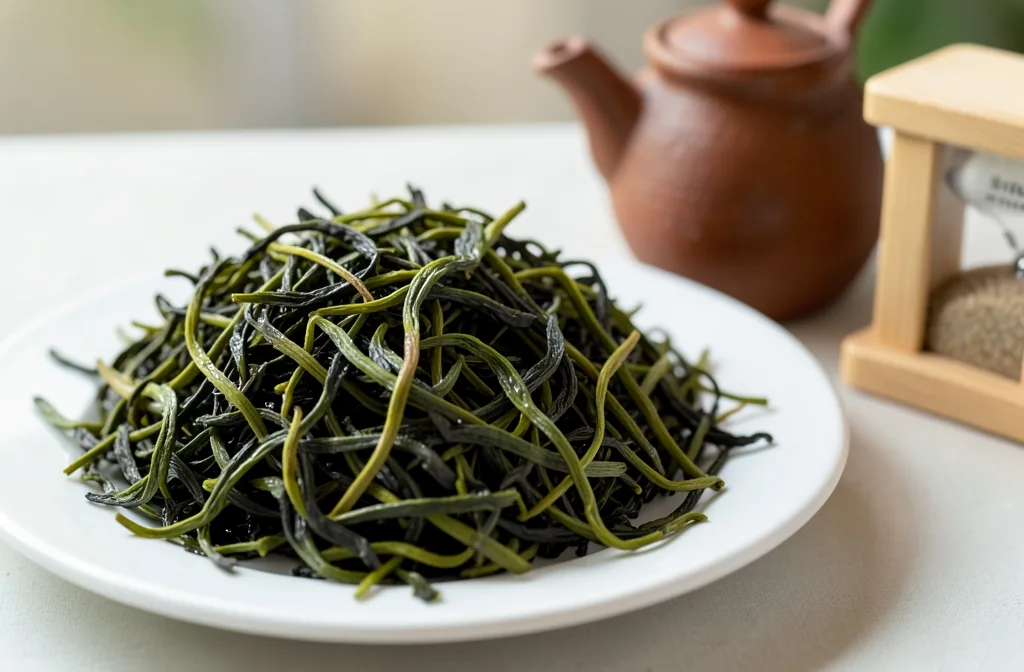
Good loose leaf can often be steeped more than once. Image generated by AI.
Caffeine, comfort and your daily cup
Tea contains caffeine, though usually less than coffee. The US Food and Drug Administration lists typical amounts of about 37 milligrams in a 12-ounce green tea and 71 milligrams in a 12-ounce black tea, compared with roughly 113 to 247 milligrams in the same amount of regular brewed coffee. The FDA cites 400 milligrams a day as an amount not generally linked with negative effects for most healthy adults, although sensitivity varies a lot from person to person.
Longer, hotter steeps tend to draw out more caffeine along with more flavour. If you like a gentle evening cup, a short steep of green or white tea, or a caffeine-free herbal infusion, is a kinder choice. And if you are pregnant, take medication or have a health condition, the FDA suggests asking your health care provider how much caffeine suits you.
Our analysis: why a few degrees matter so much
Recipes for tea can sound fussy, but there is a practical reason the numbers matter. Flavour and bitterness come out of the leaf at different speeds. Sweet, aromatic notes arrive early, while the more astringent compounds keep coming the longer and hotter you brew. That means every cup sits on a curve, and the goal is to stop near the top, before bitterness overtakes sweetness.
This is also why the official tasting standard and good home brewing look so different. A tester wants to expose a tea’s weaknesses, so the ISO method uses lots of leaf, boiling water and a long steep. A home brewer wants to show off a tea’s strengths, so the best approach is usually gentler. Understanding that difference frees you from strict rules. The temperatures and times above are a map, not a law, and your own taste is the final judge.
A simple routine to start tomorrow
- Warm your cup or pot with a splash of hot water, then pour it out.
- Add about one heaped teaspoon of leaf for each mug.
- Heat fresh water to the right range for your tea.
- Steep, set a timer and taste at the short end of the range.
- Strain fully so the leaves do not keep brewing in the cup.
- Save the leaves and try a second steep later.
Related reading: how to keep your sleep on track after the fall back time change.
Frequently asked questions
How much loose-leaf tea should I use per cup?
Start with about 2 to 3 grams, roughly one heaped teaspoon, for 200 to 250 millilitres of water. Adjust to taste, using a bit more for large, fluffy leaves.
Can I use boiling water for green tea?
You can, but it often makes green tea taste bitter. Water at about 70 to 80 °C, with a short steep, usually brings out a sweeter, softer cup.
How many times can I re-steep loose-leaf tea?
Many green teas and oolongs can be steeped two or three times, and some oolongs many more in gongfu style. Steep a little longer each round.







0 Comments