

An original TeaLamp explainer based on the sources listed below. Prepared by the TeaLamp Editorial Team with the help of AI.
Shrinkflation is the quiet price rise you are not supposed to notice: the same chocolate bar at the same price, but a few grams lighter; the same roll of paper towels, but with fewer sheets. Instead of raising the number on the shelf tag, a manufacturer gives you a little less. Statistics agencies on both sides of the Atlantic have studied how common it really is, how it shows up in inflation figures and why companies choose it. The answers are more reassuring in some ways, and more surprising in others, than the headlines suggest.
Key takeaways on shrinkflation
- Shrinkflation, also called downsizing, means a product gets smaller while its price stays the same or falls by less, so the price per unit goes up.
- Official inflation measures in the US and UK already count it as a price increase by tracking price per ounce, gram or sheet.
- Across the whole economy its effect on inflation is tiny, but for some everyday items, such as paper towels, snacks and cereal, it adds noticeably to the real price.
- Companies use it because research shows shoppers react more strongly to a higher price than to a smaller pack.
- The best defence is the unit price on the shelf label, and some countries now require shops to flag downsized products.
What shrinkflation means
The word blends “shrink” and “inflation”, and the economist Pippa Malmgren is often credited with coining it in its current sense. The idea is simple. Suppose a tub of ice cream holds 64 ounces and costs $5.99. If next month it holds 60 ounces but still costs $5.99, the shelf price has not moved, yet you are paying more for every spoonful. The US Bureau of Labor Statistics (BLS) uses exactly this example: the effective price rises from about 9.3 cents to almost 10 cents an ounce, an increase of more than 6 percent that never appears on the price tag.
Downsizing can be hard to spot. According to the BLS, manufacturers may add more air to a bag, deepen the dimple in the bottom of a jar, or launch the smaller size alongside a fresh package design, so the change feels like an update rather than a cut. It also need not affect a whole brand at once: one flavour or one version of a product may shrink while its neighbours on the shelf stay the same. Products sold by weight, like loose vegetables, meat at the counter or petrol, cannot be downsized in this way, because you pay for exactly the amount you take.
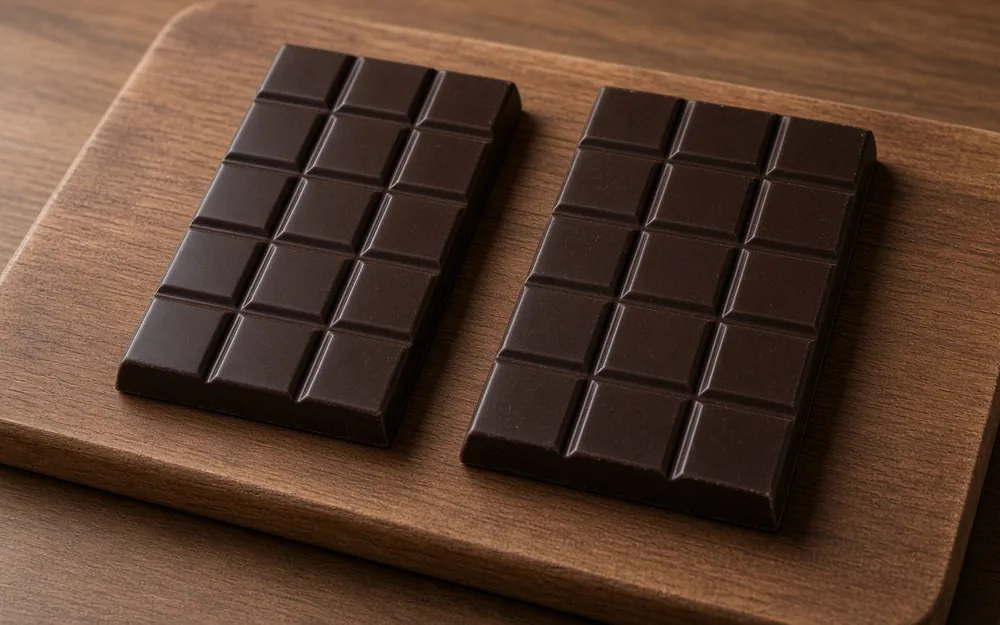
Same price, a little less inside. Image generated by AI.
Why companies shrink products instead of raising prices
When the cost of ingredients, packaging, energy or wages rises, a manufacturer has a few options: absorb the cost, raise the price, change the recipe, or sell a little less for the same money. Shrinking the pack is attractive because of how people shop. A widely cited 2004 Harvard Business School paper by John Gourville and Jonathan Koehler found that consumers are more sensitive to changes in price than to changes in quantity, a finding the BLS itself points to. A 2025 report by the US Government Accountability Office (GAO), which reviewed research on the topic, reached a similar conclusion: shoppers tend to respond less to downsizing than to an equivalent price increase, perhaps because they miss subtle packaging changes, buy some items only occasionally, or are loyal to a favourite brand.
There are other reasons too. Many products are sold at familiar “price points”, such as one dollar or one pound, that retailers and shoppers like to keep. Shrinking the pack lets the price stay put. Not every size change is sneaky, either. Products sometimes grow, and companies also change sizes to match new packaging lines or to standardise ranges across countries.
How common is shrinkflation?
The official data suggest it is real but less widespread than social media might imply. In the UK, the Office for National Statistics (ONS) first reported that its price collectors recorded 2,529 price quotes between January 2012 and June 2017 where a tracked item had shrunk. A follow-up analysis, published in January 2019, estimated that 206 distinct products shrank and 79 grew larger between September 2015 and June 2017. Most were food and drink. Out of roughly 37,400 food and drink items tracked through 2016, the ONS identified 361 with size reductions, between about 1 and 2.1 percent, and 116 that got bigger. Prices usually stayed the same in the month the size changed, which is precisely the shrinkflation pattern.
In the United States, where the BLS prices roughly 100,000 goods and services every month for the Consumer Price Index (CPI), household paper products such as paper towels and toilet tissue were the category with the most size changes between 2015 and 2021, with 716 reports of upsizing and downsizing. That sounds like a lot, but it was only about 3 percent of the price observations for that category over seven years. Snacks had the most size changes among foods. For tea lovers, a small note: tea was also on the BLS list of categories with relatively frequent downsizing, with about 0.27 percent of observations shrinking, so it may be worth glancing at the number of bags in your next box.
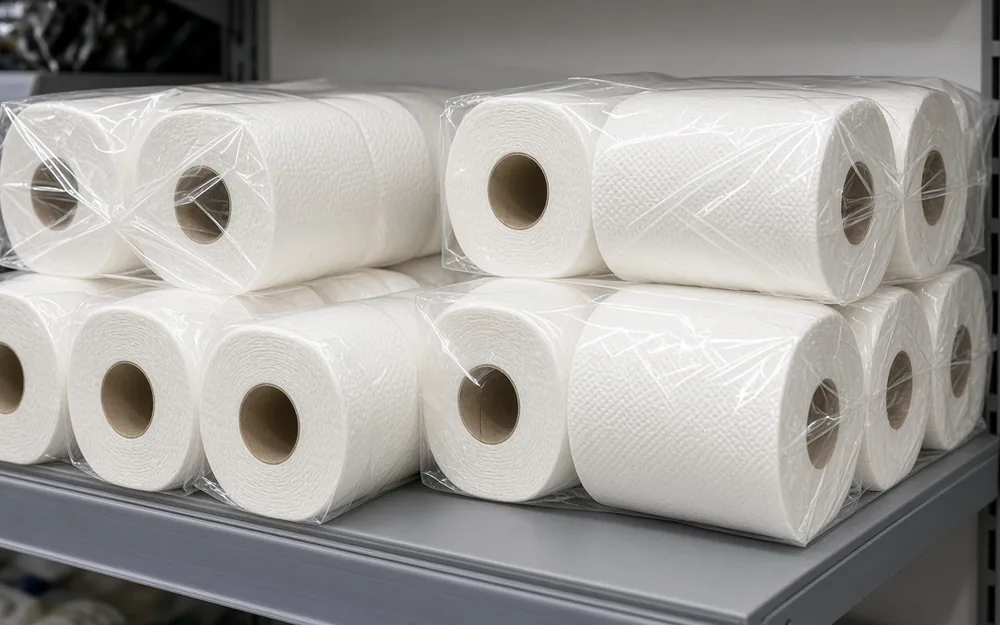
Household paper products change size more than any other category. Image generated by AI.
Does shrinkflation make inflation worse?
Because statisticians track prices per unit, shrinkflation is already counted in official inflation figures rather than hidden from them. When a BLS data collector notices a smaller pack, economists verify the change and the CPI records the effective price rise. The UK’s ONS makes similar quality adjustments for changes in weight, volume or size.
So how much does it add? Less than many people expect. The GAO analysed BLS data from 2019 to 2024, a period in which overall consumer prices rose by 34.5 percent, and found that downsizing accounted for less than one-tenth of a percentage point of that increase. The reason is that downsized goods are a small share of everything people spend money on, from rent and fuel to haircuts and car insurance. But for the products most affected, the effect is real. Among the top five downsizing categories, size changes added between 1.6 percentage points to inflation for cereal and 3.0 percentage points for household paper products over the period. In other words, if you mainly notice shrinkflation in the snack aisle and the cleaning cupboard, your instincts are right.
What governments are doing
Some governments have decided that, even if shrinkflation is legal, shoppers deserve to be told. In France, a rule that took effect on 1 July 2024 requires large food-focused supermarkets of more than 400 square metres to put a label next to pre-packaged products whose quantity has fallen while their unit price has risen. The label must state the old and new quantity and the price change, and it stays up for two months after the smaller version goes on sale. The GAO report notes that several other countries have looked at similar disclosure rules, while warning that regulators can struggle to define downsizing precisely and to check compliance.
A simpler tool already exists in many places: the unit price, shown on the shelf label as a price per 100 grams, per kilogram, per litre, per ounce or per sheet. The GAO points out that clear, consistent unit pricing helps shoppers compare products even when they never notice that a pack has shrunk, although labels are not always consistent from one shop or product to the next.
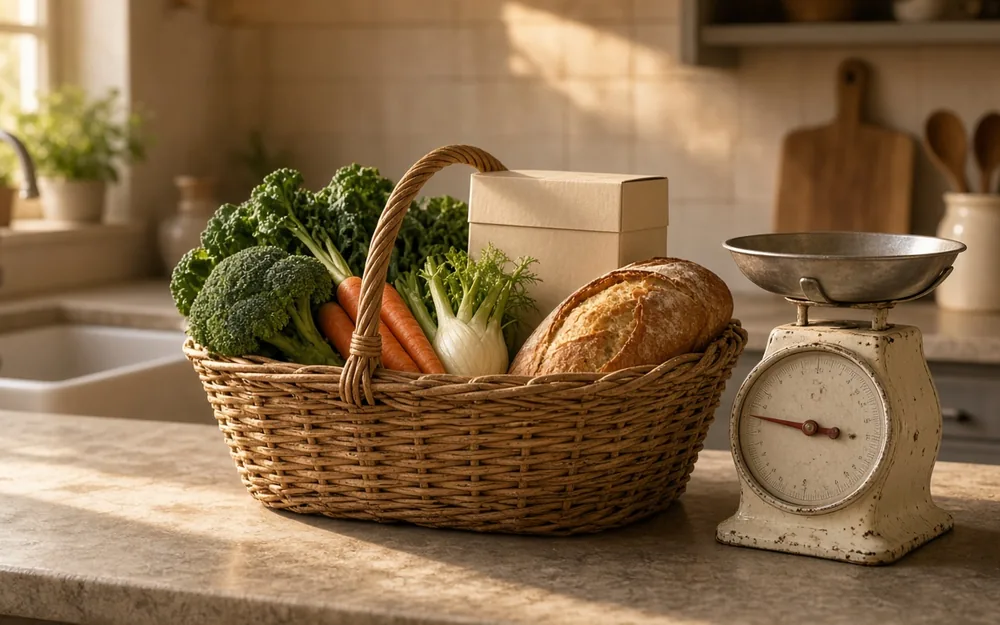
Checking the weight and unit price is the best defence. Image generated by AI.
How to spot shrinkflation when you shop
- Read the unit price, not just the price. It is usually in small print on the shelf label. Compare it across brands and pack sizes.
- Check the net weight or count. Look at grams, millilitres, sheets or tea bags, especially when a favourite product gets a “new look”.
- Be wary of redesigned packaging. A fresh design, a deeper base or more air in the bag can accompany a smaller amount inside.
- Compare with store brands. Own-label products may offer a better unit price, and switching sends a signal to manufacturers.
- Buy loose or by weight where you can. Products sold per kilogram or per pound cannot shrink without you seeing it.
Related reading
For another look at why everyday prices behave the way they do, read why coffee still costs so much after the shortage ended, and for a quick way to think about money over time, see our explainer on the Rule of 72 and compound interest.
Why it matters
Shrinkflation is a small thing that tells us something big about how prices work. It shows how companies manage rising costs, how much shoppers rely on habit and familiar price tags, and why the humble unit price may be the most useful number in the shop. Official statistics suggest it barely moves the national inflation rate, but it can still stretch a household’s budget in the aisles people visit most. Knowing what to look for turns a quiet trick into an informed choice, and perhaps leaves a little more in the purse for a good box of tea.
Frequently asked questions
Is shrinkflation illegal?
Generally not, as long as the package correctly states its contents. Some countries, such as France, now require shops to inform shoppers when a product has shrunk while its unit price has risen.
Is shrinkflation included in inflation figures?
Yes. Agencies such as the US Bureau of Labor Statistics and the UK’s Office for National Statistics track the price per unit, so a smaller pack at the same price is recorded as a price increase.
Which products shrink most often?
Official data point to household paper products, snacks, cereal, sweets, baked goods and cleaning products, along with some drinks such as coffee and tea.
What is the difference between shrinkflation and skimpflation?
Shrinkflation means getting less of a product for the same price. Skimpflation describes getting lower quality, such as cheaper ingredients or poorer service, for the same price.
Sources
- How the CPI measures shrinkflation and its impact on inflation (US Bureau of Labor Statistics, Beyond the Numbers)
- Consumer prices: trends and policy options related to shrinking product sizes (US Government Accountability Office, 2025)
- Shrinkflation: how many of our products are getting smaller? (UK Office for National Statistics, 2019)
- Gourville and Koehler (2004): downsizing price increases and consumer sensitivity (Harvard Business School, via SSRN)
- Shrinkflation: obligation to inform consumers from 1 July 2024 (Service-Public.fr, French government)
- Beyond inflation numbers: shrinkflation and skimpflation (Federal Reserve Bank of St. Louis)
- That shrinking feeling: the origin of “shrinkflation” (Merriam-Webster, archived)










0 Comments