

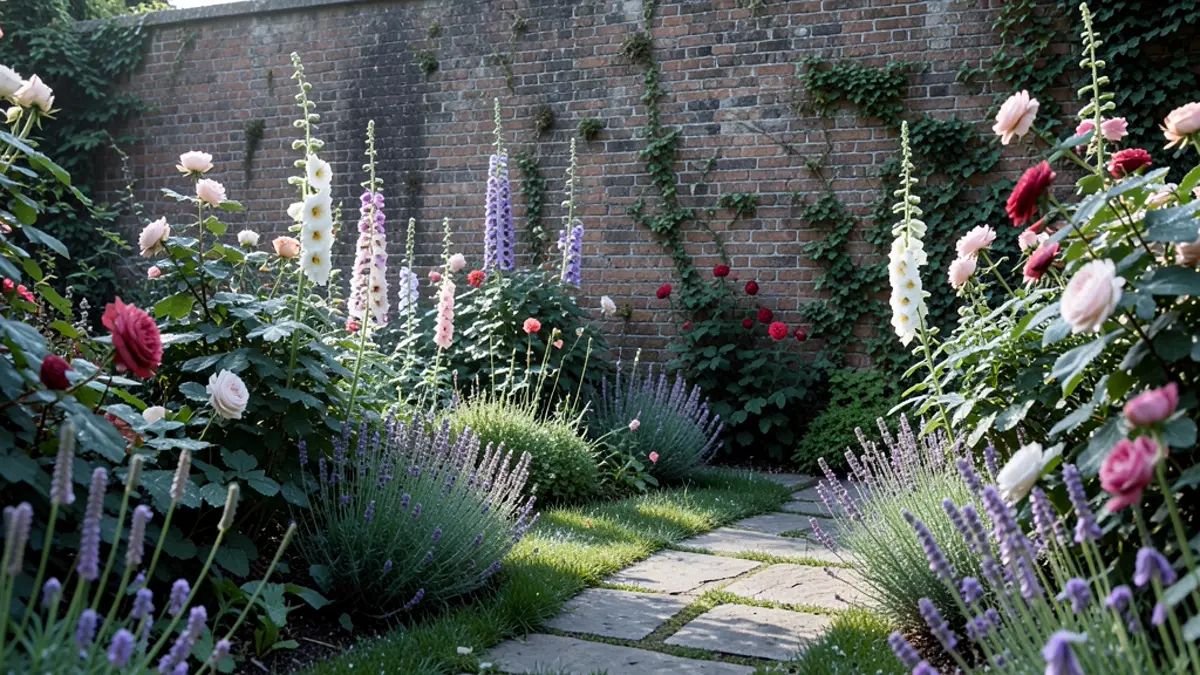
An original TeaLamp reading list. Prepared by the TeaLamp Editorial Team with the help of AI.
A garden in a book is never just a garden. It is a place where a lonely child learns to belong, where a retired judge tries to make peace with the past, where a scientist finds the pattern of all living things. These five books about gardens span a century, three continents and every kind of garden you can imagine — a locked one, a Japanese one, a botanist’s estate, a field of potatoes, and a braid of sweetgrass. Each one is a good read on its own. Together, they make a fine shelf for the winter.
The Secret Garden by Frances Hodgson Burnett (1911)
Start with the classic, because every garden book since owes it something. Mary Lennox is ten years old, recently orphaned in India and sent to live in a vast, gloomy house on the Yorkshire moors. She is, to be honest, a difficult child: spoiled, lonely and furious at the world. Then she finds a key, and behind a hidden door, a garden that has been locked for ten years.
What follows is one of the most satisfying transformations in children’s literature. Mary clears the weeds, her cousin Colin learns to stand and walk, and the garden comes back to life along with both of them. Burnett never hurries it. The healing happens at the pace of growing things, a little each day, with fresh air and honest work. If you have never read it, or only remember the film, the book is quieter and stranger than you might expect — and the moor wind in it is almost a character of its own. It is also the rare classic that adults enjoy just as much on a second reading, for the way it trusts a garden to do what lectures cannot.
The Garden of Evening Mists by Tan Twan Eng (2011)
The most beautiful garden in this list is also the saddest. In the Cameron Highlands of Malaya, in the years after the Second World War, retired judge Teoh Yun Ling returns to the place where she once apprenticed herself to a Japanese gardener named Aritomo. She had asked him to design a memorial garden for her sister, who died in a wartime camp. What she got instead was months of hard lessons in pruning, raking gravel and the Japanese art of garden design.
Tan Twan Eng writes about gardens the way a gardener does: precisely, and with great respect for the work. The garden at the heart of the novel, Yugiri, is built stone by stone and tree by tree, and every choice in it carries meaning. Around it, the novel moves gently between three periods of Yun Ling’s life, as she tries to remember what the war took from her and to forgive what cannot be undone. The book was shortlisted for the Booker Prize in 2012 and went on to win the Man Asian Literary Prize and the Walter Scott Prize for Historical Fiction. Read it slowly, preferably with tea, and expect to think about it for days.
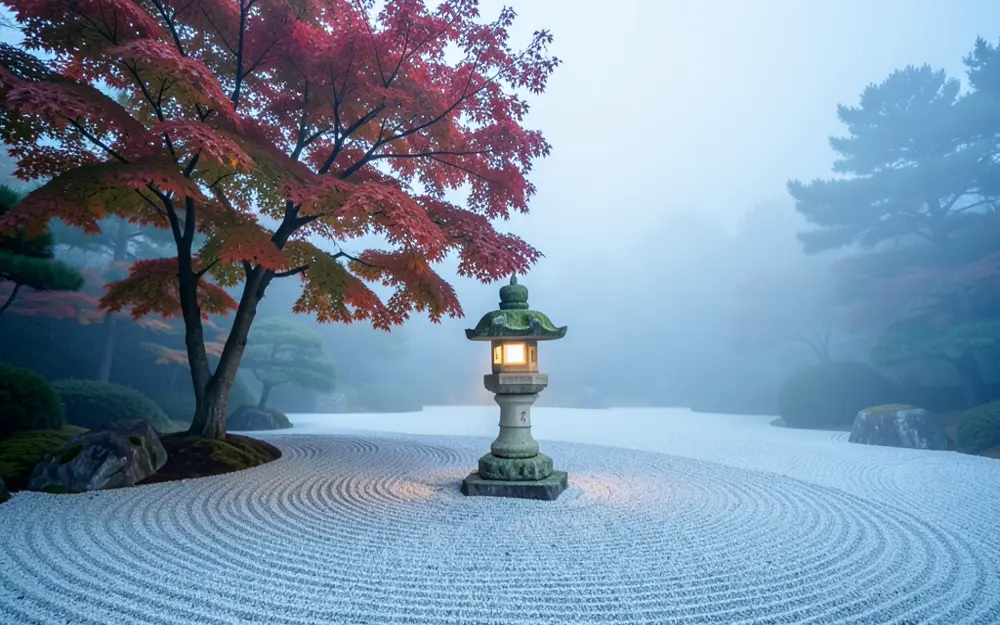
A garden built stone by stone. Image generated by AI.
The Signature of All Things by Elizabeth Gilbert (2013)
Alma Whittaker is born in Philadelphia in 1800, the daughter of a man who made a fortune from plants and the heir to a great botanical estate called White Acre. She is tall, plain, brilliant, and far more at home among mosses than among people. Over five hundred pages, Gilbert follows Alma from her father’s greenhouses to Tahiti and Amsterdam, as she studies the smallest of plants and works her way, quite on her own, towards a theory of evolution.
This is a big, old-fashioned novel, the kind that takes its time and earns it. The gardens here are working places: greenhouses full of orchids, a Dutch botanical garden, a hillside of moss examined through a magnifying glass. Gilbert spent years researching the botany, and it shows — the science is real, and so is Alma’s hunger to understand how the world fits together. It is also a love story of a sort, though not the kind you expect, and a portrait of a woman who refuses to be small. If you liked the sweep of a nineteenth-century novel but want a heroine who does her own thinking, this is your book.
The Botany of Desire by Michael Pollan (2001)
Most garden books ask what we do to plants. Michael Pollan turns the question around: what have plants done to us? His answer is that four familiar plants have quietly trained humans to spread them across the world, by appealing to four deep desires. The apple gives us sweetness. The tulip gives us beauty. Cannabis gives us intoxication. And the potato gives us control.
Each chapter follows one plant through history, and each story is a small adventure. There is Johnny Appleseed, planting orchards across America; there is the Dutch tulip craze of the 1630s, when a single bulb could cost as much as a townhouse in Amsterdam; and there is Pollan’s own first-hand research among the sophisticated growers of Amsterdam. It is the most fun you will have with plant science, and it changes the way you look at your own garden. After this book, a potato is never just a potato. It is a plant that persuaded us to plant it on five continents, and it is winning.
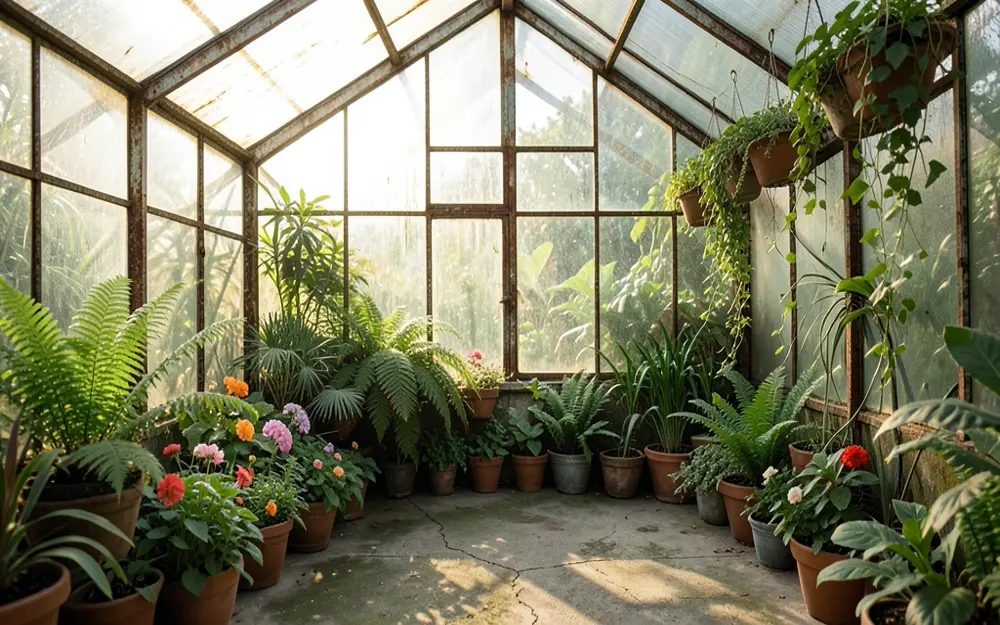
A working greenhouse, full of green. Image generated by AI.
Braiding Sweetgrass by Robin Wall Kimmerer (2013)
Robin Wall Kimmerer is a botanist and a member of the Citizen Potawatomi Nation, and her book braids those two ways of knowing together the way sweetgrass itself is braided: three strands, science, Indigenous wisdom and personal story, woven into one strong thread. The essays move from plant to plant — sweetgrass, squash, goldenrod, pecans — and each one teaches something about reciprocity, the idea that taking from the land carries a duty to give back.
The chapter on the Three Sisters is worth the price of the book alone: corn, beans and squash, planted together so that each helps the others grow, a system of farming that is older than the countries that now occupy the land. Kimmerer writes with the clarity of a scientist and the warmth of a storyteller, and she never lectures. Readers who come for the plants stay for the way she sees the world. The book won the Sigurd F. Olson Nature Writing Award in 2014 and found its way onto the bestseller lists years after publication, passed from reader to reader the way good books are.
Why these five books about gardens
What ties these books together is not just that they are about gardens. It is that each one treats a garden as a place where something is worked out: grief, curiosity, desire, belonging. The Secret Garden heals a child. Yugiri holds a memory. White Acre raises a scientist. Pollan’s fields feed our wants. Kimmerer’s sweetgrass teaches us how to take without taking too much.
Read them in any order. Start with the one whose garden sounds most like yours — or most unlike it. And if you finish the list and want more, the garden shelf is a deep one: there are many more where these came from, and a winter is a good time to dig in.
Related reading
For a closer look at the first book on this list, read our review of The Secret Garden.
Sources
- The Garden of Evening Mists — Wikipedia (publication, prizes)
- The Signature of All Things — Wikipedia (publication, Baileys longlisting)
- The Botany of Desire — Wikipedia (publication, four plants and desires)
- Braiding Sweetgrass — Wikipedia (publication, pages, award)
- Elizabeth Gilbert on The Signature of All Things — National Geographic







0 Comments