

An original TeaLamp explainer based on the sources listed below. Prepared by the TeaLamp Editorial Team with the help of AI.
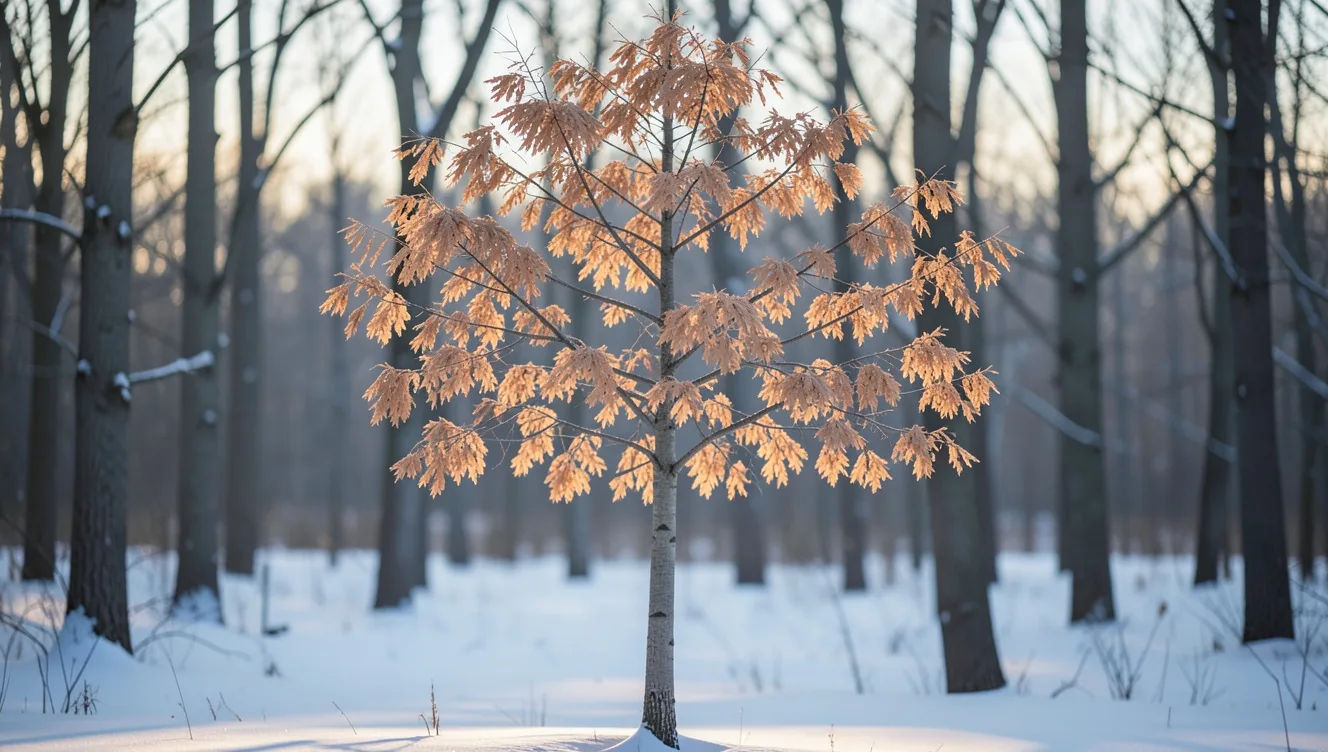
Walk through a winter wood after the first snow and you may notice something odd. Most trees stand bare, but here and there a young beech or oak still wears a full coat of pale, papery leaves that rattle in the wind. This habit has a lovely name, marcescence, and although botanists have studied it for well over a century, they still cannot say for certain why it happens. Here is what we know, what scientists suspect, and why it is worth a closer look on your next cold-weather walk.
Key takeaways on marcescence
- Marcescence is the winter habit of keeping dead, dry leaves on the branch instead of dropping them in autumn.
- It is most common in oaks and beeches, and also shows up in hornbeams, hophornbeams and witch hazels.
- It happens because the layer of cells that normally cuts a leaf loose forms late or only partly.
- Young trees and the lower branches of older trees hold on to their leaves the most.
- The leading ideas are protection from hungry deer, shelter for buds, and a well-timed spring mulch, but none is fully proven.
What marcescence means
The word comes from the Latin marcescere, “to fade” or “to wither”, as the University of Maryland Extension explains in its guide to marcescence. A marcescent leaf is one that has died and withered but has not fallen. The Clemson Home and Garden Information Center describes it simply as winter retention of leaves.
It is worth separating marcescent trees from evergreens. A pine or a holly keeps living, green leaves through the winter and keeps using them. A marcescent beech, by contrast, is fully deciduous: its leaves have stopped working, lost their green colour and turned tan, copper or the shade of old parchment. They simply have not let go yet.
How a normal leaf falls
To understand why some leaves stay, it helps to know how most leaves leave. In autumn, as days shorten and nights cool, deciduous trees break down the green chlorophyll in their leaves and pull useful nutrients back into their twigs and roots. That is the process behind the reds and golds we covered in our explainer on why leaves change colour in fall.
At the same time, the tree builds a thin band of special cells where the leaf stalk meets the twig. This is called the abscission layer. The University of Illinois Extension explains that this layer cuts off the supply of water and nutrients to the leaf. Its cells then separate, the leaf is held on by little more than a few strands, and the next gust of wind finishes the job. A corky seal is left behind to protect the twig.
In marcescent trees, that abscission layer is delayed or only partly formed in autumn. The leaf dies on schedule, but the clean break does not happen. Winter winds and snow knock some leaves loose, and in spring the swelling new buds push the rest of the old leaves off.
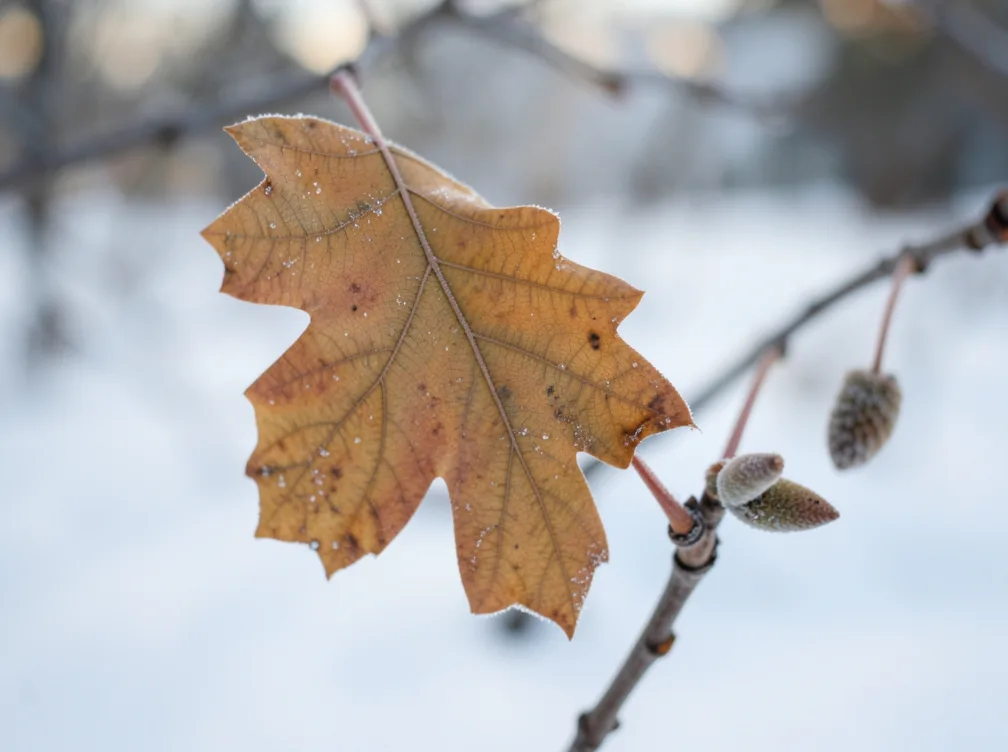
A dead leaf that has not let go, with next spring’s bud waiting beside it. Image generated by AI.
Which trees keep their leaves
Across eastern North America, the trees most often seen holding their leaves are oaks (Quercus) and American beech (Fagus grandifolia). Extension services in Maryland and South Carolina also list American hornbeam (also called musclewood or ironwood), eastern hophornbeam and witch hazels. In Europe, the classic examples are European beech and common hornbeam, which is one reason beech and hornbeam hedges stay so thick and brown through the winter in many gardens.
Age and height matter a great deal. In a 2023 review in the journal Ecosphere, titled “Not all temperate deciduous trees are leafless in winter”, botanist J. Mason Heberling and colleagues reported that marcescence in American beech was much more common in saplings under about 5 metres tall and on lower branches. Most of the retained leaves were then shed quickly in early spring. That pattern matches what many walkers notice: a tall oak may be bare at the top but still leafy near the ground, while the understorey glows with small, leafy beeches.
Why do trees hold on? The main ideas
Here is the honest answer: nobody knows for sure. Marcescence probably has more than one cause, and the benefit may differ from place to place. Still, scientists have tested a few ideas, and some have better support than others.
Keeping hungry deer away
The best-tested idea is that dry, dead leaves make winter twigs less tempting to browsing animals. In winter, deer and moose eat buds and young twigs, which are among the few foods left. A dead leaf is tough, low in protein and full of lignin, the woody material that is hard to digest.
In a feeding trial in Jaegersborg Dyrehave, a deer park north of Copenhagen, researcher Claus Svendsen offered free-roaming red, fallow and sika deer branches of beech, hornbeam and oak in February 1992. Half of the branches still had their marcescent leaves, and half had them removed. As he reported in the journal Alces in 2001, the deer ate significantly more of the beech and hornbeam branches once the leaves were stripped off. Oak, interestingly, was eaten about the same either way. The study concluded that marcescent leaves may work as an anti-herbivore defence.
This fits the height pattern nicely. Leaves cling most on small trees and low branches, which is exactly where a deer can reach. The Ecosphere review calls this support speculative but consistent with the idea.
A coat for tender buds
A second idea is that the leaves shelter next year’s buds from drying winds and harsh cold. Illinois Extension notes that this could matter most in exposed, windy places such as open oak savannas, where buds face a long winter with little cover. Dead leaves may also give small birds a bit of shelter from the wind, as the Maryland guide points out.
A spring delivery of mulch
A third idea is about timing. Leaves that fall in autumn can be blown away or have their nutrients washed out by winter rain and snowmelt. Leaves that drop in spring land right at the base of the tree just as the growing season starts, adding a fresh layer of mulch and a slow release of nutrients. Oaks and beeches often grow on dry, poor ridges, so a well-timed leaf drop could help them hold moisture and compete on tough sites.
Is there a downside?
Holding leaves is not free. A branch dressed in dry leaves catches more wind, snow and ice, which adds weight and strain during winter storms. Illinois Extension notes that this can make trees more likely to lose branches in bad weather. The fact that so many oaks and beeches keep the habit anyway suggests the benefits, whatever they are, usually outweigh the risks.
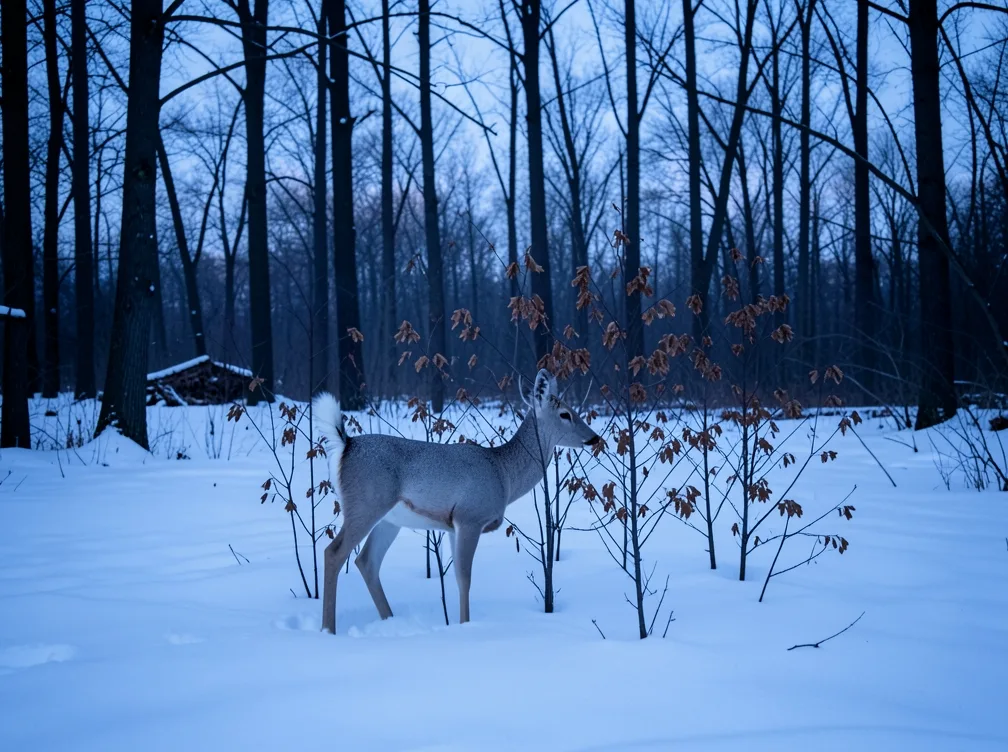
Leaves cling most on low branches, right where hungry deer can reach. Image generated by AI.
How to spot marcescence on a winter walk
You do not need to be a botanist to enjoy this quiet winter show. A few tips:
- Look low and look young. Scan the understorey of a mixed forest for small trees still holding pale leaves.
- Listen. On a breezy day, marcescent beeches make a dry, papery rustle that carries across a silent wood.
- Check the leaf shape. Beech leaves are oval with neat parallel veins and a toothed edge; oak leaves are lobed or wavy.
- Watch the light. Low winter sun shining through beech leaves turns them a warm copper against snow or a blue sky.
- Come back in spring. Visit the same tree in April or May and you can watch the new buds swell and push the old leaves away.
If you keep a nature journal, marcescence is a simple project: note which trees hold their leaves, how high up, and when they finally drop them. Over a few winters you may see your own patterns.
Why it matters
Marcescence is a small reminder that even familiar trees still hold surprises. Something we have all walked past for years turns out to be an open scientific question, tied up with deer, wind, soil and deep evolutionary history. It also asks us to slow down. A bare winter forest can look empty at first glance, but the rustle of a few stubborn leaves shows that the trees are quietly getting ready for spring.
Related reading: learn how one animal reshapes whole forests in our piece on the beaver’s dam, or revisit the colour story of autumn leaves.
Frequently asked questions
Is a tree that keeps its dead leaves in winter sick?
Usually not. On oaks, beeches and hornbeams, holding dry leaves through winter is a normal habit called marcescence. If a tree that normally drops its leaves suddenly holds brown ones, or if leaves die in summer, it is worth asking a local arborist.
When do marcescent leaves finally fall?
Some fall during winter storms, but most drop in early spring, when new buds swell and push the old leaves off.
Should I pull the leaves off my beech hedge?
There is no need. The leaves do the tree no harm in most cases, and many gardeners plant beech and hornbeam hedges partly because they stay full and give privacy through winter.
Sources
- University of Maryland Extension: The Mystery of Marcescence
- Clemson Home and Garden Information Center: When Leaves Don’t Let Go, Marcescence
- University of Illinois Extension: The stubborn beauty of oak leaves, marcescence explained
- Heberling and colleagues (2023), Ecosphere: Not all temperate deciduous trees are leafless in winter
- Svendsen (2001), Alces: Effects of marcescent leaves on winter browsing by large herbivores







0 Comments