

A TeaLamp reading list. Prepared by the TeaLamp Editorial Team with the help of AI.
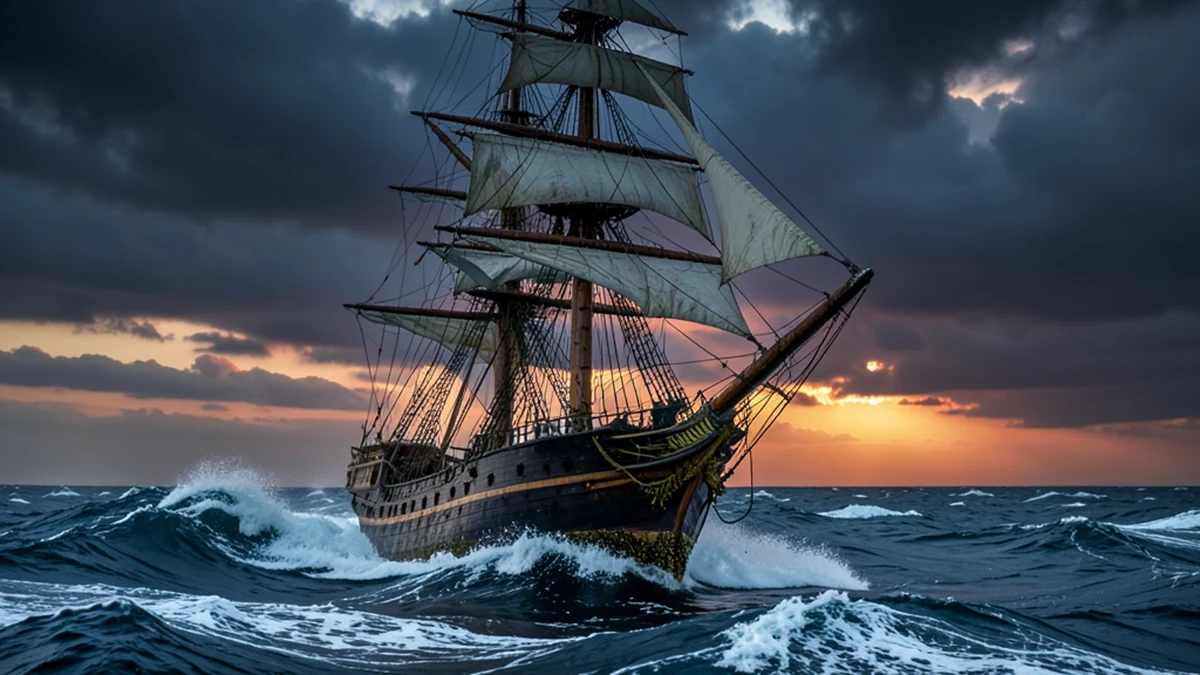
Some nights ask for a story with wind in it. When rain hits the window and the house is warm, there is nothing quite like a tale of the open sea: a shipwreck, a storm, a long voyage, a character tested by water. These five sea stories span three centuries, from a castaway’s island to a boy adrift with a tiger, and every one of them is a fine companion for a stormy night. Pour something warm, settle in, and let the waves do their work.
Key takeaways on sea stories
- Robinson Crusoe, the original castaway tale of survival and self-reliance on a desert island.
- Twenty Thousand Leagues Under the Seas, Jules Verne’s voyage beneath the waves with the mysterious Captain Nemo.
- The Swiss Family Robinson, Johann David Wyss’s tale of a shipwrecked family building a new life on a desert island.
- The Sea-Wolf, Jack London’s brutal and gripping tale of life aboard a seal-hunting schooner.
- Life of Pi, Yann Martel’s modern fable of a boy shipwrecked in a lifeboat with a Bengal tiger.
Robinson Crusoe by Daniel Defoe
Published in 1719, Robinson Crusoe is the book that invented the castaway story, and three hundred years later it still sets the standard. Crusoe, a young Englishman with a taste for adventure, is shipwrecked alone on an island near the mouth of the Orinoco River. With only what he salvages from the wreck, he builds shelter, grows food, keeps goats, and learns, slowly and painfully, how to live with himself as his only company.
Read it for the practical magic of survival: the lists, the building, the small triumphs that feel enormous when you are alone. It is also a story about patience. Crusoe spends 28 years on his island, and Defoe makes every one of those years feel real. Best for a long, wild evening when you want a story that starts with disaster and ends with a man remade by solitude. If storms keep you indoors, this is the book that makes staying in feel like an adventure of its own.

A castaway’s shore, quiet after the storm. Image generated by AI.
Twenty Thousand Leagues Under the Seas by Jules Verne
First published in 1870, Verne’s novel takes the sea story somewhere no story had gone before: underneath the waves. When a mysterious creature begins attacking ships, a professor, his servant and a harpooner set out to hunt it, only to discover that the monster is a submarine, the Nautilus, commanded by the brilliant and troubled Captain Nemo. What follows is a voyage through coral forests, sunken ships, Antarctic ice and the lost world of Atlantis.
Read it for wonder. Verne imagined undersea diving, electric submarines and deep-sea exploration decades before they existed, and his excitement is infectious. Nemo himself is one of literature’s great mysteries: a genius, a rebel, a man who has turned his back on the world above the waves. Best for readers who love a voyage into the unknown, and for anyone who has ever wondered what lies beneath the surface of the sea.
The Swiss Family Robinson by Johann David Wyss
Published in 1812, The Swiss Family Robinson is the warmest voyage on this list, and the most ingenious. A Swiss pastor, his wife and their four sons are shipwrecked in the East Indies while sailing for Australia, abandoned by the rest of the crew. With what they salvage from the wreck, and a great deal of patience, they build a new life on a tropical island: first a treehouse, then a cave dwelling, with gardens, livestock and workshops of their own making.
Read it for the pleasure of making do. Where Crusoe survives alone, the Robinson family survives together, and half the fun is watching them solve each new problem: how to cross to the island, how to store food, how to tame the island’s animals. It is a story about resourcefulness and family teamwork, told with a father’s pride in his children’s growing skill. Best for a stormy night when you want adventure with a warm heart, a book the whole family can enjoy, and a reminder that a wreck can be the start of something, not just the end.
The Sea-Wolf by Jack London
Published in 1904, The Sea-Wolf is the roughest voyage on this list, and the most gripping. Humphrey Van Weyden, a gentle literary critic, is rescued from a ferry wreck by Wolf Larsen, the fearsome captain of a seal-hunting schooner called the Ghost. Larsen is brilliant, cruel and utterly without mercy, and Van Weyden must learn to survive aboard a ship ruled by force.
Read it for the clash at its heart: a man of books against a man of raw power, arguing about life, death and what makes a person strong. The storms, the hunting and the hard work of the ship are vividly drawn, and Larsen is a villain readers never forget. Best for a night when the wind is up and you want a story with real bite. This is not a gentle book, but it is a thrilling one, and its questions stay with you long after the last page.
Life of Pi by Yann Martel
Published in 2001, Life of Pi is the most modern book on this list and the most magical. Pi Patel, a sixteen-year-old boy from India, survives a shipwreck and finds himself adrift in the Pacific Ocean in a lifeboat with a Bengal tiger named Richard Parker. For 227 days, boy and tiger share food, water and fear, and Pi must find a way for both of them to live.
Read it for the wonder and the question at its centre. Martel’s ocean is beautiful and terrifying by turns, full of flying fish, storms and shining water, and the story Pi tells about his survival asks the reader to think about truth, faith and the stories we choose to believe. The book won the Booker Prize in 2002. Best for readers who like a sea story that is also a puzzle, and for a stormy night when you want to be amazed as well as entertained.
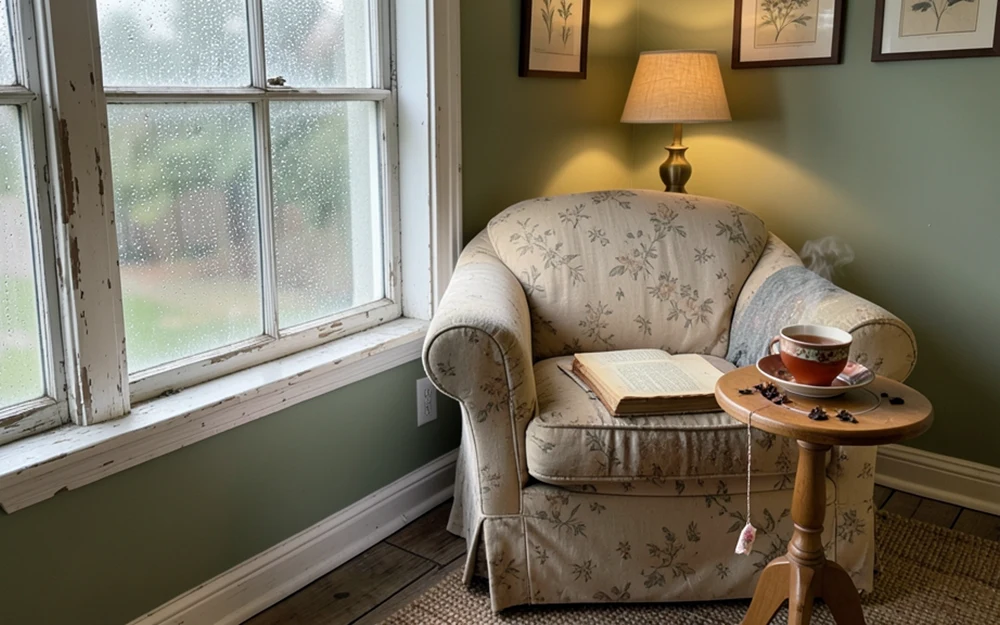
A warm nook for a stormy night’s reading. Image generated by AI.
Why it matters
Sea stories last because the sea is the oldest test we know. Put a person alone against wind and water, and you quickly find out what they are made of. These five books answer that question five different ways: with patience, with wonder, with teamwork, with force, and with faith. They are also simply wonderful company on a wild night, when the rain is on the glass and the kettle is on.
Start with whichever title pulls you first. There is no wrong order, and no exam at the end. The storm outside is the point.
Related reading
For another quiet classic to read over tea, see our list Five Short Classics for a Quiet Weekend.







0 Comments