

An original TeaLamp explainer based on the sources listed below. Prepared by the TeaLamp Editorial Team with the help of AI.
Ask a friend why is it called Black Friday and you will probably hear a neat story about shops finally moving from red ink to black ink. It sounds like accounting wisdom, but the records tell a messier and more interesting tale, one that starts with tired traffic police, grumpy merchants and a public relations campaign that did not quite work.
Key takeaways: why is it called Black Friday?
- The shopping meaning of “Black Friday” comes from Philadelphia police, who used it in the early 1960s for the crowds and traffic jams on the day after Thanksgiving.
- Downtown merchants disliked the gloomy name and tried to replace it with “Big Friday”, without lasting success.
- The popular “red to black” profit story only spread nationally in the 1980s and is a later explanation, not the origin.
- Before shopping, “Black Friday” already meant a disaster, most famously the gold market panic of September 24, 1869.
- Today the long weekend has grown into a whole season, with Small Business Saturday, Cyber Monday and GivingTuesday added on.
The older, darker Black Fridays
For centuries, calling a day “black” meant something went badly wrong. The Oxford English Dictionary’s researchers have traced “Black Friday” back to 1610, when English schoolboys used it for any Friday with an exam, according to the OUPblog history of Black Friday and other black days. Later the phrase was attached to financial disasters.
The best known is the American gold panic of 1869. As Encyclopaedia Britannica explains, the financiers Jay Gould and Jim Fisk tried to corner the gold market at the New York Gold Exchange. On Friday, September 24, the government stepped in, prices collapsed and many investors were ruined. That Black Friday had nothing to do with holiday gifts, but it shows how the word “black” carried a sense of chaos and loss long before anyone queued for a discount television.
Keep that gloomy meaning in mind, because it explains why shopkeepers would later be so uneasy about the name.
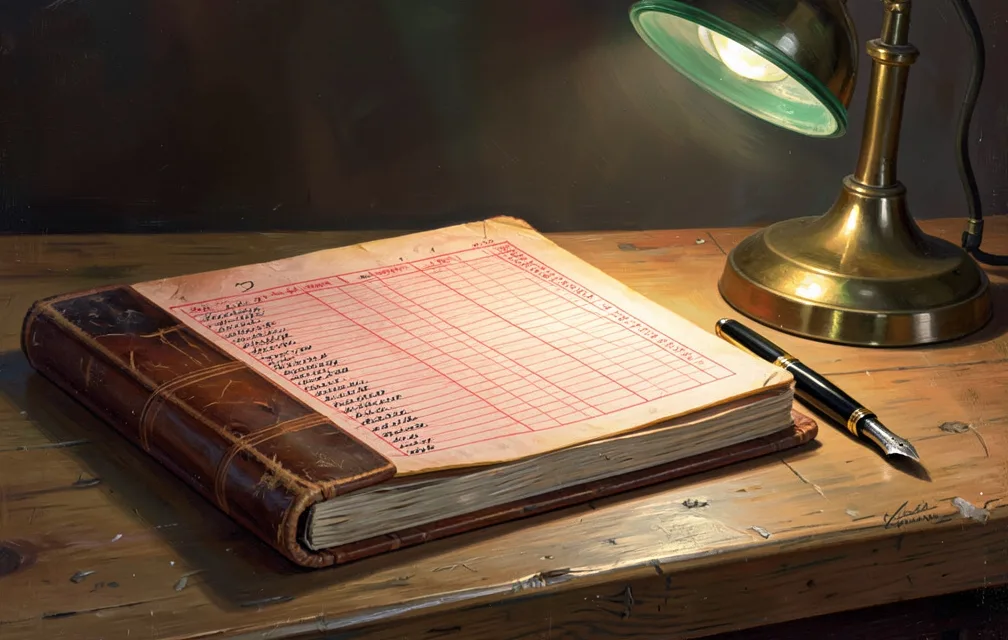
Old bookkeeping used red ink for losses and black for profits, the root of a popular but later story. Image generated by AI.
Philadelphia police and the day after Thanksgiving
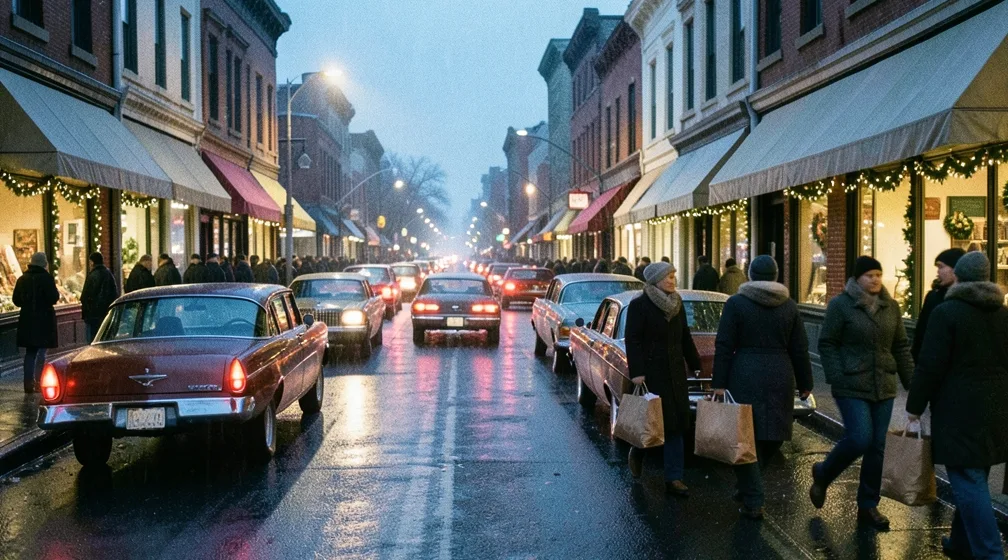
The modern shopping sense grew up in one American city. In the 1950s and early 1960s, the Friday after Thanksgiving was a busy day for downtown department stores, and in Philadelphia, in some years, it came just before the annual Army–Navy football game on Saturday, which pulled in even more visitors. Britannica notes that police officers worked longer shifts as they dealt with traffic jams, accidents and shoplifting.
For the police, the day was not a celebration. A veteran Philadelphia reporter, Joseph P. Barrett, later recalled that traffic officers were not allowed to take the day off and were put on 12-hour shifts, as summarised in Bonnie Taylor-Blake’s research on the rebranding of Black Friday. In a 1994 recollection quoted there, Barrett wrote that the term “came out of the old Philadelphia Police Department’s traffic squad.”
The earliest clear printed link between the phrase and holiday shopping comes from December 1961. An item in the trade newsletter Public Relations News, found by word researchers and shared on the American Dialect Society mailing list, reported that “in Philadelphia, it became customary for officers to refer to the post-Thanksgiving days as Black Friday and Black Saturday.”
An even earlier, factory-floor meaning
There is one older clue. In November 1951, the trade magazine Factory Management and Maintenance used “Black Friday” for the day after Thanksgiving because so many workers called in sick to enjoy a four-day weekend. The OUPblog post says the OED has found no evidence of the Thanksgiving link before that 1951 use. It was about empty workbenches, not full shops, but it shows the day already had a reputation for disruption.
The “Big Friday” makeover that did not stick
Merchants hated the name. Who wants their busiest day to sound like a disaster? According to the same 1961 report, Philadelphia stores worked with Abe S. Rosen, the city’s deputy city representative and a seasoned public relations official. His suggestion was to turn Black Friday and Black Saturday into “Big Friday” and “Big Saturday”, and to promote the festive decorations, extra parking and a family day out in town.
It was a sensible plan, and the report claimed business that weekend was excellent. Yet the new name never caught on. Local journalists kept writing “Black Friday”, and the phrase spread slowly to other cities. It is a useful lesson for anyone in marketing: a catchy nickname that people actually use is very hard to replace from above, even with the media on your side.
Where the red-ink-to-black-ink story came from
If the name began with police, where does the accounting story come from? Britannica explains that the idea of Black Friday as the day stores finally turn a profit spread nationally in the late 1980s. In old-fashioned bookkeeping, losses were often written in red ink and profits in black, so the tale was easy to picture and pleasant to repeat.
The story is upbeat and it turned a slightly embarrassing name into a positive one. That is probably why it stuck. But it does not match the timeline, and it does not quite match retail reality either. Britannica points out that, in truth, most stores saw their largest sales on the Saturday before Christmas, not on the day after Thanksgiving. Few businesses spend eleven months losing money and then make it all back in one day.

Much of today’s Black Friday shopping happens online, from home. Image generated by AI.
How a weekend became a whole shopping season
Once Black Friday was famous, the retail calendar began to fill up with new named days. In 2005, a small public relations team at Shop.org, the online arm of the National Retail Federation, noticed a spike in online orders on the Monday after Thanksgiving and called it “Cyber Monday”, as Georgetown University’s profile of Ellen Davis describes. Davis has said there was no budget and no committee, just a few colleagues in a room.
American Express launched Small Business Saturday in 2010 to encourage shopping at local independent stores, according to USA Today’s report on branded shopping days. In 2012, GivingTuesday arrived as a day for charitable donations, with the same report noting its first year. In 2026, Thanksgiving in the United States falls on November 26, so Black Friday is November 27 and Cyber Monday is November 30.
What the numbers look like today
The scale is now enormous. The National Retail Federation’s 2025 holiday weekend survey found a record 202.9 million people shopped from Thanksgiving Day through Cyber Monday, up from 197 million in 2024. Black Friday itself was still the top day, with 80.3 million in-store shoppers and 85.7 million online. Online, Adobe Analytics reported that US shoppers spent $11.8 billion on Black Friday 2025 and $14.25 billion on Cyber Monday, which remains the biggest online shopping day.
Look closely and you can see an interesting shift. Black Friday is no longer a single frantic morning at the mall. Deals start earlier, run longer and move between stores, phones and laptops. The name survives, but the day it describes has spread out into something closer to a week-long season.
What the name tells us about business
The story of Black Friday is a small case study in how language and commerce shape each other. A word coined by people who disliked the day ended up as one of retail’s most valuable brands. A rebrand designed by professionals failed, while a folk explanation invented decades later became the version most people know. And once a name works, businesses copy it, which is why we now have a Cyber Monday, a Small Business Saturday and a GivingTuesday.
For shoppers, the history is a gentle reminder to keep a little distance from the hype. The day has always been about crowds and pressure as much as bargains. A clear list, a set budget and a cup of tea before you open the shopping tabs can do more for your wallet than any countdown clock.
Why it matters
Knowing the real origin helps us read marketing with a clearer eye. Stories that sound tidy and reassuring are not always true, and a quick look at dated sources can separate the record from the legend. Black Friday began as a police complaint about traffic, became a merchant’s headache and turned into a global retail event. That journey says a lot about how ideas spread, and about how often the friendliest explanation is the one added later.
Related reading: if you enjoy the maths of money, try our explainer on the Rule of 72 and compound interest, or read how long new businesses usually survive.
Frequently asked questions
Is it true that stores go “into the black” on Black Friday?
No, that is a later explanation. The name came from Philadelphia police in the early 1960s, and the profit story only spread widely in the 1980s.
When is Black Friday in 2026?
Black Friday is the day after US Thanksgiving. In 2026, Thanksgiving is Thursday, November 26, so Black Friday falls on Friday, November 27.
Who invented Cyber Monday?
The term was coined in 2005 by a public relations team at Shop.org, part of the National Retail Federation, after they noticed a jump in online shopping on the Monday after Thanksgiving.
Sources
- Encyclopaedia Britannica: Why Is It Called Black Friday?
- OUPblog: The origin of Black Friday and other black days
- Bonnie Taylor-Blake: Whitewashing Black Friday, the rebranding of an American shopping holiday
- American Dialect Society list: Black Friday (day after Thanksgiving), 1961
- Georgetown McDonough School of Business: Shopping Spree (Ellen Davis and Cyber Monday)
- USA Today: “Black Friday” success prompts retail name game
- National Retail Federation: Thanksgiving holiday weekend draws a record 203 million shoppers
- Adobe: Cyber Monday 2025 recap (PDF)








0 Comments