

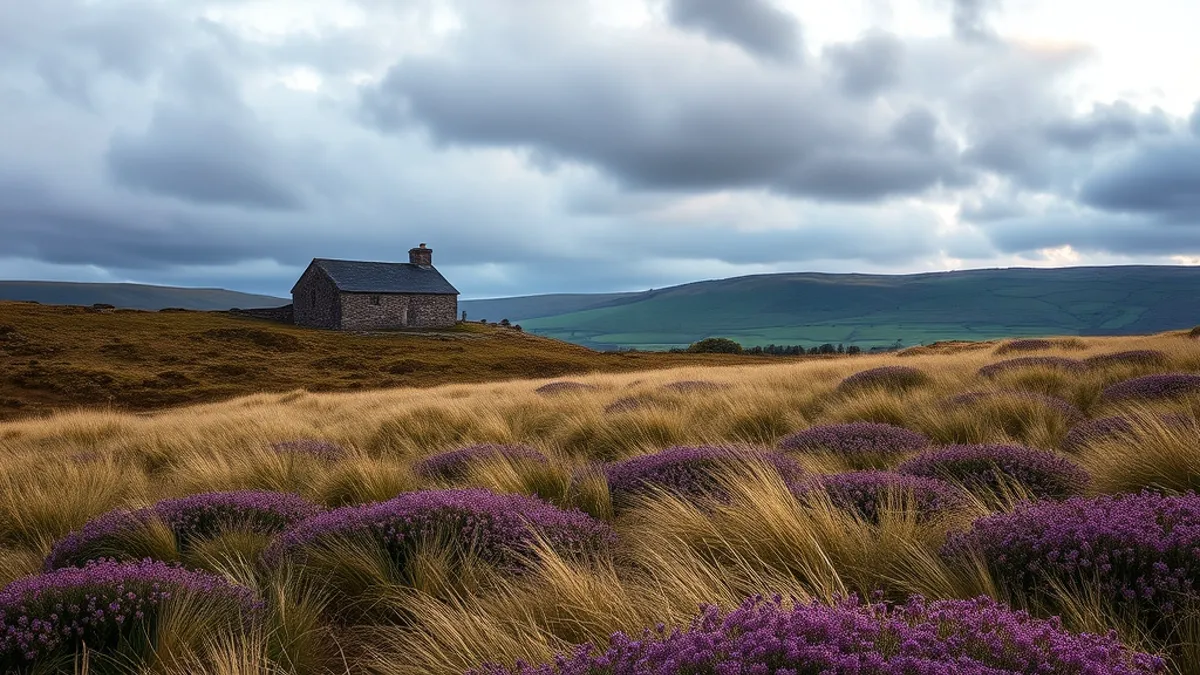
A TeaLamp book review of Wuthering Heights by Emily Brontë, first published in 1847. In the public domain. Prepared by the TeaLamp Editorial Team with the help of AI.
Few novels stay with readers the way this one does. In this Wuthering Heights review, we look at Emily Brontë’s only novel: a wild, stormy story of two families on the Yorkshire moors, told with a power that still surprises readers nearly 180 years after it first appeared. It is not a gentle love story, and it is not an easy read. But for readers who enjoy strong feeling, vivid landscape, and characters who refuse to be forgotten, it offers something few other books can match.
Key takeaways on Wuthering Heights review
- Emily Brontë’s only novel, first published in 1847 under the pen name Ellis Bell, and now a classic of English literature.
- The Yorkshire moors are more than a backdrop: wind, weather, and wild open land shape the people and the story at every turn.
- At its heart is the bond between Heathcliff and Catherine Earnshaw, a connection that crosses family lines, marriages, and even death.
- The story is told through two narrators, the housekeeper Nelly Dean and the visitor Mr. Lockwood, which gives it the feel of a tale passed down and pieced together.
- Best for readers who like intense, character-driven classics and do not mind a darker, stormier kind of story.
The moors, alive in every chapter
The first thing most readers notice about Wuthering Heights is its setting. The novel takes place on the high, windswept moors of Yorkshire, in the north of England, between two houses: the rough farmhouse of Wuthering Heights and the calmer, tidier Thrushcross Grange. The wind bends the trees, the heather stretches for miles, and the weather changes the mood of a scene as surely as any character does. Brontë writes about this landscape with a closeness that makes it feel alive.
This is one of the book’s great strengths. The moors are not just scenery. They stand for freedom and wildness, set against the order and comfort of the Grange. When Catherine and Heathcliff run out onto the moors as children, readers feel the joy of that freedom. When the wind howls around the Heights in later chapters, it echoes the storms inside the people who live there.
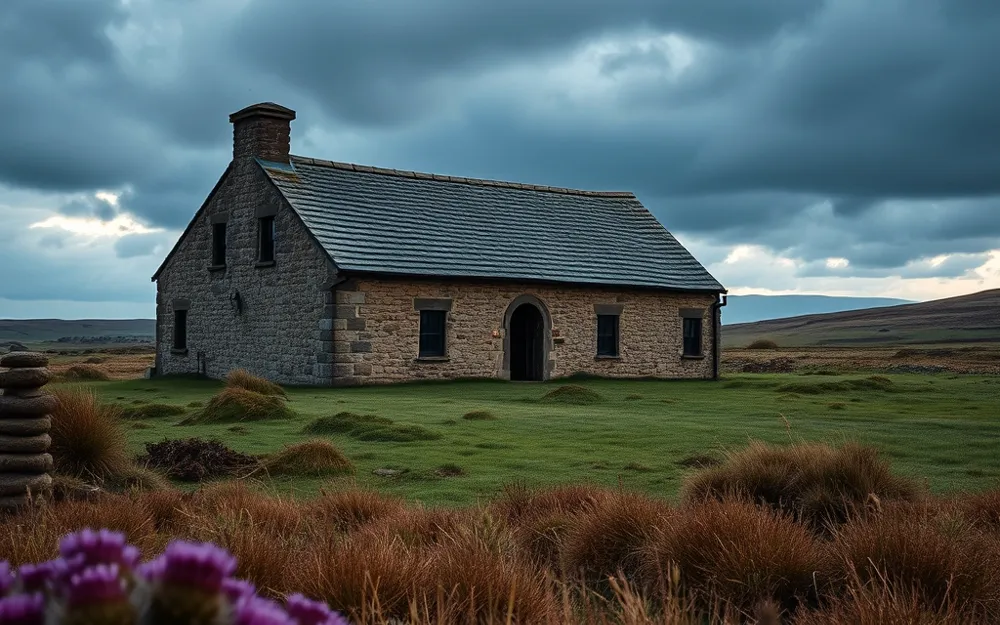
An old stone farmhouse on the moor. Image generated by AI.
Heathcliff and Catherine: a bond like no other
Heathcliff arrives at Wuthering Heights as a child, taken in by Mr. Earnshaw, and grows up beside Catherine Earnshaw. The two become inseparable, sharing a bond that the novel presents as deeper than ordinary friendship or romance. Catherine herself puts it in words that readers have quoted ever since: “Whatever our souls are made of, his and mine are the same.”
What makes the pair so memorable is that Brontë never softens them. Catherine is headstrong and restless, torn between the wild life she loves and the comfort of a more settled marriage. Heathcliff, hurt and cast aside, grows hard and vengeful, and his anger shapes the lives of everyone around him. Neither is a simple hero or villain. Readers who enjoy characters with sharp edges and real flaws will find them fascinating, even when their choices are hard to watch.
It is worth saying plainly that this is not a cozy romance. The love at the center of the book is fierce and troubled, and it brings pain to both families. Readers looking for a light, happy love story may prefer something else. Readers who like stories about passion, loyalty, and the long shadow of old wounds will find this one hard to put down.
Two generations, two storytellers
Wuthering Heights is cleverly built. The story spans two generations: first Catherine and Heathcliff, then their children, who inherit the quarrels and the houses of their parents. The second half asks whether the younger generation can break free of the past, and its gentler ending gives the book its sense of hope.
The telling is part of the pleasure too. Most of the story comes from Nelly Dean, the housekeeper who has served both families and seen it all. She tells it to Mr. Lockwood, a visitor renting Thrushcross Grange, who passes it on to us. Nelly is warm and plainspoken, but she has her own views, and Lockwood sometimes misunderstands what he hears. That layered telling makes the novel feel like a story heard by a fireside. New readers should give the opening chapters a little patience: once Nelly takes over, the story gathers speed.
Why it shocked readers in 1847, and why it endures
When Wuthering Heights first appeared in 1847, published under the name Ellis Bell, many early reviewers were startled. Its rough manners and strong passions were unlike anything polite readers expected. Some praised its originality and power; others found it too wild. Emily Brontë died the year after publication, aged thirty, and never saw her book take its place among the great English novels.
Today, the very qualities that shocked its first readers are the reason it endures. Brontë wrote with a freedom that still feels modern. She let her characters be difficult, let her storytellers be unreliable, and let the landscape speak as loudly as any person. The novel has inspired stage plays, films, and songs, and it is still read, studied, and argued over around the world.
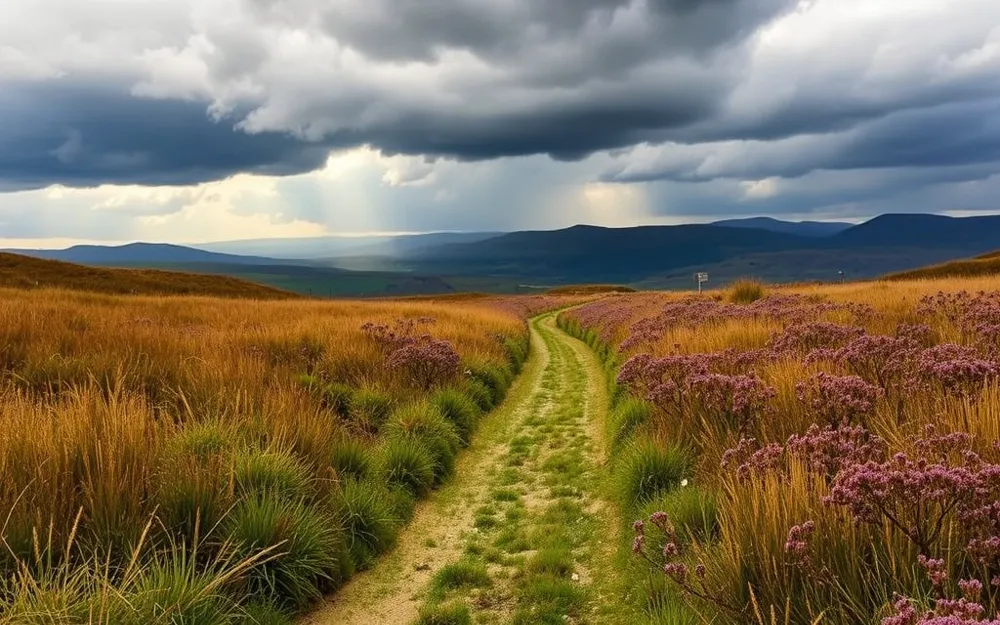
A moorland path through heather under a stormy sky. Image generated by AI.
Who will love this book most
Wuthering Heights suits readers who enjoy classic novels with strong atmosphere and strong feeling. It is a good fit for fans of the Brontë sisters, for readers of Jane Eyre who want to meet its wilder sibling, and for anyone who likes gothic stories, windswept settings, or family sagas that span generations.
It is best approached with a little patience. The language is Victorian, the Yorkshire speech of some characters takes getting used to, and the story moves between narrators and time periods. Readers who enjoy settling into a rich, demanding classic will be rewarded. Those who prefer short, fast, light reads may find it a heavier lift, and that is simply a matter of fit, not fault.
Why it matters
Wuthering Heights matters because it widened what a novel could do. It showed that a story could be told in layers, through voices that disagree; that landscape could carry meaning; and that love in fiction did not have to be tidy or sweet to be true to life. For a first and only novel, that is a remarkable achievement. Nearly two centuries on, it still earns its place among the great English novels.
Related reading
If you enjoy dark, atmospheric classics, you may also like our Dracula Summary: The Count Who Would Not Die, another nineteenth-century tale where setting and mood do much of the storytelling.
Frequently asked questions
Is Wuthering Heights hard to read?
It can feel challenging at first, mainly because of its Victorian language and its layered storytelling. Most readers find it much easier once Nelly Dean begins telling the story. A little patience in the opening chapters pays off, and reading at a steady pace helps the voices and timeline fall into place.
Is Wuthering Heights a love story?
In a sense, yes, but not a light or comforting one. At its center is a fierce bond between Heathcliff and Catherine that shapes two generations of two families. Readers who expect a gentle romance may be surprised. Readers who enjoy intense, complicated relationships in fiction will find it gripping.
Do I need to know anything before reading it?
No. It helps to know that the story moves between two generations and is told by two narrators, the housekeeper Nelly Dean and the visitor Mr. Lockwood. Beyond that, you can come to it fresh. The novel is in the public domain, so free editions are easy to find.








0 Comments