

An original TeaLamp explainer based on the sources listed below. Prepared by the TeaLamp Editorial Team with the help of AI.
A beaver does not set out to save a valley. It sets out to build a safe home, store food for winter, and keep the water deep enough to swim in without meeting a predator. Yet the dams and ponds that result from that modest plan change almost everything around them. Beaver dams slow streams, spread water across dry ground, and turn a single channel into a patchwork of ponds, marshes and meadows. Scientists now study these animals not as a nuisance to be managed, but as partners in keeping landscapes wet, living and resilient.
Key takeaways on beaver dams
- Beaver dams turn fast streams into chains of ponds, which store water, recharge groundwater and soften both floods and droughts.
- Research in Alberta found beaver ponds held nine times more open water than ponds without beavers during severe drought.
- A study in Scotland found more species, cleaner water and far more aquatic plants where beavers had been at work.
- Beavers also bring trade-offs: flooded fields and roads, felled trees and blocked culverts, which need honest management, not just praise.
The animal behind the dam
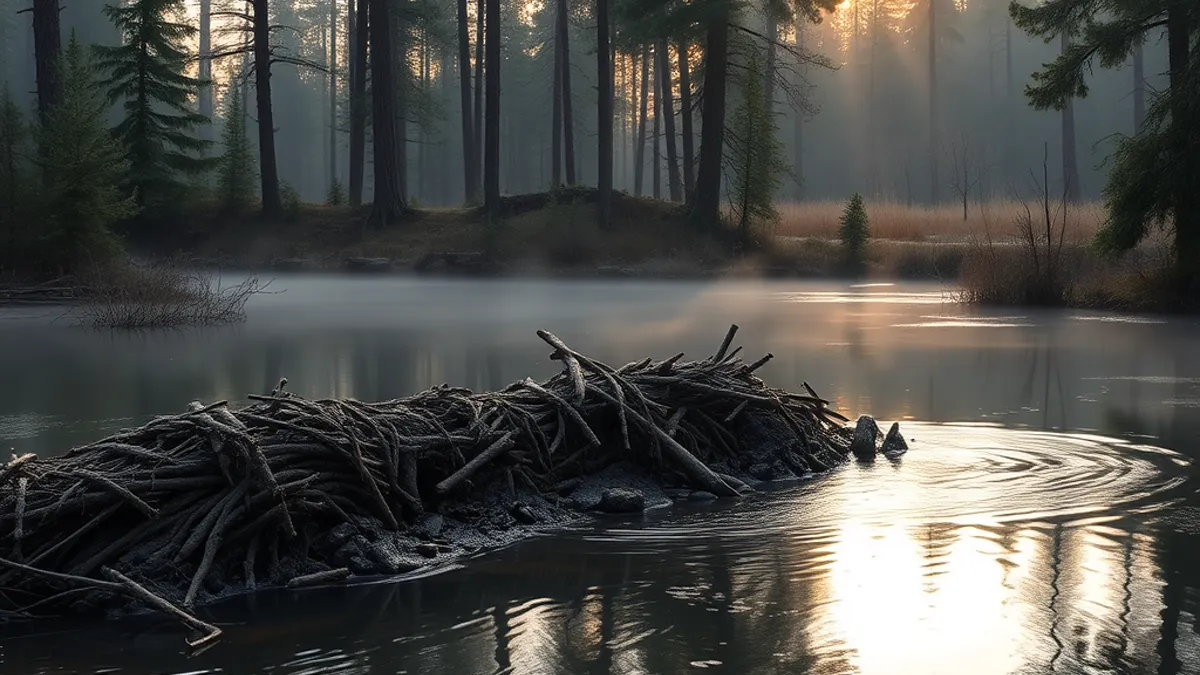
There are two living beaver species: the North American beaver and the Eurasian beaver. Both are large, semi-aquatic rodents, and both build in the same way, gnawing down trees with teeth that keep growing throughout their lives, then packing branches, mud and stones into a dam across a stream. Behind the dam they build a lodge, a dome of sticks and mud with underwater entrances and a dry chamber inside, where the family sleeps and raises its young. In autumn they pile branches in the pond as a food cache, so they can eat bark and twigs beneath the ice all winter.
What draws a beaver to build is the sound of running water. Where a stream runs shallow and fast, a beaver hears a problem: shallow water leaves the lodge entrance exposed and the food cache out of reach. The dam is the answer. It raises the water level, deepens the pond and slows the current to a crawl. The beaver is not thinking about the valley. It is thinking about its front door. The valley benefits anyway.
How a dam changes a stream
Left alone, a small stream is a single fast channel. Water rushes past, carrying soil and nutrients with it. A beaver dam breaks that rush. Water spreads sideways into the floodplain, seeps into the soil and settles in ponds of different depths. Some ponds are deep and still, some shallow and warm, some little more than muddy edges. Each suits different creatures, and together they form a wetland mosaic that a bare stream could never offer.
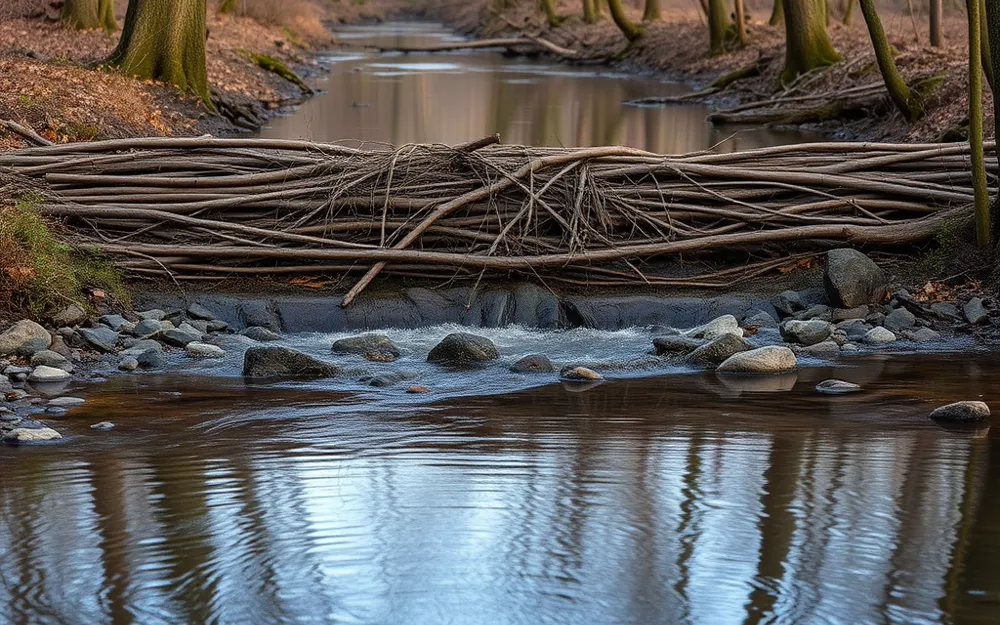
A dam of woven branches across a forest stream. Image generated by AI.
The change does not stop at the waterline. As ponds fill and drain over the seasons, sediments settle instead of washing away, and the valley floor slowly rises and enriches. When beavers eventually move on, because the nearby trees are eaten out or the pond silts up, the dam breaches and the pond drains, leaving a rich, damp meadow. Grasses and wildflowers take over, then shrubs, then young trees, and the cycle can begin again somewhere nearby. A beaver valley is never finished. It is always becoming something else.
Water in dry times
The most practical gift of a beaver pond is storage. A pond holds water on the land instead of letting it run to the sea, and the weight of that water pushes some of it down into the ground, recharging the groundwater that feeds wells and keeps streams flowing in dry months. Research in Alberta, Canada, compared ponds with and without beavers through severe drought and found that beaver ponds retained nine times more open water than ponds where beavers were absent, and stayed deeper even where streams were isolated and rainfall varied.
That stored water matters far beyond the pond. Farmers, towns and wildlife all draw on the same slow release. In dry regions, a chain of beaver ponds can keep a creek alive through a summer that would otherwise dry it to cracked mud. And because the ponds are spread across a valley rather than held behind one concrete wall, the water returns to the landscape gradually, through soil and small channels, instead of all at once.
A buffer against fire and flood
The same storage that helps in drought also helps at the other extreme. During heavy rain, a maze of dams and ponds catches water, spreads it and lets it out slowly, cutting the peak of a flood downstream. Researchers studying the Devon beaver trial in England, where beavers built thirteen dams, found that peak flows leaving the site were on average thirty percent lower during storms, even though the ponds themselves flooded some local fields. The flood was not prevented, but it was slowed, spread and softened.
Fire tells a similar story. In Idaho, beavers were released into Baugh Creek in the 1940s, and over decades their ponds turned a dry valley into a green mosaic of wetland and meadow. When a wildfire swept through the area in 2018, satellite images showed the beaver valley still green and damp while the surrounding hills had burned. Wet soil, green plants and open water do not stop a fire on their own, but they give firefighters a line to work from and wildlife a refuge to survive in.
The neighbours move in
Where beavers build, other species follow. A study by researchers at the University of Stirling, on a site in Tayside, Scotland, where beavers had been reintroduced, found that areas with beaver activity held more species than areas without them, with aquatic plant life far richer and the retention of organic matter several times higher. The dams also trapped agricultural pollutants: phosphorus levels were roughly halved and nitrate levels fell by more than forty percent in beaver areas, as pond sediments and microbes broke nutrients down before they reached larger rivers.
Fish find cool, deep corners in stratified ponds. Herons and kingfishers hunt the shallows. Frogs and dragonflies breed in the warm edges. Otters, which sometimes share a beaver pond, hunt where the fish gather. Even the trees the beavers fell become habitat: a gnawed stump sprouts new shoots, a drowned trunk becomes a perch, and the coppiced willows along a pond edge grow dense and bushy, offering cover for nesting birds. A beaver does not plant a nature reserve. It accidentally builds one.
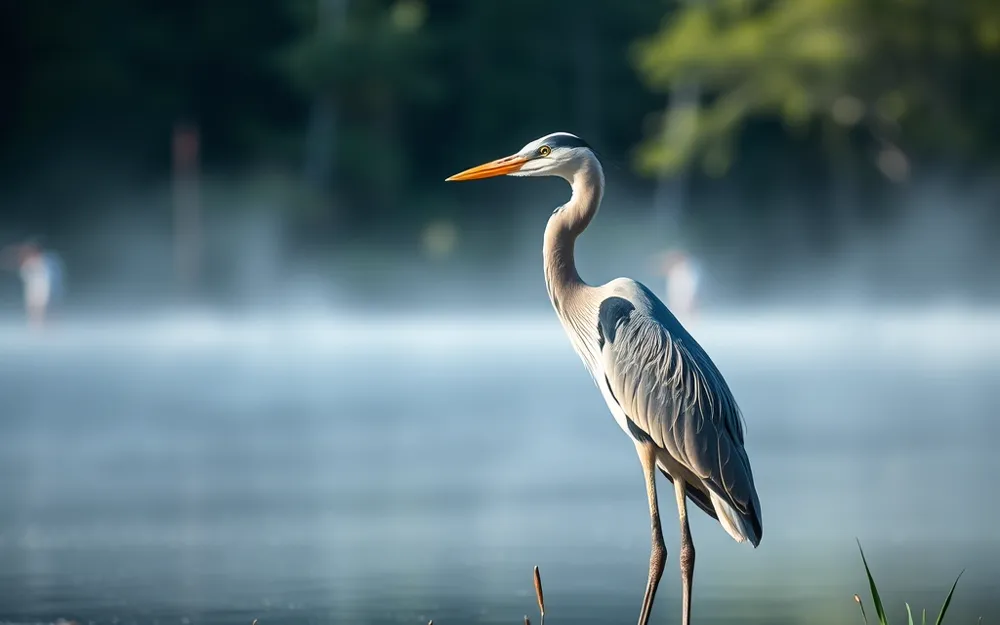
A heron at the edge of a still pond. Image generated by AI.
Living with beavers
None of this makes beavers simple neighbours. A dam in the wrong place floods a road, a field or a garden. A family can fell valued ornamental trees overnight, and a blocked culvert can wash out a track. Farmers and foresters have real complaints, and pretending otherwise would only make the argument worse. The question is rarely whether beavers help or harm in general. It is where, and how much, and who pays when a pond spreads too far.
The tools for that balance are now well tested. Flow devices, pipes set through a dam at a chosen height, let a pond stay while capping its level, so a wetland survives without flooding a road. Protective mesh around prized trees stops gnawing without harming the animal. And in some places, beavers that cause trouble in towns are moved to headwater streams, where their ponds do the most good and the least damage. The aim is not a landscape covered in beaver ponds. It is a landscape where ponds sit where they help most and harm least.
Why it matters
Beavers were once hunted so heavily for their fur that they nearly vanished from much of their range, and with them went the wetlands they maintained. Rivers ran faster, valleys dried sooner, and countless species lost the ponds they depended on. Their recovery, under legal protection and reintroduction programmes, is one of the quiet conservation successes of the last century, and it arrived with a lesson: sometimes the cheapest way to restore a landscape is to let the animal that built it do the work.
That lesson travels well. In a century of heavier rains, longer droughts and hotter fire seasons, landscapes need ways to hold water, slow floods and stay green. Concrete can do some of that, at great cost. A beaver does it for the price of a few trees, and it keeps doing it, dam after dam, year after year. We do not need to romanticise the animal to appreciate the engineering. We only need to leave it room to build.
Related reading
For another story about a landscape shaped by water, read our piece on the forested floodplains of Congaree National Park, where seasonal floods feed one of the tallest hardwood forests in North America.
Frequently asked questions
Do beaver dams cause flooding?
They can flood land locally, and that is a genuine problem for roads and fields. But across a whole catchment, a chain of dams usually slows and spreads floodwater, reducing the peak flow downstream. Local flooding and downstream flood protection can both be true at once.
Do beavers eat fish?
No. Beavers are strict vegetarians, eating bark, twigs, leaves and aquatic plants. Fish benefit from beaver ponds, which offer cool, deep water and shelter, though a dam can block fish movement on some streams, which is why fish passage is part of good beaver management.
Can beavers live in towns?
Yes, and increasingly they do, in city parks and suburban streams. Urban beavers need the same management as rural ones: protected trees, flow devices to cap pond levels, and a plan for what happens when a dam appears under a bridge.
Sources
- The Ecological Role of Beavers in Alberta’s Wetlands, Alberta Biodiversity Monitoring Institute
- Beavers bring environmental benefits, ScienceDaily, reporting the University of Stirling Tayside study
- Beavers and the art of ecological resilience, Canadian Geographic
- Beavers Are the Ultimate Ecosystem Engineers, Sierra Club
- Research backs beavers in the fight against flooding and droughts, Devon Wildlife Trust (University of Exeter River Otter trial)









0 Comments