

An original TeaLamp explainer based on the sources listed below. Prepared by the TeaLamp Editorial Team with the help of AI.
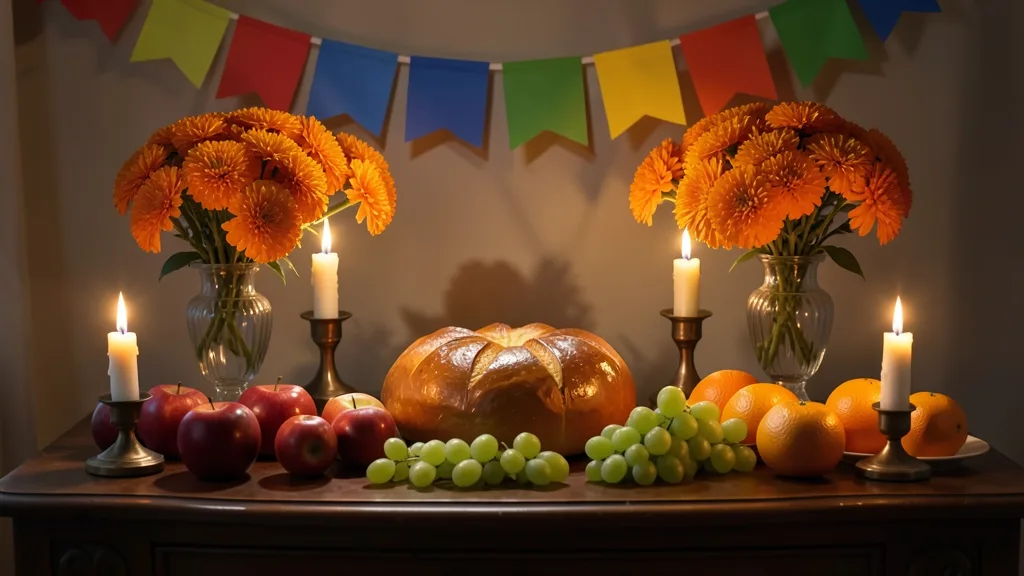
Day of the Dead traditions turn the end of October and the first days of November into one of the warmest celebrations of memory anywhere in the world. In homes across Mexico, families build an ofrenda, a home altar heaped with orange marigolds, candles, food and photographs, to welcome loved ones who have died back for a brief visit. It is a festival about death, yet it feels full of life: colour, cooking, music and long family meals. Here is what the main symbols mean, where they come from and why this old custom keeps growing.
Key takeaways
- Día de los Muertos is held at the end of October and the start of November, with November 1 and 2 as the central days.
- UNESCO recognises the Indigenous festivity dedicated to the dead in Mexico as Intangible Cultural Heritage of Humanity, inscribed in 2008 after being proclaimed in 2003.
- The ofrenda, marigolds, candles, food and cut-paper banners all help “guide” and welcome the visiting souls.
- The elegant skeleton called La Catrina began as a satirical print by José Guadalupe Posada and was later reshaped by Diego Rivera into a national symbol.
A festival of return, not of fear
UNESCO describes the celebration, as practised by Indigenous communities in Mexico, as a commemoration of the “transitory return to Earth” of deceased relatives. The timing is not random. UNESCO notes that the season also marks the end of the annual maize harvest, the country’s main food crop. In other words, the dead come home when the fields have given their last gift of the year, and there is food to share.
The festival blends two worlds. UNESCO describes it as a fusion of pre-Hispanic religious rites and Catholic feasts, joining Indigenous belief systems with ideas brought by Europeans in the sixteenth century. That is why the main days line up with All Saints’ Day on November 1 and All Souls’ Day on November 2. Many families remember children who have died on the first day and adults on the second, although customs vary a great deal from region to region and village to village.
This mixture helps explain the tone. Halloween, which falls on the night before, grew out of different roots and often plays with fear. Day of the Dead, by contrast, is mostly about welcome. The question at its heart is not “What scares us?” but “Who do we miss, and what did they love?”
Inside the ofrenda: what each element means
An ofrenda can be a simple table or a towering structure with several levels. Every family builds its own, but some elements appear again and again. UNESCO’s description mentions flower petals, candles and offerings laid along the path from the cemetery to the home, with the person’s favourite dishes placed around the home shrine and the tomb.
Marigolds: the flower of twenty
The bright orange flower most linked to the festival is the cempasúchil, a Mexican marigold. Its name comes from Nahuatl, the language of the Aztecs and of millions of Mexicans today. According to the Royal Spanish Academy and the Mexican Academy of Language, it joins cempoalli, meaning “twenty”, and xóchitl, meaning “flower”. The name is often read as “twenty flowers”, a nod to its many layered petals. Its strong scent and vivid colour are believed to help souls find their way, which is why families scatter petals in trails leading to the altar.
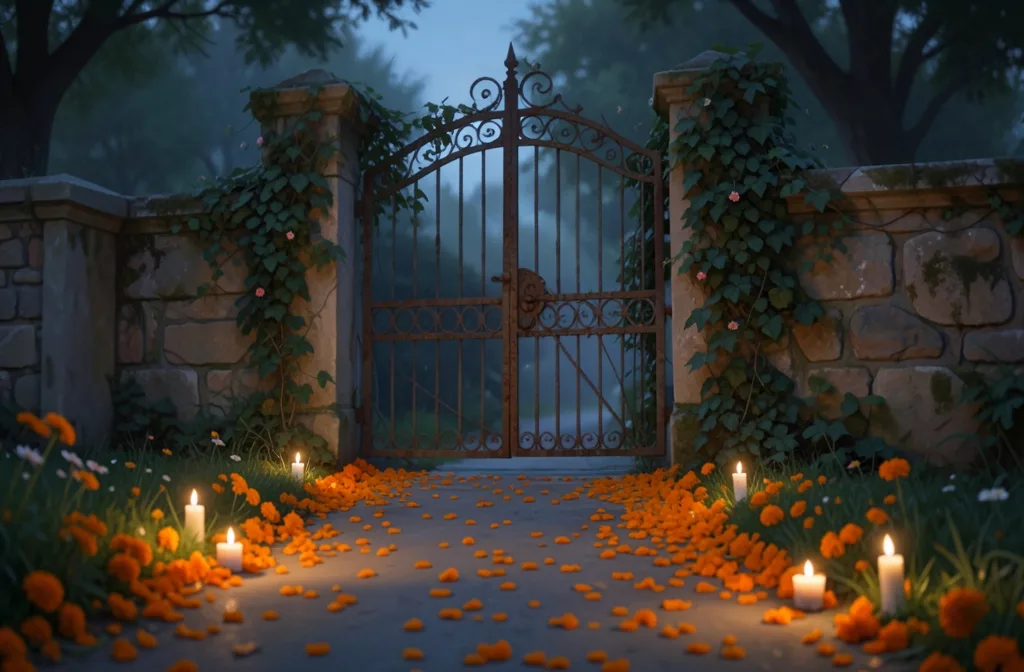
Marigold petals are often scattered in trails to guide visiting souls. Image generated by AI.
Candles, water and salt
Candles light the route and the altar itself. A glass of water is often set out for a visitor who has made a long journey and arrived thirsty. Many families also add a small dish of salt. Together these simple items speak the language of hospitality: we have been waiting for you, come in and rest.
Food, photographs and favourite things
Food is the heart of most altars. Families prepare the dishes their loved ones enjoyed, along with seasonal fruit, tamales, mole or a favourite drink. A sweet, round loaf called pan de muerto, often decorated with strips of dough shaped like bones and dusted with sugar, is a classic. Photographs, letters, toys or tools are added, so the altar becomes a small portrait of a life.
UNESCO notes that great care goes into these preparations, because in traditional belief the dead can bring good fortune, such as a fine harvest, or misfortune, depending on how well they are honoured. That idea gives the work real weight. Cooking for an ofrenda is not decoration. It is a promise kept.
Papel picado: cut-paper banners
Overhead, strings of colourful cut-paper banners, known as papel picado, flutter above many altars and streets. UNESCO lists paper cut-outs among the typical handicrafts of the season. The paper is light enough to move with the slightest breeze, and many people see that gentle motion as a sign that the spirits have passed by.
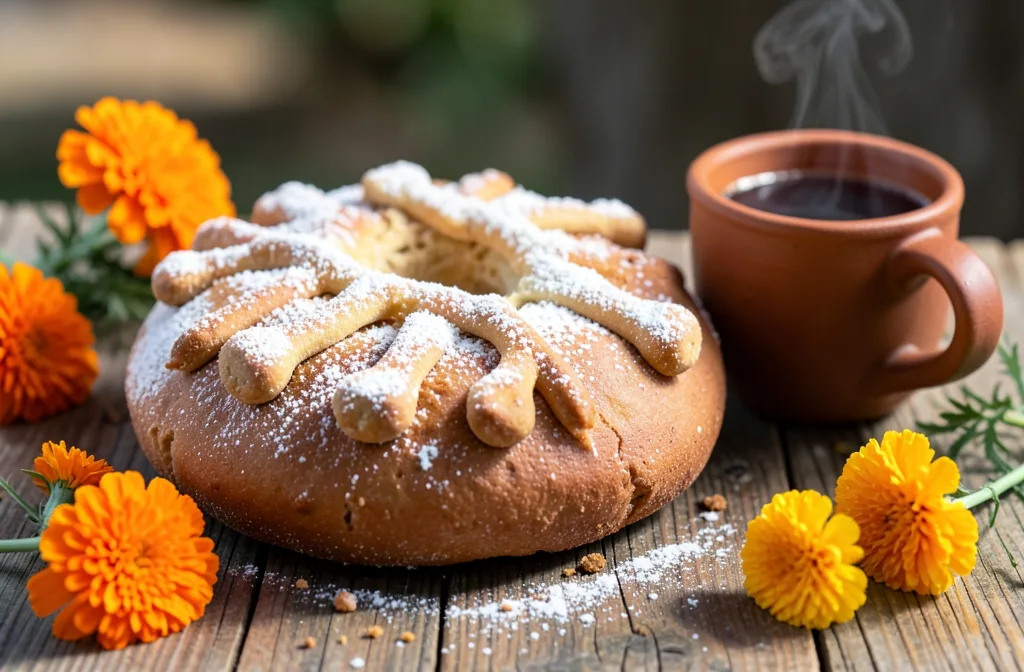
Pan de muerto, a sweet loaf decorated with dough “bones”, is a classic of the season. Image generated by AI.
La Catrina: from sharp satire to national icon
The grinning skeleton in a wide, flower-trimmed hat is now one of Mexico’s best-known images. She began as a joke with a sting. The printmaker José Guadalupe Posada, who lived from 1852 to 1913, created a zinc etching usually dated to around 1910 to 1912 and known as the Calavera Garbancera. As BBC News Mundo explains, it mocked people who tried to look European and hide their Indigenous roots. Posada’s message was blunt: rich or poor, everyone ends up a skeleton.
Decades later, the muralist Diego Rivera gave her a new life and a new name. In his fresco Dream of a Sunday Afternoon in the Alameda Central, painted in 1946 and 1947, he placed the full-length figure, now called La Catrina, at the centre, holding hands with a boyhood version of Rivera himself, beside Posada. The mural was first painted for the Hotel del Prado. After the 1985 earthquake forced the hotel’s demolition, it was moved to the Museo Mural Diego Rivera, built beside Alameda Park to house it. Through Rivera, a satirical cartoon became a proud symbol of Mexican identity.
How a film helped launch a parade
Traditions are never frozen, and Day of the Dead shows this well. The 2015 James Bond film Spectre opened with a huge skeleton parade through Mexico City. At the time, the city had no such parade. As Atlas Obscura reported, Mexico City held its first official Day of the Dead parade on October 29, 2016, openly inspired by the film, and city estimates put the crowd at about 425,000 people. The parade has continued since and is now a major event.
Our analysis: why Day of the Dead traditions keep growing
It would be easy to see the parade as a sign that tourism is swallowing the tradition. The wider picture is more interesting. The family altar, the cemetery visit and the shared meal still happen in homes and villages, largely unchanged by cameras. What has grown is a public layer around them: parades, museum displays and Catrina costumes. That outer layer draws visitors, but the inner layer, quiet and personal, is what UNESCO set out to protect.
The festival also answers a very human need. Many cultures keep grief private and short. Day of the Dead makes remembering public, seasonal and even joyful. Once a year, everyone is invited to say names aloud, cook a favourite recipe and tell stories. That rhythm may be the real reason the custom travels so well, from Mexico to Mexican communities in the United States and Canada and to people who simply like the idea of setting a place at the table for those they miss. If you visit, the best way to take part is with respect: admire the altars, ask before taking photos and remember that each one honours real people.
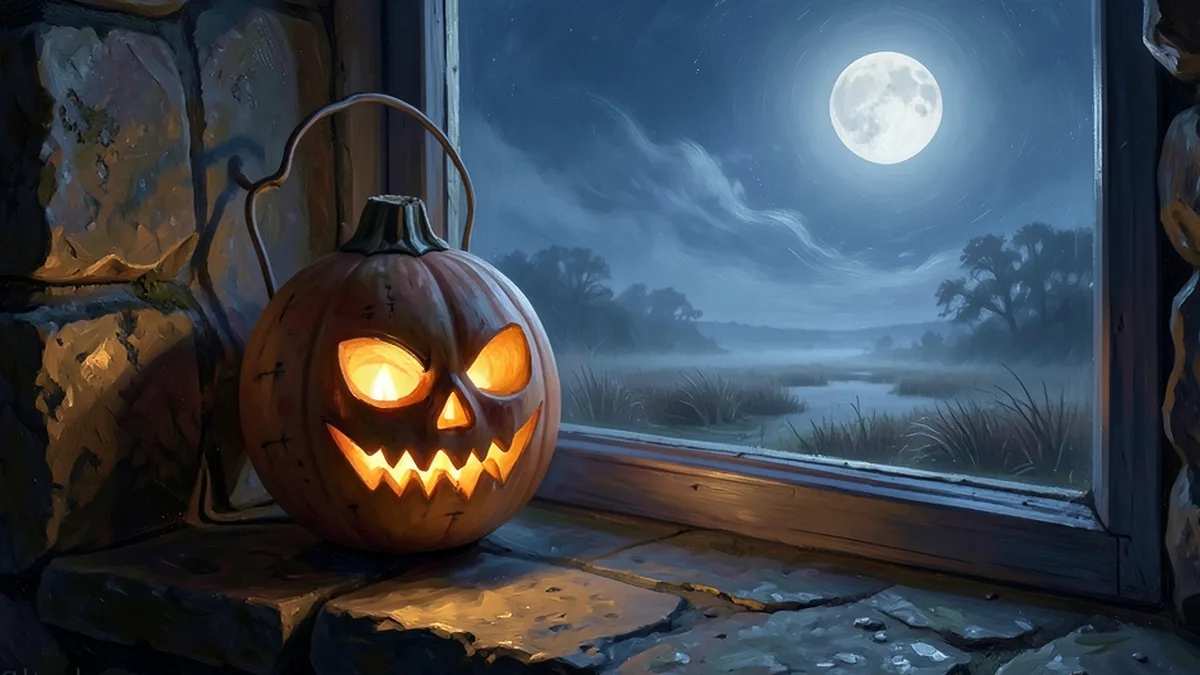
Related reading: jack-o’-lantern history, from carved turnips to pumpkins.
Frequently asked questions
When is the Day of the Dead?
The festivities run at the end of October and the start of November. The main days are November 1 and November 2, often remembering children first and then adults.
Is the Day of the Dead the same as Halloween?
No. They fall close together, but Day of the Dead has its own Mexican roots and focuses on welcoming and remembering loved ones, not on fear.
Why are marigolds used on the ofrenda?
The cempasúchil marigold’s bright colour and strong scent are believed to guide souls home, so its petals are laid on altars and along paths.
Sources
- Indigenous festivity dedicated to the dead, UNESCO Intangible Cultural Heritage
- Cempasúchil, Diccionario de la lengua española, Real Academia Española
- Cempasúchil, Academia Mexicana de la Lengua
- Where La Catrina comes from, BBC News Mundo
- La Calavera Catrina, Wikipedia
- Mexico City’s new Day of the Dead parade is based on a James Bond film, Atlas Obscura


0 Comments