

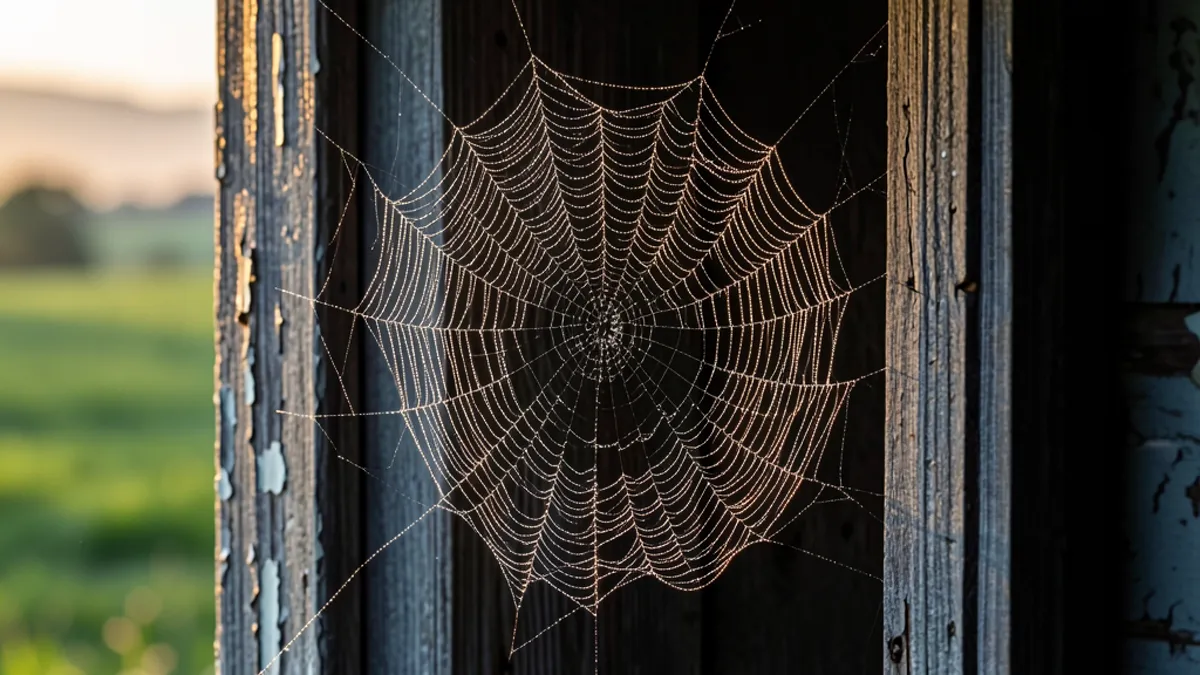
A TeaLamp book review. Prepared by the TeaLamp Editorial Team with the help of AI.
This Charlotte’s Web review looks at a small book with a very large heart. E. B. White first published the story in 1952, and it has been read and loved ever since. It tells of Wilbur, a young pig in danger of slaughter, and Charlotte, a grey barn spider who decides to save him. She cannot lift him or fight for him, so she does the one thing she can do: she writes. One word at a time, in silk, she changes what the world thinks of him.
Key takeaways on Charlotte’s Web review
- Wilbur is the runt of a litter of piglets, saved as a baby by eight-year-old Fern Arable and later sold to her uncle Homer Zuckerman’s farm.
- When Wilbur learns he is being raised for slaughter, Charlotte, a barn spider above his pen, promises to save his life.
- Charlotte weaves words of praise into her web, “Some Pig”, “Terrific”, “Radiant” and “Humble”, and the words make Wilbur famous enough to live.
- At the county fair Wilbur wins a special prize, so Zuckerman will keep him for good, but Charlotte, whose life is naturally short, dies at the fair.
- First published by Harper & Brothers on October 15, 1952, with drawings by Garth Williams, the book won a Newbery Honor in 1953 and is one of the best-selling children’s books ever written.
A Runt Pig and a Quiet Spider
The book opens on a farm morning, with a question that has become one of the most famous first lines in children’s books. Fern Arable sees her father walking out with an axe and asks where he is going. He is going to kill the runt of a litter of eleven piglets. Fern stops him. She takes the piglet, names him Wilbur, and raises him like a pet.
Wilbur cannot stay small forever. When he grows too big for the house, Fern’s father sells him to her uncle, Homer Zuckerman, who keeps him in a barn across the road. Fern still visits, and she is the only person in the story who can hear the animals talk. Then the old sheep tells Wilbur the plain truth: Zuckerman is raising him to be killed and eaten. That is when Charlotte speaks. She lives in the corner of the barn doorway, above Wilbur’s pen, a calm, clever grey spider, and she tells Wilbur not to worry. She will save his life.
Wilbur, the Pig Who Wanted a Friend
Wilbur is an easy pig to love. He is warm, open and full of feeling, and he wants what every young creature wants: company, kindness and a safe place to sleep. He feels everything strongly, and White never makes fun of him for it. Wilbur’s feelings are treated as real, and that is a large part of why children trust the book.
What makes Wilbur more than a cute animal is the way he grows. At the start he is a pet who is looked after. By the end he is a friend who looks after someone else. When Charlotte’s children hatch, most fly away on the wind, but three stay, and Wilbur keeps them through the winter. He becomes the steady, caring creature Charlotte was for him. Friendship, the book quietly says, is not only about being saved. It is also about what you do once you have been saved.
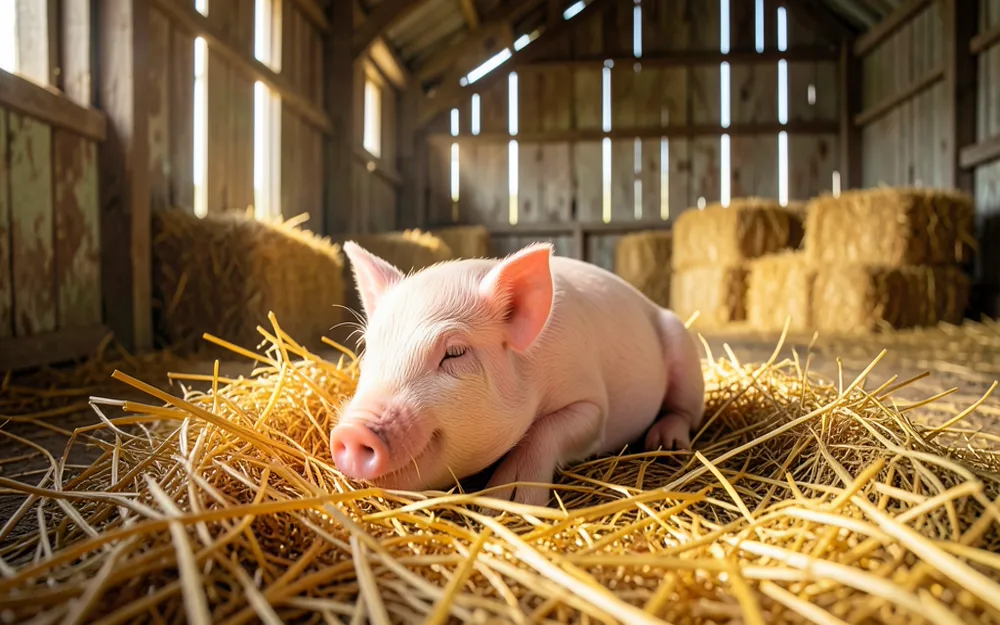
A young pig resting in golden straw. Image generated by AI.
Charlotte, the Writer in the Corner
Charlotte is the most memorable character in the book, and she is memorable because she is so unlike the usual hero. She is small, she stays in one place, and she has no strength to speak of. What she has is language, patience and a clear head. She thinks the problem through: if people believe Wilbur is no ordinary pig, they will not want to kill him. So she writes about him in her web, where everyone can see it.
Her first word is “Some Pig”. The farmer’s hired man finds it in the morning, and word spreads fast. People come from miles around to look at the web, and the barn becomes a small wonder. When the wonder fades, Charlotte writes again, with help from Templeton the rat, who brings her words from scraps he finds around the farm. “Terrific” follows, then “Radiant”, then, at the county fair, “Humble”. Each word is true, and each one buys Wilbur a little more time. She spins her web the way a writer writes a sentence: carefully, and with the reader in mind.
The Barn Around Them
One of the pleasures of the book is the barn itself. White fills it with animals who each have a clear character. The goose is warm and motherly, and it is her idea to keep writing new words when the first one wears out. The old sheep is blunt and honest. Templeton the rat is greedy, grumbling and entirely out for himself, and yet he finds the words Charlotte needs. He helps only when he is paid in food, yet without him the plan would fail. Fern, the girl who saved Wilbur, listens to the animals too, and grows up gently through the story, spending her time at the fair with a boy her own age.
Why the Writing Still Works
White is one of the great plain writers of English, and Charlotte’s Web shows why. His sentences are short and clear, and every word is doing a job. There is no showing off, and there is nothing a child cannot follow. Yet the writing is beautiful in a quiet way, and it never calls attention to itself. That is what makes it last.
The early chapters set up the farm, the friendship and the danger. The middle chapters follow the four words in the web, each one raising the stakes a little higher, and the fair brings everything together. The book is sad in one place. Charlotte dies at the fair, after she has saved Wilbur, because a barn spider’s life is naturally short. White does not hide this, and he does not make it cruel. Charlotte dies content, knowing her work is done, and Wilbur carries her egg sac home. The book ends with the words that close the story:
“It is not often that someone comes along who is a true friend and a good writer. Charlotte was both.”
— E. B. White, Charlotte’s Web
It is the whole book in two sentences. White says a great deal with very little.
Who Will Love This Book
This is a book for readers who like gentle stories with real feeling in them. Children from about seven or eight can read it alone, and it is a wonderful book to read aloud to younger children, a chapter at a time, at bedtime. The chapters are short, and there is always something to talk about afterwards. Adults who read it again after many years often find it richer than they remembered.
It suits readers who love animals and farm life, readers who love stories about friendship, and readers who are meeting a classic for the first time. It also suits families who want a book that treats children seriously. White never talks down to his readers, and he never pretends that hard things do not happen. He simply shows that kindness, patience and a few well-chosen words can change a life. Readers who want fast action may find the middle slow, because much of it happens in one barn, at the pace of a farm summer. But that slowness is the point.
Why It Still Matters
Charlotte’s Web has been in print for nearly seventy-five years, and it is easy to see why it has lasted. It has sold more than 45 million copies and been translated into 23 languages. In 2000, Publishers Weekly listed it as the best-selling children’s paperback of all time. It was filmed in 1973 and 2006, and made into a series in 2025. But the book itself is the reason for all of that. The films come and go, and the book stays.
It stays because it is about things that do not change. Friendship. The fear of being forgotten. The wish to matter to someone. The fact that the smallest creature in the room can do the most important thing in it. White wrote the book after failing to save a sick pig of his own, an experience he described in his 1948 essay “Death of a Pig”. A child reads it as an adventure about a pig and a spider, and an adult as a story about love, work and letting go. Both readings are right, and both are in the book.

A county fair midway in daytime. Image generated by AI.
If you love gentle farm stories, you may also like our summary of Heidi, another classic about a child, a mountain farm and the kindness that changes everyone around her.
Frequently asked questions
Is Charlotte’s Web sad?
It has one sad part. Charlotte dies near the end of the book, after she has saved Wilbur, because a barn spider’s life is naturally short. The book handles this gently: Charlotte dies content, knowing her work is done, and Wilbur brings her egg sac home, so her children hatch in the barn and keep him company. The ending is hopeful.
What age is Charlotte’s Web for?
It is usually read by children from about seven or eight, and it is a fine read-aloud book for younger children, a chapter at a time. The language is plain and clear, the chapters are short, and the story is easy to follow. Adults enjoy it too, often more on a second reading.
Sources
- Charlotte’s Web, Wikipedia (E. B. White, Harper & Brothers, October 15, 1952; 192 pages; Garth Williams; plot, characters, reception and adaptations)
- E. B. White, Wikiquote (closing lines of Charlotte’s Web: “It is not often that someone comes along who is a true friend and a good writer. Charlotte was both.”)
- Charlotte’s Web Quotes, LitCharts (closing lines, pages 183–184, and the four web words)










0 Comments