

A TeaLamp book review of The Hobbit by J. R. R. Tolkien (1937), written in our own words. Prepared by the TeaLamp Editorial Team with the help of AI.
This Hobbit review looks at a book that began as a bedtime story and became one of the best-loved adventures ever written. J. R. R. Tolkien’s tale of a home-loving hobbit who is talked into a dragon hunt has been in print since 1937, and it still reads like a long, comfortable evening by the fire, with a few cold shivers along the way. Here is what the book does, why it has lasted, and who is most likely to fall for it.
Key takeaways from our Hobbit review
- A children’s fantasy novel by an Oxford professor of Anglo-Saxon, first published in London by George Allen & Unwin on September 21, 1937.
- Bilbo Baggins, a cautious hobbit who loves his armchair and his teapot, joins a wizard and thirteen dwarves on a quest to win back a treasure guarded by the dragon Smaug.
- Its warm, chatty narrator, steady humour and real moments of danger make it a rare book that children and adults enjoy for different reasons.
- It is the starting point for The Lord of the Rings, but it stands perfectly well on its own and is lighter in tone.
A story that started on a blank page
Tolkien later recalled that the book began almost by accident. In the early 1930s he was marking exam papers when he found a blank page and wrote a single sentence on it: “In a hole in the ground there lived a hobbit” (J. R. R. Tolkien, The Hobbit). He later admitted he had no idea at the time why he had written it. He spent the next few years finding out, telling the story to his own children and lending the manuscript to friends, including C. S. Lewis.
The book reached its publisher in a charming way. A staff member at George Allen & Unwin read the manuscript and passed it to the company’s chairman, Stanley Unwin, who handed it to his ten-year-old son Rayner for an opinion. Rayner liked it, and that settled the matter. The first printing of 1,500 copies sold out by December 1937. A year later the American edition won a New York Herald Tribune prize for the best book for young readers.
What happens in The Hobbit (without spoilers)
Bilbo Baggins lives a neat and respectable life in a comfortable hole under a hill. Then the wizard Gandalf arrives, followed by thirteen dwarves led by the proud Thorin Oakenshield, who eat everything in the pantry and sing about lost gold. Long ago, a dragon named Smaug drove the dwarves out of their mountain home and took their treasure. They want it back, and Gandalf has decided that Bilbo will be their “burglar”.
What follows is a journey east across a wide, wild country: hungry trolls, goblin tunnels under the Misty Mountains, a gloomy forest called Mirkwood, a town built on a lake and, at the end of the road, the Lonely Mountain itself. Along the way Bilbo meets a strange creature in the dark and wins a game of riddles that will matter far more than he knows. We will leave the rest for you to discover.
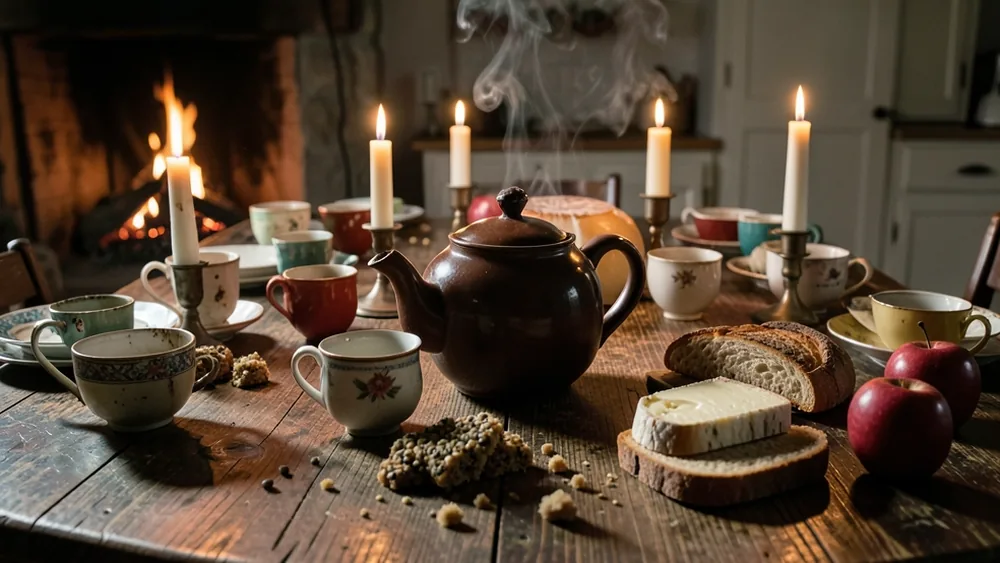
A table crowded with teacups and cakes, much like the unexpected party that starts the story. Image generated by AI.
The narrator who talks to you over the fire
The first thing most readers notice is the voice. The narrator speaks directly to the reader, adds little asides and sometimes pauses to explain what hobbits are like or why a certain detail matters. Tolkien later said he was not fond of this style, but it is one of the main reasons the book feels so welcoming. It sounds like a grandparent telling a story they know by heart, and it makes the strange world feel safe enough to enter.
That voice also controls the pace. The book moves in episodes, and each chapter tends to bring a new place and a new kind of trouble. This makes it ideal for reading aloud, a chapter at a time, and it is easy to pick up again after a break.
Bilbo: a hero who would rather be at home
Bilbo is not a born adventurer. He worries about pocket handkerchiefs, misses his kettle and dreams of second breakfasts. That is exactly why he works so well as a hero. Readers grow with him as he learns to use his wits, keep his nerve and make hard choices on his own. By the final chapters, the hobbit who fainted at the idea of danger is the one quietly trying to keep the peace when everyone else is ready to fight.
The book’s deeper theme sits in that change. The Hobbit is full of characters who want things: food, gold, revenge, a famous jewel. Bilbo is the one who learns when enough is enough. This gives the ending a gentle moral weight without ever turning it into a lecture.
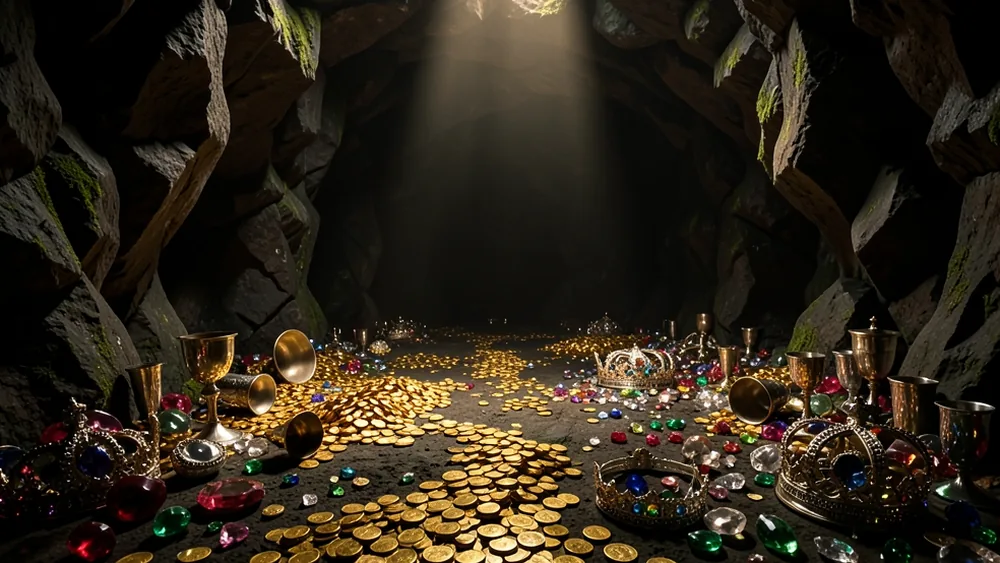
A dragon’s hoard of gold and jewels, the treasure at the heart of the quest. Image generated by AI.
Old roots under a new story
Tolkien was a scholar of early English and Norse literature, and his learning shows in the book’s bones. The dwarves’ names come from a list of dwarves in the Old Norse poem Völuspá, and the clever, greedy dragon who notices a single stolen cup owes a clear debt to the Old English poem Beowulf, a work Tolkien studied for most of his life. Yet the book never feels like homework. The old material is worn lightly, mixed with nursery-rhyme riddles, songs and very English comforts such as tea, cakes and a warm fire.
Scholars have also noticed echoes of the First World War, in which Tolkien served, especially in the bleak, burned landscapes near the mountain and in the book’s clear-eyed view that war is a gloomy business, even for the winners.
Who will enjoy this book most
The Hobbit suits a very wide range of readers. It is best for:
- Families reading aloud, since the chapters are a good length and the narrator’s voice practically asks to be spoken.
- Confident young readers from about nine or ten, who enjoy maps, riddles and a proper dragon.
- Adults who know the films and want the quieter, funnier original, with far fewer battles and more time on the road.
- Readers new to fantasy, because it is shorter and gentler than The Lord of the Rings and explains its world as it goes.
It is best for readers who enjoy a leisurely pace with songs and side trips; those who want non-stop action may prefer to read it as a slow, savoured story rather than a page-turner.
How the book has changed over time
One detail surprises many readers: the version on shelves today is not exactly the one published in 1937. While writing The Lord of the Rings, Tolkien realised that the ring Bilbo finds had to be far more dangerous than he first imagined. In 1951 a revised edition rewrote the chapter “Riddles in the Dark” so that the meeting in the cave fits the later story. Further small changes followed in 1966. If you ever see an old copy, the difference is part of the fun.
Why it matters
The Hobbit helped shape modern fantasy. Its popularity led directly to The Lord of the Rings, and the later paperback editions of both books helped create the mass market for fantasy fiction that exists today. Estimates of its sales run from about 35 million to as many as 100 million copies, and it has been translated into more than sixty languages. More quietly, it showed that a children’s book could be built from serious scholarship and still feel like pure pleasure. Nearly ninety years on, it remains one of the best invitations to the joy of reading that a family can share.
Related reading
If you love a cozy classic with animals, rivers and the pull between home and adventure, read our review of The Wind in the Willows. For a winter of reading by the fire, try our list of classic mystery novels for winter.
Frequently asked questions
Do I need to read The Hobbit before The Lord of the Rings?
It is not essential, but it helps. The Hobbit introduces Bilbo, Gandalf and the ring, and The Lord of the Rings picks up those threads many years later. It is also the gentler of the two, so it is a natural place to start.
What age is The Hobbit suitable for?
Many children enjoy it from about nine or ten, and younger ones often love it read aloud. There are scary moments, such as goblins, giant spiders and a battle near the end, but the narrator keeps the tone warm and never dwells on violence.
Is the book very different from the films?
Yes. The films spread the story across three long movies and add new characters and battles. The book is much shorter, funnier and more focused on Bilbo’s own journey.
Sources
- The Hobbit: publication, revisions and reception (Wikipedia, citing Hammond and Anderson’s descriptive bibliography and Carpenter’s biography)
- The Hobbit (Britannica)
- J. R. R. Tolkien: life and work (Britannica)
- The Hobbit you grew up with isn’t quite the same as the original (Smithsonian Magazine, 2012)

0 Comments