

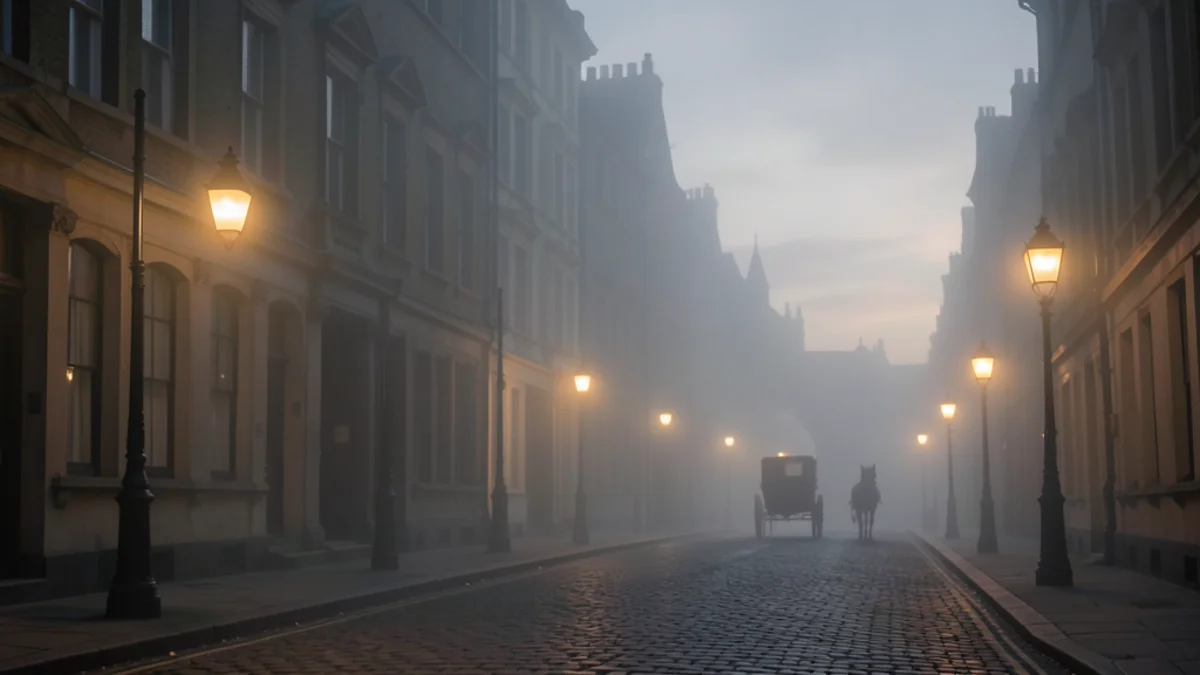
A TeaLamp book review. Prepared by the TeaLamp Editorial Team with the help of AI.
This Picture of Dorian Gray review follows Oscar Wilde’s only novel from a painter’s studio in London to a locked room upstairs, and asks why a book first published in 1890 still unsettles readers today. It is a story about beauty, influence and the price of a wish, told with some of the wittiest dialogue in English fiction. Short, sharp and strange, it is the Wilde novel every reader meets sooner or later, and it rewards a slow, unhurried read.
Key takeaways on Dorian Gray review
- Dorian Gray, a beautiful young man, wishes that his portrait would age and grow ugly in his place, and the wish is granted.
- The novel is Oscar Wilde’s only novel: first published in July 1890 in Lippincott’s Monthly Magazine in 13 chapters, then expanded to 20 chapters with a famous preface in the 1891 book edition.
- Its three central figures, the painter Basil Hallward, the charming Lord Henry Wotton and Dorian himself, are among the most quoted characters in English literature.
- The book’s great question is influence: how much of who we become is our own choice, and how much is the voice of someone we admired?
- It suits readers who like wit, atmosphere and a story that moves quickly, and who enjoy a classic that can be read in a weekend.
The story in brief
The novel opens in the London studio of Basil Hallward, a painter at work on a portrait of Dorian Gray, a young man of extraordinary beauty. Basil is half in love with his subject and afraid to exhibit the picture, because he feels he has put too much of himself into it. His friend Lord Henry Wotton arrives, sees the portrait, and meets Dorian. Lord Henry is a brilliant talker with a philosophy of pleasure, and he fills Dorian’s head with a single idea: beauty and youth are the only things worth having, and they fade. Looking at the finished portrait, Dorian makes a wish he cannot take back: that the picture would grow old instead of him, and that he would stay as he is.
From that day, Dorian does not age, and the portrait changes in his place. At first the change is small. Dorian falls in love with Sibyl Vane, a young actress, and when she performs badly one night, after falling in love for real and losing the artifice that made her acting shine, he rejects her cruelly. The next morning he notices a touch of cruelty in the painted mouth, and learns that Sibyl has died. He is horrified, and then, under Lord Henry’s influence, he decides to treat the whole thing as a pose, a beautiful tragedy to admire rather than a life to mourn. That choice sets the pattern of the book.
For eighteen years Dorian lives a life of pleasure, collecting beautiful things and beautiful experiences, while the portrait in the locked room grows more hideous with every unkindness. Basil, the painter, comes to see the picture and is horrified at what it has become; in a rage Dorian kills him, and hides the body with the help of an old friend. Sibyl’s brother James, who has sworn to avenge her, hunts Dorian across the years. At the end, Dorian tries to destroy the evidence of his life by stabbing the portrait. The servants find the picture restored to its first beauty, and on the floor beside it the body of an old man, withered and unrecognisable, with the rings Dorian wore.
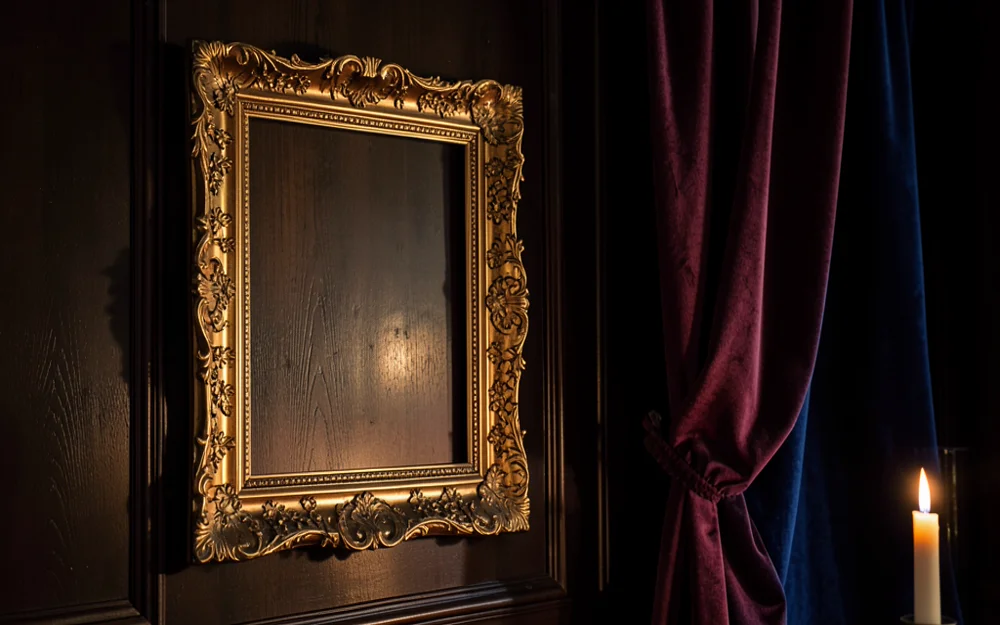
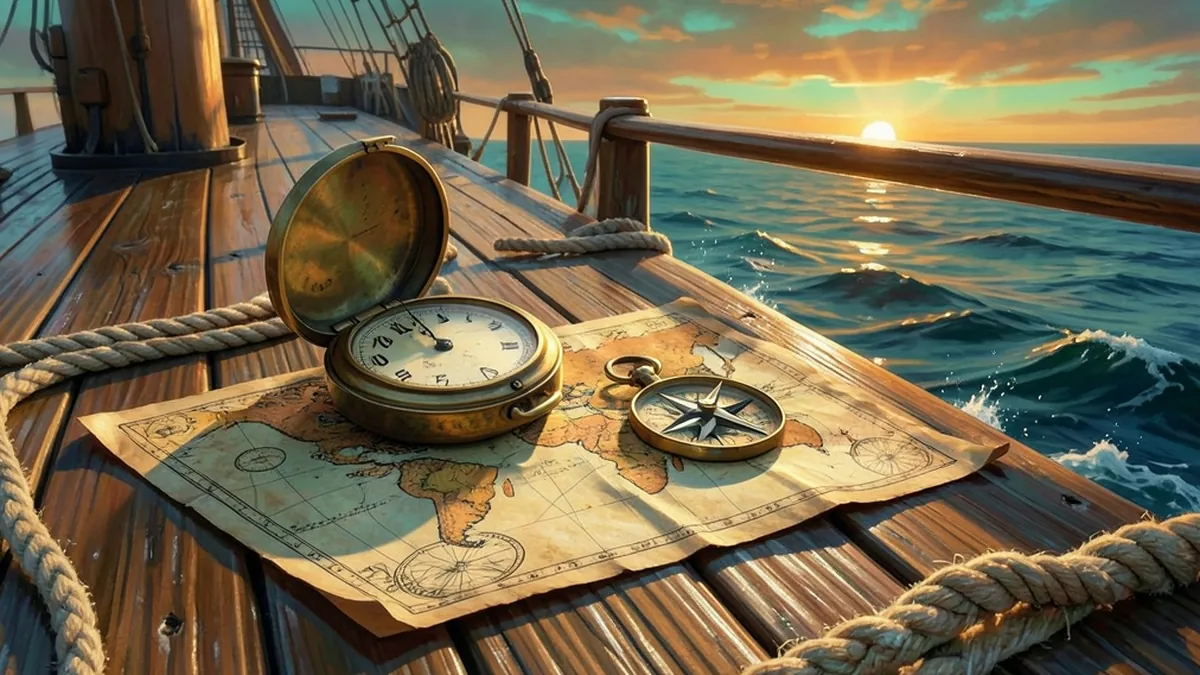
The portrait, waiting in the locked room. Image generated by AI.
What the book does best
The Picture of Dorian Gray does three things better than almost any other novel of its time. The first is talk. Lord Henry’s conversation is the engine of the book: bright, paradoxical, endlessly quotable. “There is only one thing in the world worse than being talked about, and that is not being talked about,” he says, and the sentence is so good that the reader almost forgets what it means. Wilde wrote dialogue as music, and the novel is full of lines that have outlived the book itself.
The second is the central image. The portrait is one of the great devices in fiction: a conscience you can hang on a wall and hide behind a curtain. It lets Wilde show the reader, in a single picture, what a life of small cruelties adds up to, without a single sermon. Every time Dorian returns to the locked room, the reader sees the cost of the life he is living, even as Dorian refuses to look.
The third is pace. At around 250 pages, the novel moves quickly, and Wilde never lets the story sag. The scenes are short, the settings are vivid, the London of theatres, drawing rooms and opium dens feels close enough to touch, and the ending arrives with a shock that has lost none of its force in 136 years.
The portrait and the price
Under the wit, the novel is a serious book about influence. Lord Henry does not force Dorian to do anything. He talks, and Dorian listens, and that is enough. Wilde himself described the three men as three parts of himself, writing in a letter in 1894 that Basil Hallward is what he thought he was, Lord Henry what the world thought him, and Dorian what he would like to be. The book asks, gently and then less gently, what happens when a person hands their judgement to someone else.
The famous preface, added for the 1891 book edition, is a defence of art that refuses to preach. “The only excuse for making a useless thing is that one admires it intensely,” Wilde wrote, and the preface insists that a book is not a moral lesson. Yet the story itself is a moral fable, and Wilde knew it. The tension between the two, a book that refuses to moralise and a story that moralises anyway, is part of what keeps readers arguing about it.
The novel was controversial when it appeared. The magazine’s editor removed about five hundred words before publication, fearing the story was indecent, and critics called it immoral. Wilde defended it in letters to the press, and then, when he prepared the book edition, he made cuts of his own and added the preface. The book that survives is the 1891 version, and it is the one most readers meet today.
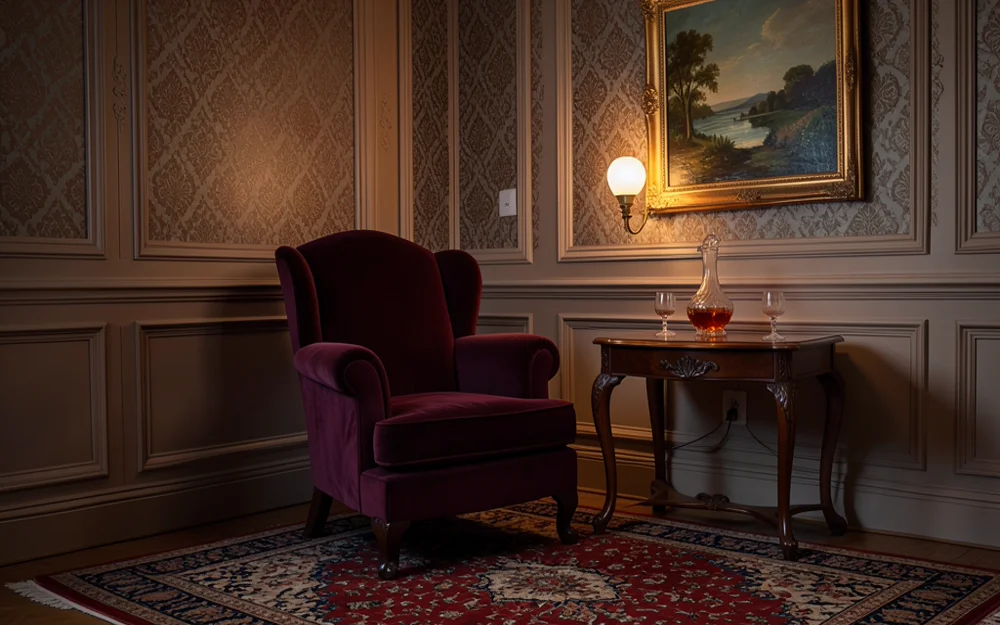
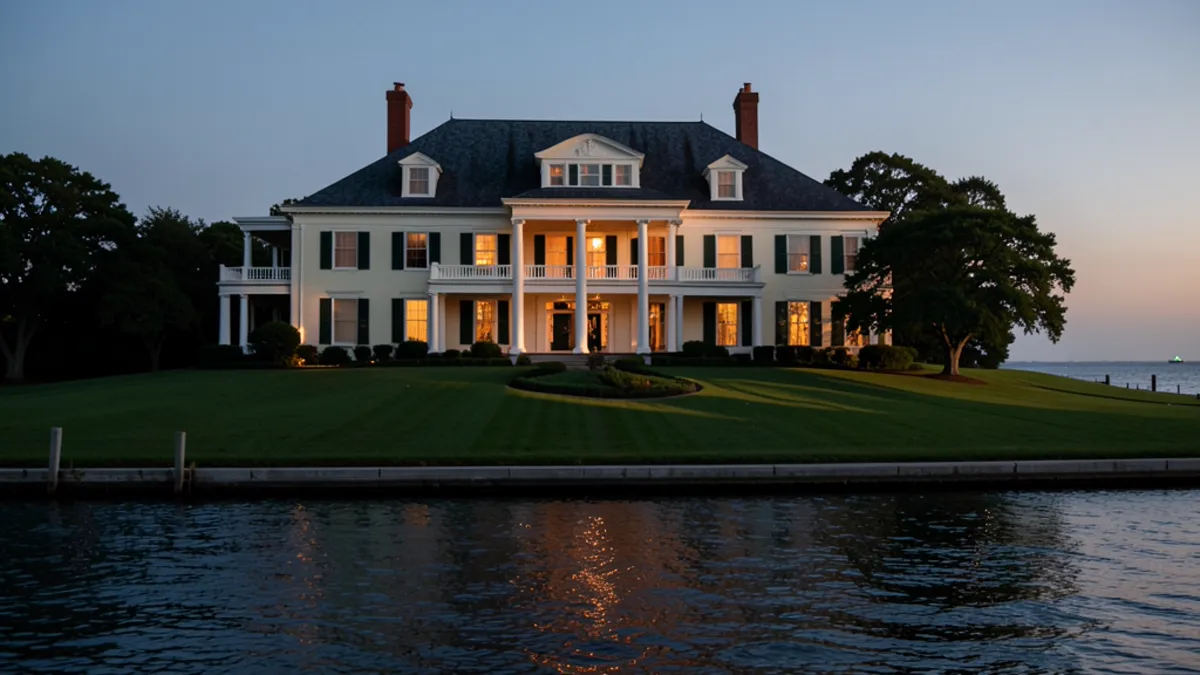
The world Dorian moves through: drawing rooms, wit and beautiful things. Image generated by AI.
Who will enjoy it most
This is a book for readers who like their classics short and sharp. It suits anyone who enjoys witty dialogue, gothic atmosphere and a story with a clear, haunting idea at its centre. Readers who loved the moral fable of Stevenson’s Strange Case of Dr Jekyll and Mr Hyde will feel at home here, and so will anyone who enjoys a novel that can be argued about for hours afterward.
It is best for readers who do not mind a book that raises more questions than it answers. Wilde never tells the reader how to judge Dorian, or Lord Henry, or Basil. He leaves the portrait on the wall and lets the reader decide what it means. Readers who prefer a story that resolves neatly may find the ending abrupt. Readers who like a book that lingers after the last page will find it hard to put down.
Why it matters
The Picture of Dorian Gray endures because its question has not dated. We still live in a world that rewards beauty and youth, and still find it easy to confuse a good line with a good argument. Dorian’s wish is a fantasy, but the trade it describes is familiar: the slow cost of choices we refuse to look at, and the comfort of a voice that tells us what we want to hear. Wilde wrapped that warning in some of the most beautiful prose of the nineteenth century, and gave it an image nobody forgets: a portrait in a locked room, growing older so that we do not have to. That is why the book is still read, still quoted, and still argued about, more than a century after it first appeared.
Related reading
For another classic about a young person learning what a fortune is worth, see our review of Great Expectations: Ambition, Love and Second Chances.
Frequently asked questions
Is The Picture of Dorian Gray Wilde’s only novel?
Yes. Wilde wrote one novel, first published in a magazine in 1890 and in book form in 1891, along with plays, essays, fairy tales and a single book of poems. Everything else he is famous for, from The Importance of Being Earnest to the fairy tales, came in other forms.
Is the book suitable for younger readers?
It suits older teenagers and adults. The language is elegant and the story moves quickly, but it deals with adult themes, including cruelty, murder and a young woman’s death, handled in the restrained style of a nineteenth-century novel. There is no graphic detail, but the subject matter is serious.
Which version should I read?
The 1891 book edition, with 20 chapters and the preface, is the version most readers meet and the one this review discusses. The original 1890 magazine version had 13 chapters and is shorter. Modern editions almost always print the 1891 text, and it is in the public domain, so it is easy to find in print and free to read online.






0 Comments