

A TeaLamp book review. Prepared by the TeaLamp Editorial Team with the help of AI.
This Great Expectations review follows Charles Dickens’s most personal novel from the Kent marshes to the drawing rooms of London, and asks why a story first published in 1861 still feels so close to home. It is a book about a boy who gets everything he thinks he wants, and then has to learn what it was worth. Funny, dark and tender by turns, it is the Dickens novel many readers love best, and the one that rewards a slow, unhurried read.
Key takeaways on Great Expectations review
- Pip, an orphan raised by his sister and her husband, the blacksmith Joe Gargery, is given a fortune by a secret benefactor and remade as a London gentleman.
- The novel is Dickens’s thirteenth, serialised in All the Year Round from December 1860 to August 1861 and published in three volumes by Chapman and Hall in October 1861.
- Its great characters, the kind blacksmith Joe, the frozen Miss Havisham, the cold Estella and the convict Magwitch, are among the most memorable Dickens ever wrote.
- Dickens wrote two endings: a bleak original, and the warmer revised ending readers know today, which leaves Pip and Estella’s future deliberately open.
- It suits readers who like character, humour and atmosphere, and who do not mind a long book that takes its time getting where it is going.
The story in brief
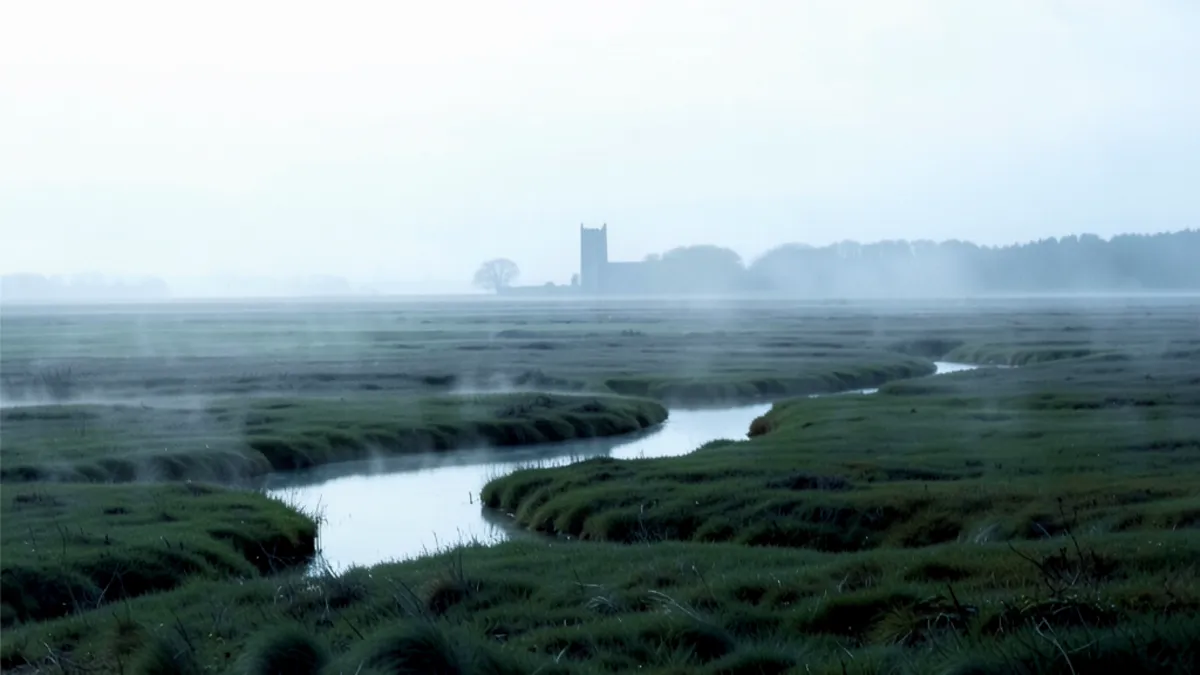
The book opens on the marshes of Kent, where young Pip lives with his older sister and her husband Joe, a blacksmith with a heart as soft as his hands are hard. In the churchyard one cold afternoon, Pip meets an escaped convict, Abel Magwitch, cold, hungry and in leg irons, and helps him, stealing food and a file from the forge. It is a small act of kindness, and it changes everything.
Soon after, Pip is summoned to Satis House, the decaying home of Miss Havisham, a woman who stopped the clocks on her wedding day decades earlier and still wears her wedding dress among the rotting feast. There he meets her adopted daughter Estella, beautiful, proud and cold, who is being raised to break men’s hearts. Pip falls in love with her at once, and comes home ashamed of his coarse hands, his boots and his life at the forge. He begins to dream of being a gentleman.
Then a lawyer arrives with extraordinary news: Pip has come into great expectations. An unknown benefactor will pay for him to live as a gentleman in London. Pip is sure the money comes from Miss Havisham, and that Estella is meant for him. He leaves the forge, grows ashamed of loyal, unpolished Joe, and spends his fortune learning to be a young man of fashion. London gives him friends, debts and polish, and slowly teaches him what his new life costs. The truth, when it comes, turns the whole story around: his benefactor is Magwitch, the convict he once fed, who made a fortune in Australia and risked his life to return to England to see the gentleman he made. Estella, meanwhile, has married a brute of a husband. Miss Havisham, who raised Estella as an instrument of revenge against men, comes to see what she has done, and it breaks her. The novel follows Pip as he learns, the hard way, what loyalty is worth, and who his real friends were all along.
What the book does best
Great Expectations does three things better than almost any other novel. The first is character. Dickens peoples the book with figures who feel carved rather than written: Joe Gargery, whose goodness is the moral centre of the story and who never once reproaches Pip for leaving him; Miss Havisham, terrible and pitiable in the same breath, sitting in her yellowed dress among the spiders; Jaggers, the great lawyer with his terrible hands and his habit of washing them; Wemmick, all business at the office and all warmth at home, with his little castle and his Aged Parent. They are exaggerated, yes, but they are never cartoons. Each one has a private life that explains the public face.
The second is voice. This is only Dickens’s second novel told in the first person, after David Copperfield, and Pip’s voice carries the whole book. The adult Pip looks back on his younger self with a mixture of affection and embarrassment, and the gap between what young Pip felt and what older Pip understands is where the comedy and the ache both live. The opening pages, with their jokes about Pip’s name and his dead parents’ tombstones, are as funny as anything Dickens wrote, and the humour never quite leaves, even in the darkest chapters.
The third is atmosphere. The marshes, with their flat grey light, their mists and their gibbet, hang over the whole novel like weather. Satis House, with its stopped clocks and its wedding cake gone to dust, is one of the great haunted houses of literature, and it needs no ghost. London, by contrast, is noise, fog, debt and temptation. Dickens makes each place feel like a state of mind, and Pip’s journey between them is the journey of the book.
A Victorian study, candlelit. Image generated by AI.
The two endings
Every reader of Great Expectations eventually meets its famous puzzle: the book has two endings. In the one Dickens first wrote, Pip meets Estella by chance on a London street years later. She has remarried, after her first husband’s death, and they part as polite strangers, with Pip glad to see that suffering has given her a heart. His friend Edward Bulwer-Lytton read it and urged Dickens to change it, arguing that readers would want something warmer after so long a journey. Dickens agreed, and wrote the ending every modern edition carries: Pip meets Estella in the ruined garden of Satis House, they speak as friends, and he takes her hand as they leave together, writing, “I saw no shadow of another parting from her.”
The revised ending is deliberately ambiguous. It does not say the two marry, and readers have argued about it ever since. That is part of its charm. Dickens gives Pip and Estella a second chance without promising them a happy ending, and the book’s last line, with its careful double negative, keeps the future open. Readers who love a clean resolution sometimes prefer the first ending’s honesty. Readers who want hope prefer the second. The argument is one of the pleasures of the book, and there is no wrong side to it.
Who will enjoy it
Great Expectations suits readers who love character and story more than speed. It is a long book, 544 pages in its first edition, and Dickens takes his time, lingering over a meal, a walk, a joke. Readers who like their novels lean and fast may find the middle chapters slow, and the language, though far clearer than in Dickens’s earlier books, is still Victorian in its rhythms. The best way in is to read it as it was first read, a chapter or two at a time, the way its first readers met it week by week.
It also suits readers who have never read Dickens and want a place to start. It is shorter and more focused than Bleak House, warmer than Hard Times, and its story, a young person wanting a better life and learning what better means, is as current now as it was in 1861. Younger readers will find a coming-of-age story; older readers will find a book about regret and repair. Both will find the same thing Dickens’s first readers found: a story that is hard to put down and harder to forget.

The forge at the heart of Pip’s childhood. Image generated by AI.
Frequently asked questions
Is Great Expectations hard to read?
Not especially. The sentences are longer than in a modern novel, and a few words are old-fashioned, but the story moves clearly and the humour carries you along. Most readers find it easier than they expect, and a modern edition with notes will explain anything unfamiliar.
Which ending should I read?
The revised ending is the one in almost every edition, and it is the right place to start. Many editions print the original ending as an appendix, so you can read both and decide which you prefer. Dickens himself kept changing his mind, in a small way, revising the last sentence again in 1868.
Do I need to know Dickens to enjoy it?
No. Great Expectations stands on its own, and it is often recommended as the best first Dickens. Nothing in it depends on his other books, though readers who enjoy it usually go on to David Copperfield next.
Why it matters
Great Expectations matters because it is a book about wanting, and about what wanting costs. Pip wants to be a gentleman, to be loved by Estella, to escape the forge, and he gets all of it, only to find that the price was the people who loved him first. That is a story for any age, and it is why the book has never been out of print. It also matters because it shows Dickens at his most controlled: the comedy and the darkness held in balance, the plot turning on a single secret, and the ending left open enough for readers to argue about it for more than a century and a half. A book that can still start an argument is a book that is still alive.
Related reading
For another classic about a young woman finding her place, read Persuasion Summary: Jane Austen’s Second Chance at Love.








0 Comments