

A TeaLamp book review of One Hundred Years of Solitude by Gabriel García Márquez (1967), written in our own words. Prepared by the TeaLamp Editorial Team with the help of AI.
This One Hundred Years of Solitude review looks at one of the most loved novels ever written in Spanish: the story of the Buendía family and the town of Macondo, told across seven generations. Gabriel García Márquez mixes the everyday and the impossible so smoothly that a rain of flowers feels as natural as a family dinner. Here is what the book is about, how it works, why it changed world literature, and who is most likely to fall under its spell.
Key takeaways from our One Hundred Years of Solitude review
- First published in Spanish as Cien años de soledad by Editorial Sudamericana in Buenos Aires in 1967; Gregory Rabassa’s English translation followed in 1970.
- It follows seven generations of the Buendía family in Macondo, a fictional town in the Colombian countryside, from its founding to its final days.
- The book is the best-known example of magical realism, a style in which marvels are described in the same calm voice as daily life.
- It has sold more than 50 million copies, has been translated into dozens of languages and was central to García Márquez’s 1982 Nobel Prize in Literature.
- Best for patient readers who enjoy big family sagas, rich language and stories that feel like legends told aloud.
What the story is about
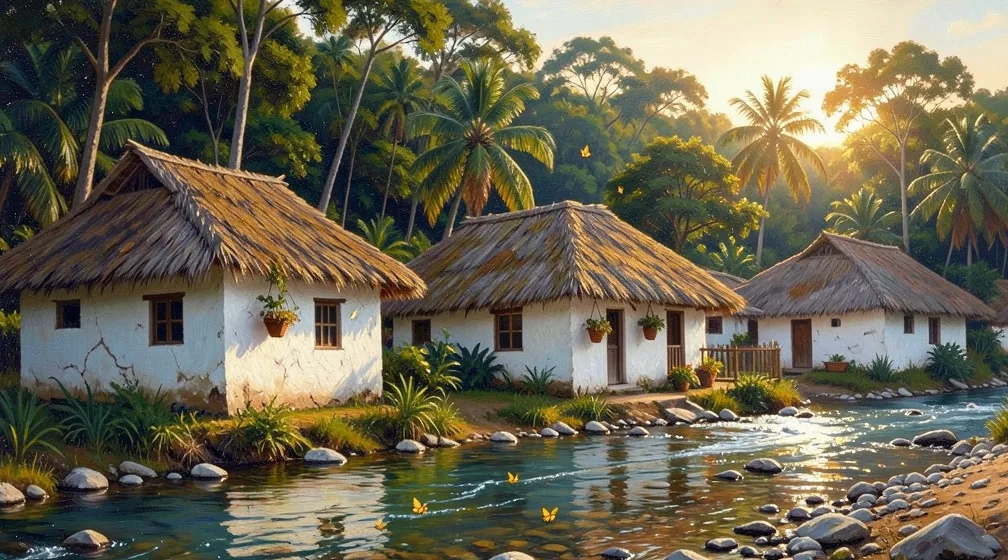
José Arcadio Buendía and his wife, Úrsula Iguarán, leave their home village and found Macondo beside a clear river with white stones. At first the town is so new that many things have no names. Each year a band of travelling gypsies arrives with wonders from the wider world: magnets, magnifying glasses, false teeth and, most famously, ice. Their leader, the wise and mysterious Melquíades, becomes a friend of the family and leaves behind a set of manuscripts that no one can read.
From there the novel moves forward through children, grandchildren and great-grandchildren. Names repeat again and again, with sons called José Arcadio or Aureliano, and the family seems to repeat its habits as well: dreamers and inventors, soldiers and lovers, people who shut themselves away in workshops and bedrooms. Macondo grows from a hidden village into a town touched by civil war, the railway, a foreign banana company and a terrible strike. Through it all, Úrsula holds the household together for well over a century, a tough and practical centre in a family that keeps drifting into its own private worlds.
We will not give away the ending. It is enough to say that the last pages bring the whole long story into focus in a way many readers never forget.

A block of ice, the wonder that opens the novel’s famous first sentence. Image generated by AI.
Magic told in a matter-of-fact voice
The novel opens with a colonel who, years later, facing a firing squad, “was to remember that distant afternoon when his father took him to discover ice” (Gabriel García Márquez, One Hundred Years of Solitude, translated by Gregory Rabassa). That first sentence sets the book’s whole method. It jumps across time, it treats a block of ice as a miracle, and it speaks about danger and wonder in the same steady tone.
That tone is the secret of magical realism. A plague of insomnia makes the town forget the names of things, so people label every object. A young woman of unearthly beauty rises into the sky while folding sheets. Yellow butterflies follow a man wherever he goes. It rains for almost five years without stopping. None of this is explained, and the narrator never winks at us. García Márquez often said he learned this from his grandmother, who told the strangest stories with a completely straight face. The effect is warm and slightly dizzying, like hearing family legends late at night.
Memory, solitude and history
The title points to the book’s central theme. Almost every Buendía is, in some way, alone. Colonel Aureliano Buendía leads uprising after uprising and ends up making little gold fishes in his workshop. Others lose themselves in alchemy, old papers, pride or unspoken love. The novel suggests that a family, and perhaps a whole society, can be crowded and noisy yet still deeply lonely when people cannot truly reach each other.
Memory is just as important. The insomnia plague, the repeating names and the unread manuscripts all ask what happens when people forget their own past. This matters most in the chapters about the banana company and the strike, which echo a real massacre of striking banana workers in Colombia in 1928. In the novel, the official story quickly erases what happened, and only a few people remember. It is one of the most serious passages in the book, and it shows that the magic is never only decoration: it is a way of talking about real history and the struggle to keep it alive.
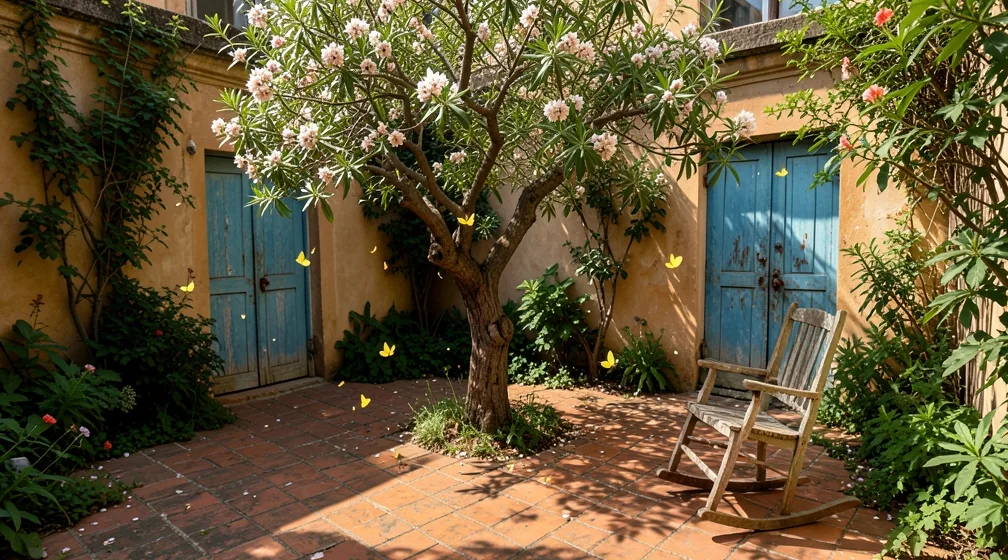
Yellow butterflies, one of the book’s best-loved images, drift through a sleepy courtyard. Image generated by AI.
Why the book changed world literature
When the novel appeared in 1967, García Márquez was a little-known Colombian writer living in Mexico City. The first printing of 8,000 copies sold out within weeks, according to BBC Mundo, and the book quickly became a bestseller across Latin America and Spain. It became a flagship of the so-called Latin American Boom, alongside writers such as Julio Cortázar, Carlos Fuentes and Mario Vargas Llosa.
The English edition owes a great deal to its translator. Cortázar reportedly urged García Márquez to wait for Gregory Rabassa, and the author later praised the result warmly. In 1982 the Nobel Prize in Literature went to García Márquez “for his novels and short stories, in which the fantastic and the realistic are combined in a richly composed world of imagination” (NobelPrize.org). The book’s influence can be felt in many later novels around the world that blend family history, politics and the supernatural.
For decades García Márquez resisted film adaptations. In December 2024, Netflix released the first part of a Spanish-language series made in Colombia with the support of his family, which has brought a new wave of readers to the novel.
Who will enjoy it, and tips for reading
This is a book for readers who like to sink into a long story and let it carry them. Its sentences are long and flowing, chapters rarely stop for dialogue, and the many Josés and Aurelianos can be confusing at first. A simple tip helps: keep a small family tree beside you, or use the one printed at the front of many editions. After a few chapters the pattern of names starts to feel deliberate, almost like a refrain in a song.
Readers should also know that the novel includes war, violence and some complicated family relationships, described frankly but without graphic detail. It suits older teens and adults best. If you enjoy family sagas, folk tales or books that feel like a whole world, this is one to read slowly, perhaps a chapter an evening with a pot of tea, so the strange and lovely images have time to settle.
Why it matters
One Hundred Years of Solitude matters because it shows that a small, imaginary town can hold the story of a continent. Through one family’s loves, wars and losses, García Márquez explores how history repeats itself when it is forgotten and how loneliness can survive even in a crowded house. More than half a century later, it remains a joyful, funny and haunting book, and a reminder of how much wonder ordinary life can contain.
Related reading
For another landmark novel about a community facing great change, read our Things Fall Apart review, which explores Chinua Achebe’s classic story of Okonkwo and his Igbo village.
Frequently asked questions
Is Macondo a real place?
No. Macondo is fictional, but it is inspired by the Caribbean region of Colombia where García Márquez grew up, especially his childhood town of Aracataca.
Do I need to know Latin American history to enjoy the book?
Not at all. The novel works as a family story on its own. Knowing a little about Colombia’s civil wars and the banana industry simply adds an extra layer of meaning.
How long is One Hundred Years of Solitude?
Most English paperback editions run to roughly 420 to 450 pages, so many readers take a few weeks to enjoy it at a relaxed pace.
Sources
- NobelPrize.org: The Nobel Prize in Literature 1982
- Harry Ransom Center: A history of One Hundred Years of Solitude in documents
- BBC News Mundo: 12 curiosities from more than 100 editions of Cien años de soledad (Spanish)
- Rolling Stone: One Hundred Years of Solitude: Part One to debut on Netflix Dec. 11
- Wikipedia: One Hundred Years of Solitude







0 Comments