

A TeaLamp book review. Prepared by the TeaLamp Editorial Team with the help of AI.
This Metamorphosis review looks at one of the shortest and most talked-about classics in world literature. Franz Kafka wrote The Metamorphosis in late 1912 and published it in 1915. It begins with one of the most famous opening situations ever put on paper: a travelling salesman named Gregor Samsa wakes up one morning to find that he has turned into a giant insect. What follows is not a horror story or a fantasy adventure, but something quieter and stranger, a story about work, family, duty and what happens to love when someone can no longer be useful. It takes only an evening or two to read, and people have been talking about it for more than a century.
Key takeaways on The Metamorphosis review
- Gregor Samsa, the main earner in his family, wakes transformed into an enormous insect and can no longer work.
- The story follows how Gregor and his parents and sister, Grete, adjust to this impossible change over the following weeks and months.
- Kafka tells the fantastic event in calm, precise, everyday language, which is what makes it so unsettling and memorable.
- Its great themes are alienation, work, family obligation, guilt and transformation, and it can be read in many different ways.
- It is around 70 printed pages long, has been translated into English more than twenty times and gave rise to the word “Kafkaesque.”
About the book and its author
Franz Kafka was born in Prague in 1883, when the city was part of Austria-Hungary, and he wrote in German. By day he worked at the Workers’ Accident Insurance Institute in Prague; by night he wrote, often in intense bursts. The autumn of 1912 was one of the most productive periods of his life. In September he wrote the story “The Judgment” in a single night, and in the weeks that followed he worked on the novella that became Die Verwandlung, known in English as The Metamorphosis and sometimes as The Transformation.
The story first appeared in October 1915 in the literary journal Die weißen Blätter, and in book form that December from the publisher Kurt Wolff. It is the longest of the stories Kafka considered finished and published during his lifetime. Kafka died in 1924, at forty, with most of his work still unpublished. His novels The Trial and The Castle appeared only after his death, thanks to his friend Max Brod, but The Metamorphosis is the book that most readers meet first.
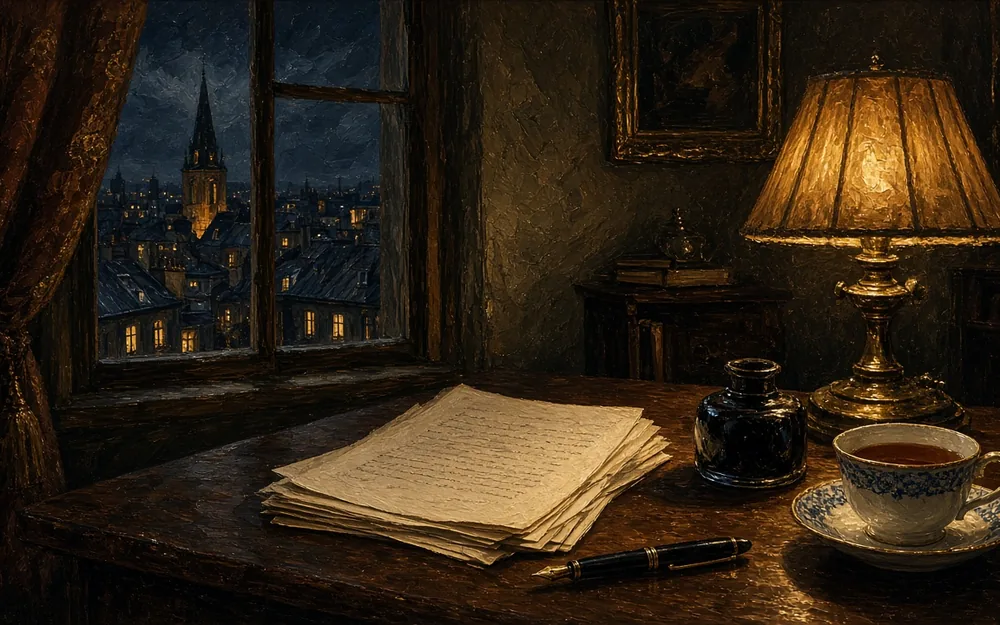
Kafka wrote much of his work at night, after long days at the office. Image generated by AI.
What happens in The Metamorphosis (light spoilers)
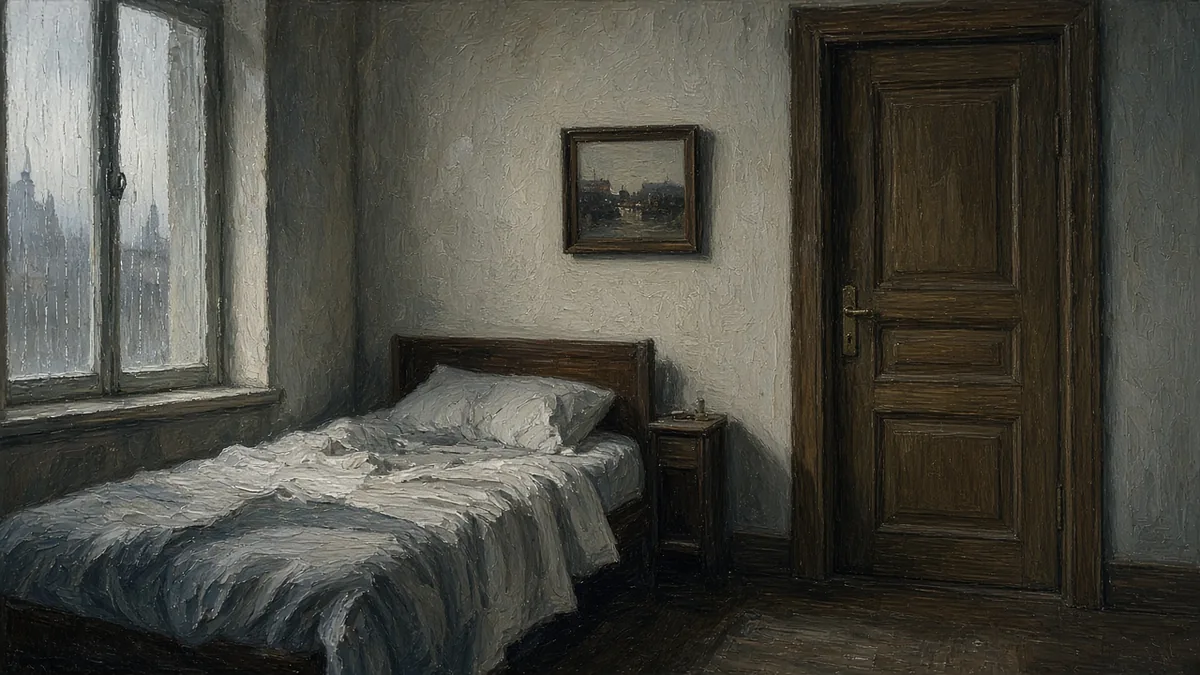
The novella is told in three parts. In the first, Gregor wakes in his bed and, rather than panicking about his new body, worries mainly that he has missed his train to work. His family knocks on his door, and soon the chief clerk from his firm arrives to ask why he is late. When Gregor finally manages to open the door, the clerk flees, his mother collapses and his father drives him back into his room.
In the second part, Gregor’s sister Grete becomes his carer. She brings him food, learns what he will eat and cleans his room. Gregor, who cannot speak in a way his family understands, listens to their conversations through the door and learns how much the household depended on his wages. A tense scene in which Grete and her mother clear the furniture from his room ends in a painful clash with his father.
In the third part, the family takes jobs and rents a room to three lodgers to make ends meet, and Gregor is increasingly neglected. One evening, drawn by the sound of Grete playing the violin, he creeps out of his room. What happens next brings the family to a decision about their future, and the book ends with a short, strangely bright scene of the parents and Grete taking a tram ride into the countryside. We will leave the details for you to discover.
Kafka’s calm, precise style
The first thing many readers notice is the tone. Kafka never explains how or why Gregor changed. Nobody calls a doctor or a scientist, and nobody wonders whether it is a dream for very long. Instead, the narration moves on to practical problems: how to get out of bed with so many legs, how to turn a key without hands, what to do about the job. This flat, almost businesslike calm is the source of the story’s power. The stranger the situation becomes, the more ordinary the language stays, and the reader is left to feel the shock that the characters seem to swallow.
Kafka is also careful about what he does not show. In the original German, Gregor becomes an ungeheueres Ungeziefer, a phrase that can mean a monstrous or enormous vermin and that does not name a particular creature. Popular culture usually pictures a cockroach, but the text keeps it vague, and translators have rendered the phrase in at least sixteen different ways. When the first edition was prepared in 1915, Kafka asked his publisher that the insect itself should not be pictured. The result is a creature each reader has to imagine, which keeps the focus on Gregor’s feelings rather than on his appearance.
Themes: work, family and being needed
At its heart, The Metamorphosis is a family story. Before his transformation, Gregor worked long hours as a travelling salesman to pay off his father’s debts and support his parents and sister. He dreamed of sending Grete, who loves the violin, to the music conservatory. After the change, he is still the same person inside, still thinking about his family’s money and comfort, but he can no longer do anything for them. The book quietly asks a hard question: how much of the love and respect we receive depends on what we provide?
It is also a story about work. Gregor’s first thoughts are about his boss, his train and the risk of losing his job, which is both funny and sad. Many readers recognise in him the feeling of being worn down by a job that leaves little room for anything else, and of feeling more like a function than a person.
And it is a story about transformation in more than one sense. While Gregor weakens, the rest of the family changes too. His father, who seemed tired and idle, goes back to work in a uniform; his mother takes in sewing; and Grete grows from a girl into a confident young woman. Some critics, such as Nina Pelikan Straus and Volker Drüke, have argued that Grete’s transformation is just as important as Gregor’s, and that the title may point to her as well.
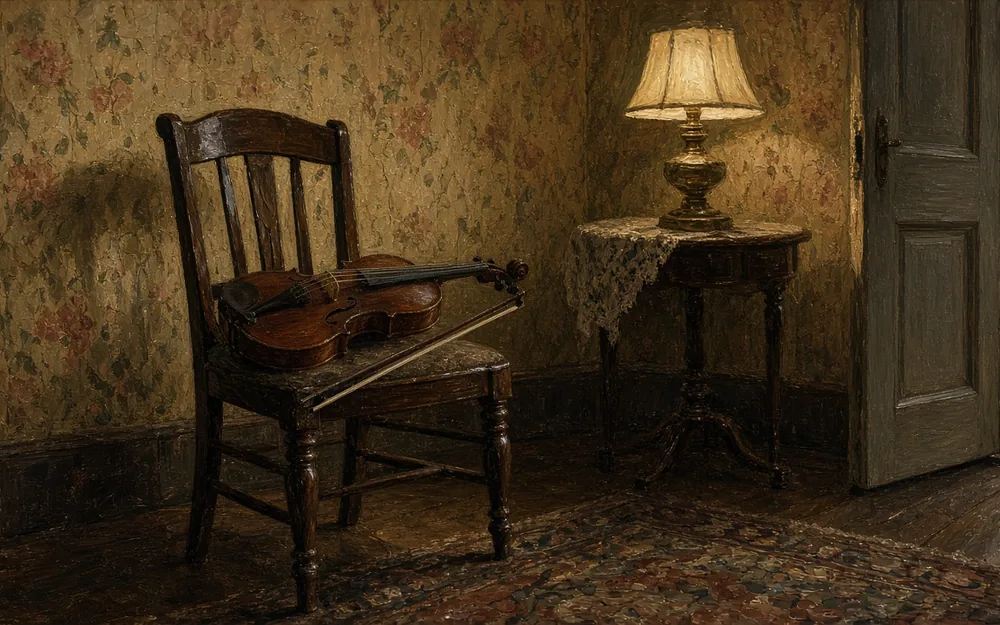
Grete’s violin plays a quiet but important part in the story. Image generated by AI.
Many readers, many interpretations
Few short books have inspired so many readings. Some interpreters, beginning with Kafka’s friend Max Brod, have read it in religious terms. Others, starting with Charles Neider in 1948, have connected it to Kafka’s famously difficult relationship with his own father. Sociological readings see the Samsas as a typical struggling family of their time and place, and more recent readers have seen in the story a picture of illness, disability or caregiving, and of how families can be unintentionally cruel under strain.
The novelist Vladimir Nabokov, who taught the book in his university lectures, preferred to set symbolic theories aside and look closely at Kafka’s artistry, his clear style and the precise details of the Samsa apartment. Nabokov, who was also an expert on butterflies, even concluded from clues in the text that Gregor was a winged beetle rather than a cockroach, and sketched him in the margin of his teaching copy. That is perhaps the best advice for a first reading: notice the details, the closed doors, the sounds from the living room, the view from Gregor’s window, and let the meanings arrive on their own. The story’s refusal to explain itself is part of why it stays fresh.
Influence and legacy
It is hard to overstate how much this little book has shaped modern writing. The word “Kafkaesque,” used for situations that are nightmarish, absurd or trapped in impersonal systems, draws on The Metamorphosis and The Trial. Gabriel García Márquez said that reading the story showed him it was possible to write in a different way, and Haruki Murakami paid tribute to it in his short story “Samsa in Love,” which imagines the transformation in reverse. The novella has been adapted for stage, film, ballet, opera and comics, and it remains a staple of school and university reading lists around the world.
The first English translation, by Willa and Edwin Muir, appeared in 1933, and many more have followed. Because Kafka’s German text is in the public domain, it is easy to find, and a free English translation by David Wyllie is available from Project Gutenberg’s edition of Metamorphosis.
Who will enjoy The Metamorphosis?
This is a good choice for readers who like short books with big ideas, for anyone curious about classic European literature, and for book clubs, since almost every reader comes away with a different interpretation to share. It also suits readers who enjoy stories that mix the ordinary and the impossible, and anyone who has ever felt unseen at work or at home.
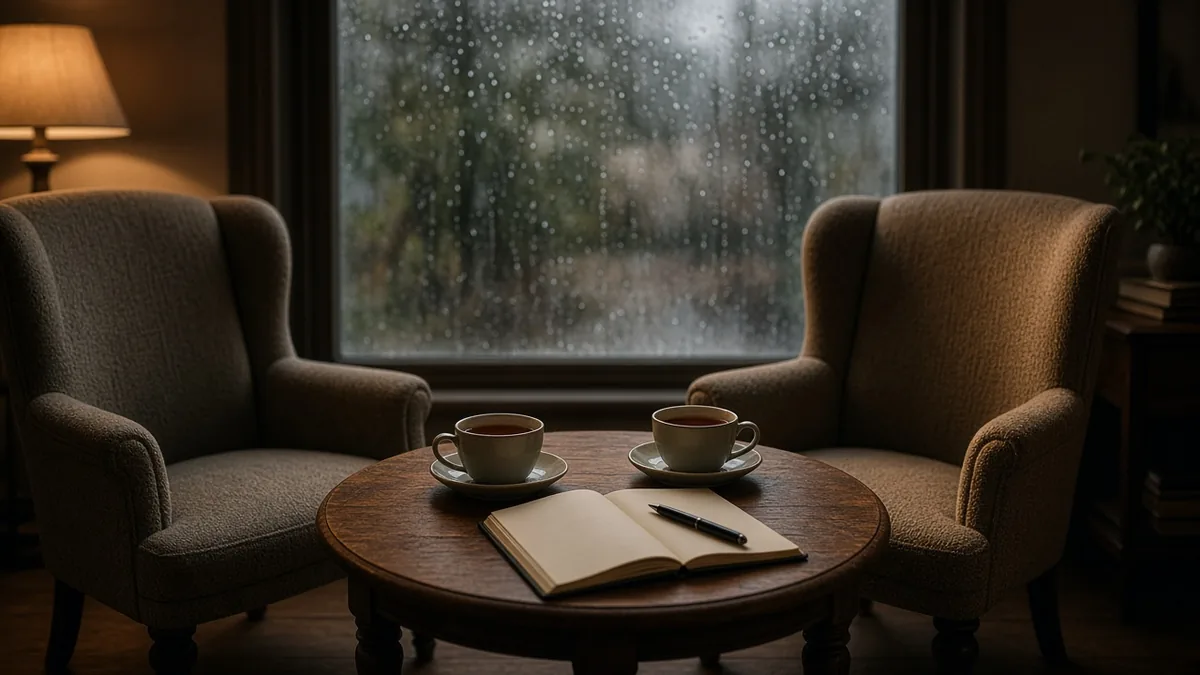
Readers should know that it is a serious and at times sad story, with moments of family conflict and an ending that is more bitter than sweet, though it is never graphic. It is best read slowly, perhaps in one sitting on a quiet afternoon with a pot of tea, so you can stay inside Gregor’s strange, closed-in world from beginning to end.
If you enjoy classic stories about change and identity, you may also like our summary of Frankenstein by Mary Shelley, or our review of Siddhartha by Hermann Hesse, another short German-language classic about a life transformed.
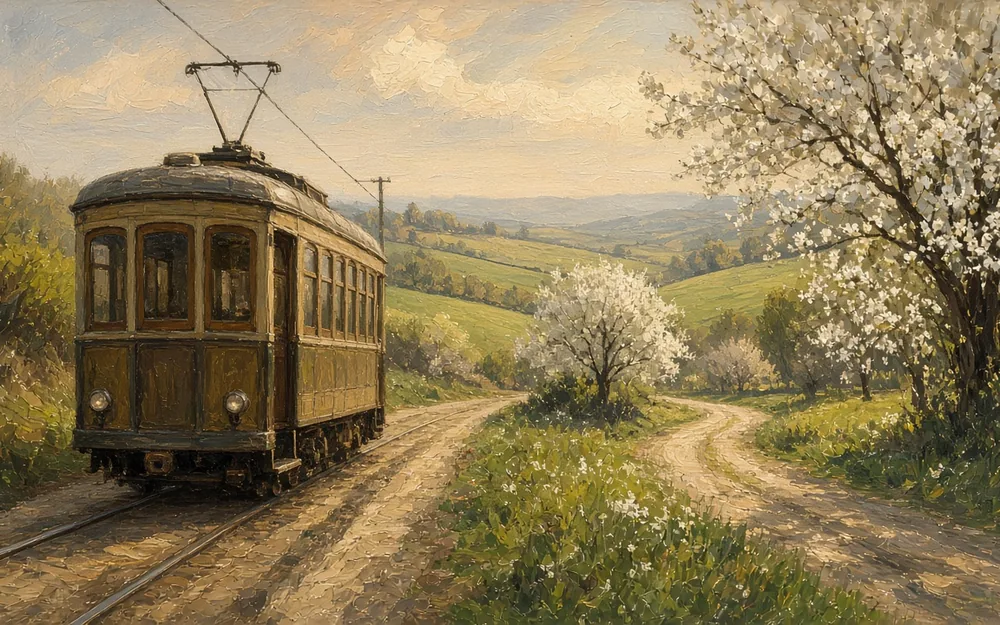
The story ends with a short, strangely bright tram ride into the countryside. Image generated by AI.
Frequently asked questions
Is The Metamorphosis hard to read?
Not in terms of language. The sentences are clear and the story is short, so many readers finish it in an evening or two. What makes it challenging is its meaning, since Kafka leaves many questions open for the reader to think about.
What kind of insect does Gregor become?
Kafka never says exactly. The German phrase suggests a monstrous or enormous vermin, and Kafka asked that the creature not be pictured on the first edition. Many people imagine a beetle or a cockroach, but the vagueness is deliberate.
Which translation of The Metamorphosis should I read?
There are many good English versions, and each makes slightly different choices, especially in the famous first sentence. A free public-domain translation is a fine place to start, and if you love the story, comparing a second translation is a rewarding way to see how much a few words can change.
Why is The Metamorphosis so famous?
It combines an unforgettable premise with calm, precise writing and themes that almost everyone recognises: work, family, loneliness and change. Its openness to interpretation has kept readers, students and writers discussing it for over a hundred years.
Sources
- The Metamorphosis: publication history, characters, interpretations and translations (Wikipedia)
- Franz Kafka: life, work and influence (Wikipedia)
- Metamorphosis by Franz Kafka, translated by David Wyllie (Project Gutenberg)








0 Comments