

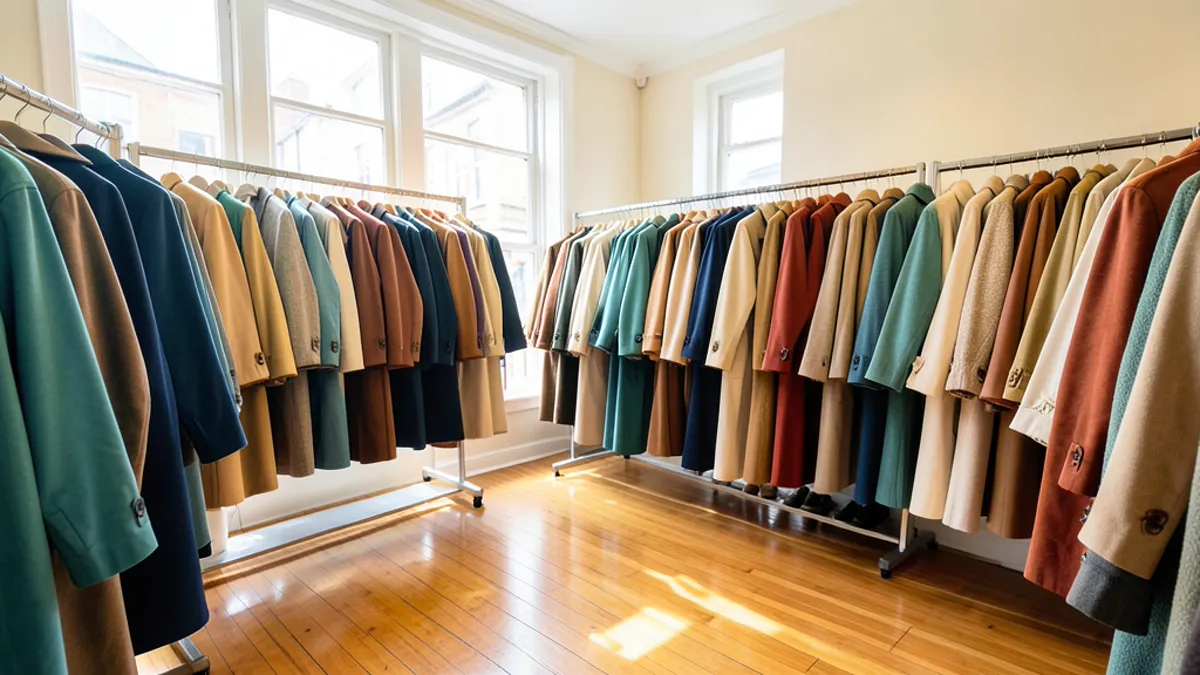
An original TeaLamp explainer based on the sources listed below. Prepared by the TeaLamp Editorial Team with the help of AI.
The circular economy is a simple idea with a big promise: keep things in use for as long as possible, and let nothing useful become waste. Instead of making a product, selling it once and watching it end up in a bin, businesses repair it, resell it, refurbish it or take it apart for parts, and earn money at every step. What was once a green ideal is now a fast-growing market, from secondhand clothes to refurbished phones.
Key takeaways on circular economy
- Secondhand clothing is booming: the global market is expected to reach 367 billion dollars by 2029.
- Repair is coming back as a real business, helped by new laws in France and the European Union.
- Refurbished electronics were a 64 billion dollar market in 2025, led by marketplaces such as Back Market.
- Big brands now sell their own used goods, from Patagonia jackets to IKEA furniture.
The old way: take, make, throw away
For most of the last century, business followed a straight line: dig up raw materials, make a product, sell it, and when it breaks or goes out of fashion, throw it away and buy another. It was simple, and for a long time it was cheap. But the straight line has a cost that never showed up on the price tag: mountains of waste, and raw materials that get harder to find every year.
A cracked phone screen is a good example. A few years ago, the usual answer was a new phone, and the old one went into a drawer, or into the bin. Multiply that by billions of phones, jackets, sofas and washing machines, and the straight line starts to look less like progress and more like a leak.
Three simple principles
The idea behind the circular economy comes from the Ellen MacArthur Foundation, a charity that has spent years explaining it to businesses and governments. It rests on three principles, all driven by design: eliminate waste and pollution, circulate products and materials at their highest value, and regenerate nature.
Eliminating waste starts before a product is made. If a jacket is designed so its zip can be replaced, or a phone is built so its battery can be swapped, waste is designed out from the beginning. Circulating products means keeping them in use: maintain them, share them, repair them, resell them, refurbish them, and only as a last resort take them apart and recycle the materials. Regenerating nature means the whole system should leave the natural world better, not worse, for example by returning nutrients to the soil.
Notice where recycling sits in that list: last. Recycling is better than landfill, but it is the weakest link in the chain. A phone shredded for its metals loses all the work that went into making it; a phone repaired and used for two more years keeps all of that value. The circular economy is, above all, about keeping things whole and in use.
Resale: the secondhand boom
Nowhere is the shift clearer than in secondhand clothing. According to thredUp’s 2025 Resale Report, prepared with the retail analysts at GlobalData, the global secondhand clothing market is expected to reach 367 billion dollars by 2029, growing by about 10 percent a year, which is 2.7 times faster than the clothing market as a whole. In the United States alone, the secondhand market is expected to reach 74 billion dollars by 2029. It grew by 14 percent in 2024, its strongest year since 2021, and five times faster than the wider clothing market.
Online resale is growing fastest of all: in the United States it is expected to nearly double by 2029, reaching 40 billion dollars. The reasons are practical as much as principled. Secondhand clothes cost less, they are often better made than cheap new clothes, and every piece is one of a kind. Shoppers who once saw used clothing as a compromise now see it as a find.
Brands have noticed, and retailers are building secondhand sections into their ordinary stores. Even tariffs have helped: thredUp found that 59 percent of shoppers say they would turn to secondhand options if new trade rules make new clothes more expensive. What began as charity shops and flea markets is now a mainstream way to buy clothes.
Repair is becoming a business again
For decades, repair was the poor relation of retail. Spare parts were hard to find, manuals were secret, and a repair often cost nearly as much as a replacement. That is changing, and the law is doing much of the pushing.
France moved first. In January 2021 it made a repairability index compulsory for smartphones, laptops, televisions, washing machines and lawnmowers. Every product in those categories must show a score out of 10 next to its price, based on five things: whether repair documents are available, how easy the product is to take apart, whether spare parts are available, what those parts cost, and a few details specific to the product type. A shopper can now compare two phones not only on price and camera, but on how fixable they are.
The European Union followed. Its Right to Repair Directive was adopted in April 2024 and came into force that July, with member states due to apply it from July 2026. If a shopper chooses repair over replacement while a product is still under guarantee, the guarantee is extended by a year. Manufacturers of listed products, from washing machines to smartphones, must also repair them after the guarantee ends, within a reasonable time and at a reasonable price. Since June 2025, new smartphones and tablets sold in the EU also carry a repairability score from A to E, with spare parts to be available for seven years.
The result is work. Repair shops, spare-parts sellers and refurbishers are small businesses, and a law that makes repair easier gives them customers. In repair cafés, volunteers help neighbours fix toasters, lamps and torn jackets, often over a cup of tea, and every fixed item is one less thing bought new.
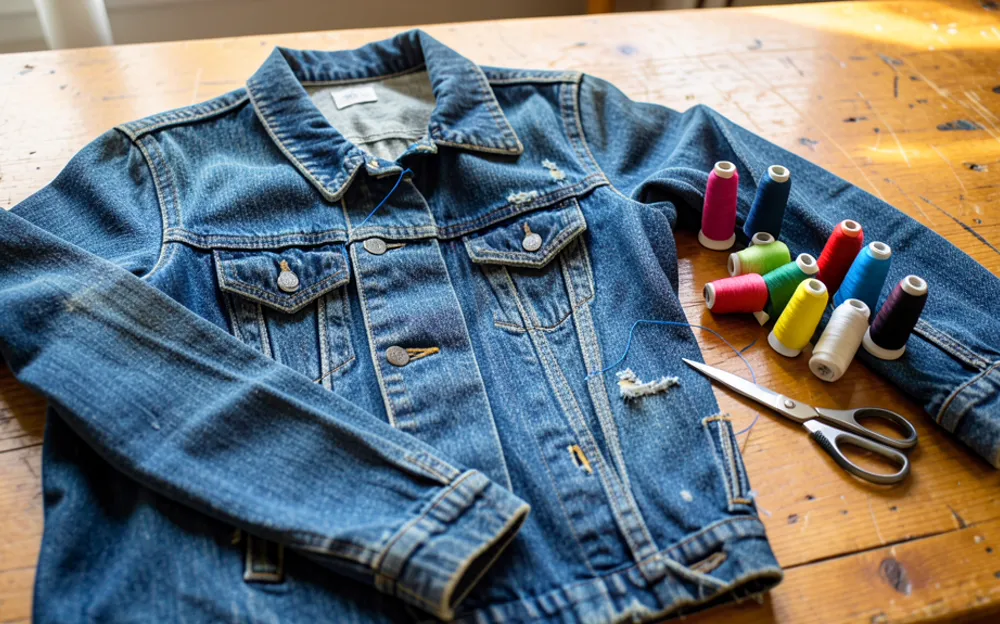
A stitch in time: mending keeps clothes in use. Image generated by AI.
Refurbished phones and the new marketplaces
Phones are where the circular economy is easiest to see. A refurbished phone is a used phone that has been tested, repaired, cleaned and graded, then sold with a warranty. It is not a gamble on a stranger’s old handset; it is a product with a promise attached.
Research firm Dataintelo puts global refurbished electronics sales at 64 billion dollars in 2025, rising to 161 billion dollars by 2034. The best-known name in the field is Back Market, a Paris marketplace founded in 2014. It does not refurbish phones itself: about 2,700 vetted professional refurbishers sell through its platform, and Back Market sets the quality rules, the grading and the warranty. Goods worth more than 3 billion euros passed through the platform in 2025, up by about a third on the year before, and the company reached 17 million customers across 18 countries, turning its first profitable year worldwide.
The big manufacturers have joined in too: Apple sells certified refurbished devices, Samsung runs its own renewed programme, and Amazon sells renewed electronics with a guarantee. In France, 22 percent of smartphones in use in 2024 had been bought secondhand or refurbished, up from 17 percent in 2020, and nearly half of young shoppers say their next phone will be a refurbished one.
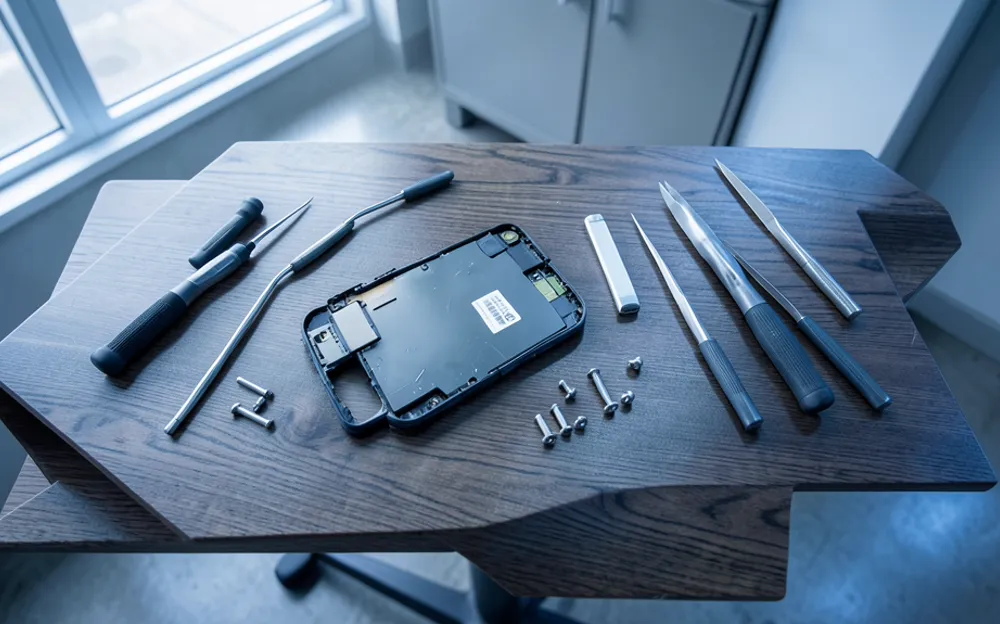
A phone taken apart for repair, not for the bin. Image generated by AI.
Brands selling their own secondhand goods
Patagonia’s Worn Wear programme lets customers trade in used outdoor clothing for credit, then repairs the garments and sells them again. IKEA’s Buy Back and Resell programme takes back gently used furniture for store credit and sells it on in a dedicated secondhand corner, and the company says it aims to make its products circular by 2030. Levi’s runs a secondhand denim programme, Lululemon buys back used athletic wear, and REI resells traded-in gear through Re/Supply.
For a brand, the logic is simple: a jacket sold twice earns money twice, and the customer who trades one in usually comes back. The secondhand sale is no longer a lost sale. It is a second sale.
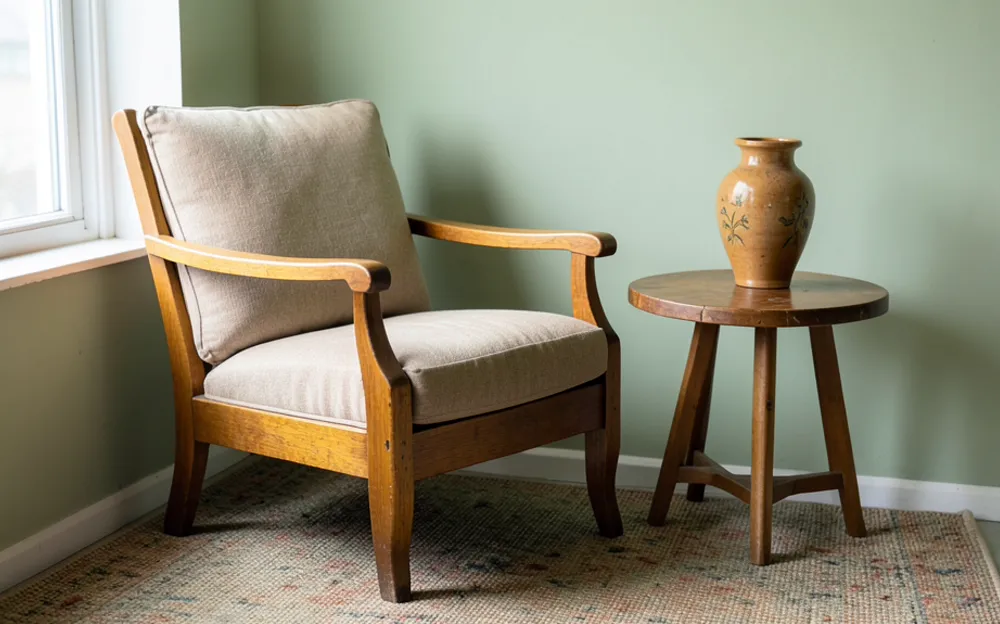
Restored furniture, ready for a second home. Image generated by AI.
What still gets in the way
For all the growth, the circular economy is still small next to the old straight line. The United Nations’ Global E-waste Monitor 2024 counted a record 62 million tonnes of electronic waste in 2022, up 82 percent since 2010, and only 22.3 percent of it was documented as properly collected and recycled. At the current pace the yearly total will reach 82 million tonnes by 2030, and 62 billion dollars’ worth of recoverable materials was simply unaccounted for in 2022.
Running a circular business is also harder than it looks. Collecting used goods, testing them, grading them and finding buyers takes time and money, and a refurbished phone needs a warehouse, a workshop and a warranty behind it. Some products are still designed to resist repair, glued shut or built with parts only the manufacturer can supply. And not every “circular” claim deserves trust: a brand that repairs a few hundred jackets while selling millions of new ones is running a pilot, not a transformation. The honest test is scale.
The deepest limit is the simplest one. No amount of resale can fix a world that buys far more than it needs. A secondhand jacket that replaces a new one is a win; a secondhand jacket bought on top of five new ones is just a sixth jacket. The circular economy works best when it helps people buy fewer new things, not more old ones.
Why it matters
The circular economy matters because waste is not just rubbish. It is value thrown away: the metal in a phone, the cotton in a shirt, the skill in a well-made chair. When businesses learn to catch that value, everyone gains. Shoppers get good things for less money, small repair and resale businesses get customers, and fewer raw materials need digging up. The laws in France and the European Union are tilting the field the same way, rewarding products that last and can be fixed.
For another story about business done differently, read The Quiet Rise of Employee-Owned Companies.
Frequently asked questions
What is the circular economy in simple terms?
It is an economy where products are kept in use for as long as possible. Instead of making something, using it once and throwing it away, we repair it, share it, resell it or refurbish it, and only recycle the materials when nothing else is possible.
Is buying secondhand really better for the planet?
Usually, yes, because the biggest environmental cost of most products comes from making them. A used jacket or phone that replaces a new purchase avoids all of that manufacturing. The gain shrinks if the secondhand item is bought on top of new ones, or shipped halfway around the world.
Does the circular economy actually save money?
Often it does. A refurbished phone or a repaired appliance usually costs less than buying new, and trade-in credit lowers the price further. For businesses, the saving comes from selling the same product more than once instead of making a new one each time.
Sources
- Ellen MacArthur Foundation, “The circular economy in detail”
- thredUp Newsroom, “ThredUp’s 13th Resale Report Shows Online Resale Saw Accelerated Growth in 2024” (March 2025)
- Fast Company, “We’re creating more e-waste — and recycling isn’t close to keeping up” (March 2024)
- Bird & Bird, “The new Right to Repair Directive — How does it interact with IPRs?” (2025)
- iFixit, “French Repair Index: One Year Later”
- Dataintelo, “Refurbished Electronics Market Size, Share & Forecast Report 2025 to 2034”
- EachSite, “How 10 brands integrate refurbishment and recycling in their business models”









0 Comments