

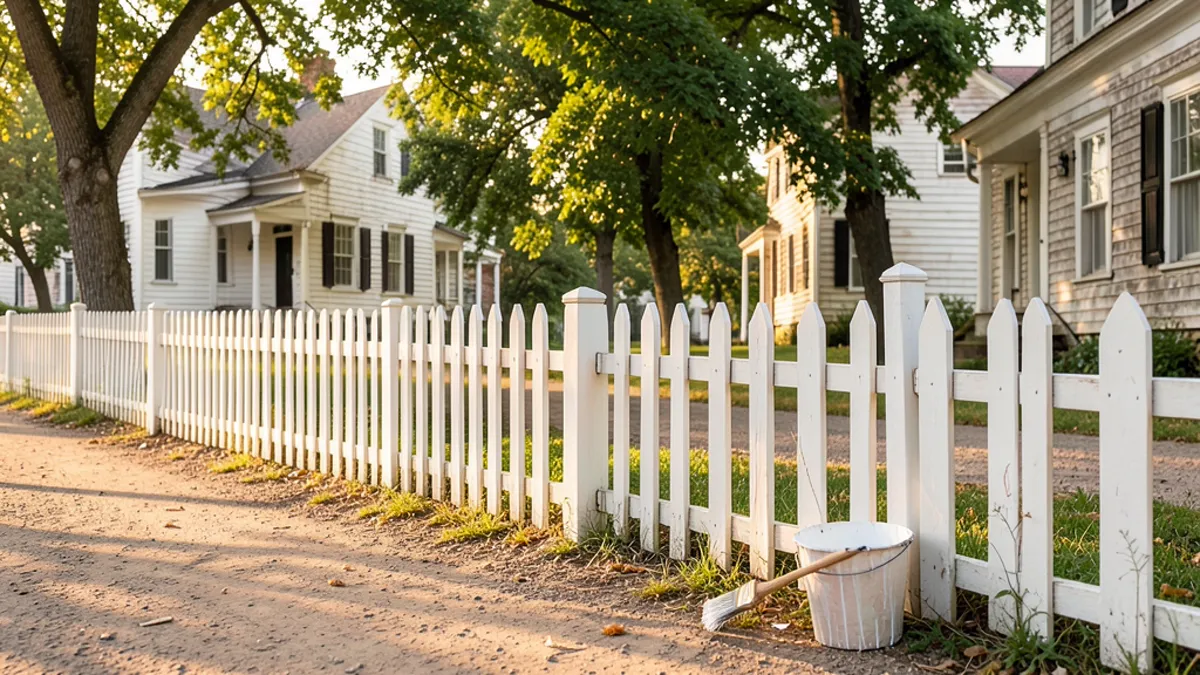
A TeaLamp book review of The Adventures of Tom Sawyer by Mark Twain, first published in 1876. Written in our own words, with two short quoted lines from the book. Prepared by the TeaLamp Editorial Team with the help of AI.
Few books open with a punishment and turn it into a triumph. This Tom Sawyer review is about a boy who is told to whitewash a fence on a bright Saturday morning, and who walks away richer than he started, with a pocket full of treasures and a village of boys queuing to do his work for him. Mark Twain published The Adventures of Tom Sawyer in 1876, and a hundred and fifty years later it is still the warmest, funniest picture of an American boyhood ever written. It is a book about mischief, friendship and the long summers of childhood, set on the banks of the Mississippi River, and it reads as fresh now as it did when Twain wrote it in Hartford, Connecticut.
Key takeaways on Tom Sawyer review
- Tom Sawyer is a twelve-year-old orphan living with his Aunt Polly in the river town of St. Petersburg, Missouri, in the 1830s and 1840s.
- The famous whitewashing scene is the book in miniature: Tom turns a chore into a prize by making other boys beg to do it.
- Tom and his friend Huckleberry Finn witness a murder in the graveyard, swear to stay silent, and later find the courage to tell the truth in court.
- The story moves from small adventures, like a pirate summer on an island, to real danger in McDougal’s Cave, and ends with hidden gold.
- Twain based the town on Hannibal, Missouri, where he grew up, and drew Tom from boys he had known as a child.
A boy, a fence and a brilliant trick
The book’s best-known scene comes early, and it is worth every bit of its fame. Tom comes home late on a Friday evening, after a fight, and Aunt Polly sets his Saturday punishment: thirty yards of board fence, nine feet high, to be whitewashed. Tom looks at the fence and all gladness leaves him. Then Ben Rogers comes along, pretending to be a steamboat, and Tom has his idea. He picks up the brush and paints with great care, as if whitewashing were the finest pleasure in the world, until Ben grows curious and asks to try. “Like it? Well, I don’t see why I oughtn’t to like it,” Tom answers. “Does a boy get a chance to whitewash a fence every day?” Before the morning is out, every boy in the village has paid Tom for the privilege of painting his fence, in marbles, a kite, a dead rat on a string, and other treasures of boyhood, and the fence gets three coats.
“Work consists of whatever a body is obliged to do, and that Play consists of whatever a body is not obliged to do.” — Mark Twain, The Adventures of Tom Sawyer, Chapter 2
The scene works because it is true in a way that has nothing to do with fences. Twain understood that children, and grown-ups too, want most what looks hard to get. The joke lands lightly, and the book never stops to lecture about it. It simply lets Tom be clever, and lets the reader enjoy the trick. Twain writes about a boy the way a friend remembers one, with affection and a clear eye.
Tom and Huck: friendship on the run
Tom’s best friend is Huckleberry Finn, the son of the town drunk, who sleeps in empty barrels and answers to nobody. The grown-ups of St. Petersburg warn their children away from Huck, which is exactly why every child in town admires him. Together the two boys slip out at midnight to the graveyard, where they see a terrible thing: Injun Joe kills Dr. Robinson and lays the blame on Muff Potter, a harmless drunk who was knocked out during the fight. The boys swear a blood oath to say nothing, afraid that Joe will come after them. Twain tells this plainly, without dwelling on the violence. The fear that follows is the real story. The secret sits on Tom like a weight through the summer, until at last, in court, he stands up and tells the truth, and Potter goes free.

Two boys poling a raft on the misty Mississippi at dawn. Image generated by AI.
Between the fear and the courtroom, the boys run away to be pirates. With their friend Joe Harper they take a raft to Jackson Island, cook stolen food over a fire, smoke, swim, and enjoy being gloriously free, until a thunderstorm and a long homesick night send them creeping back to town. They arrive home in time to hear their own funeral service in the church, and step out from hiding to the astonishment of the whole congregation. It is one of the happiest scenes in the book: a child’s daydream, being a pirate, being missed, coming home a hero, allowed to happen for real.

A campfire on a river island at dusk, with a raft pulled ashore. Image generated by AI.
The cave, the treasure and growing up
The last part of the book is its most serious, and its most exciting. Tom and Becky Thatcher, the new girl in town, get lost in McDougal’s Cave during a picnic. For days they wander the dark passages, hungry and frightened, while the town searches above. Tom keeps Becky’s spirits up, finds a way out, and leads her back to daylight. In the cave he has also seen Injun Joe, hiding with stolen gold. When the townspeople seal the cave entrance, Joe dies inside, and Tom and Huck return to dig out the hidden treasure: a chest of gold coins that makes them both rich. Huck is taken in by the Widow Douglas, who wants to civilise him, and Tom, ever the schemer, is already planning their next adventure.
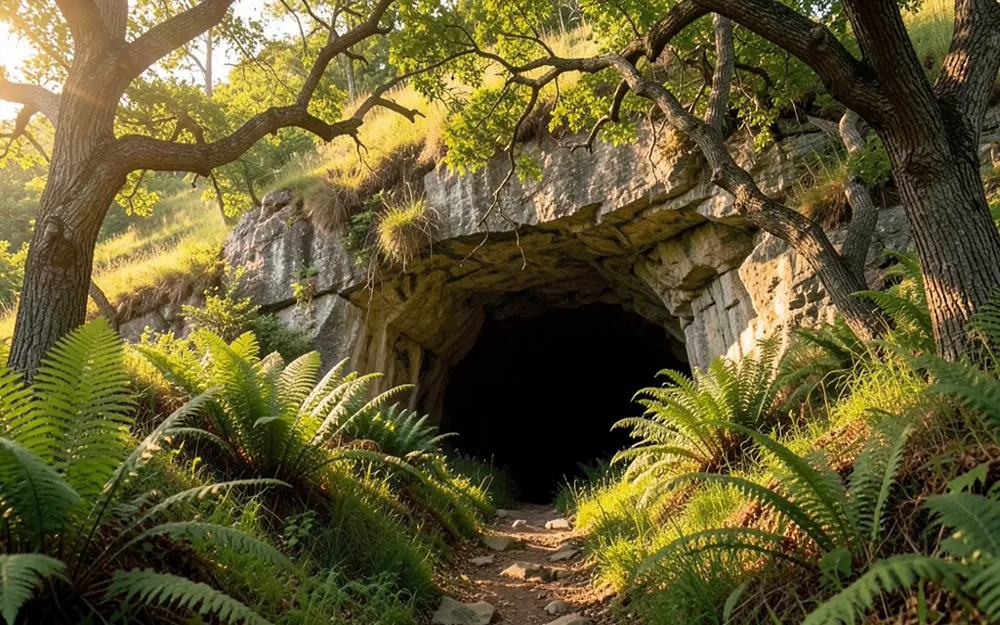
The mouth of a limestone cave in a green hillside. Image generated by AI.
What makes the cave chapters work is that Tom grows up inside them. He is no longer showing off or playing a trick: he is looking after someone smaller than himself, with quiet courage. The boy who began the book trading marbles for fence-painting ends it as someone his town can rely on, and Twain never announces the change. He just lets it happen, one brave choice at a time.
Mark Twain’s Mississippi
Part of the book’s charm is how real its world feels. St. Petersburg is a made-up town, but it is Hannibal, Missouri, where Samuel Clemens, the man who called himself Mark Twain, spent his boyhood. The river is the Mississippi, the great highway of steamboats and rafts that ran past his door. Twain wrote the book in Hartford, Connecticut, in the 1870s, looking back across thirty years to the summers of his childhood. He drew Tom from boys he had known, and the town from the place he had left behind. The result feels remembered rather than invented, full of small true things: locust trees in bloom, stolen apples, a steamboat whistle on the river.
The book was first published on June 9, 1876, and this year marks its hundred and fiftieth anniversary. It was not a great commercial success at first, which seems strange now, for within a few years it had become one of the best-loved books in American literature, never out of print, and the starting point for the American boyhood story. Its sequel, Adventures of Huckleberry Finn, published in 1884, gives Huck his own book, and is the deeper and darker of the two. Tom Sawyer is the sunny one, and that is exactly why readers keep coming back to it first.
Who will love this book
This is a book for readers who like their classics warm and funny rather than grand and heavy. It suits anyone who enjoys a good adventure, a clever trick, and a hero who is ordinary, naughty, and brave in the ways that matter. Children of about ten and up can follow the story easily, and many meet Tom first at school. Grown-ups will find a second book inside it: a river town, a vanished way of life, and the moment childhood starts to turn into something else.
Readers who want a tightly plotted novel may find the book wanders. It is a string of episodes more than a single straight story, and some chapters are simply Tom having fun. That is part of its design, not a flaw in it: the book is a summer, not a race. One honest note for modern readers is that the book is a product of its time and place. It was written about the 1840s, and some of its language and attitudes belong to that era. It is best read with that in mind, as a window into a past that was not always kind. None of this stops the story from working.
Why it matters
Tom Sawyer matters because it invented a kind of story we now take for granted: the American boyhood adventure, told in the boy’s own world, in his own language, without a grown-up standing over the page to explain it. Before Twain, children’s books were mostly lessons dressed up as stories. Tom Sawyer is a story first, and the lessons, about courage, loyalty, and telling the truth when it is frightening, arrive quietly, inside the adventure. That is why the book has lasted. It trusts its readers to find the meaning for themselves, and rewards that trust with some of the happiest reading in English literature. Pick it up on a slow afternoon, with tea in hand, and the Mississippi will still be there, wide and bright, with Tom somewhere on its banks, planning his next escape.
Related reading
For another children’s classic about friendship and loyalty, see our review of E. B. White’s Charlotte’s Web, a small spider with a lasting friend.
Frequently asked questions
Is Tom Sawyer suitable for children?
Yes, for children of about ten and up. The story is an adventure, and the frightening parts, the graveyard scene and the cave, are described plainly without graphic detail. Younger readers may want a grown-up nearby for those chapters, and for a short talk about the book’s old-fashioned language.
Do I need to read Huckleberry Finn afterwards?
No, Tom Sawyer stands on its own, and its story is complete. But Huckleberry Finn, published in 1884, continues the story from Huck’s point of view, and it is the deeper book of the two. Many readers enjoy Tom Sawyer first, for the fun, and Huckleberry Finn second, for the depth.
Is St. Petersburg a real place?
No, it is invented, but it is based on Hannibal, Missouri, the Mississippi River town where Mark Twain grew up. The river, the caves, the island and the white fences all come from the real Hannibal of Twain’s boyhood in the 1840s.
Sources
The Adventures of Tom Sawyer — Wikipedia
The Adventures of Tom Sawyer, Chapter 2 — Standard Ebooks (full text)
Tom Sawyer, Chapter 2 — University of Virginia, Mark Twain Library
Tom Sawyer, Chapter II — Carnegie Mellon University
The Mark Twain House & Museum, Hartford — 150th anniversary of Tom Sawyer








0 Comments